
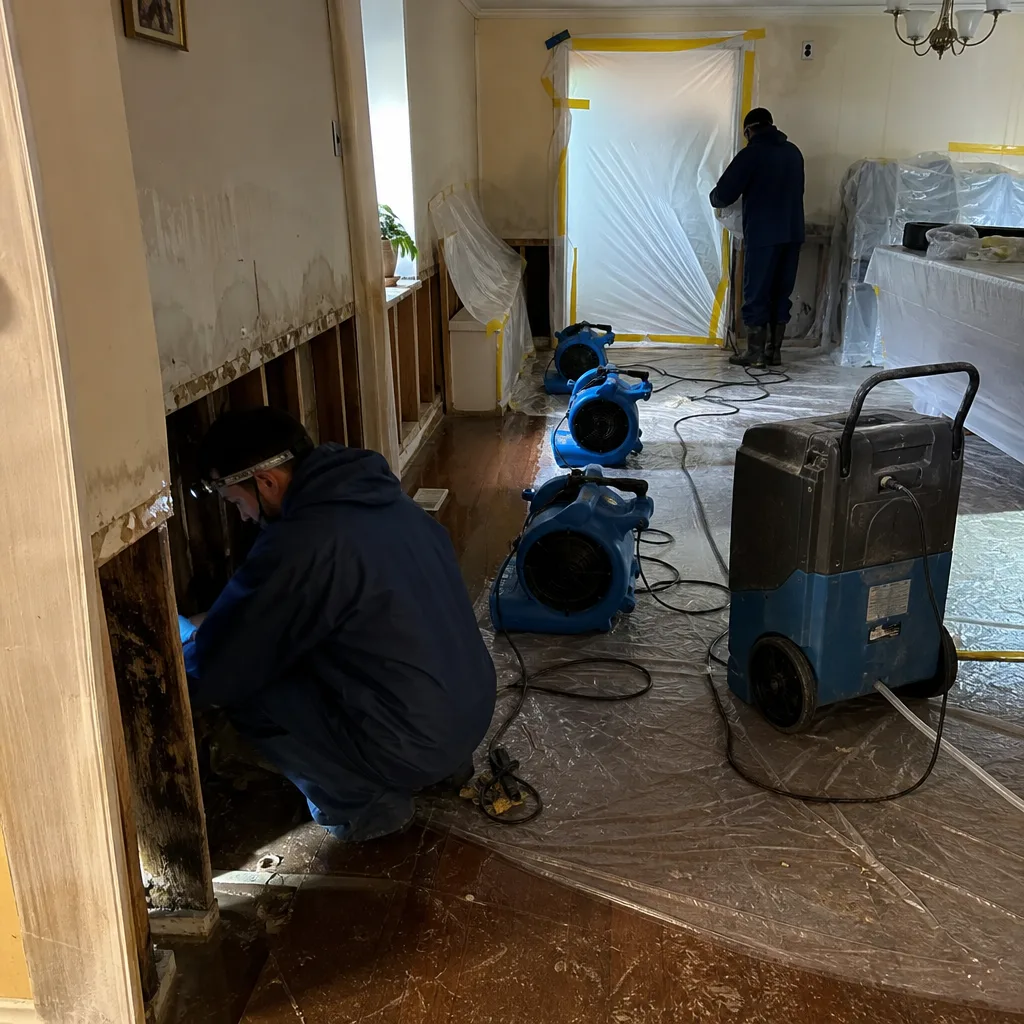
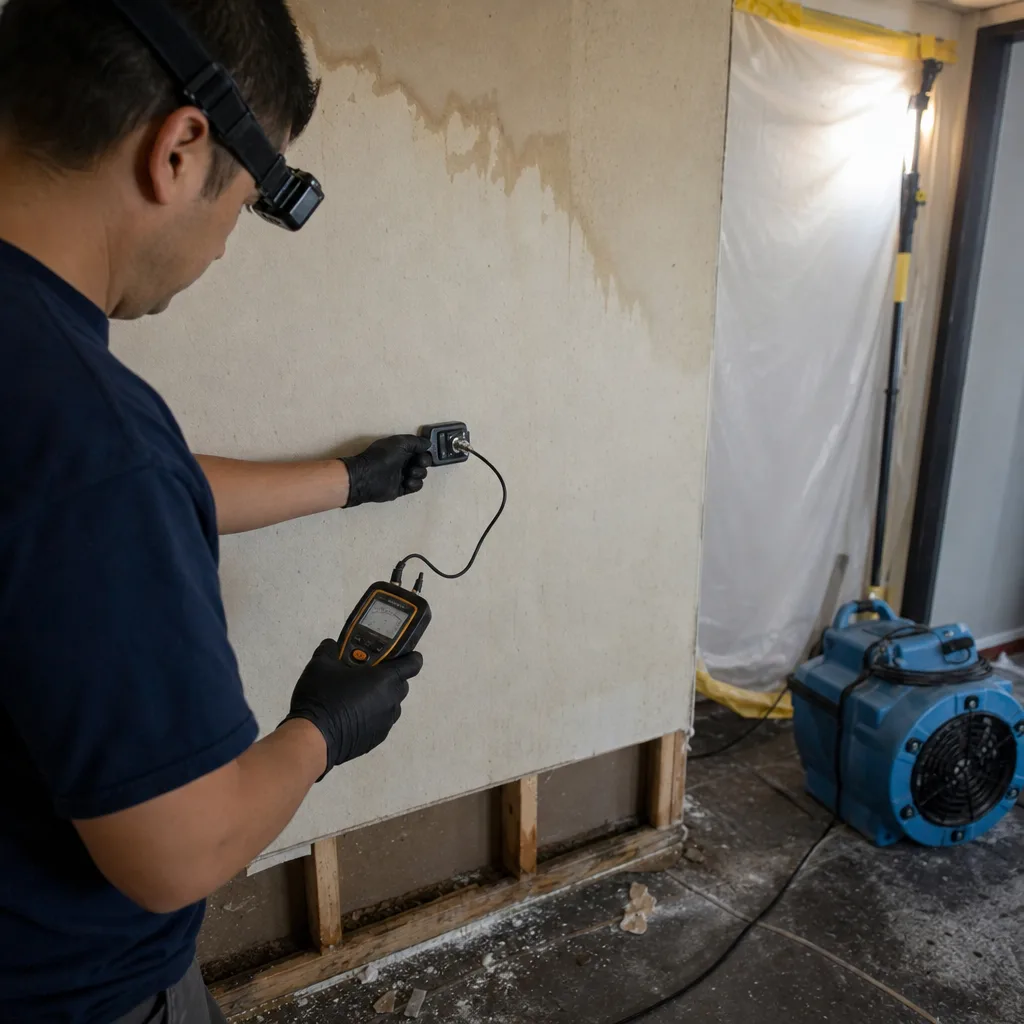
Free visual inspection and a written scope of work before any mitigation begins - photos, moisture readings, and drying logs go in your claim file
The scope we write is the scope we bill. Anything new gets shown to you, in writing, before we touch it.
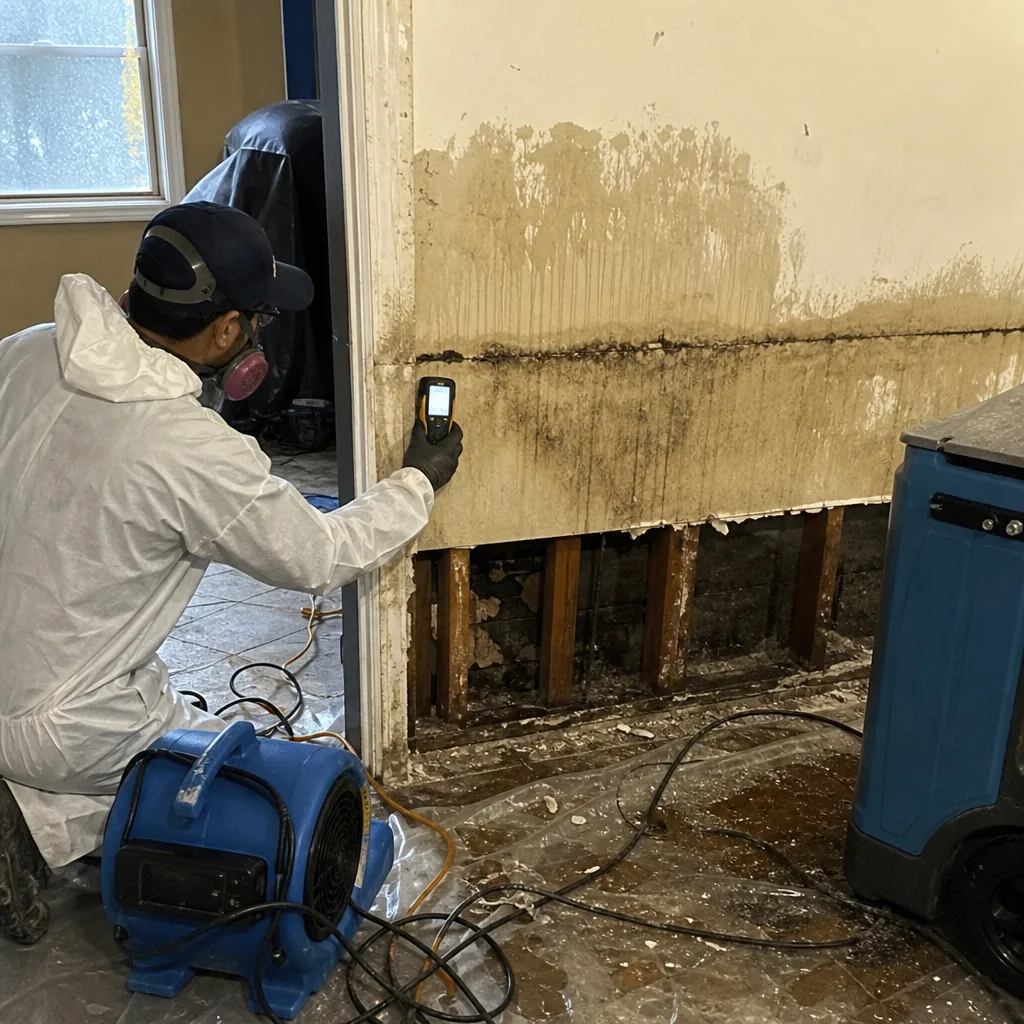 Before
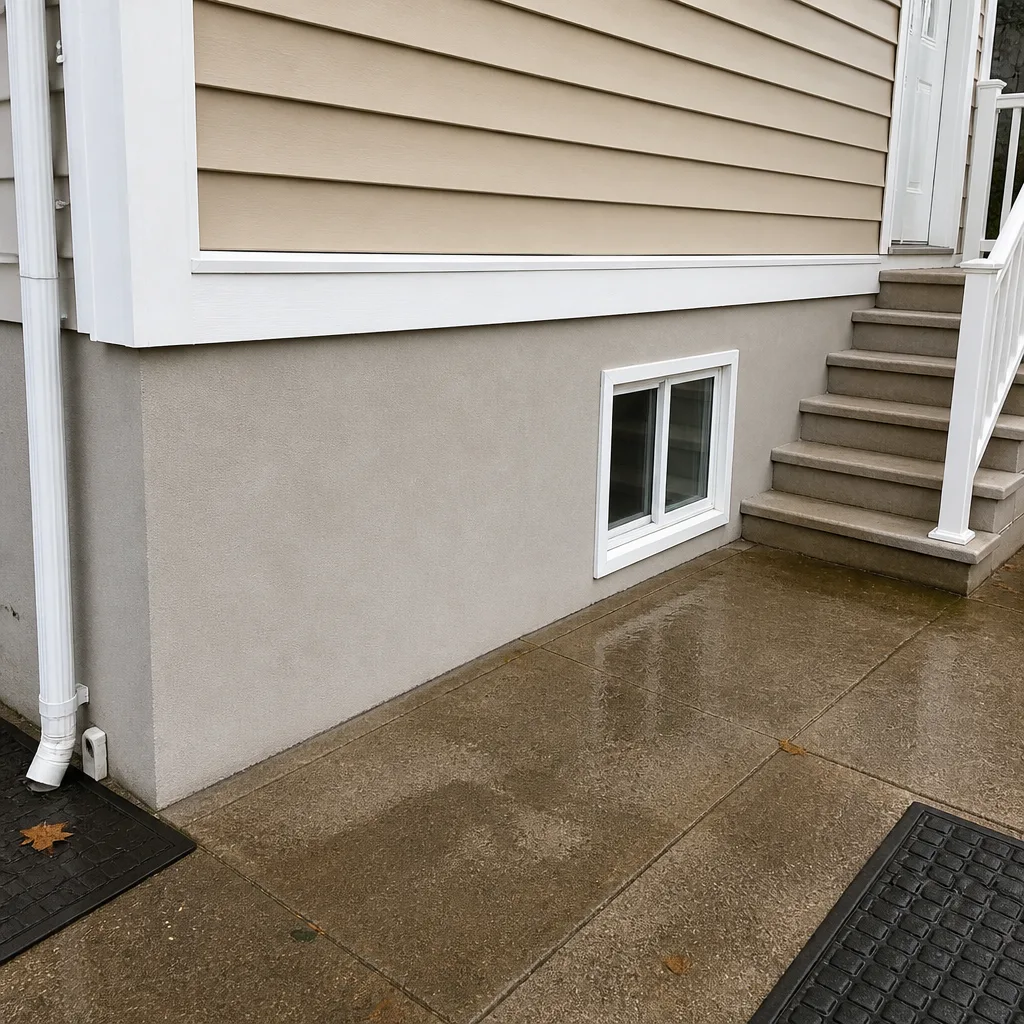 After
After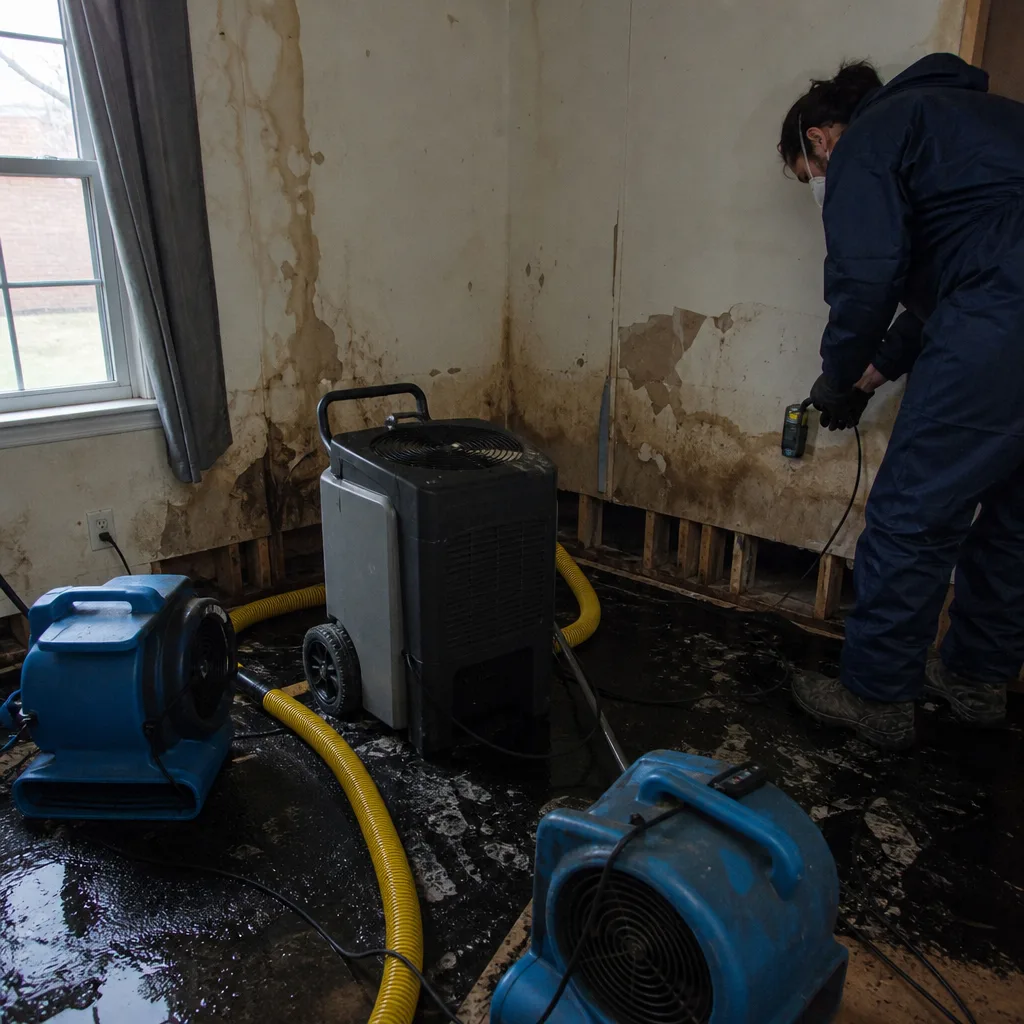 Before
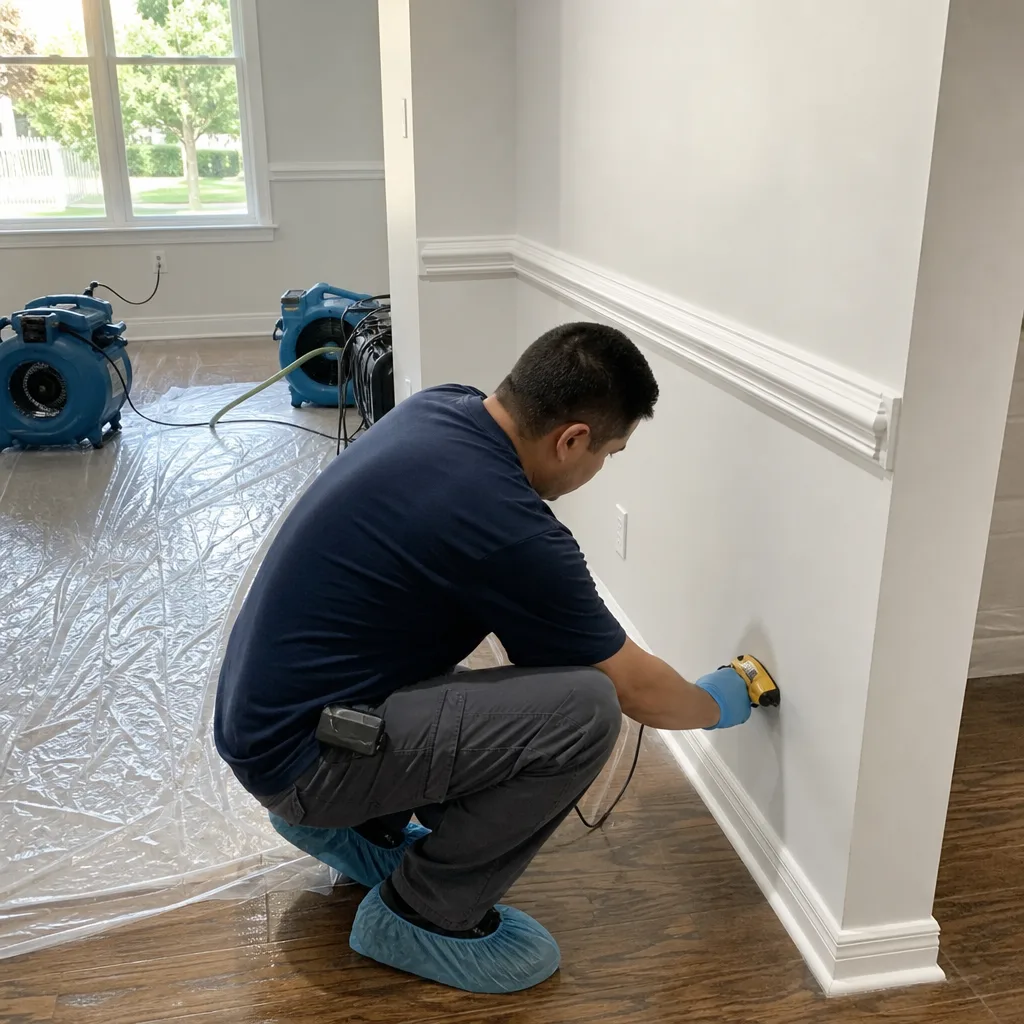 After
After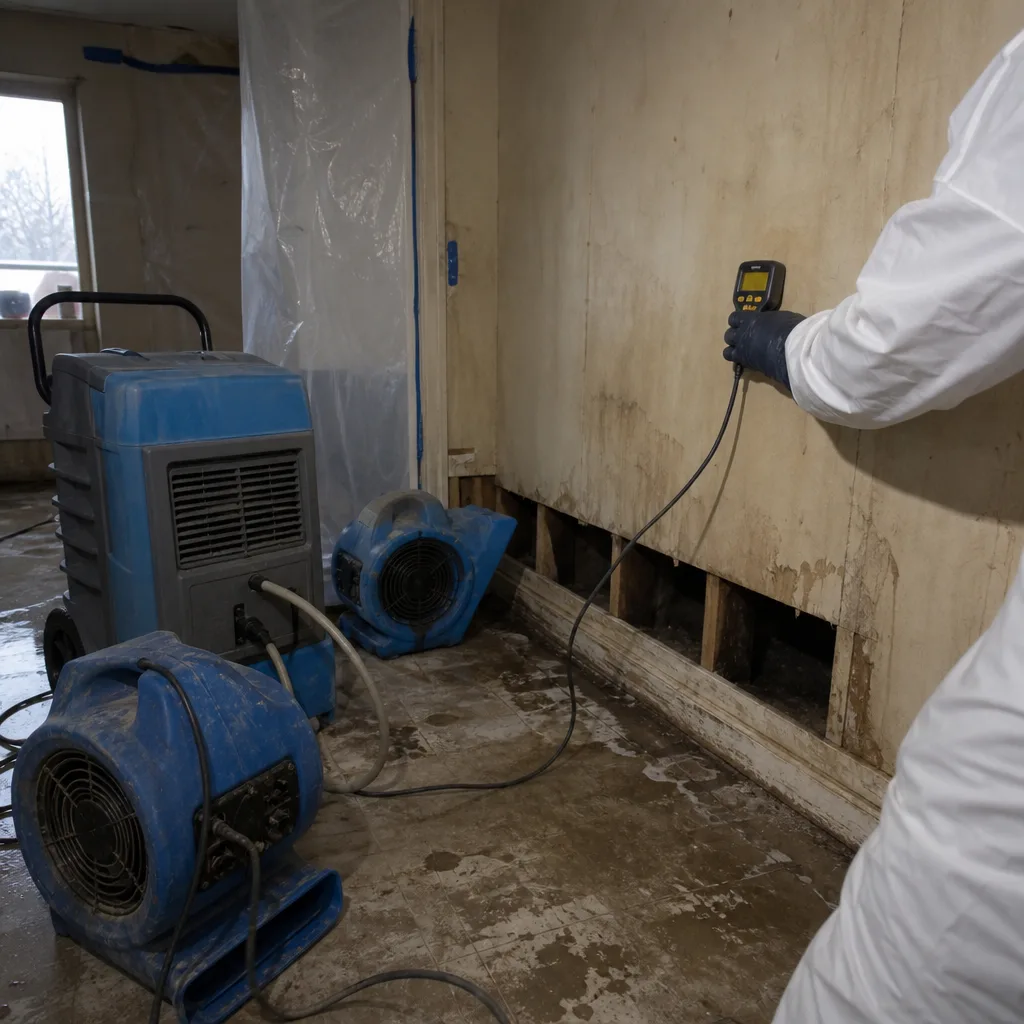 Before
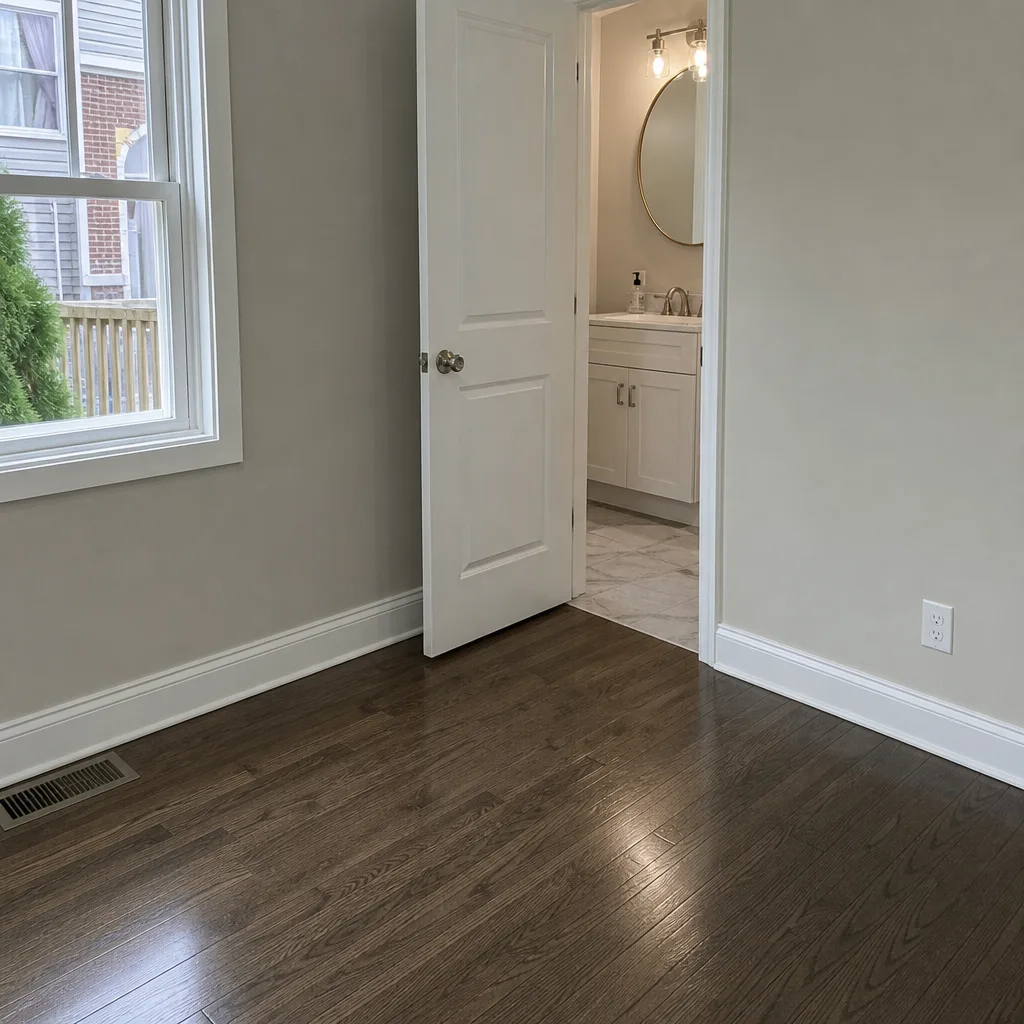 After
After24/7 Emergency Commercial Restoration in Union City
Commercial restoration in Union City means working inside some of the densest square mileage in America. When a pipe bursts on the fourth floor of a pre-war tenement on Bergenline Avenue, it’s not one storefront that floods. It’s every commercial tenant below, down through the floors, all filing claims at once. Call (551) 348-8481 and a live dispatcher answers, any hour, any day. A crew is dispatched to Union City immediately because the first hour decides whether you’re drying drywall or replacing it. We do a free visual inspection, give you a straight answer, and start extraction that same visit. That’s how you keep a small business from becoming a closed one.
Understanding Commercial Restoration Severity in Union City Properties
Union City’s commercial buildings are overwhelmingly pre-WWII brick tenements with mixed-use layouts: retail on the ground floor, offices or apartments stacked above. That construction pattern changes how damage behaves. A supply line failure on the top floor sends Category 1 water through original cast iron drain stacks and along rusted galvanized steel, picking up decades of sediment until it’s Category 2 by the time it reaches the shop below. If it passes through a sewage backwater valve failure or a garden-level sump pit, it’s Category 3 and requires full containment, antimicrobial treatment, and disposal of porous materials. Moisture mapping here isn’t just about one unit. It means reading the wall cavities, floor assemblies, and the shared party walls between tenants. In a building where the original steam riser still runs behind the register, a wet ceiling in one space often means a hidden pool in the adjoining landlord-controlled chases.
Smoke migration follows the same vertical logic. A kitchen fire in a restaurant moves through open stairwells, elevator shafts, and old dumbwaiter chases that were sealed decades ago but never fire-stopped to modern code. Soot residue pressures are different in these buildings. Protein soot from a grease fire is heavier and more adhesive than dry structural soot, and it will ghost the walls of offices two floors up. You need thermal imaging and a full air exchange strategy, not a bucket and a sponge. Mold, once it finds the shared wall cavities in a building that predates vapor barriers, moves laterally within 24 to 48 hours. That’s why our IICRC-certified crews, trained to WRT and AMRT standards, set containment before they begin demolition, not after.
Why Union City Property Owners Choose Floodline Restoration Co.
- 45-minute response commitment. When a water source is active, we’re on scene fast. Every minute of running water in a stacked commercial building doubles the square footage of damage.
- 24/7 live answer, a real person. No phone tree, no answering service that takes a message. You call (551) 348-8481 at 2 a.m., a dispatcher picks up, and a uniformed, background-checked crew is mobilized.
- IICRC-certified crews. Water damage restoration technicians hold WRT certification. Mold projects are handled by AMRT-certified techs. Fire and smoke work under FSRT standards. Not every company here can say that.
- Free visual inspection. We look at the loss, tell you honestly whether it’s a cleanup or a strip-and-replace, and put the scope in writing before any work starts.
- Direct insurance billing. We coordinate with your carrier, provide the documentation they need, and bill them directly. You never play messenger between a landlord, a tenant, and an adjuster.
- One team from extraction to reconstruction. Curt Bowman built this company so no customer ever gets handed to a different contractor mid-job. The crew that pulls the water is the crew that hangs the new drywall.
Our Commercial Restoration Process
Inspection & Assessment
We start with thermal imaging and moisture meters to find every wet surface, including the wall cavities you can’t see. If asbestos is suspected in a pre-war building, we test before we touch anything. The scope is written for your approval and your carrier’s records.
Extraction & Stabilization
High-volume extraction with Dri-Eaz and XPOWER equipment removes standing water fast. We shut off the water source, cap the pipe, and contain the affected area so cross-contamination doesn’t reach neighboring tenants.
Drying & Dehumidification
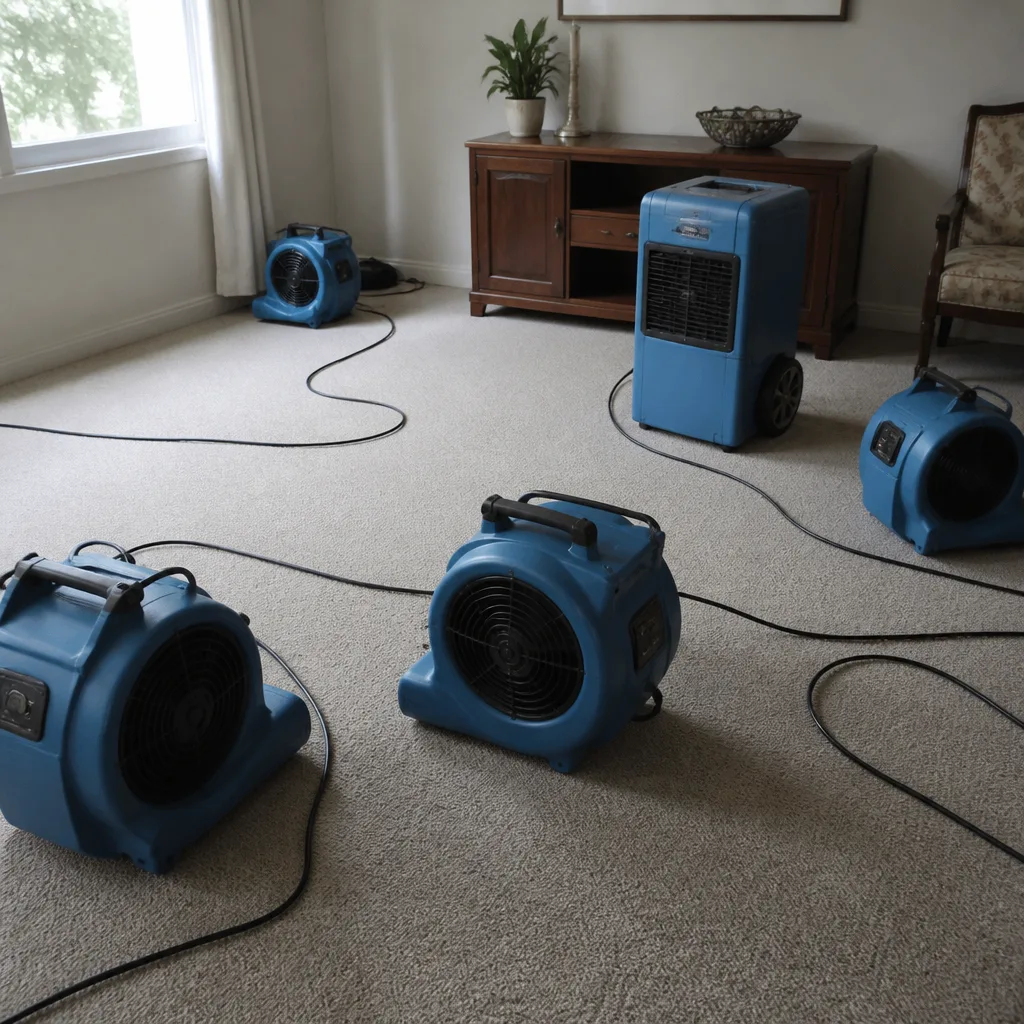
Commercial-grade dehumidifiers and air movers are placed according to a moisture map, not guesswork. Daily readings are logged, and the drying log goes to you and your insurer. We dry until we hit the standard, not until the calendar says to stop.
Cleaning & Sanitization
Category 2 and 3 water demands antimicrobial and sanitizing treatment on all affected surfaces. HEPA air scrubbers run during and after work to clear the air. For fire losses, we use specialty soot sponges and chem sponges before any wet cleaning begins.
Business Interruption Minimization
We build containment that can keep part of a storefront operating while we work. Pack-out of salvageable inventory happens under a documented chain of custody. For offices, we can often isolate the work zone so your team keeps working.
Repairs & Restoration
Full reconstruction happens under the same crew. Drywall, flooring, paint, fixtures. When we hand the keys back, the job is done and backed by the 90-Day Done Right Promise in writing. No punch list left for the landlord to chase.
Need Emergency Commercial Restoration in Union City Now?
Crews minutes away, answering live 24 hours a day. The sooner we start, the less it costs.
Working With Your Insurance Company
Commercial restoration in Union City is rarely a one-claim event. The density means multiple tenants, multiple policies, and a landlord who may or may not carry adequate building coverage. We’ve seen garden-level storefronts flooded by a burst riser in a unit three floors up, while the upper-floor tenant’s insurer argues it’s not their pipe. From the first hour, we document everything. Photos before extraction starts. Moisture readings room by room and wall by wall. A line-item scope with square footage, affected materials, and specific remediation methods. Our team talks directly to your adjuster, answers their questions, and provides the drying logs and photo evidence they need to approve coverage. You stay focused on running your business. We’ll handle the paperwork side of the loss. It’s a square deal: no surprises on the bill.
What We Provide Your Insurer
- Thorough documentation of the loss
- Photos of all damage, room by room
- Moisture readings and drying logs
- A detailed, line-item scope of work
- Direct coordination with your carrier
Built for Union City’s Loss Calendar
The restoration calls in Union City follow the weather and the age of the buildings. January and February are the worst months for frozen supply lines. When temperatures drop into the teens, original galvanized steel pipes in uninsulated exterior walls freeze and split. The burst is often not discovered until the thaw starts and water runs down through three floors of stacked commercial spaces. March brings the thaw and the first big rain events; garden-level units along the steep Palisades grade start taking Category 3 stormwater through foundation cracks and overwhelmed drains. July and August are thunderstorm season, when the impervious concrete and brick canyon streets shed rain faster than ancient combined sewers can carry it. Flash flooding from cloudbursts sends water pouring into basement-level shops and storage rooms. September through November is nor’easter season: long, heavy rainmakers that test the aging flat roof membranes on buildings that haven’t been re-roofed since the Clinton administration. Every landlord in Union City knows that roof leak signature: water stains beginning in the top-floor ceiling and working downward through shared walls until it shows up as a drip over the cash register.
Commercial Restoration Across Union City’s Neighborhoods
Every corridor in Union City has its own damage signature. The Bergenline Avenue commercial strip is the city’s spine, with ground-floor retail and restaurants under four to five floors of residences. Those businesses sit directly beneath original steam risers and waste stacks. A supply line failure in a fourth-floor apartment is their flood. We run our response routes from the dispatch board knowing that Bergenline’s narrow sidewalks and double-parked delivery trucks mean our crews arrive with smaller, maneuverable vehicles and extraction equipment designed for tight rear entrances. Over near the Hudson Palisades edge, the buildings on Palisade Avenue face wind-driven rain that side-washes brick walls. The brick, built before cavity wall construction was common, acts like a sponge. Water drives through the mortar joints and shows up inside walls, not through windows. It’s a slow leak that becomes a mold problem before anyone notices a puddle. The Washington Park and 49th Street districts, where older brick three-flats and mix-used buildings cluster, see a steady run of cast iron drain stack failures. Original 100-year-old stacks rust at the joints, and a sudden backup sends Category 3 water into ground-level commercial spaces. Down in the area around the 32nd Street entrance to Route 495, the commercial strip is lower, closer to the grade of the old riverbed, and those buildings carry the highest risk of stormwater intrusion during heavy rain.
Commercial Restoration in Union City
Floodline Restoration Co. has built its Commercial Restoration team around the reality of Union City’s vertical buildings. Our crews carry the equipment for a fifth-floor pipe burst the same way they carry it for a garden-level stormwater flood. The job doesn’t change; the access and the containment plans do. When you call, you get a live person, and you get a crew that has worked these buildings before. We’re coordinated from our metro office for dispatch, and our technicians serve Union City daily. That local presence is why we answer at 2 a.m. and are on scene while the water is still spreading.
Specialized Commercial Restoration Services We Offer in Union City
Multi-Unit & HOA Restoration
Condominium associations and HOA boards in Union City face a structural problem that no single-family homeowner in New Jersey recognizes. A pipe burst in one unit means water migrating through shared walls, ceilings, and floor joists into multiple units. The association’s master policy, the building’s sub-limits, and each unit owner’s policy are all in the room at the same time. We have run dozens of stacked-unit losses in buildings along Palisade Avenue and Bergenline. Our scope documents are written so each carrier sees exactly which portion of the damage belongs to whom. That prevents the classic HOA dispute where nobody pays because nobody can prove what got wet.
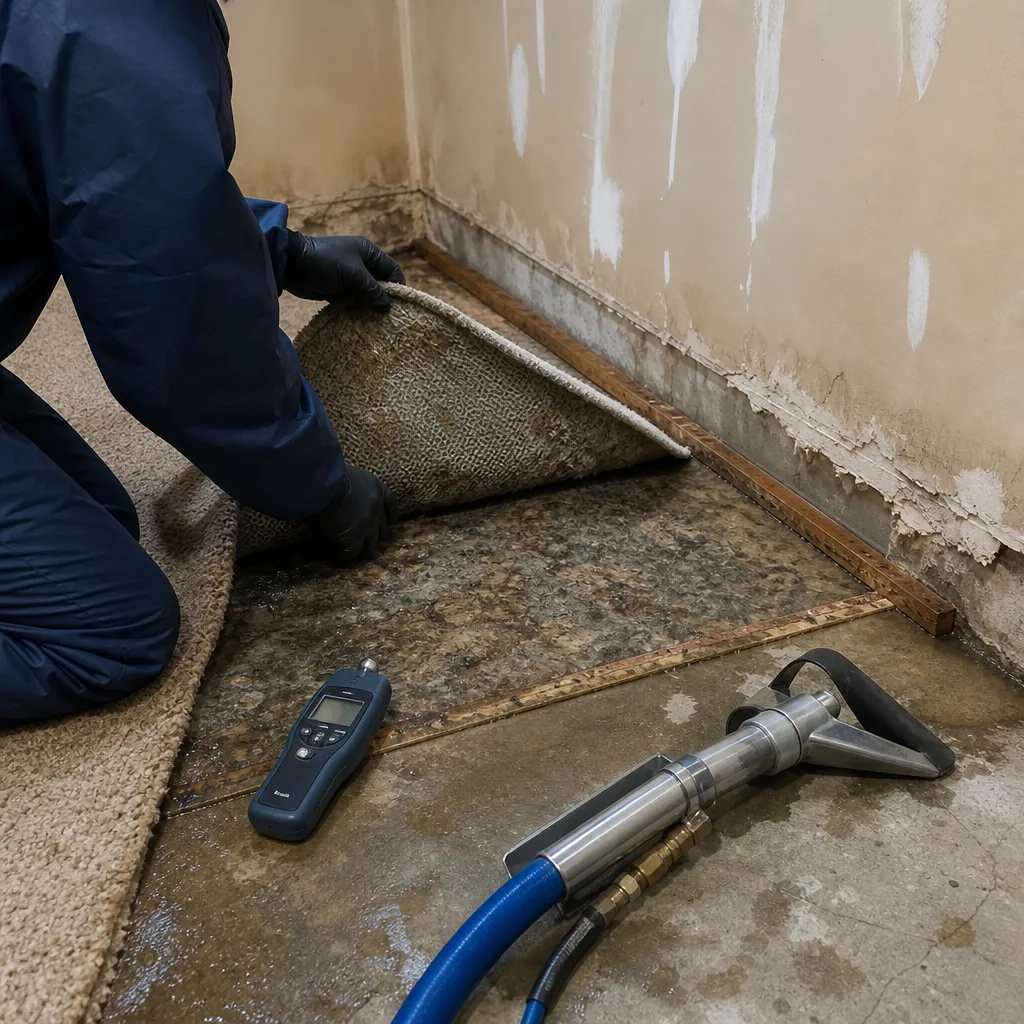
Business Interruption Minimization
Every day a storefront on Bergenline Avenue is closed is revenue that doesn’t come back. In a dense commercial district where foot traffic is the business model, a three-week closure over a burst radiator pipe is not a nuisance. It’s a death sentence. We build negative-air containment with zipped barriers so we can dry the back stockroom while you keep the front counter open. Pack-out happens under a documented inventory list. If the front of house is usable, we do everything possible to keep it usable. The goal is not just a restored space; it’s a space that never fully closed.
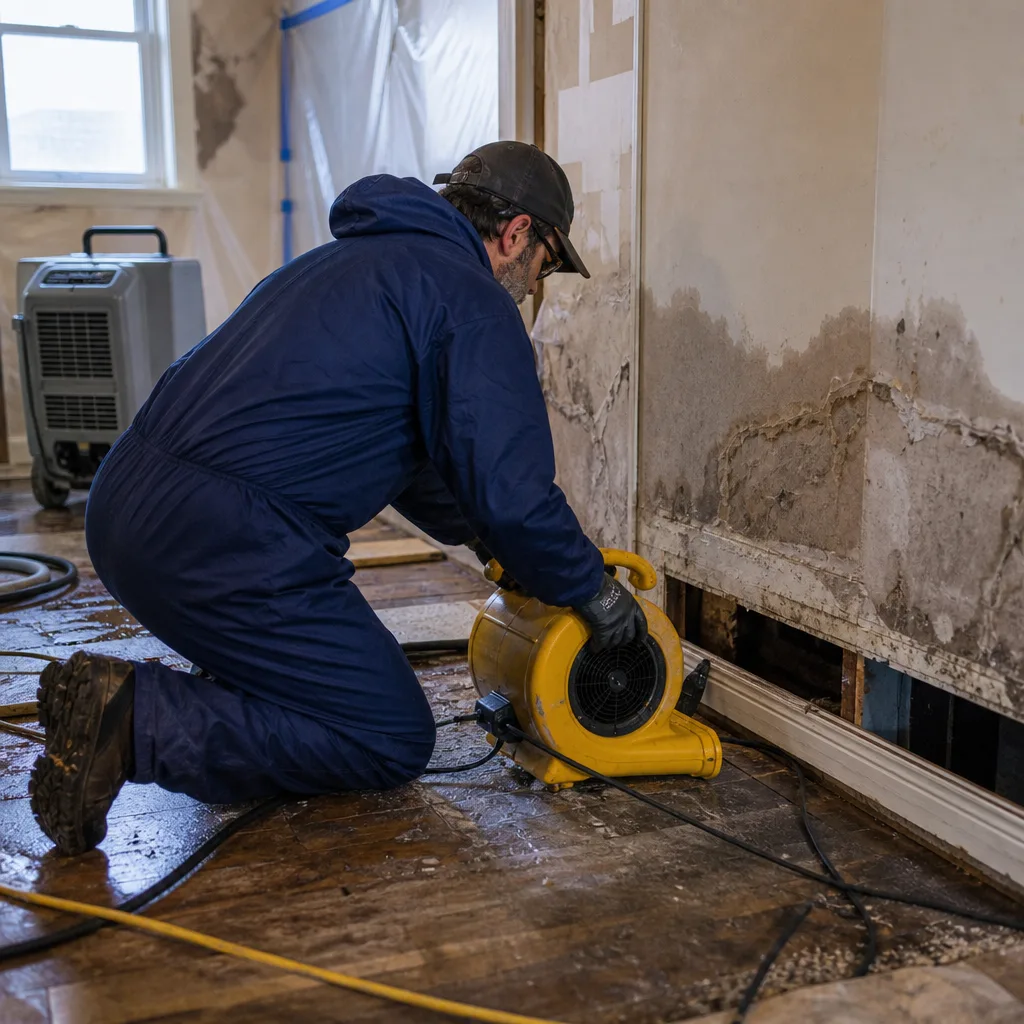
Office & Retail Restoration
Office floors in Union City’s older buildings are often cut up into small tenancies: a law office, a dental practice, an accountant, a real estate office. A wet ceiling drip is not just water. It’s suspended acoustic ceiling tiles saturated and dropping onto desks. It’s the smell of wet carpet and wet drywall driving off clients. We restore those spaces with an eye toward the things that matter to a professional office: clean air, dry walls, no visible dust, and a written scope of work the building owner can show his own insurer. We have done it on floors that were built before you were born and still had the original lath and plaster under the drywall.
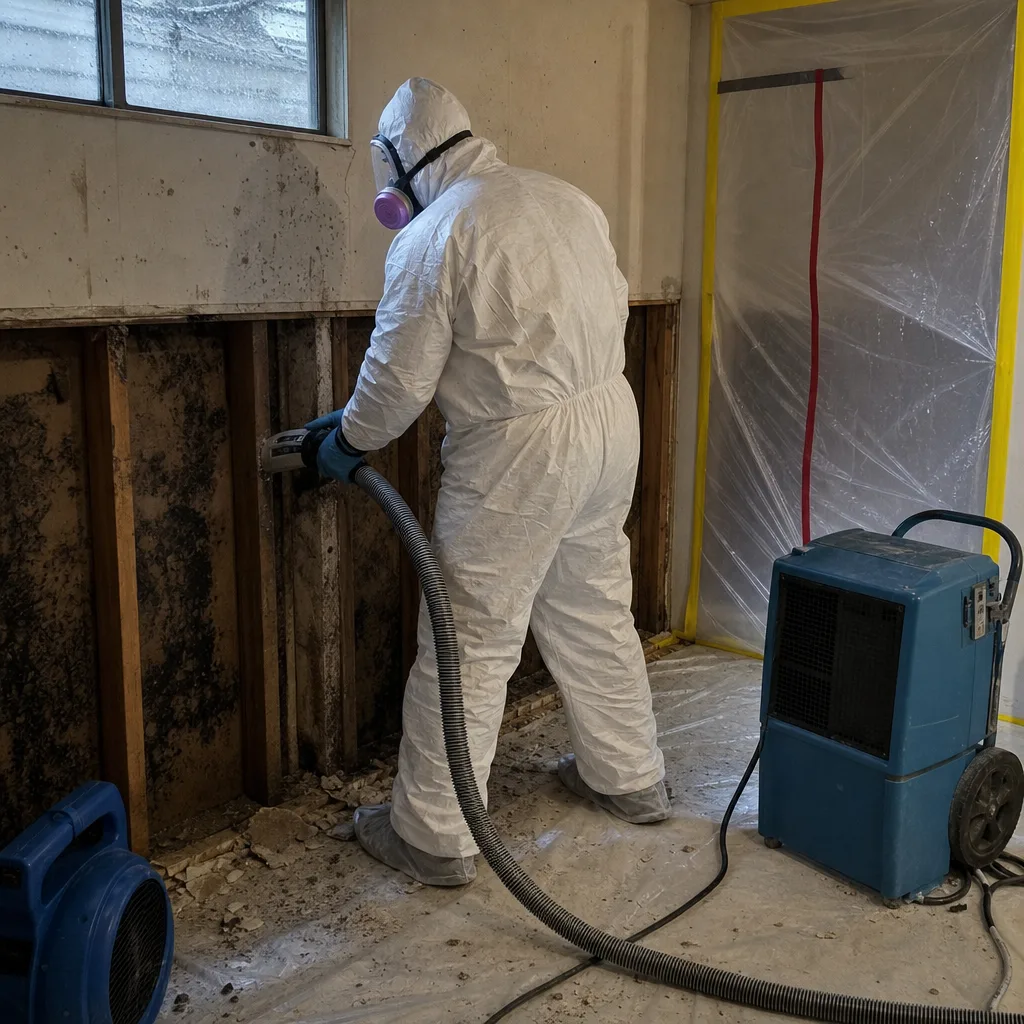
Industrial Facility Cleanup
Union City still has light industrial and warehouse spaces on the western edge, near the old rail corridor and along the Route 495 approach. Those buildings are a different animal: concrete floors, steel I-beams, open bay loading docks, and older electrical and gas services. A broken sprinkler main in a 20,000-square-foot warehouse means massive extraction capacity, floor squeegees and submersible pumps before you even think about humidity control. We bring the equipment for those jobs: high-capacity extraction, desiccant dehumidifiers, and enough air movement to dry a concrete slab without warping the racks stored on it.
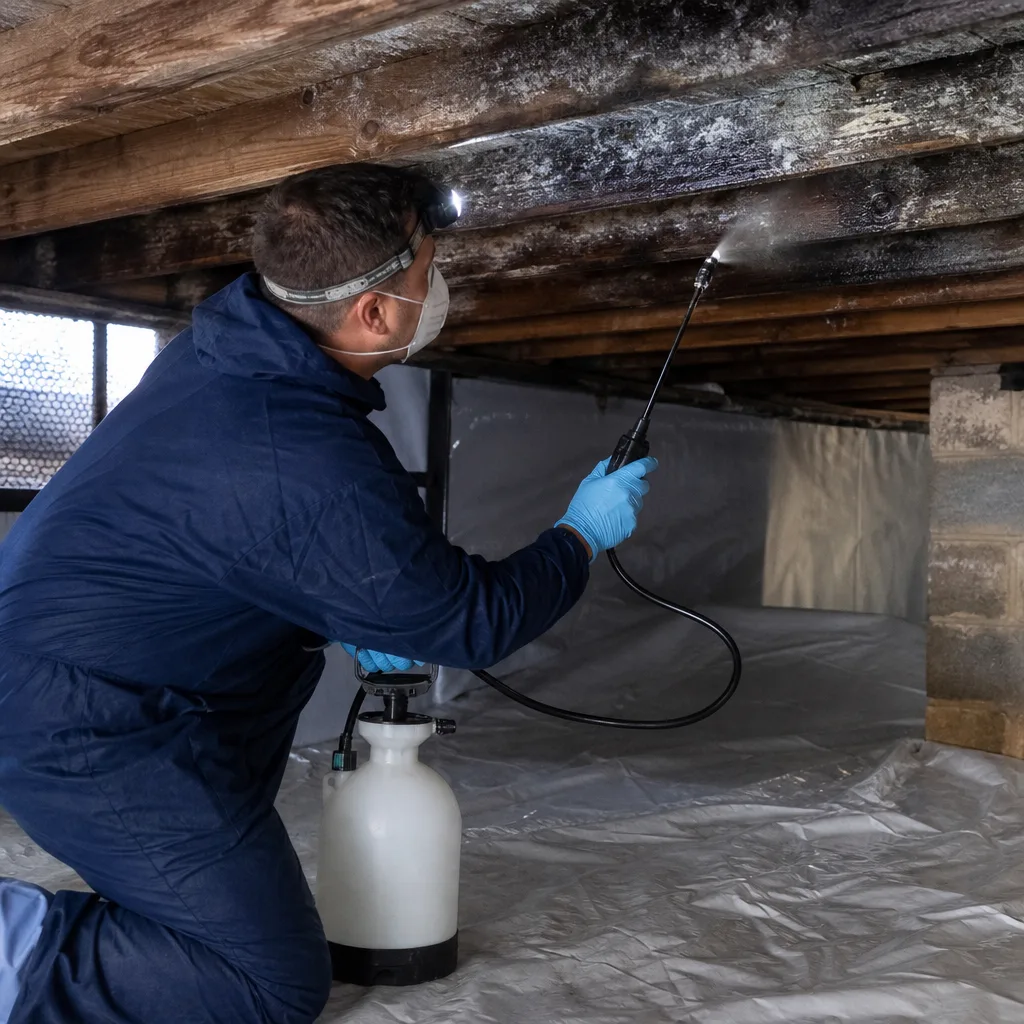
Large-Loss Response
When a building-wide event hits a multi-tenant building, the response cannot be piecemeal. One crew for one unit, then another company for the unit next door, means two different dry logs, two different scopes, and a landlord caught in the middle. A large-loss response in Union City requires a single project manager, a single moisture map for the entire affected column of the building, and a single point of contact for the landlord. That’s how we run it. Curt Bowman built the company around a dispatch board, not a sales desk, and that philosophy shows in the way we mobilize for full-building events.
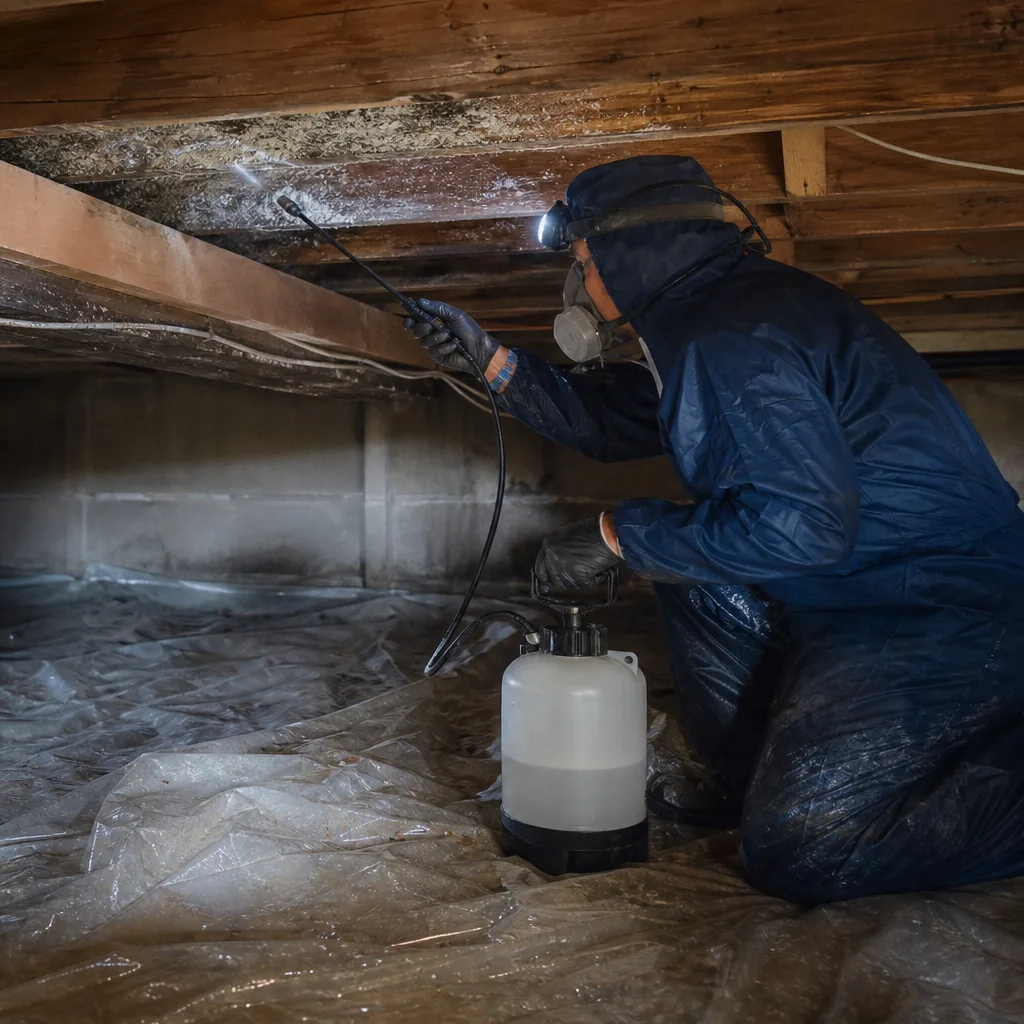
Document & Inventory Recovery
Paper records, client files, and inventory in a garden-level office or storage room are often the first things lost when Category 3 water comes through. We handle document recovery with freeze-drying where appropriate and prioritized pack-out of high-value inventory. For retail, that means separating salvageable stock from compromised stock, documenting every item for the claim, and storing it in a dry, secure location while the space is restored. For offices, that means file recovery and, where possible, restoration of critical paperwork before mold has a chance to set in. The clock starts when the water stops; we act like it.
What happens when you call
- 1
A real person answersNo phone trees - you reach a local pro.
- 2
You get an upfront price rangeHonest numbers before anyone is dispatched.
- 3
A background-checked tech heads outLicensed & insured, dispatched right away.
- 4
You approve before work beginsNothing starts until you say go.
Commercial Restoration Costs in Union City, NJ
Here are real numbers for this market. A single-unit water extraction in a Union City storefront, with drying and minor drywall repair, typically runs $2,500 to $7,500. A multi-floor event, where water has cascaded through three or more stacked units, usually lands between $15,000 and $65,000 depending on the square footage affected and whether asbestos abatement is triggered. Garden-level stormwater intrusion with Category 3 water and full antimicrobial treatment commonly runs $8,000 to $30,000 for a small retail space. A small commercial kitchen fire, including soot cleanup, duct cleaning, and repainting, often falls in the $12,000 to $40,000 range. Mold remediation in a single commercial unit with containment and clearance testing generally costs $3,000 to $12,000; if it has crossed into neighboring units through shared walls, double or triple it. The biggest variables are asbestos testing requirements, access restrictions in occupied buildings, and the number of tenancies affected. When insurance is covering the loss, we work directly with your carrier and bill them directly. Call (551) 348-8481 for a free visual inspection and a firm scope in writing before any work begins.
We Also Serve Cities Near Union City
Our commercial restoration crews also respond to losses in Weehawken, Hoboken, North Bergen, and Secaucus. The building stock and the response logic are similar, but every city has its own access challenges and its own building code quirks. We know them because we work them.
Serving Union City, NJ - Our Local Coverage Area
We’re based in the Union City area and know this community well. Use the map below to see our service coverage - if you’re nearby, we can almost certainly help.
Union City Commercial Restoration Questions, Answered
Why does commercial restoration in Union City’s tenements take longer than in other NJ towns?
It takes longer because the buildings are vertical and old. A pipe burst in a fourth-floor apartment of a pre-war tenement means water moving through four levels of floors and walls, not one. Every affected surface needs moisture readings on both sides. Original plaster walls dry slower than modern drywall. Shared wall cavities need to be opened and inspected, not assumed dry. And pre-WWII buildings often require asbestos testing before any demolition starts, which adds regulatory time. We tell property owners upfront: a two-day dry-out in a single-story suburban building is often a seven-to-ten-day job in a Union City tenement. That’s not bad workmanship. That’s honest physics.
How do you handle steam pipe bursts that have original asbestos insulation?
We stop and test. Any burst pipe in a pre-WWII building, especially if it’s an original steam riser, is suspected of having asbestos insulation until a certified lab says otherwise. If asbestos is confirmed, no water restoration company may legally begin demolition or drying work that disturbs that pipe until a licensed asbestos abatement contractor has removed and bagged the material. We coordinate directly with a licensed abatement firm, adjust the scope, and keep the project moving. The cost goes up, yes. But the alternative is a regulatory shutdown and cross-contamination of neighboring units. That’s a far bigger bill.
Can you restore our office after Hudson Palisades stormwater flooded the garden level?
Yes. Stormwater from Union City’s steep Palisades grade is almost always Category 3 water by the time it enters a garden-level space. It has run across pavement, collected road oils and animal waste, and pushed through foundation cracks. We treat it as contaminated. That means extraction first, then full containment, removal of saturated porous materials, antimicrobial treatment on every affected surface, and HEPA air scrubbing throughout. Skipping the Category 3 protocol is the most common mistake we see from out-of-area crews. Call (551) 348-8481 and we’ll be there to start the right way.
What does pack-out mean for a retail store with inventory damaged by a burst pipe?
Pack-out is the process of removing, inventorying, cleaning, and storing your merchandise while the space is dried and restored. We photograph every item, log it in an inventory document, and separate salvageable stock from items that must be disposed of under Category 2 or 3 water loss rules. Your insurer gets the inventory list. Your merchandise goes to a secure storage facility. When the building is restored, we return the inventory and help you restock. For a store on Bergenline Avenue, this is often the difference between a three-week closure and a three-month closure.
How do you stop mold from spreading to neighboring commercial units through shared walls?
Containment and negative air pressure. Before we open any wall, we set up plastic containment barriers and run HEPA-filtered negative air machines. That ensures air flows into the contained area, not out of it. We take moisture readings on both sides of every affected shared wall. We remove wet drywall and insulation and dry the framing to standard before any rebuild begins. In Union City’s pre-war buildings, where wall cavities are often open from one unit to the next, this is the only way to stop a bloom from spreading. We’ve seen what happens when someone skips containment. The whole building gets involved.
Will my insurance cover commercial restoration in Union City?
Most commercial property policies cover sudden and accidental water damage, fire damage, and storm damage, subject to your deductible. Coverage details vary by policy: some exclude gradual leaks, some have mold sub-limits, and some separate flood coverage for stormwater. The best way to know is to file early and document thoroughly. We provide the documentation your adjuster needs from the first hour, and we coordinate with them directly. We’ll also help you understand what your policy says, in plain English, before you commit to any scope of work. Call (551) 348-8481 to start.
How fast can you actually get to a building in Union City?
Our commitment is 45 minutes from your call to a crew on site. In practice, for emergencies in Union City, we are often on scene in under 30. We coordinate dispatch from our metro office, but our crews work Union City daily. A live dispatcher answers the phone 24/7, and the crew that arrives is the crew that stays through the whole job. We do not take your information and call you back later.
What should I do in the first 30 minutes after a pipe bursts in my building?
Shut off the water at the main valve if you can reach it safely. Kill the electricity to the affected area if water is near outlets or panels. Move high-value inventory and documents out of the water path. Then call (551) 348-8481. Do not try to open walls or pull wet drywall yourself. In a pre-war building, you may be disturbing asbestos. In a Category 3 event, you may be spreading contamination. The first 30 minutes are for shutting off the source and making the call. We handle the rest.
When a stacked commercial building in Union City takes water or fire damage, the last thing the owner, the landlord, and the tenants need is a company that treats it like a suburban single-family job. They need a crew that knows the buildings, knows the asbestos tests, knows the shared-wall containment protocols, and knows how to keep a small business alive through a loss. That’s what we do. Floodline Restoration Co. answers the phone with a live person around the clock. Our technicians are background-checked, uniformed, and certified. Our work is backed by the 90-Day Done Right Promise, in writing, no arguments. We’ll be there when we say. Call (551) 348-8481 for a free estimate today.
Written by Curt Bowman, Owner at Floodline Restoration Co., answering the phone around the clock for Union City property owners.