
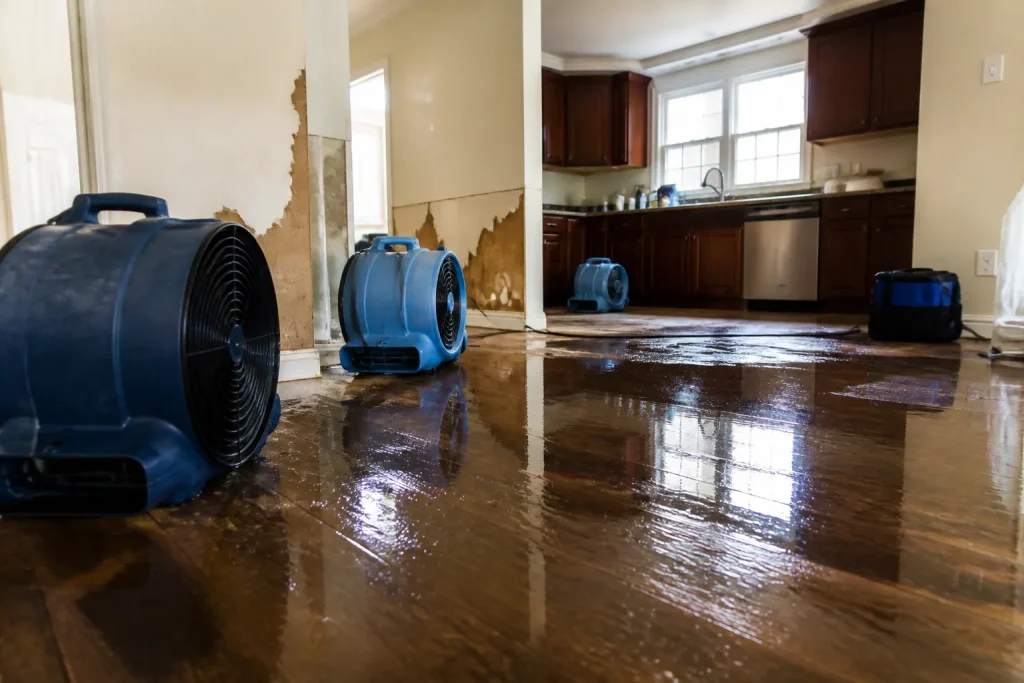
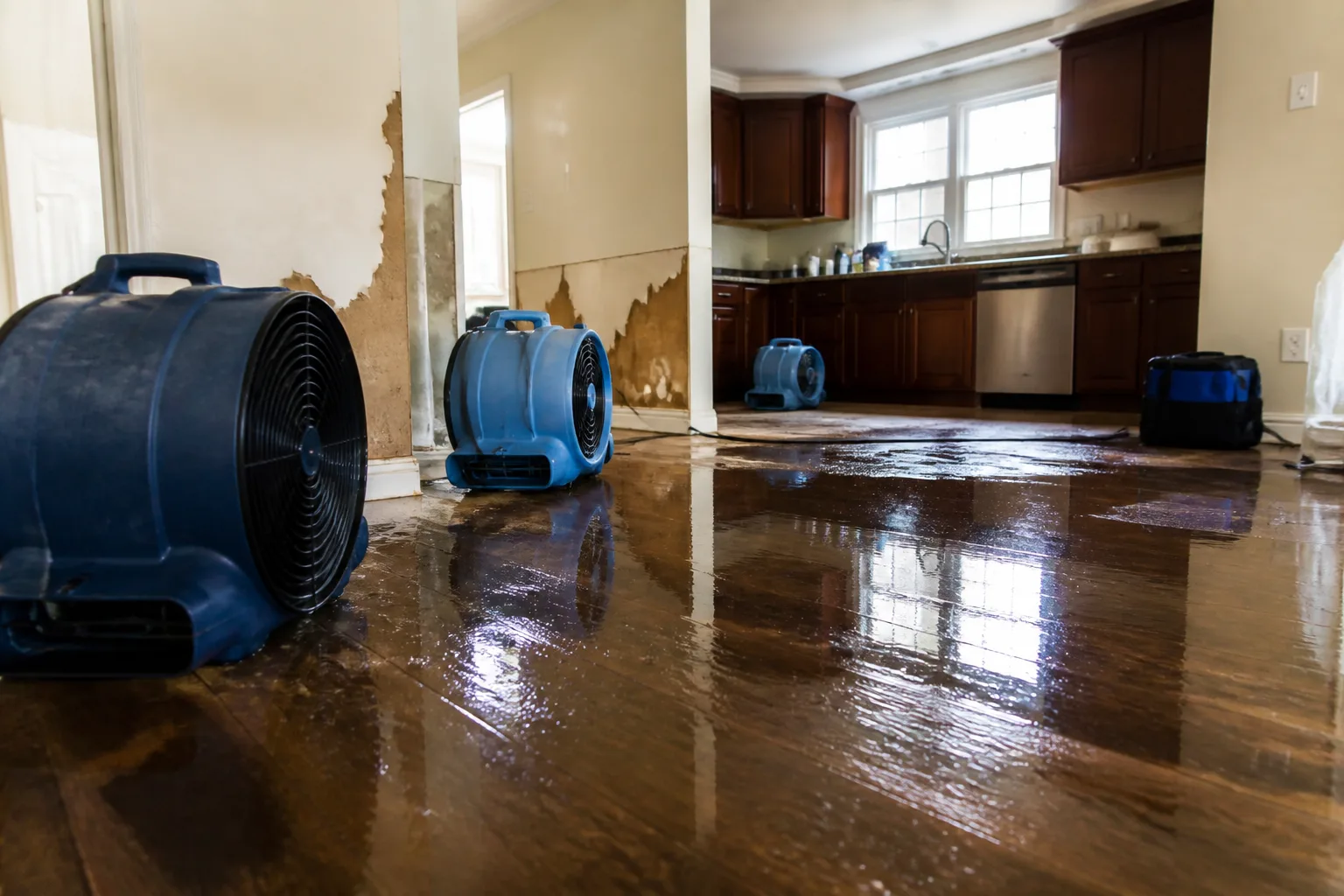
Water Damage Restoration Pricing Breakdown: What Union City Homeowners Pay in 2026
In Union City, water damage restoration runs from about $2,800 for a contained single-room leak with drywall and baseboard replacement up to $25,000 or more when a broken pipe floods a finished basement with Category 3 water and full rebuild is needed. Most mid-range jobs land between $4,500 and $9,500. If you’d rather skip the back and forth and just get a number from someone who’s done this in Hudson County for 15 years, call (551) 348-8481.
The reason those numbers don’t match the national guides is simple: Union City is not a national market. The housing stock here is dense rows of attached homes built between 1890 and 1940. Plaster walls, shared foundation walls, slab floors, and plumbing that’s either been patched for a century or replaced piecemeal. When water moves through a row home, it doesn’t behave the way it does in a brand-new subdivision in Texas. It runs down party walls, wicks up through plaster, and sits against foundations that three other families share. Those are the variables that actually move the price, and most pricing guides never mention them.
What Actually Drives Water Damage Cost in Union City
Four factors matter more than anything else, and all four play out differently in Union City than they do anywhere else in New Jersey.
Square footage of affected area. Water restoration is priced per square foot of affected material, not per square foot of the whole room. A 200-square-foot basement with a 40-square-foot wet corner isn’t a 200-square-foot job, it’s a 40-square-foot job. In Union City, the difference matters because basements are small and square footage is precious. A leak that would spread across 800 square feet in a suburban home might only hit 150 square feet in a row-home basement, which keeps the mitigation cost down but concentrates it in a tight, hard-to-dry space.
Water category. Clean water from a supply line is the cheapest to handle. Gray water from a washing machine or dishwasher overflow adds sanitizing steps and a bit more labor. Black water, which means sewage or floodwater from outside, is a different job entirely. In Union City, where combined sewer systems still exist in the older blocks and heavy rain can back up floor drains, black water jobs are common enough that we keep dedicated protocols and separate equipment for them. You don’t dry black water, you cut it out and replace it. That’s the difference between a $3,000 job and a $9,000 job on the exact same floor plan.
Structural material. Plaster takes longer to dry than drywall and is more likely to be salvageable if you catch it early, but more expensive to repair if you don’t. Tile floors over concrete slab can be dried; hardwood floors over a wood subfloor may survive if the water was clean and the response was same-day. In Union City, we see a lot of original pine flooring under newer tile, and that combination does not dry well. It traps moisture against the subfloor and leads to mold if anyone cuts corners. More on that in the mold section below.
Access in attached row homes. This is the big one nobody writes about. In a detached house, you have four sides to work from. In a Union City row house, you’ve got a front and a back, and maybe a narrow side alley if you’re lucky. Equipment hoses run through the front door, through the living room, down the basement stairs. Drying chambers need to be built around stairwells. Sometimes the only way to inspect a shared foundation wall is through a two-foot crawl space. All of that takes time, and time is labor, and labor is the single biggest line item on any restoration quote in Hudson County.
Union City Line-Item Pricing: What the Numbers Look Like in 2026
Here’s a breakdown of the typical ranges we see in Union City, based on current Hudson County labor rates and material costs. These are not quotes, just real-world ranges from jobs we’ve done and estimates we’ve seen.
- Emergency water extraction: $450-$900 for a standard single-room response, including equipment setup and initial moisture mapping.
- Structural drying (3-5 days): $800-$1,600 depending on affected area and equipment count. This includes Dri-Eaz and Phoenix dehumidifiers, XPOWER air movers, and daily moisture readings.
- Drywall removal and replacement: $3.50-$6.00 per square foot, materials and labor included. Higher end if you have plaster repair instead of drywall patch.
- Baseboard and trim: $4-$8 per linear foot, including material, install, and paint-match.
- Flooring removal and disposal: $1.50-$3.50 per square foot. Tile over concrete runs higher due to demo labor.
- Antimicrobial application and sanitizing: $0.50-$1.25 per square foot of affected area, done after drying and before rebuild.
- Plaster wall repair: $8-$16 per square foot when original plaster can be saved. Full plaster replacement on a Union City party wall runs higher because the wall has to be matched to the neighbor’s side.
- Content handling and pack-out: $500-$2,500 depending on volume. In small Union City basements used for storage, this line item is often underestimated on the first quote.
The single biggest spread in Union City pricing is rebuild. A mitigation-only company will quote you drying, demo, and sanitizing and stop there. Then you’re calling a contractor to hang drywall and a painter to finish. That handoff is where the total price climbs 20-35%. Each contractor carries their own mobilization, their own markup, their own site visit minimums. We’ve seen the same finished basement cost $4,000 more because three companies touched it instead of one. We do it differently, and that difference is structural, not promotional. The Floodline Restoration Co. home team handles extraction, drying, and rebuild under one roof, with one scope and one person you can hold accountable. Curt Bowman built the company that way on purpose.
How Much Does Water Damage Restoration Cost Per Square Foot in Union City?
You’ll see national guides quoting $3.75 per square foot or similar clean numbers. In Union City, a realistic combined mitigation and rebuild figure runs $25-$55 per square foot of actually affected area, not total square footage. Clean water with a fast response and drywall replacement lands near the bottom of that range. Black water with plaster repair and flooring replacement lands at the top.
The per-square-foot model breaks down in row homes because affected areas are often vertical, not horizontal. Water traveling down a party wall from a second-floor bathroom leak doesn’t spread across a floor, it runs down a 12-foot vertical channel between two units. Drying that requires opening wall cavities at intervals, which means more cuts, more equipment, more days. A flat-per-square-foot model doesn’t capture that. Neither does a satellite inspection. You need someone walking the space with a moisture meter, and if a company quotes you over the phone without asking about your foundation type, that quote is a guess.
What Insurance Actually Covers in New Jersey, and What You Pay Out of Pocket
A standard HO-3 policy in New Jersey covers sudden and accidental water damage: a burst pipe, an overflowing washing machine, a failed water heater. It does not cover gradual leaks that have been seeping for months, and it does not cover floodwater from outside, which is a separate FEMA policy. It also does not cover the repair of the failed pipe itself, which surprises homeowners every time. The policy covers the damage from the water, not the thing that broke.
Then there’s the depreciation math. If your flooring and cabinetry are ten years old, the carrier may calculate actual cash value, which is replacement cost minus depreciation, and you’re left with the difference unless you have replacement cost coverage and can document what you actually paid to replace it. In Union City, where many homes still have original hardwood and built-in cabinetry from the 1940s and 50s, that math cuts both ways. Original materials are hard to value and hard to replace, but they’re also not depreciated the same way a 2015 Home Depot vanity would be. Either way, you need photo documentation and a moisture log to keep the adjuster from applying standard depreciation schedules to non-standard materials.
Here’s what we tell every Union City homeowner on day one: you don’t have to fight the carrier alone. We bill directly to the insurance company on covered losses and handle the adjuster communication. That’s one of the reasons our Water Damage Restoration in Union City process starts with a truthfully documented moisture map and a written scope, not a handshake and a guess. When the adjuster has clear photos, daily moisture readings, and a line-item scope from one company, the claim file moves faster. That directly affects how long you’re paying for temporary housing or living out of a drying basement.
The Hidden Cost of the Split-Contractor Model
Most Union City homeowners don’t realize they’re about to hire two or three companies when they call a mitigation firm. The mitigation crew comes out, extracts water, sets up drying equipment, and tears out wet material. Then they hand you a list of rebuilders and leave. Now you’re the general contractor, coordinating schedules, managing payments, and relaying messages between your insurance adjuster and two separate crews who’ve never met each other.
This is where projects go over budget. Each company has a minimum charge just to show up. Each one marks up materials. Each one has their own timeline, and when the drywall crew can’t start until the mitigation crew says the framing is dry, you’re paying for the delay in rental equipment time and the recleaning of an area that sat open too long. In attached Union City row homes, where shared walls mean the open cavity is exposed to the neighbor’s side, a delay isn’t just expensive, it’s a liability.
From what we’ve seen, the split model adds 20-35% to total project cost compared to a single-company rebuild. Not because anyone is dishonest, but because three companies each need to make their margin. If a quote looks lower because it’s mitigation only, read it carefully. You’re not looking at the total project cost, you’re looking at the first invoice.
Red Flags in a Low Quote
Low quotes in Union City don’t always mean a scam. Sometimes they mean someone underpriced the job and will make it up on change orders. Here’s what to look for before you sign anything.
- No moisture log commitment. If the company can’t tell you they’ll document daily moisture readings and hand that log to you and your adjuster, they’re asking you to trust a process they won’t measure. A drying job without a moisture log is a guess. A guess is how you get mold in a Union City wall cavity six months later.
- Per-day equipment rental without a drying timeline. Some companies bill dehumidifier and fan rental by the day without committing to a dry standard. That’s an open-ended billing model. Ask for a written drying target and a maximum rental ceiling before you agree to anything.
- Rebuild scoped separately with no mention of the adjuster. If the mitigation quote says “rebuild by others” and doesn’t say who “others” is or who’s coordinating with the insurance carrier, you’re about to become a project manager by default. That’s a second job you didn’t apply for.
- Ignoring the category of water. If a quote prices a Category 3 sewage backup the same as a clean-water supply line leak because “it’s all wet anyway,” walk away. The sanitizing standards are different, the demolition is different, and the health implications are different. The saving isn’t worth what you’re not paying for.
We pull one or two of these jobs out of garages and basements over in the area around Washington Park every quarter, where a homeowner took a low bid, got a three-day drying job stretched into ten, and ended up with mold behind the baseboard. At that point, the low bid is a distant memory and the Mold Remediation in Union City quote is usually three times the original drying cost. The line the water left is where the job starts. If nobody’s measuring that line day by day, the job hasn’t actually started.
How Floodline Prices a Union City Job
When we walk a water damage job in Union City, the first thing we do is find the floodline, the honest mark the water left on the wall. That tells us how high the water sat and how long it sat there. Then we map moisture through the walls and floors with hydrosensors and thermal imaging, because in a plaster-walled row home, the visible line rarely tells the whole story. Water hides behind baseboards and under tile, and if we don’t find it, the next company will, six months later, after the mold has set in.
Our pricing is built around a written scope agreed before work starts. That’s not a sales pitch, it’s a contract. We use Dri-Eaz and Phoenix dehumidifiers, XPOWER air movers, and B-Air ventilation systems, sized to the job, not to what happens to be on the truck. The same crew that does the extraction does the daily moisture readings and the rebuild. That’s not a convenience, it’s how you keep a job from drifting into change orders and how you keep a claim file clean.
We answer the phone at two in the morning with a live dispatcher, not a recording. A certified crew reaches the job and extraction runs the same visit. That’s been the standard since 2010, when Curt Bowman founded the company around a dispatch board instead of a sales desk. And every job carries the 90-Day Done Right Promise, what we call the Keystone Standard, in writing. If it’s not done right, we make it right. No arguing. That’s a square deal, and in this trade, a square deal is rare enough to be worth mentioning.
When to Call a Pro, and When It Can Wait
Here’s our honest position: if the water is from a supply line, clean, and the affected area is smaller than a bath mat, you can mop it up, point a fan at it, and watch it like a hawk. If the affected area is any larger than that, or the water came through the floor from a unit above or below, or the water sat for more than an hour, call a pro. Not because we want the work, but because in Union City construction, moisture that you can’t see is moisture that’s already doing damage.
Gray and black water jobs are never DIY. Sewage backup carries pathogens that need more than bleach. A soaked party wall needs a professional drying plan because the moisture is already in your neighbor’s structure, and their insurance company will want documentation of how it was handled. Fire & Smoke Damage Restoration in Union City runs on the same principle: undocumented damage becomes a he-said-she-said with the carrier, and the homeowner loses that fight every time. When in doubt, call (551) 348-8481 and ask. We’ll tell you if it’s a job for us or a job for a mop. Either way, it costs you nothing to ask.
The Bottom Line
Water damage restoration in Union City costs more than the national average because the housing stock is older, the construction is attached, and the labor market in Hudson County is what it is. A small clean-water job in a single room will run around $2,800 to $4,500. A full basement with black water and rebuild starts around $8,000 and goes up from there. The fastest way to control that number is to get a written scope up front, from one company that’s accountable for the whole job, with documentation that holds up in front of an insurance adjuster. If you’re in Union City and dealing with water, call Floodline Restoration Co. at (551) 348-8481. Estimates are free, the phone is answered by a person, and you will never have to play messenger between contractors or with your carrier. That promise is in writing.
Frequently Asked Questions
Our live dispatcher answers the phone 24 hours a day, 7 days a week, and a certified crew reaches Union City jobs the same day, in many cases within the hour, depending on traffic and where the crew is coming from. Extraction equipment runs the same visit. Call (551) 348-8481 any hour and a person will pick up, not a recording.
Most standard HO-3 policies in New Jersey cover sudden and accidental water damage, including burst pipes and appliance overflows. They don’t cover gradual leaks, floodwater from outside, or the cost to repair the failed pipe itself. We bill the carrier directly on covered losses and document every day of drying so the claim file supports itself. For a straight answer about your specific policy, call (551) 348-8481, we’ll walk you through what to ask your adjuster.
Not if the structure is dried within 24 to 48 hours and moisture readings confirm the dry standard was met. If water sat longer than that, or the leak was gradual and hid behind a wall, mold is a real possibility, especially in Union City homes with plaster walls and shared foundations that hold moisture. Our drying process ends with a moisture log that shows the structure met the dry standard, which is the best documentation you can hand an adjuster.
Standalone structural drying without rebuild runs $800 to $1,600 for a typical Union City basement, including equipment, daily readings, and the moisture log. If the water was clean and the response was fast, that might be the whole job. If the water was gray or black, sanitizing and material removal add to the total. Get a free, no-obligation estimate by calling (551) 348-8481, it’s a live person on the line.
Written by Curt Bowman, Owner at Floodline Restoration Co., serving Union City since 2010.
Need Damage Restoration Help?
Call Floodline Restoration Co. - licensed & insured, here with fast after-hours help in Union City.
(551) 348-8481