
Last updated August 25, 2026
Free visual inspection and a written scope of work before any mitigation begins - photos, moisture readings, and drying logs go in your claim file
The scope we write is the scope we bill. Anything new gets shown to you, in writing, before we touch it.



 Before
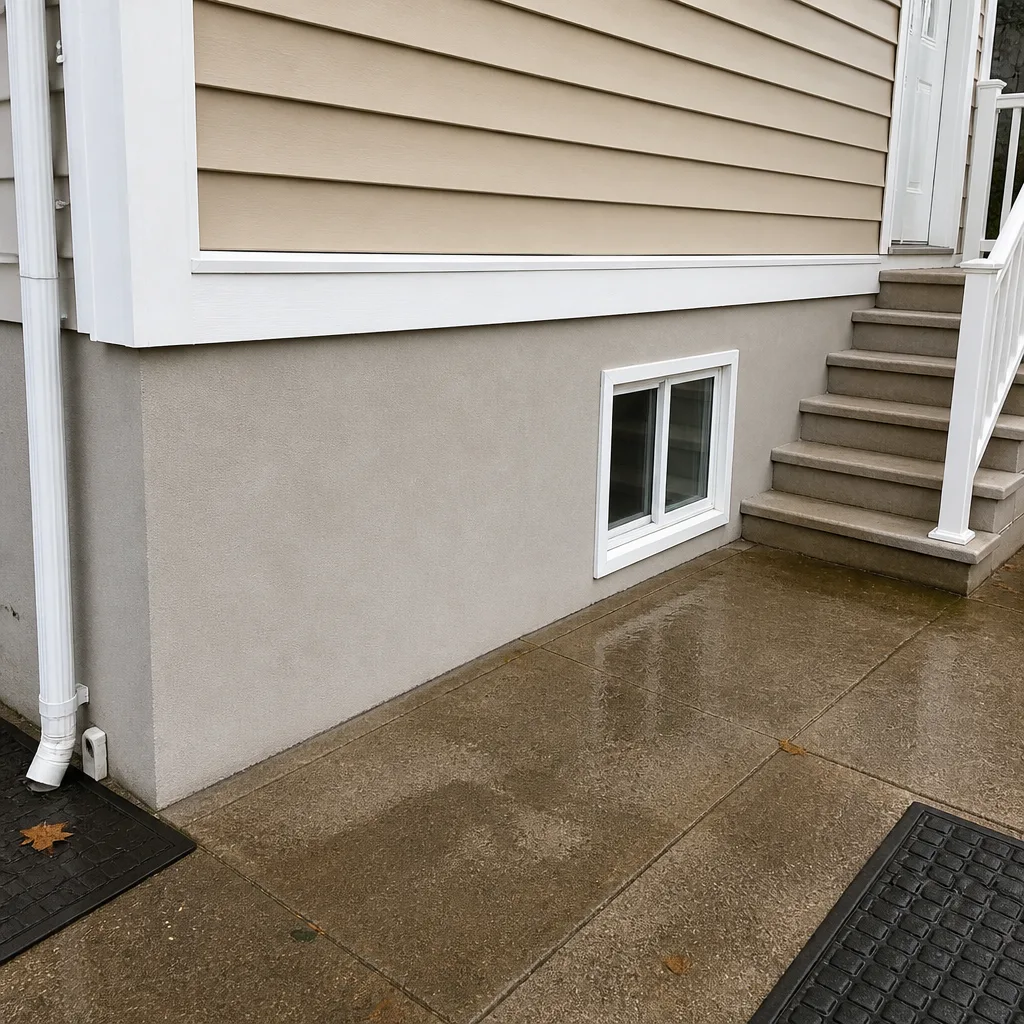 After
After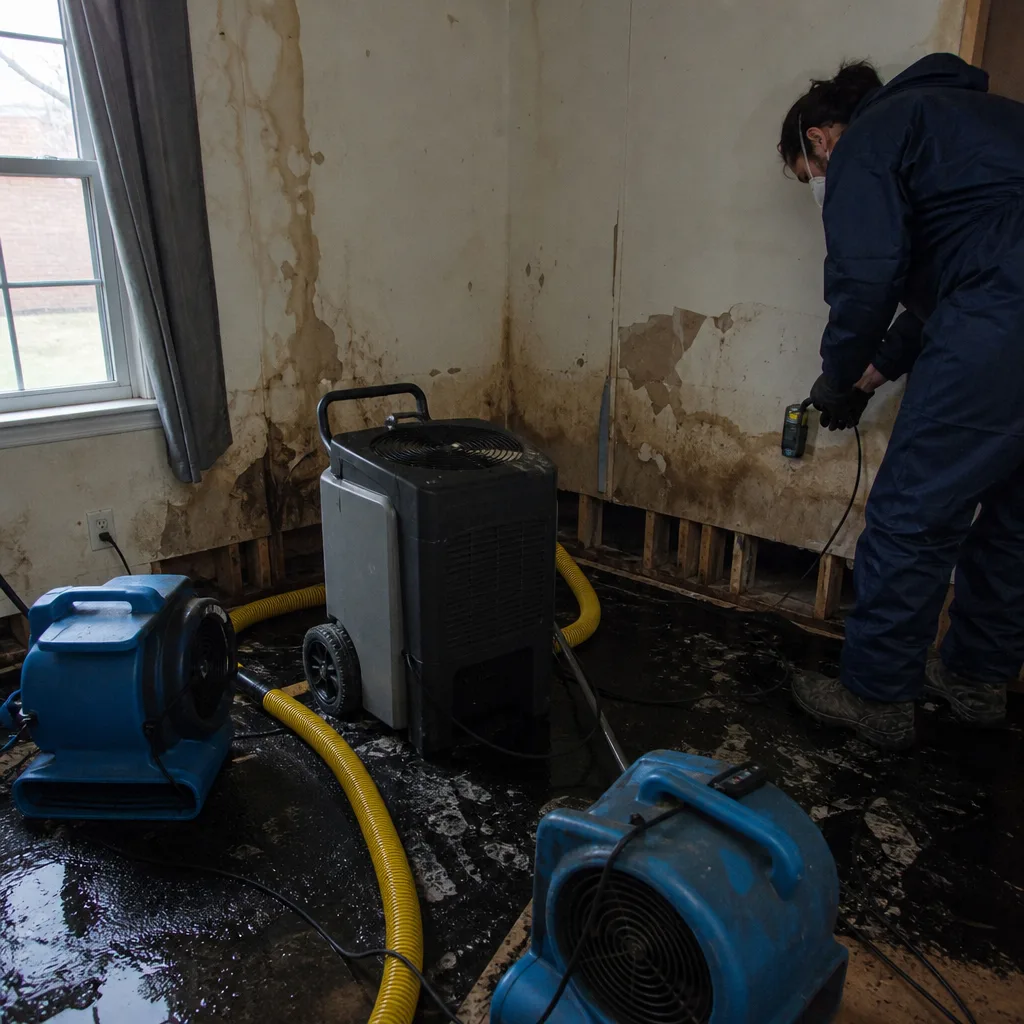 Before
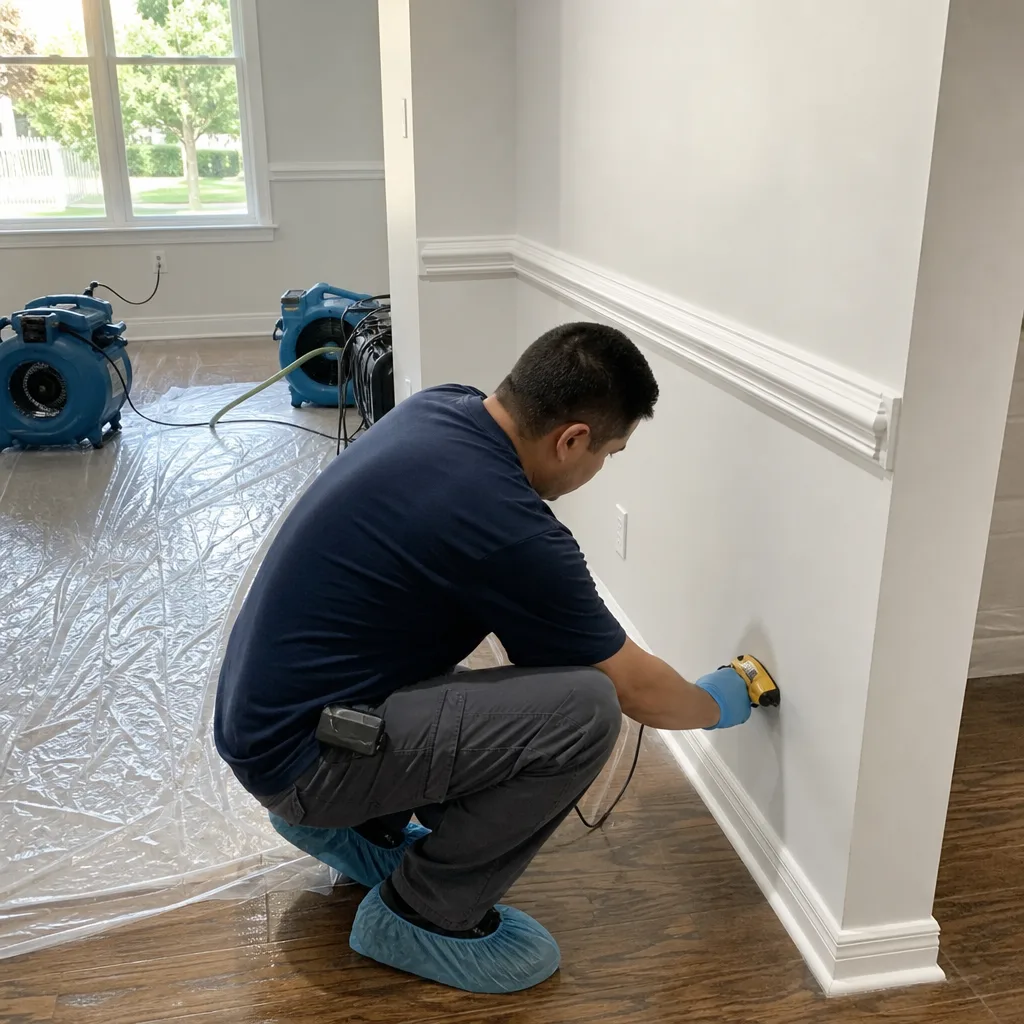 After
After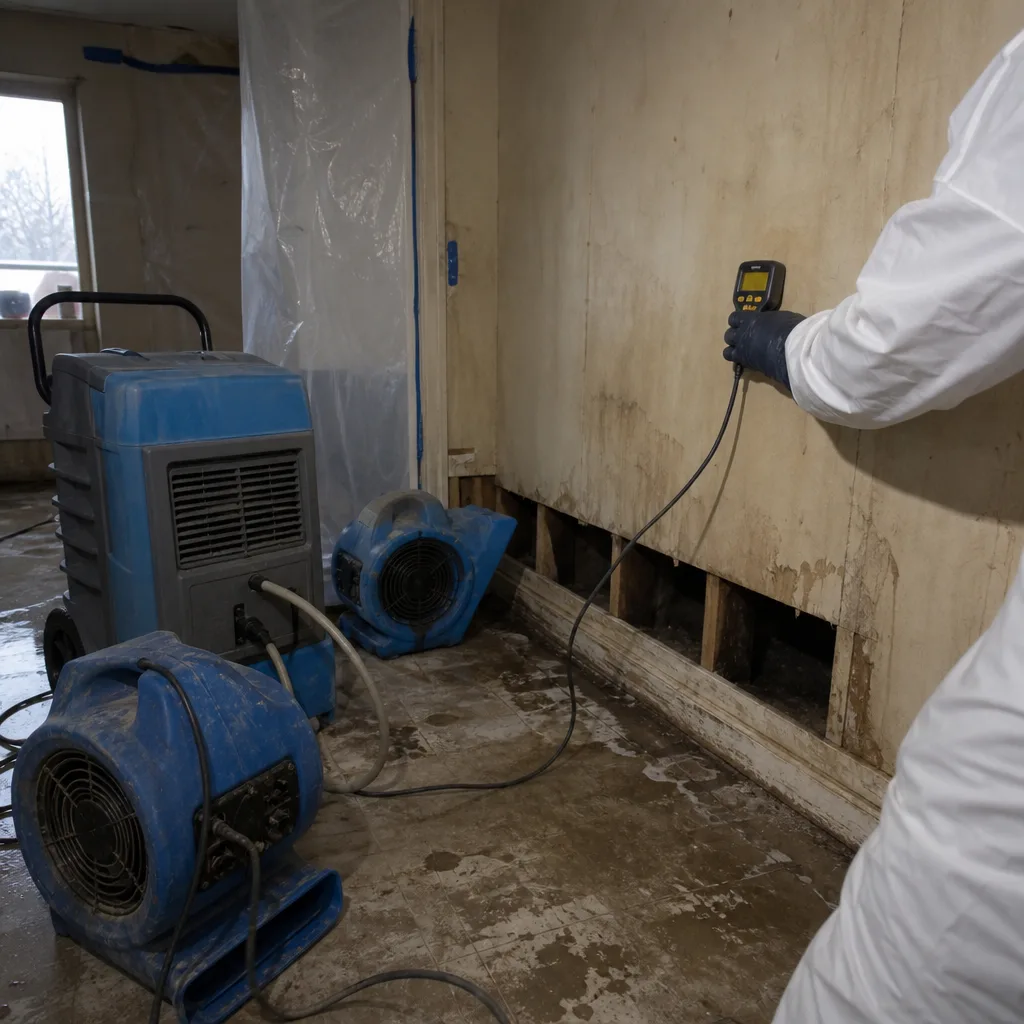 Before
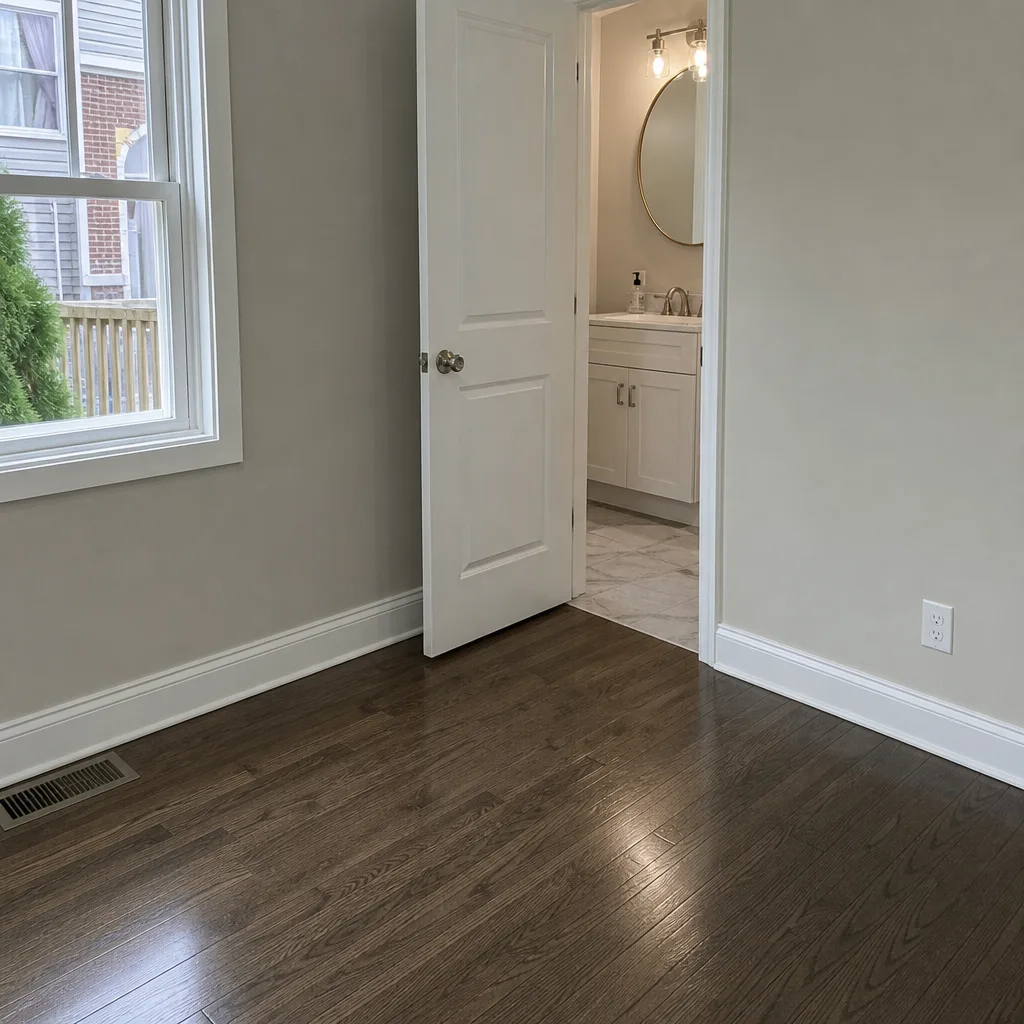 After
AfterHow to Hire a Damage Restoration Contractor in Union City: A Step-by-Step Guide
Most homeowners in Union City will hire a damage restoration contractor exactly once in their lives, and they’ll do it on the worst day they’ve had in years. The average water damage claim in New Jersey runs between $3,500 and $7,500, but the cost of hiring the wrong contractor, someone who dries the surface and misses what’s behind the baseboards, compounds for months. Mold blooms inside wall cavities. Floor joists rot from the inside. Insurance stops returning calls. This guide walks through the full process of vetting and hiring a restoration contractor in Union City, step by step, so you make one decision now and never have to revisit it.
Quick Answer
Hire a Union City damage restoration contractor by confirming three things before you sign: the company is state-licensed and insured, its technicians are certified to IICRC standards, and the scope of work is written down with a clear guarantee attached. A legitimate restoration company in Union City will answer the phone with a live person at any hour, arrive with professional-grade drying equipment the same day, and bill your insurance carrier directly. Ask for proof of each claim, and walk away from any contractor who pressures you to decide before the adjuster has seen the damage.
Table of Contents
- Understand What Kind of Damage You’re Dealing With
- Verify Licensing, Insurance, and Certification Before Anything Else
- Ask About Equipment and Drying Standards
- Understand How Insurance Billing Works
- Get the Scope and Guarantee in Writing
- Watch for Red Flags During the Walkthrough
- Common Mistakes to Avoid
- When to Call a Professional
- Frequently Asked Questions
Step 1: Understand What Kind of Damage You’re Dealing With
Before you call anyone, figure out what category of damage you have. It changes who you call and how fast. Water damage splits into three categories recognized by the IICRC, the restoration industry’s standard-setting body. Category 1 is clean water from a supply line or a failed water heater. Category 2 is gray water from a washing machine overflow or a sump pump failure, water that carries some contamination. Category 3 is black water from sewage backup or floodwater, and it’s a health hazard, not a DIY project.
In Union City, the age of the housing stock matters. Many homes along Bergenline Avenue and in the neighborhoods west of Kennedy Boulevard were built before 1950, which means galvanized supply lines and cast-iron drain pipes that have been in the ground for seventy years or more. We regularly see pinhole leaks in old galvanized supply lines that drip inside walls for weeks before the stain shows through the plaster. By the time you see it, the drying job is bigger than a mop and a fan can fix.
Fire and smoke damage brings its own timeline. Soot is acidic and begins etching surfaces within 48 hours. Storm damage from the nor’easters that push up the Hudson River corridor often means water intrusion through roofs and around windows on older brick row houses, the kind of leak that runs down inside a wall cavity and soaks insulation before it ever shows on the ceiling.
Match your contractor to the damage category. A company that only does carpet cleaning is not equipped for Category 3 sewage remediation, which requires containment, disinfection, and proper disposal. The contractor you hire should be able to name the IICRC category and standard that applies to your job, and explain their approach to it before they start charging.
Step 2: Verify Licensing, Insurance, and Certification Before Anything Else
This is the step most homeowners skip, and it’s the one that determines whether you get a professional or a pickup truck with a dehumidifier in the back. New Jersey does not have a statewide licensing board specifically for restoration contractors, which means the burden falls on you to check two things: the company’s general contractor registration and its insurance coverage.
- Ask for the New Jersey home improvement contractor registration number. Any contractor doing more than $500 in work on a residential property in New Jersey must be registered with the Division of Consumer Affairs. You can verify the number online in two minutes. An unregistered contractor is working illegally, and you’ll have no recourse through the state if the job goes wrong.
- Ask for a certificate of insurance, not a verbal assurance. The certificate should show general liability coverage and workers’ compensation. If a crew member gets hurt on your property and the contractor doesn’t carry workers’ comp, your homeowner’s policy is on the hook. The contractor’s insurance should be current, and you can call the carrier to confirm the policy is active.
- Ask about technician certifications. Reputable restoration companies train their crews to IICRC standards (the Institute of Inspection, Cleaning and Restoration Certification), and many also train to RIA (Restoration Industry Association) and IFA (Institute of Inspection, Cleaning and Restoration Certification’s French counterpart) guidelines. Certification means the person running the moisture meter understands what the readings mean, not just which button to press. Floodline Restoration Co. trains every technician to IICRC, RIA, and IFA standards before they run a job in Union City on their own.
A legitimate company will produce all three pieces of paper without hesitation. If the contractor gets defensive or says insurance “isn’t necessary for a small job,” end the conversation and move to the next name on your list.
Step 3: Ask About Equipment and Drying Standards
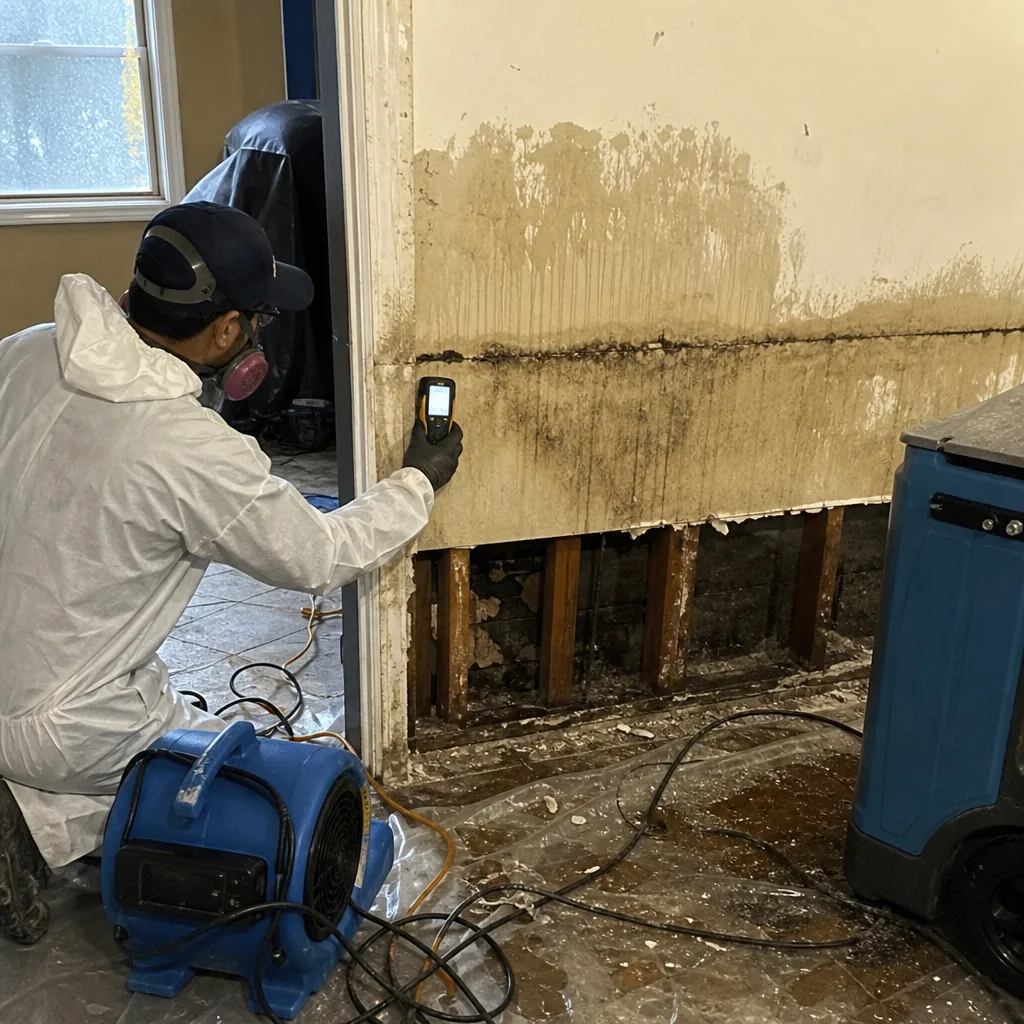
The difference between a restoration company and a clean-up crew is the equipment and the documentation. A professional restoration job in Union City runs on two principles: the moisture map and the dry standard. The moisture map is a room-by-room reading of where water has traveled, including inside walls and under flooring, taken with a moisture meter and a thermal imaging camera. The dry standard is the numeric target the moisture readings must hit before equipment comes out of the house, typically within a few percentage points of the reading from an unaffected area.
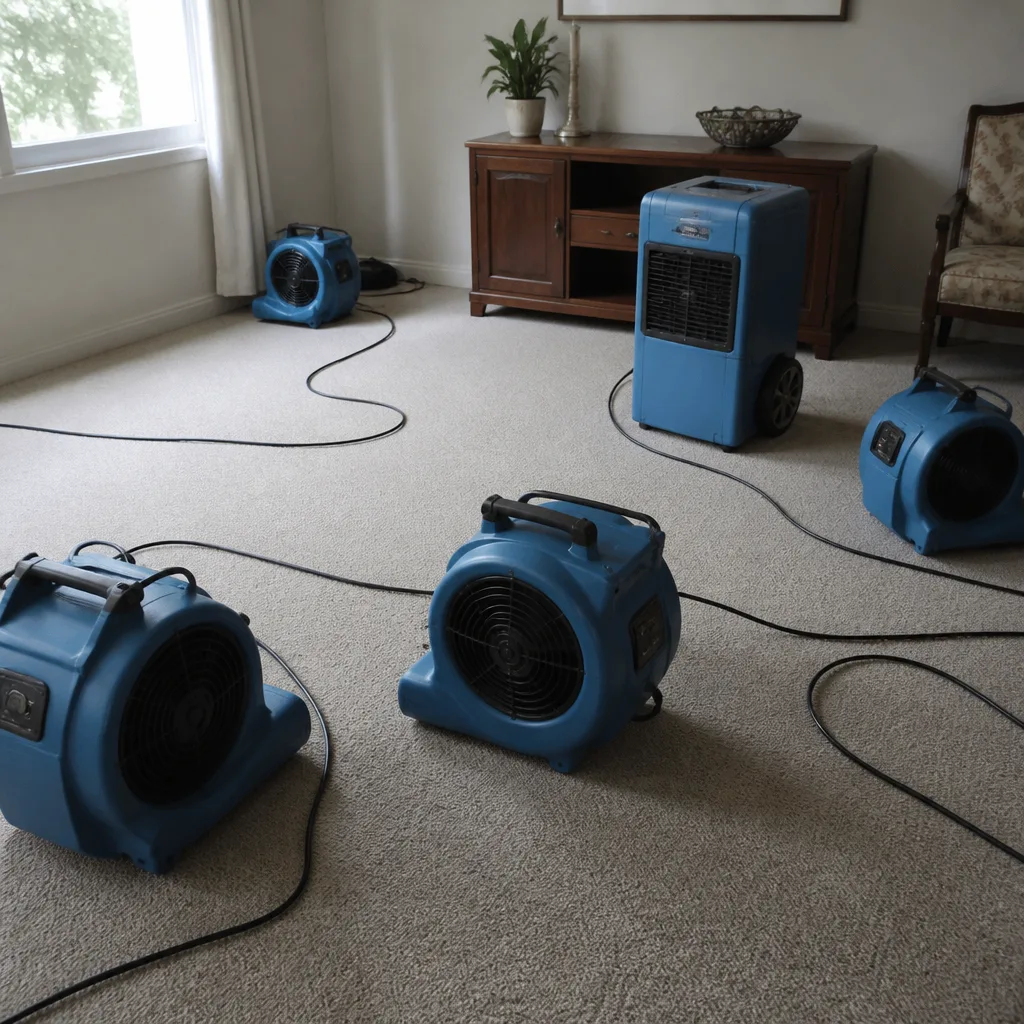
Ask the contractor what equipment they run and what standard they dry to. If they say “we’ll just put some fans in and see how it goes,” that’s not an answer. That’s an indication they’re guessing. A professional crew in Union City runs professional-grade equipment: Dri-Eaz dehumidifiers, Phoenix air movers, XPOWER axial fans, B-Air filtration units, and Injectidry systems for drying inside wall cavities and under cabinets without tearing everything apart. The benefit of drying in place with something like Injectidry is that it minimizes demolition, which means less disruption and a lower rebuild cost. The equipment matters because it’s the difference between drying the air and drying the materials.
Ask about the moisture log. A good restoration company takes daily readings, logs them in writing, and hands that log to you and your insurance carrier. That log is the evidence that the job was dry when they left. It’s also your protection if mold appears two months later and the question becomes whether the initial drying was thorough. In our experience in Union City, the homes where we’ve been called in to redo another company’s work are almost always missing this log.
Step 4: Understand How Insurance Billing Actually Works
Most restoration work in Union City gets paid through a homeowner’s insurance claim, and the billing process is where a lot of our customers have been burned before by other companies. The old model goes like this: the restoration company does the emergency work, hands you an invoice, and tells you to submit it to your carrier. You wait weeks. The carrier disputes line items. You end up in the middle, playing messenger between a billing department and an adjuster who doesn’t return calls.
That’s not how it should work. A company that handles insurance claims professionally bills the carrier directly. That means the restoration contractor sends the documented scope of work, the moisture log, photos, and the invoice to the carrier’s adjuster, and negotiates line items themselves. You’re not the messenger. You’re the homeowner whose house is being put back together.
Photo documentation matters from the first visit. Every phase of the job, the initial damage, the after-extraction condition, the daily moisture readings, the rebuild, should be photographed and time-stamped. Those photos are what the adjuster uses to approve the claim, and they’re your record if anything gets disputed later. Ask the contractor how they document and how they communicate with your carrier. If the answer is vague, ask again until it’s specific.
Step 5: Get the Scope and Guarantee in Writing
Before any work starts, you deserve a written scope of work and a written guarantee. The scope should list exactly what the crew will do, room by room: what gets extracted, what gets dried, what gets removed, what gets rebuilt, and what materials are included. It should include the equipment being placed and the duration of the drying program. It should include the price, and it should explain how any necessary change orders will be handled if the crew finds hidden damage behind the walls, which is common in older Union City homes.
The guarantee is just as important. Ask the contractor what they back and for how long. If the answer is “we stand behind our work, no problem,” ask for it in writing. A written guarantee with a specific term, 90 days, one year, whatever the company offers, tells you two things: the company has done enough jobs to know what fails and when, and it’s willing to put its name on the result. Floodline Restoration Co. gives every Union City customer a written 90-Day Done Right Promise. It’s a straightforward document: if the work isn’t done right, we make it right, no paperwork battles and no arguing. We call it the Keystone Standard internally because it sits at the center of how we operate.
If a contractor won’t commit to a written scope or a written guarantee, you’re accepting all the risk. The time to negotiate is before the crew arrives, not after the invoice comes due.
Step 6: Watch for Red Flags During the Walkthrough
You can learn more about a restoration contractor in a 30-minute walkthrough than from any website. Here’s what to watch for:
- The contractor doesn’t touch anything. A real professional opens the cabinet under the sink, checks the baseboards, feels the drywall, and asks about the crawl space. Someone who stands in the doorway and quotes a price from across the room is not going to deliver a thorough job.
- The quote comes too fast and too round. A restoration job has too many variables for an instant, round-number quote. If the price is “$5,000 flat,” with no scope attached, that’s a number, not an estimate.
- There’s pressure to sign today. Restoration work has urgency, but that urgency is about starting mitigation, not about signing a contract before your adjuster has looked at the damage. A legitimate company will handle the emergency work and sort out the billing with your carrier. Anyone who needs you to sign a full contract on the spot to “lock in the price” is creating false urgency.
- The crew isn’t background-checked or uniformed. You’re letting strangers into your house during a vulnerable moment. A professional company runs background checks on its technicians and sends them out in uniforms with company identification. Ask who’s coming to your door.
- The contractor can’t name the equipment or the dry standard. We covered this in Step 3, but if you hear vagueness on equipment, the vagueness will extend to the results.
Common Mistakes to Avoid
- Waiting too long to call. Water moves through a Union City rowhouse quickly. Within 48 hours, mold can begin forming on wet drywall, and within a week, untreated water damage becomes a category of its own. The cost of mitigation goes up the longer you wait, and the insurance carrier will scrutinize any delay.
- Hiring a general handyman for restoration work. Restoration is a specialty. The equipment, the moisture mapping, the drying standards, the insurance documentation, they’re not things a general contractor casually picks up. A handyman with a shop vac is not the same as a certified restoration technician with a Dri-Eaz dehumidifier.
- Letting the first company through the door set the scope. Get a second opinion. Not because the first company is wrong, but because restoration scope decisions, what gets saved and what gets removed, involve judgment calls that affect the final bill. A second professional walkthrough costs you an hour and can save you thousands.
- Signing over the insurance check without seeing the scope. Some contractors will ask you to sign over the claim check directly to them. Before you do, make sure the written scope matches the work described on the claim. Signing over the check before the scope is settled removes the only leverage you have.
- Skipping the written guarantee because the company “seems nice.” Nice doesn’t fix a failed drying job two months later. A written guarantee with a named term does. In Union City, where the housing is older and hidden damage is common, that written guarantee is what separates professionals from gamblers.
- Choosing the cheapest bid. Restoration is not where you save money by going low bid. A cheap bid usually means cheaper equipment, less thorough drying, and a higher chance of a second claim down the line. Ask for the scope and the guarantee, not the discount.
When to Call a Professional
Call a restoration professional the moment you see water where it shouldn’t be, smell smoke after a fire, or find mold growing on a surface larger than a dinner plate. The first hours matter most. A live dispatcher should answer the phone no matter when you call, 2 a.m. included, and a certified crew should reach your Union City home the same visit with extraction equipment running before they leave. If the water has touched drywall, flooring, or anything that can’t be removed and dried in your driveway, you need a professional with a moisture meter and a drying plan, not a fan from the hardware store. Floodline Restoration Co. offers free estimates in Union City, call (551) 348-8481 and a certified technician will walk the property with you, scope the work, and explain exactly what we’d do before you commit to anything.
Frequently Asked Questions
Water damage restoration in Union City typically costs between $3,500 and $7,500 for a standard single-room claim, while full sewage remediation or fire damage restoration can run higher depending on the extent of the contamination and the scope of the rebuild. The final number depends on the moisture map, the drying time, and what needs to be replaced. Call (551) 348-8481 for a free estimate with a written scope before any work begins.
A professional restoration company with 24/7 live dispatch should have a certified crew at your Union City home within hours of your call, and extraction running the same visit. That’s the standard we hold at Floodline Restoration Co. If a company tells you they can’t send anyone until tomorrow, call another number.
Most homeowner’s policies in New Jersey cover sudden and accidental water damage, like a burst supply line or a failed water heater, but not gradual leaks or flooding from outside without a separate flood policy. A restoration company that bills the carrier directly can help you navigate what’s covered, but your individual policy terms are between you and your carrier. Ask the contractor how they handle direct insurance billing before you sign.
A full-service restoration company should coordinate directly with your adjuster, submitting the documented scope, photo evidence, moisture logs, and invoices to the carrier on your behalf. The homeowner should never be the messenger between a contractor and an insurance company. At Floodline Restoration Co., that direct carrier billing is standard on every Union City job.
If the water is clean, the affected area is small, and you caught it within a few hours, you may be able to dry it yourself with fans and a dehumidifier. If water has touched drywall, baseboards, flooring, or any enclosed cavity, you need a professional moisture map. Hidden moisture inside walls is the #1 cause of mold claims we see in Union City homes six months after a “successful” DIY drying job.
Mitigation is the emergency work: extraction, drying, dehumidification, and preventing further damage. Restoration is putting your home back together: replacing drywall, flooring, paint, and any structural elements that were removed. Many companies in Union City do one or the other. Floodline Restoration Co. does both with the same crew, which means no mid-job handoff and no finger-pointing between subcontractors when something needs redoing.
The Bottom Line
Hiring a damage restoration contractor in Union City comes down to documentation and credentials. Verify the registration and insurance before you sign anything. Ask about IICRC-certified technicians and the specific equipment they’ll run. Insist on a written scope and a written guarantee with a named term. And choose a company that bills your insurance carrier directly so you never end up as the messenger between the restoration crew and the claims department. The contractor who can produce the paperwork, name the equipment, and explain the drying plan without hesitation is the contractor who’ll do the job right. The alternative costs more than the difference between the bids.
Written by Curt Bowman, Owner at Floodline Restoration Co., serving Union City since 2010.