
Free visual inspection and a written scope of work before any mitigation begins - photos, moisture readings, and drying logs go in your claim file
The scope we write is the scope we bill. Anything new gets shown to you, in writing, before we touch it.
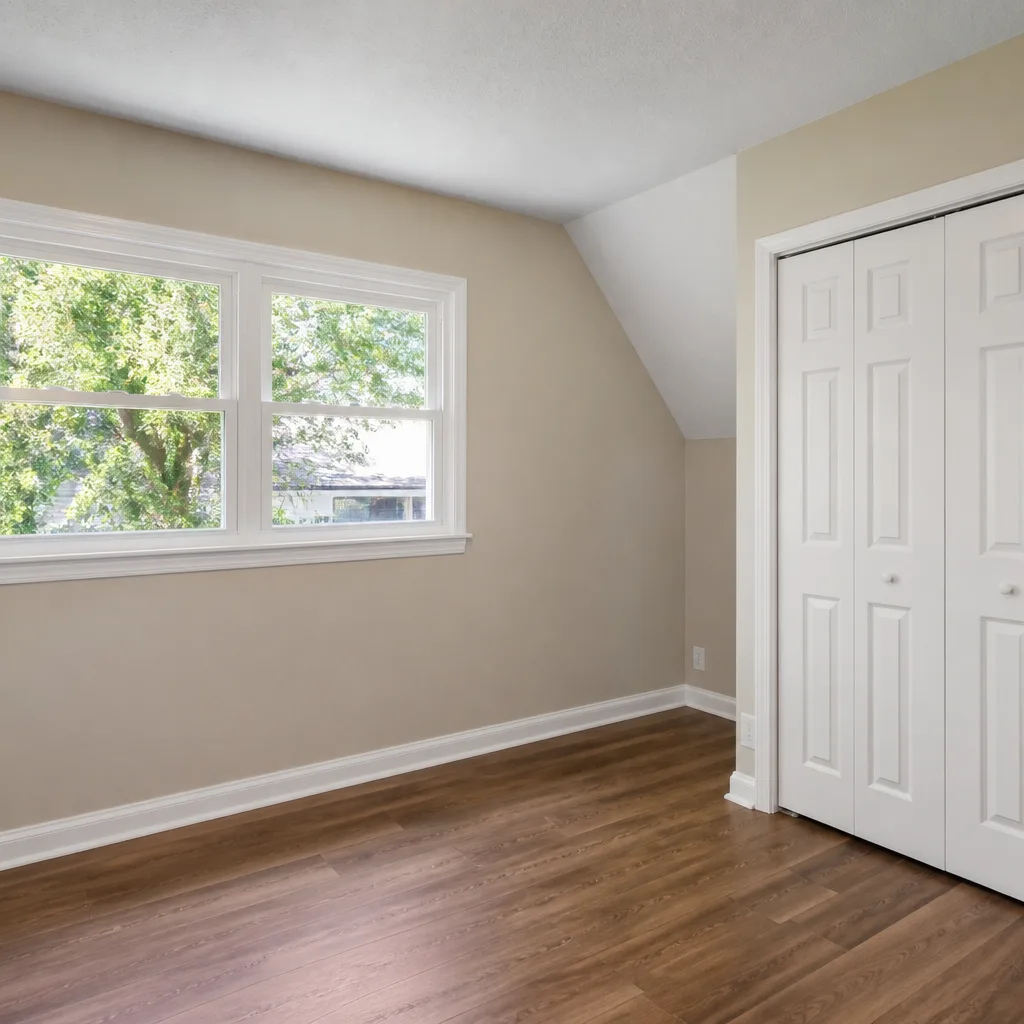

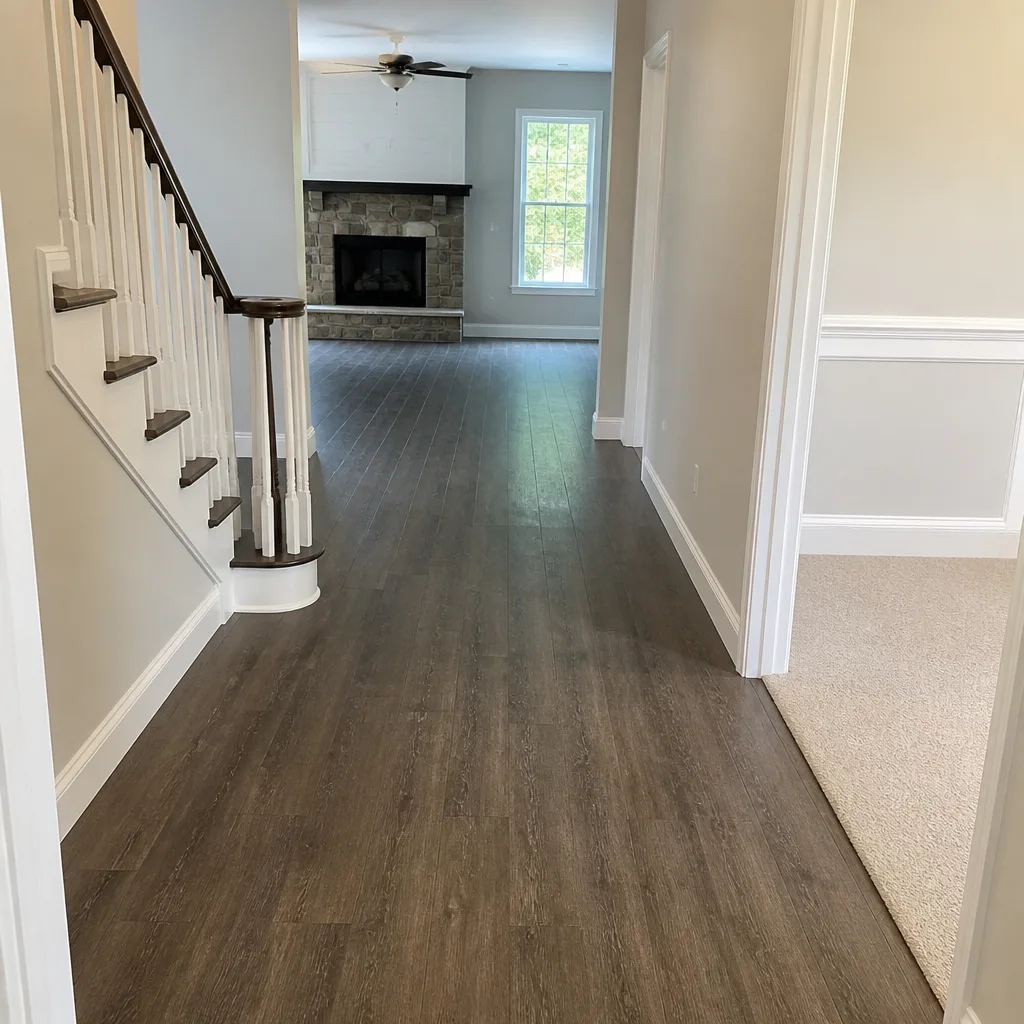

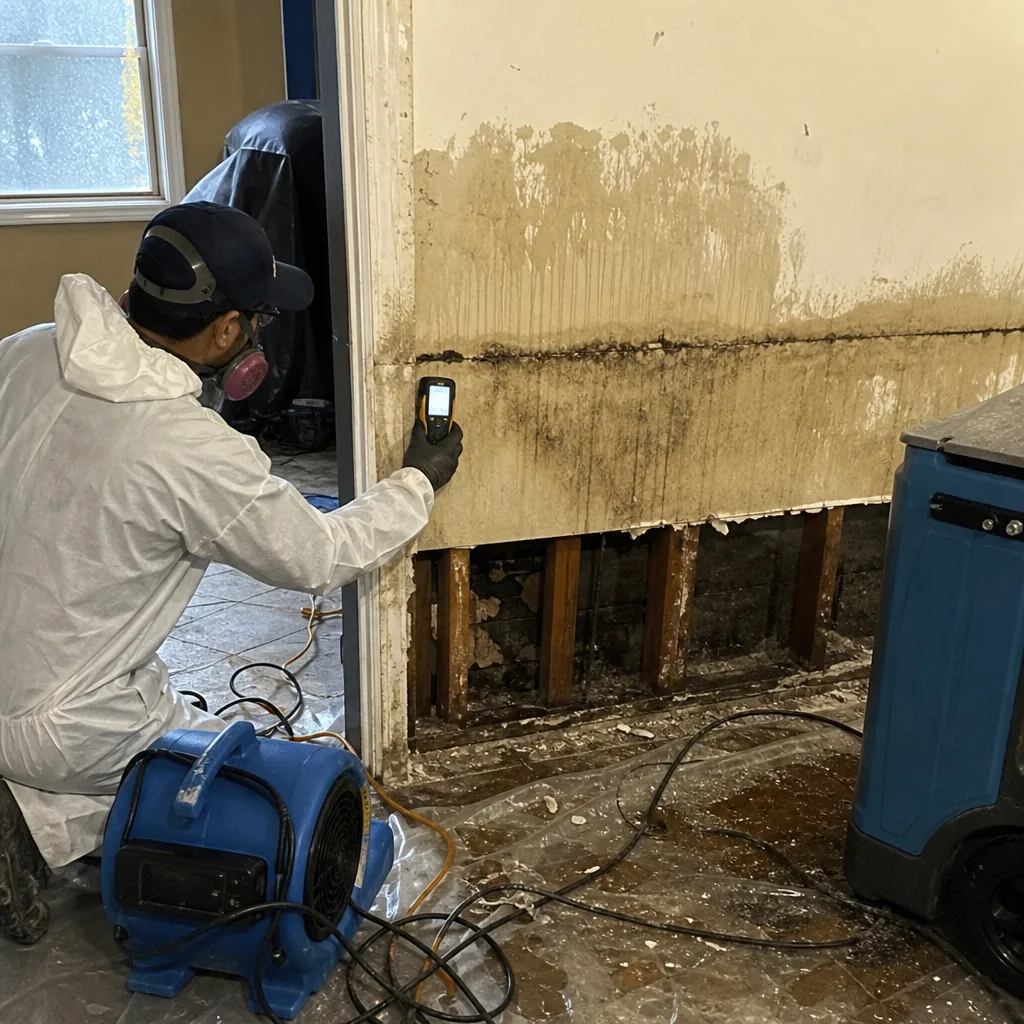 Before
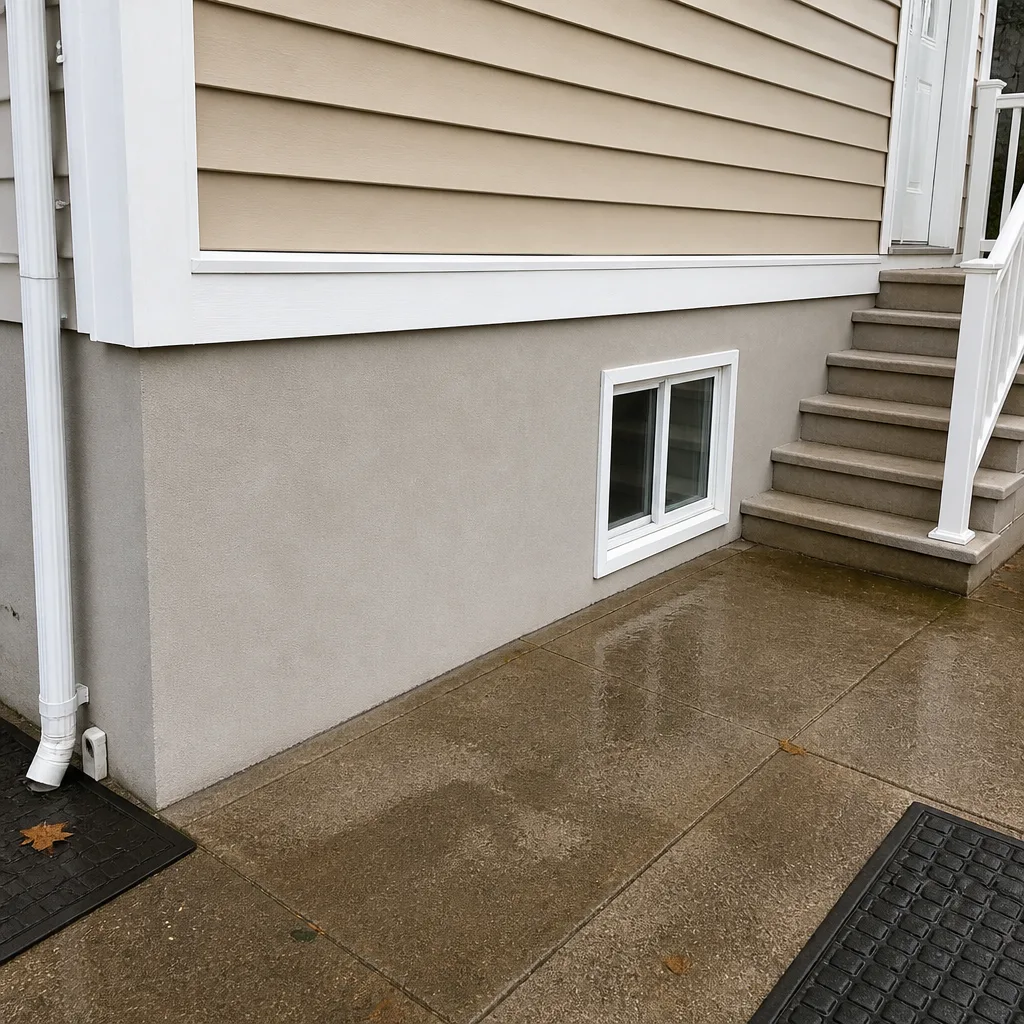 After
After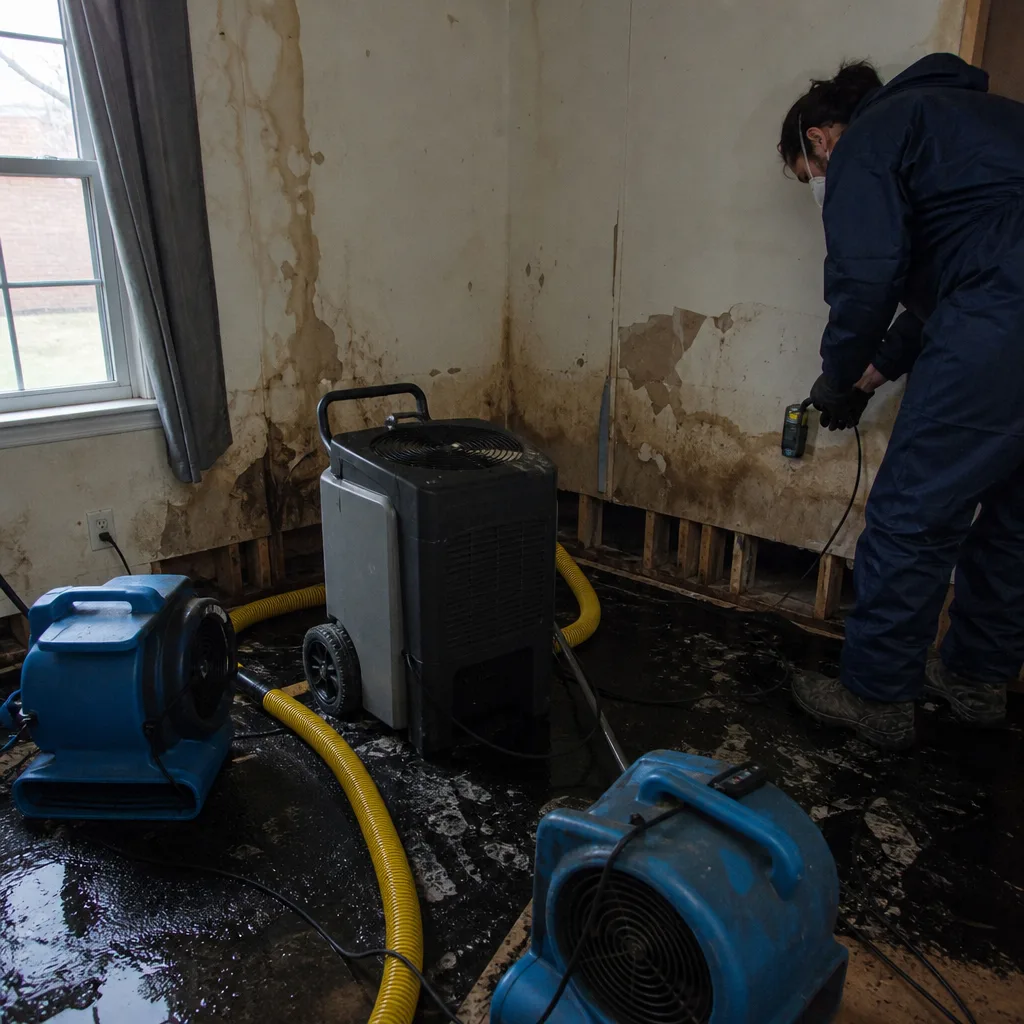 Before
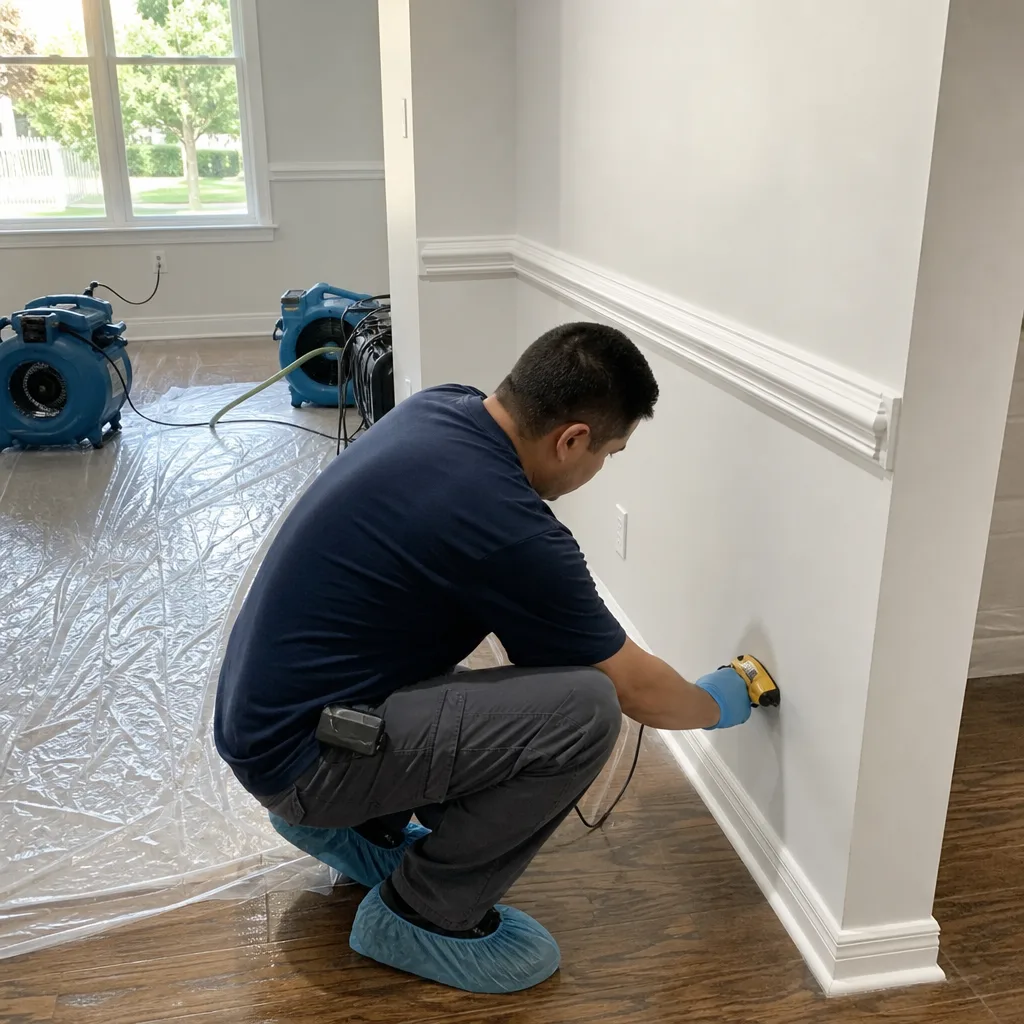 After
After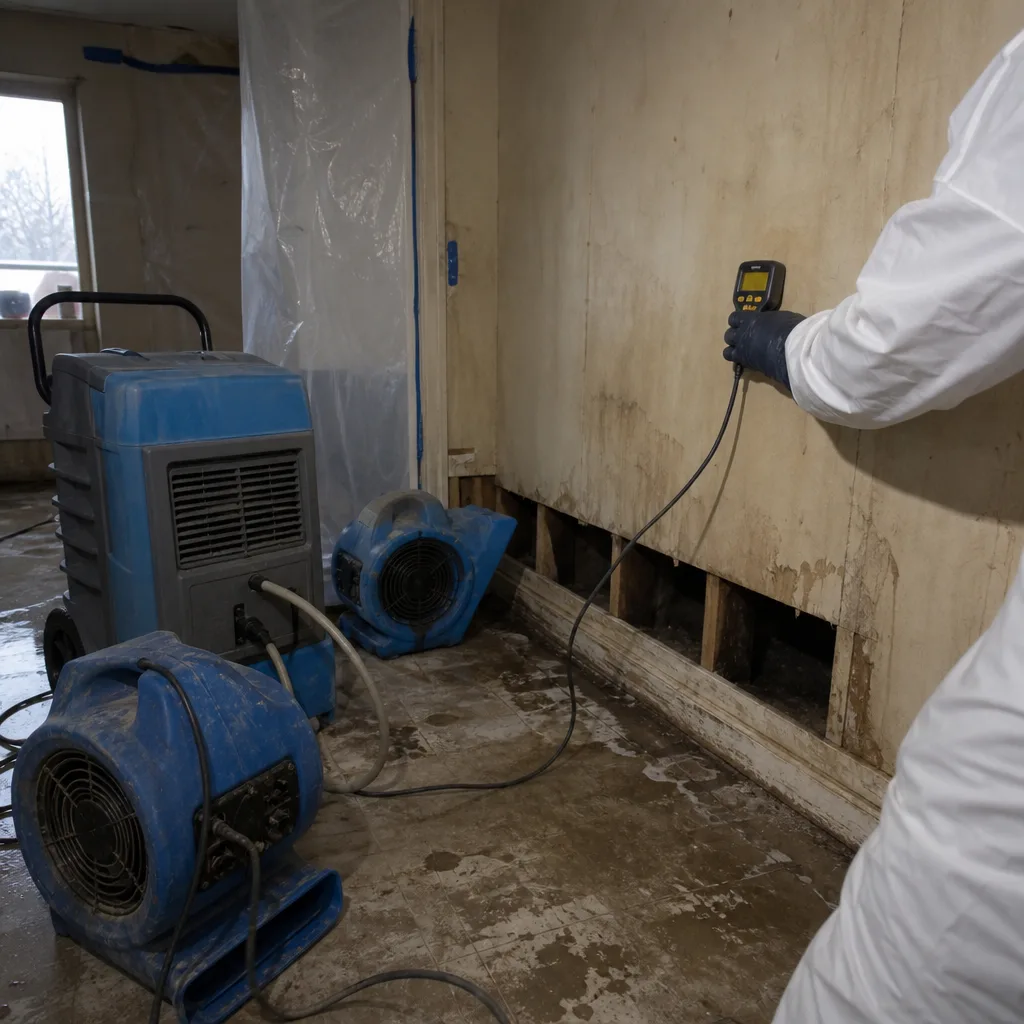 Before
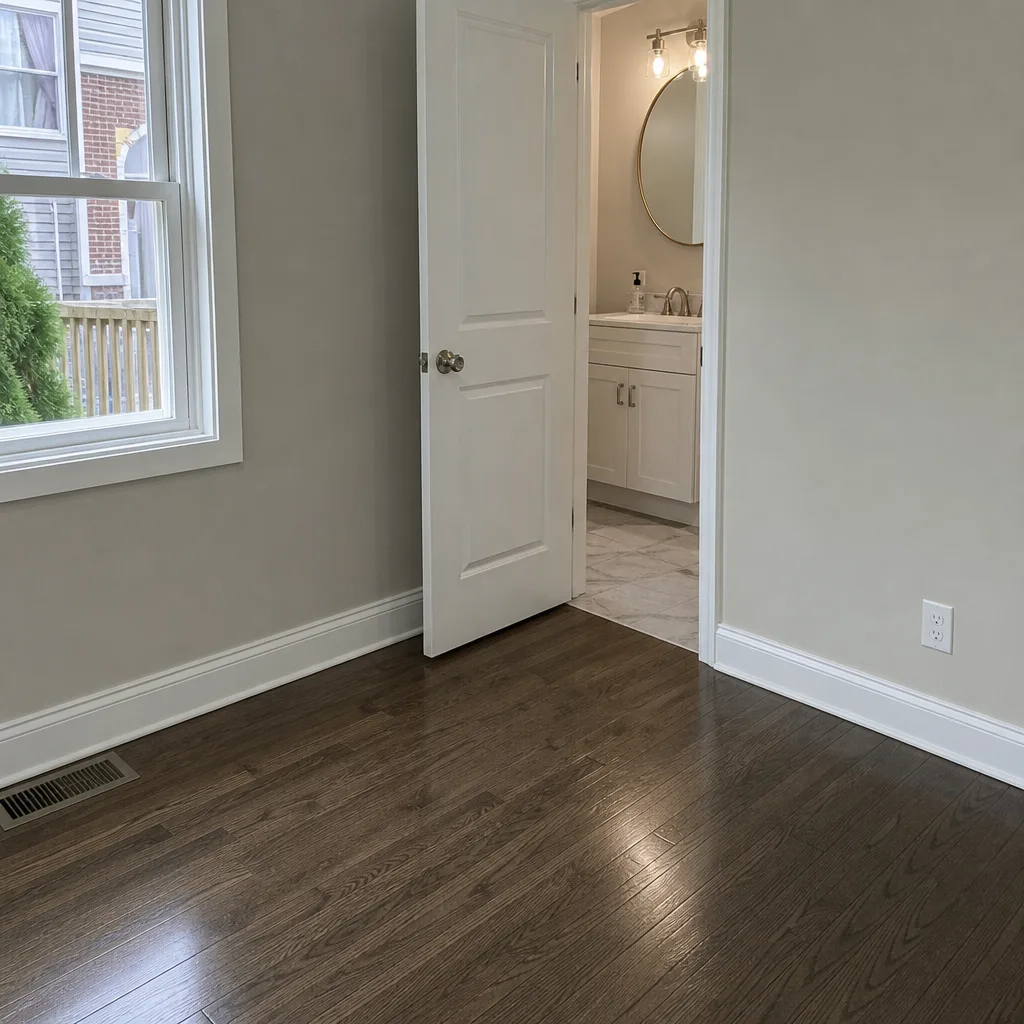 After
After24/7 Emergency Sewage Cleanup in Midtown Manhattan
Sewage backup in a Midtown Manhattan high-rise is a Category 3 water emergency, and the first hour decides how far contamination travels through shared utility chases and riser cavities. Floodline Restoration Co. answers live around the clock, every day of the year, with a dispatcher who picks up at 2 a.m., not a recording. We dispatch certified crews into Midtown Manhattan immediately, run a free visual inspection on arrival, and have extraction running the same visit. Call (551) 348-8481 the moment you see black water backing up through a floor drain, toilet, or chase wall. Curt Bowman built this company around a dispatch board, not a sales desk, so when you call, you get a person and a crew, not a pitch.
Understanding Sewage Cleanup Severity in Midtown Manhattan Properties
Sewage cleanup in Midtown Manhattan follows a severity scale that most national franchises never address. Category 1 water starts clean, a supply-line break or radiator valve failure. Category 2 carries detergents, food waste, or biological contaminants. Category 3, what we deal with in sewage backups, toilet overflows, and black water extraction, contains raw sewage, pathogens, and solids that require full containment, antimicrobial treatment, and structural drying under negative air pressure. In Midtown’s pre-war towers, the real severity multiplier is the shared vertical utility chase. A toilet overflow on the 14th floor can run down the cast-iron waste stack, wick into plaster, and reappear as black water staining on the 11th floor before anyone on the 13th knows it happened. Manhole-adjacent blockages on Lexington Avenue push sewage backward through building drain lines just as readily as a corroded trap under a 1920s bathroom floor. Our IICRC-certified crews moisture-map every affected surface, not just the visible stain, because what you can see in a Midtown chase wall is rarely the full loss.
Why Midtown Manhattan Property Owners Choose Floodline Restoration Co.
- 45-minute response commitment. When Category 3 water is moving through a chase cavity, every minute extends the contamination footprint. We commit to a crew rolling inside 45 minutes of a Midtown call and a live ETA by phone.
- 24/7 live answer, never an automated system. A real dispatcher picks up at 2 a.m., gathers the address, building access requirements, and loss description, then sends a background-checked, uniformed crew. No answering service scripts.
- IICRC-certified crews, including WRT and FSRT. Our technicians train to IICRC, RIA, and IFA standards and carry the WRT (Water Damage Restoration Technician) and FSRT (Fire & Smoke Restoration Technician) credentials relevant to black water and structural drying. We never send a general handyman to a Category 3 loss.
- Free visual inspection, written scope before work starts. We assess the contamination path, photograph everything, and put a written, line-item scope in your hand before equipment enters. No surprises on the bill.
- Direct insurance billing with adjuster coordination. We bill carriers directly and communicate with your adjuster so you never play messenger between Floodline and the insurer.
- One team from extraction to reconstruction. The same crew that extracts the black water dries the structure, sanitizes the chase, and rebuilds what had to be removed. No mid-job handoff, no inherited subcontractor.
Our Sewage Cleanup Process
Inspection & Assessment
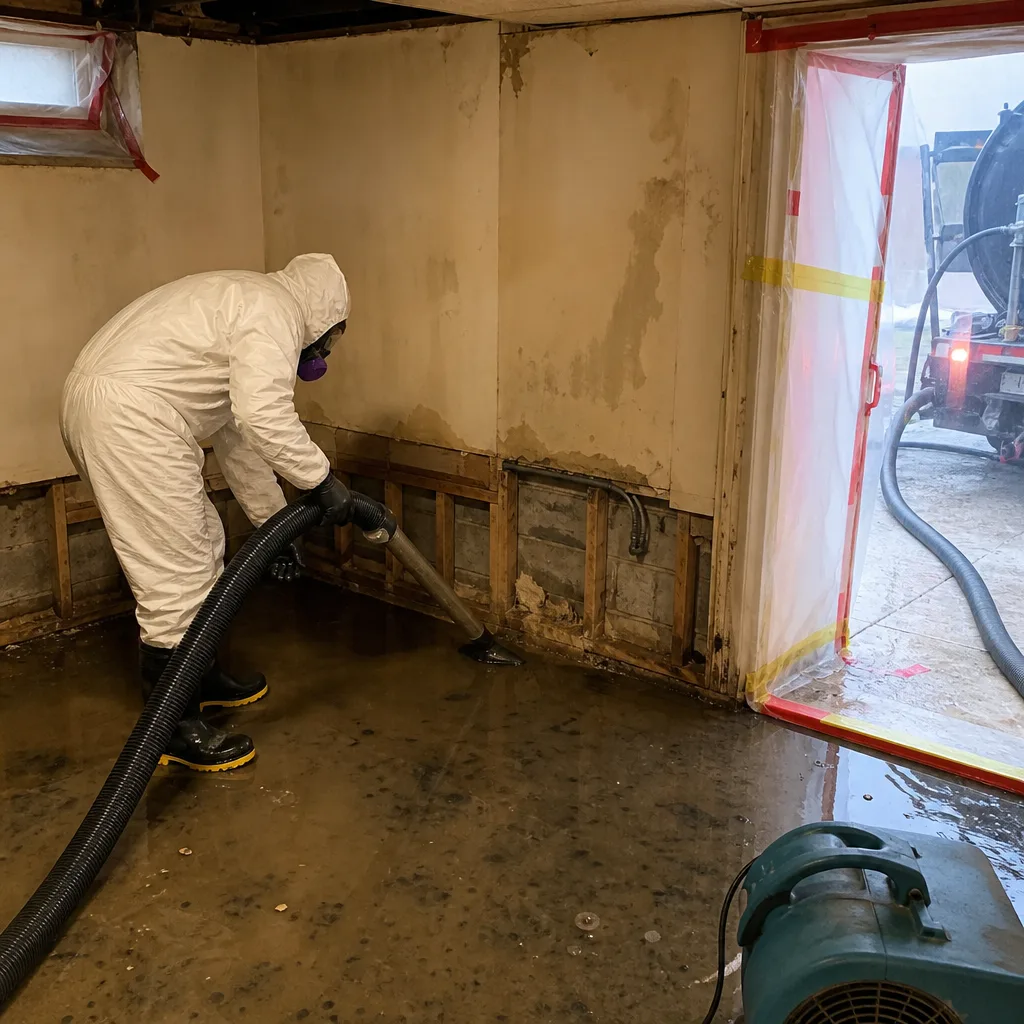
We locate the sewage source, trace the contamination path through chase cavities and drain lines, and moisture-map affected floors, walls, and sub-basement mechanical spaces using thermal imaging and hygrometers. In Midtown high-rises, this means checking the riser stack above and below the visible backup, not just the flooded unit.
Extraction & Stabilization
We remove standing black water with truck-mounted and portable extractors, then stabilize the envelope with containment and negative-air pressure to stop sewage gases and airborne contaminants from recirculating through the building’s HVAC. In deep sub-basement mechanical rooms, we isolate the dehumidification equipment from the contaminated zone before drying begins.
Drying & Dehumidification
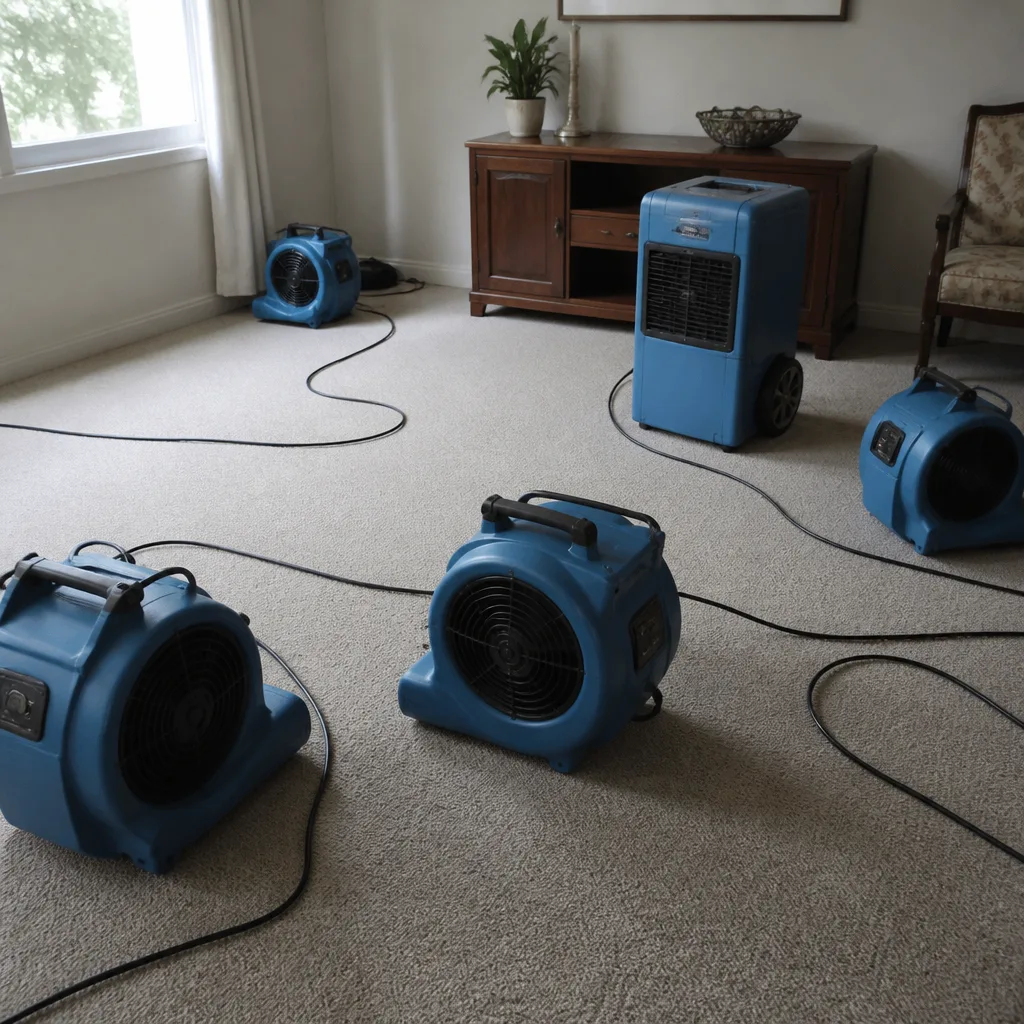
Professional-grade Dri-Eaz and Phoenix dehumidifiers and XPOWER and B-Air air movers run on a moisture map, not a guess. In Midtown’s urban canyon geometry, humidity trapped between tower facades slows evaporation, so we run daily readings and log every data point until the dry standard is met, not until the floor feels dry.
Cleaning & Sanitization
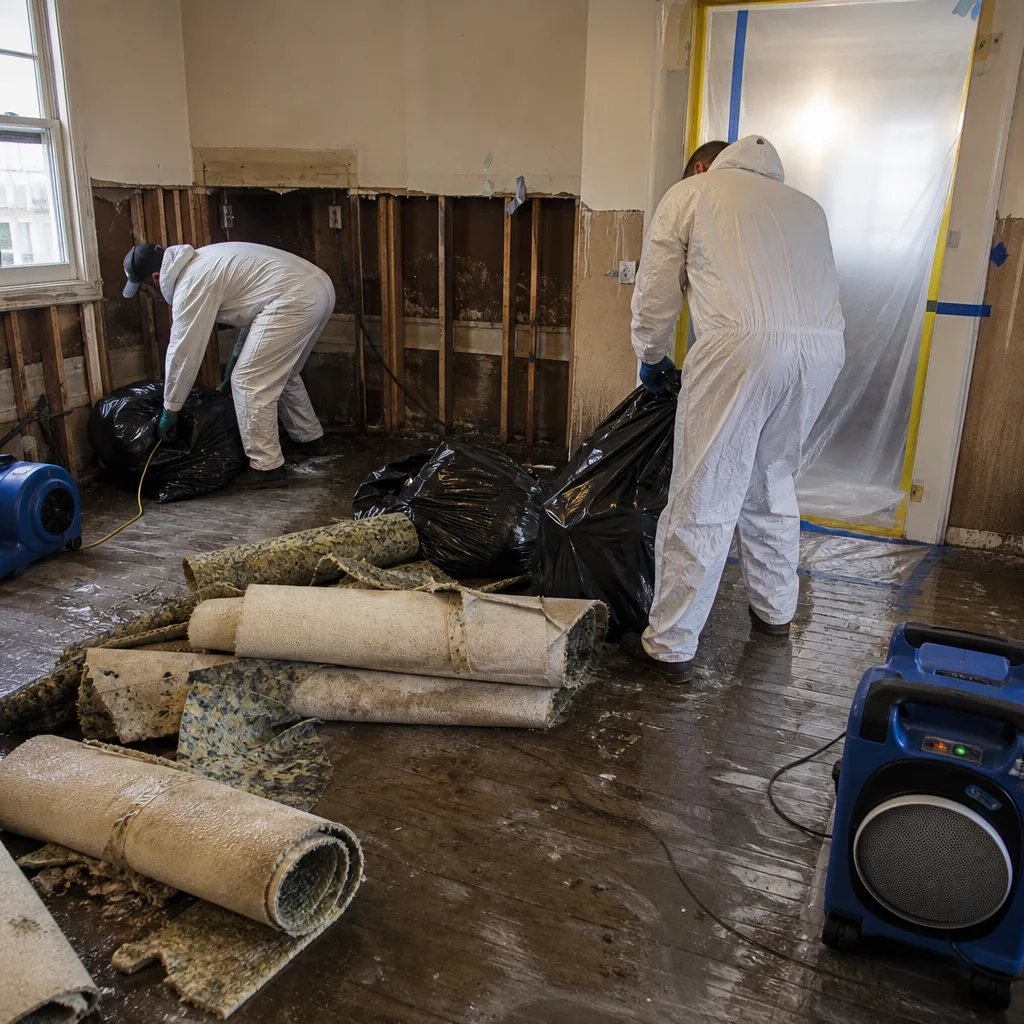
All affected surfaces receive antimicrobial treatment and HEPA air scrubbing. We remove plaster, drywall, and insulation that absorbed Category 3 water, because porous materials in a chase cavity cannot be reliably sanitized in place. We do not paint over a biohazard.
Odor & Air Quality Control
Sewage odor in a Midtown high-rise travels through the same chases the water used. We run HEPA air scrubbers and negative-air machines with charcoal filtration until air samples clear, and we treat the source, not the smell. Masking agents are not a sewage cleanup method.
Repairs & Restoration
We rebuild what had to be removed: cast-iron waste-line sections, chase drywall, plaster, flooring, and sub-basement mechanical finishes. Because Floodline carries the job through reconstruction, the moisture log and the rebuild come from the same hands, backed by the 90-Day Done Right Promise in writing.
Need Emergency Sewage Cleanup in Midtown Manhattan Now?
Crews minutes away, answering live 24 hours a day. The sooner we start, the less it costs.
Working With Your Insurance Company
Midtown Manhattan sewage backups rarely involve a single policy. A failure in a shared waste stack can trigger the building master policy, two commercial-lease riders, and a residential unit-owner policy for the same loss, and each adjuster wants different documentation. Floodline Restoration Co. handles that paperwork burden as part of the job. We document from the first hour, photograph every affected room and chase cavity, log daily moisture readings, and produce a line-item scope that matches the carrier’s format. Our crew communicates directly with adjusters, building management, and co-op or condo boards, and we bill carriers directly whenever the policy covers the work. We never ask you to play messenger between Floodline and your insurer. The written scope you approve before work starts is the same number we submit to the carrier. Done right, and backed in writing.
What We Provide Your Insurer
- Thorough documentation of the loss
- Photos of all damage, room by room
- Moisture readings and drying logs
- A detailed, line-item scope of work
- Direct coordination with your carrier
Built for Midtown Manhattan’s Loss Calendar
Midtown Manhattan’s sewage and black water losses follow a calendar that has little in common with the outer boroughs. November through March, the first hard freeze of the season blows century-old radiator supply valves and corroded expansion joints on upper floors of pre-war residential towers, sending clean water through ceilings. But the harder losses come when a frozen branch waste line thaws and cracks inside a shared chase, releasing sewage that had been trapped for days into the riser cavity. What started as a heat-loss leak becomes a Category 3 contamination event on the first mild day. Spring brings thaw-driven sub-basement seepage in Midtown’s lower-lying western blocks near Hell’s Kitchen and the Hudson Yards corridor, where stormwater pushes into aging drain lines and forces sewage backward through floor drains. Summer’s thunderstorm flash flooding hits the same low-lying eastern FDR-adjacent edges and the streets around Penn Station, where combined storm and sanitary lines under heavy rain surcharge into building drains. September through November, nor’easters push storm surge up the Hudson and East Rivers, testing the same Hudson Yards corridor blocks that Hurricane Sandy flooded. And all year, a single corroded cast-iron waste stack in a 1930s tower can turn a routine toilet overflow into a three-floor loss. Midtown Manhattan is not a single-family-home market, and sewage cleanup here is not a single-policy, single-floor job.
Sewage Cleanup Across Midtown Manhattan’s Neighborhoods
Response routes in Midtown Manhattan differ block by block, and so do the losses. Around Bryant Park and the Garment District, the density of 1920s and 1930s office and mixed-use towers means most sewage work we do involves shared utility chases and building-management access windows. A sewage backup in a 40-story tower near 42nd Street and Sixth Avenue is not the same job as one in a five-story walk-up near Ninth Avenue. Along Lexington Avenue and the blocks surrounding Grand Central, older commercial buildings carry cast-iron waste stacks that have been patched for eighty years, and a backup frequently surfaces in a restaurant grease interceptor or a lower-level retail space long after the source failure. In Midtown West and the Hudson Yards corridor, newer curtain-wall towers sit on deep sub-basement mechanical rooms where sewage gases pool against dehumidification equipment, requiring negative-air containment that a ground-floor storefront never needs. Murray Hill’s residential pre-wars run on the same uninterrupted steam risers as the rest of Midtown, but their smaller floor plates concentrate a sewage loss into fewer units with more shared wall surface, so a single waste-line failure can contaminate three apartments in under an hour. And around Washington Square’s southern edge, where Midtown’s commercial density meets older residential conversions, we regularly see sewer-line failures where the building’s private drain connects to the city main. Each of these neighborhoods demands a different access plan, but the same written scope and the same 90-Day Done Right Promise. Our Sewage Cleanup teams know the doorman buildings, the freight-elevator hours, and the loading-dock rules before they arrive.
Specialized Sewage Cleanup Services We Offer in Midtown Manhattan
Sewage Backup Cleanup
A sewage backup in a Midtown Manhattan high-rise rarely stays in one unit. Shared vertical chases carry contamination upward and downward, and by the time a lower-floor tenant reports black water staining on a wall, the riser cavity above may already be saturated. We trace the full path with moisture mapping, not just the visible stain, and we coordinate the riser shutdown with building management before opening the chase. In commercial towers, that shutdown often has to happen at night or on a weekend, and we staff crews for those windows without extra after-hours penalties.
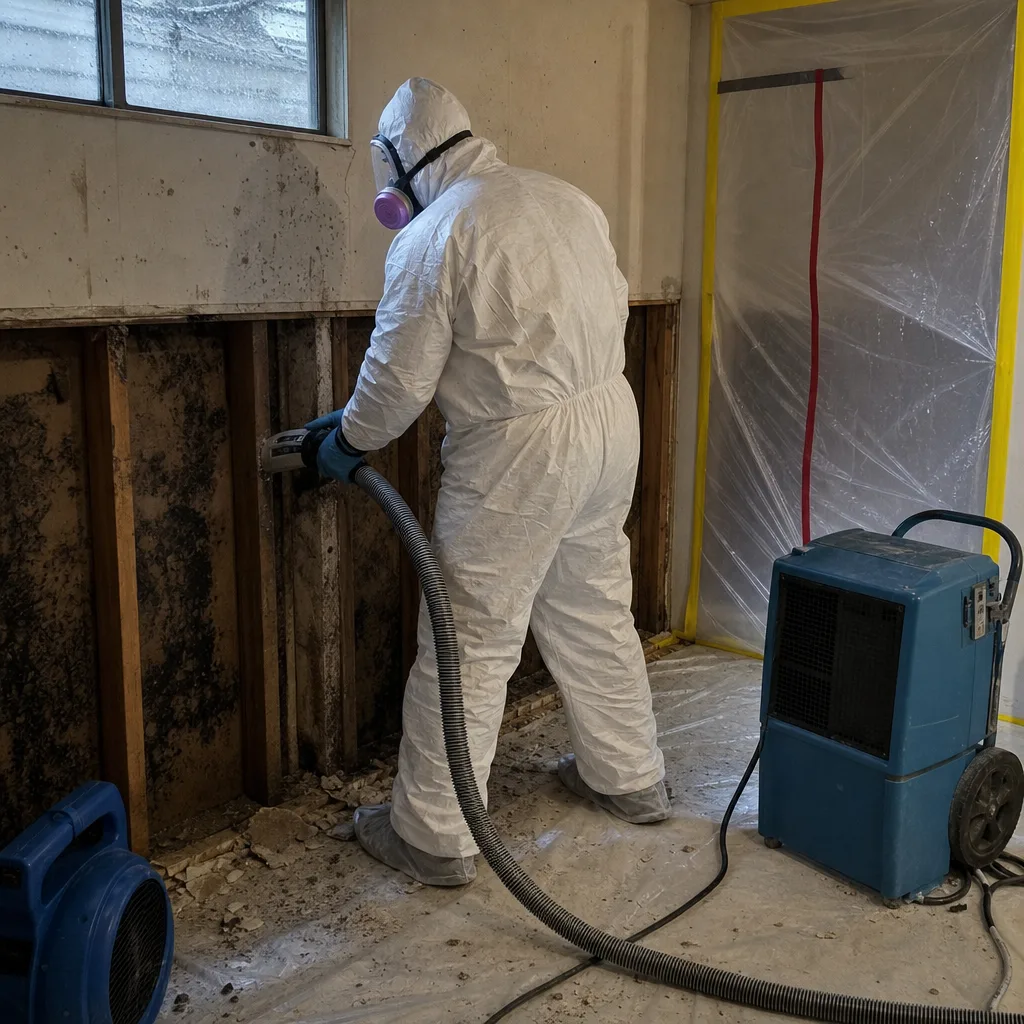
Black Water Extraction
Black water is Category 3 water: raw sewage, feces, and the pathogens that come with them. In Midtown’s deep sub-basement mechanical rooms, standing black water from a failed ejector pump or a cracked waste line can sit for days before detection. We extract with truck-mounted and portable units, contain the area with negative air to stop sewage gases from recirculating through the building’s HVAC, and remove porous materials that cannot be sanitized. We do not dry and paint over black water damage. The line the water left is where we start, and what it touched gets removed or treated.
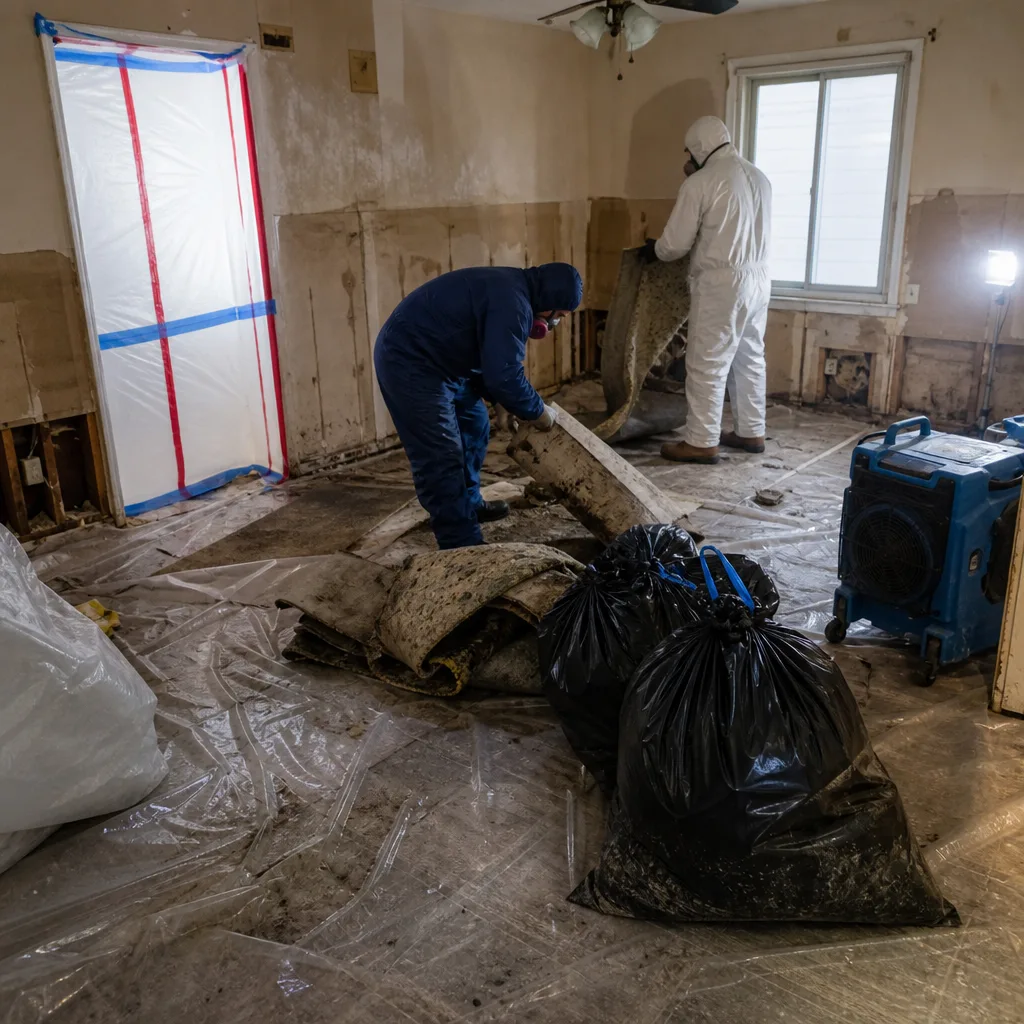
Sanitization & Disinfection
After extraction and drying, we apply broad-spectrum antimicrobial treatments to all affected surfaces and run HEPA air scrubbing until air samples clear. In Midtown’s pre-war buildings, the critical step is treating the chase cavity itself, because sewage odor and airborne contaminants travel through the same vertical void the water used, reappearing in units that never saw visible flooding. We also clean and disinfect HVAC duct runs adjacent to the loss where sewage gases could have migrated, something a single-floor cleanup rarely addresses.
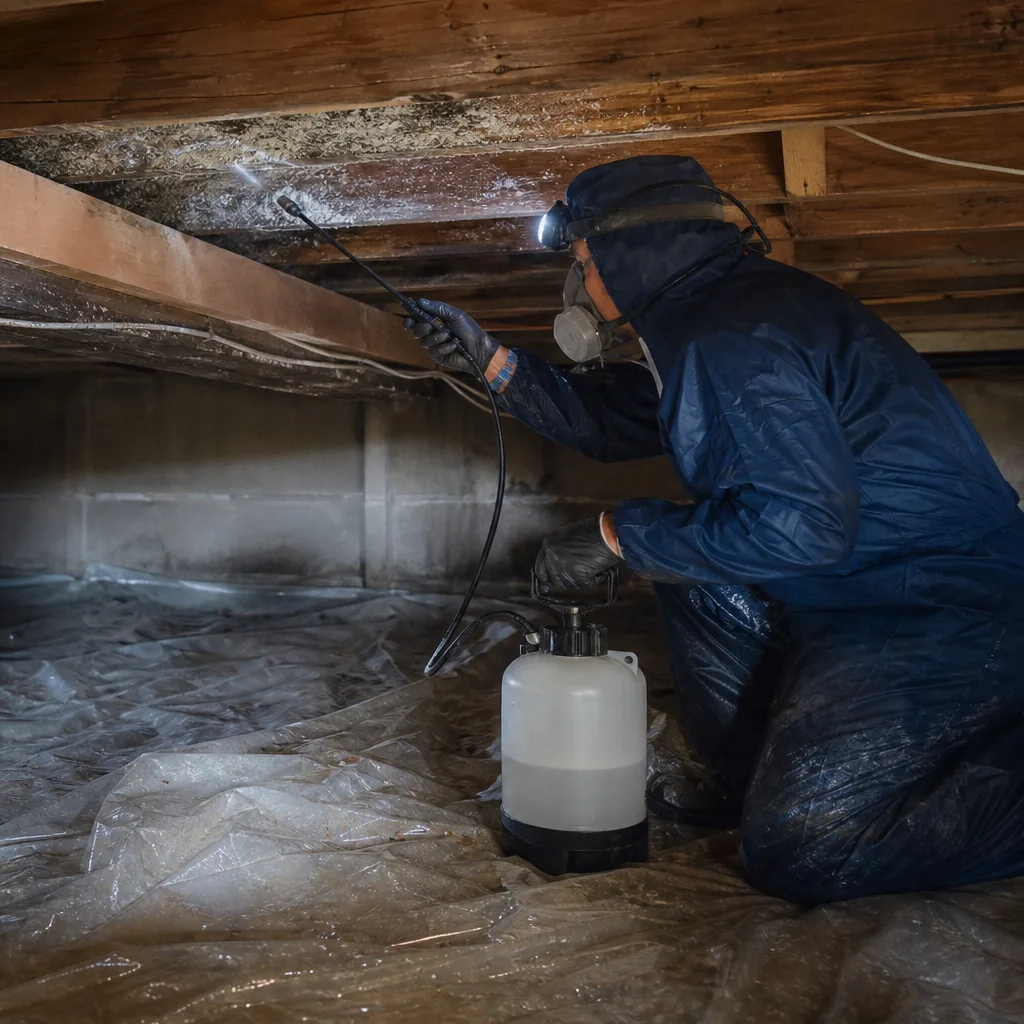
Toilet Overflow Cleanup
Toilet overflows in Midtown’s office and residential towers are almost never contained to the bathroom. Waste water runs under tile, through subfloors, and down the waste stack before anyone notices, and in a 1930s building with original cast-iron lines, the overflow is often the first sign of a corroded stack section further down. We inspect the trap, the waste line, and the chase cavity behind the wall, then dry and sanitize the full contamination path, not just the floor around the fixture.
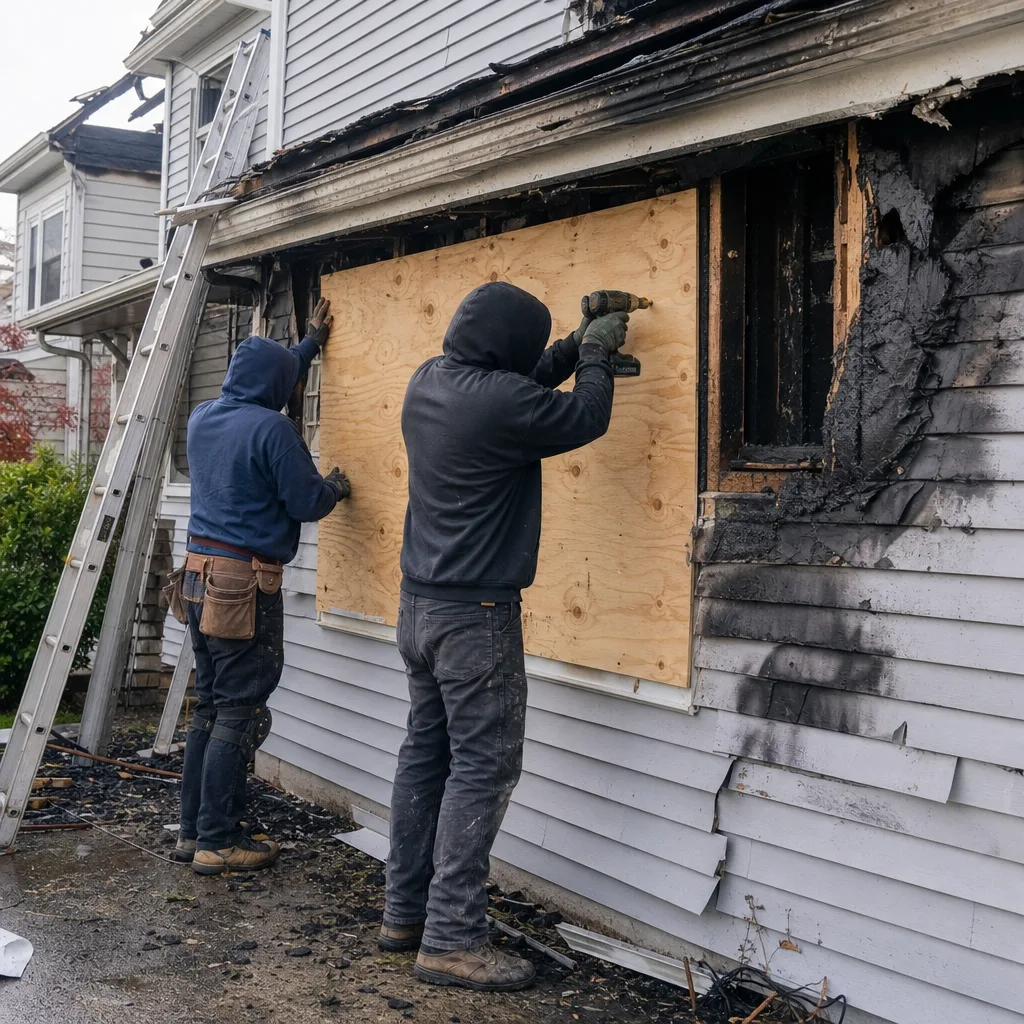
Septic Failure Cleanup
Septic systems are rare in Midtown Manhattan’s dense core, but a handful of older properties along the western blocks and in converted buildings still tie into private systems. When one fails, raw sewage surfaces in yards, sub-basements, and mechanical rooms. We extract, contain, and sanitize, then coordinate the repair or replacement with the same written-scope approach we use on every Category 3 loss.
What happens when you call
- 1
A real person answersNo phone trees - you reach a local pro.
- 2
You get an upfront price rangeHonest numbers before anyone is dispatched.
- 3
A background-checked tech heads outLicensed & insured, dispatched right away.
- 4
You approve before work beginsNothing starts until you say go.
Sewage Cleanup Costs in Midtown Manhattan, NY
Sewage cleanup costs in Midtown Manhattan reflect the density, the building access rules, and the multi-floor contamination paths that a single-family-home estimate never accounts for. A straightforward toilet overflow contained to one bathroom in a Midtown co-op typically runs $1,800 to $3,500, including extraction, drying, and antimicrobial treatment. A sewage backup that has traveled through a shared chase into two or three units commonly lands between $6,000 and $14,000, depending on how much plaster, drywall, and cast-iron waste line has to be removed and replaced. Black water extraction from a deep sub-basement mechanical room with negative-air containment and full sanitization starts around $8,000 and can exceed $25,000 when the loss includes multiple commercial floors, after-hours riser shutdowns, and building-management coordination. Insurance commonly covers the structural portion of these losses under a building master policy or a unit-owner policy with sewage backup coverage, though older policies sometimes exclude it. The free visual inspection we offer in Midtown Manhattan gives you a written, line-item scope before any equipment enters, so the number you approve is the number we bill, and it is the number your adjuster sees. Call (551) 348-8481 for an exact quote. Estimates are free, and a live person answers.
We Also Serve Cities Near Midtown Manhattan
Floodline Restoration Co. handles sewage cleanup across Midtown Manhattan and the surrounding neighborhoods, including Midtown West, Washington Square, Murray Hill, and the Upper West Side. If you are a few blocks outside our core Midtown dispatch area, call (551) 348-8481 and a live dispatcher will route the nearest certified crew to you without delay.
Serving Midtown Manhattan, NY - Our Local Coverage Area
We’re based in the Midtown Manhattan area and know this community well. Use the map below to see our service coverage - if you’re nearby, we can almost certainly help.
Midtown Manhattan Sewage Cleanup Questions, Answered
Why does sewage cleanup in a Midtown pre-war high-rise often require shutting down an entire riser stack?
Midtown’s pre-war towers were built with single vertical waste and vent stacks serving every floor, so opening a corroded section of cast-iron line on one floor usually means draining and shutting the entire stack from the roof vent to the basement cleanout. Building management has to schedule that shutdown with tenants, co-op boards, and commercial leaseholders, and in occupied towers the window is typically nights or weekends. We plan our extraction and containment around that window so the Category 3 water is not left sitting in the chase over a full weekend. Call (551) 348-8481 if your building is facing a riser shutdown and the sewage is still moving.
Is the black water from a toilet overflow in an older Midtown office tower treated as Category 3 immediately, or only after testing?
Black water from a toilet overflow is Category 3 immediately, by definition, regardless of testing. Toilet waste carries human pathogens, and once it leaves the bowl and contacts porous surfaces, those surfaces require removal or full antimicrobial treatment under containment. We do not send samples to a lab and wait while sewage wicks into plaster and cast-iron chase walls. We treat it as a biohazard from the first minute, which is what the IICRC standard requires. Call (551) 348-8481 for an immediate assessment if you have a toilet overflow in a Midtown office or residential tower.
How does Midtown’s density of mixed-use high-rises change the scope of a sewage cleanup versus a single-family home?
A single-family home sewage backup is usually one floor, one policy, and one owner. A Midtown Manhattan mixed-use high-rise backup can involve three floors of residential units, two commercial leaseholders, a building master policy, multiple riders, and a co-op or condo board. The sewage itself follows shared utility chases, so contamination crosses units that never saw the source. We handle the multi-policy documentation, adjuster coordination, and building-management access as part of the job. Call (551) 348-8481 for a free visual inspection and a written scope that accounts for the full loss, not just the unit where water first appeared.
What containment challenges are unique to Midtown’s deep sub-basement mechanical rooms during sewage cleanup?
Midtown’s deep sub-basement mechanical rooms are often below grade, with limited ventilation and shared air returns that run to upper floors. Sewage gases pool against dehumidification equipment, and without proper negative-air containment, we have seen those gases and airborne contaminants recirculate through multiple floors of a tower. We isolate the contaminated zone with plastic sheeting and HEPA-filtered negative-air machines before any drying equipment runs, and we maintain that containment until air samples clear. That is the difference between a cleanup and a building-wide complaint. Call (551) 348-8481 if you smell sewage in your building’s sub-basement or mechanical room.
How do building-management work windows in Midtown commercial towers affect how fast Category 3 water gets extracted?
Many Midtown commercial towers restrict construction and restoration work to nights and weekends, meaning a sewage backup discovered Friday morning may not see extraction until Friday evening at the earliest, unless the building declares an emergency. Category 3 water left in place through a weekend wicks into plaster, drywall, and cast-iron chase walls beyond what antimicrobial-only mitigation can salvage. We maintain crews on night and weekend shifts specifically for these windows, and we can often get a same-evening extraction approved under the building’s emergency provisions. The faster we start, the less gets cut out. Call (551) 348-8481 the day the backup is discovered, not Monday.
How fast can you actually get to a Midtown Manhattan sewage backup?
We commit to a 45-minute response inside Midtown Manhattan, with a live dispatcher who confirms the crew’s ETA by phone before you hang up. Floodline Restoration Co. crews are stationed to serve Midtown directly, not dispatched from an outer borough. A live person answers at (551) 348-8481 24 hours a day, every day of the year.
Will insurance cover sewage cleanup in a Midtown Manhattan co-op or condo?
Coverage depends on the policy. Building master policies typically cover the structural portions of a sewage loss, including drywall, plaster, and waste-line repairs in shared chases. Unit-owner policies often cover personal property and betterments, though sewage backup is sometimes an excluded peril unless a specific rider was added. Commercial lease riders add another layer. We photograph every affected room and chase cavity, log daily moisture readings, and provide a line-item scope the carriers accept, then we bill directly and coordinate with each adjuster. Call (551) 348-8481 for a free inspection and we will walk through what your specific documents look like.
What should I do in the first 30 minutes after discovering a sewage backup in my Midtown Manhattan building?
Stop using water, shut the water supply to the affected fixture if you can reach it safely, and keep people and pets out of the area. Do not flush toilets, run washing machines, or send water down any drain in the stack, because that pushes more sewage into the backup. Do not attempt to unblock the line yourself, sewage under pressure can blow back through the drain. Photograph what you can see, call building management to shut the riser if needed, then call (551) 348-8481. We will have a crew rolling within 45 minutes and a live person stays on the phone with you until they arrive.
Written by Curt Bowman, Owner at Floodline Restoration Co., serving Midtown Manhattan with 24/7 sewage cleanup, black water extraction, and sanitization.