
Free visual inspection and a written scope of work before any mitigation begins - photos, moisture readings, and drying logs go in your claim file
The scope we write is the scope we bill. Anything new gets shown to you, in writing, before we touch it.
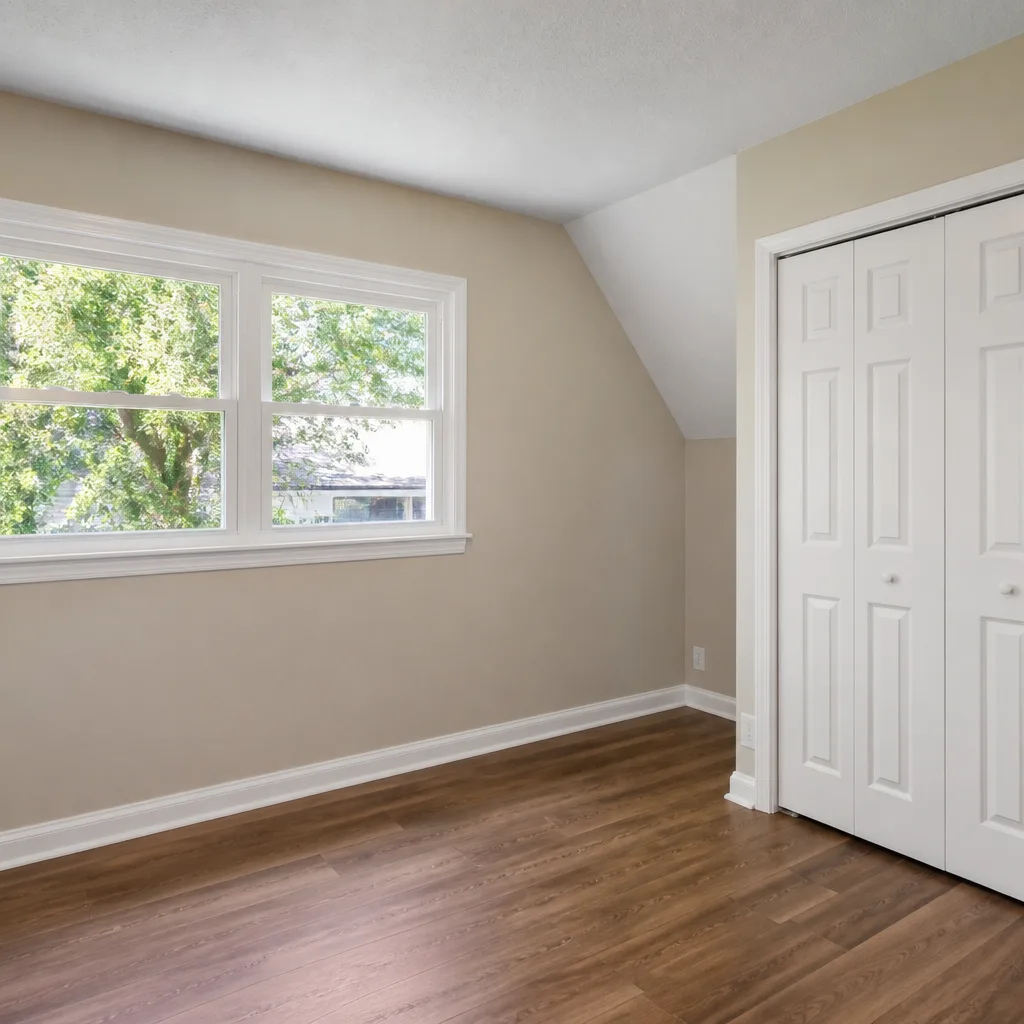

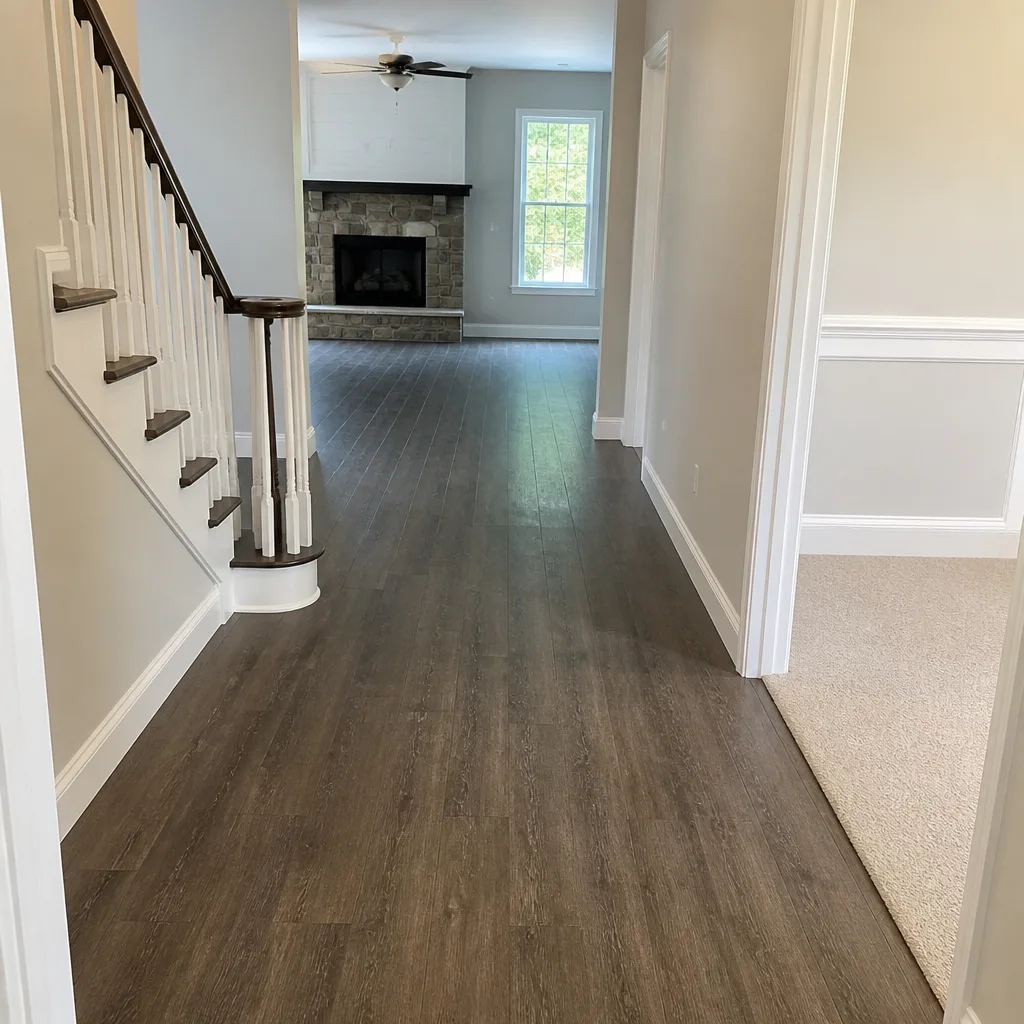

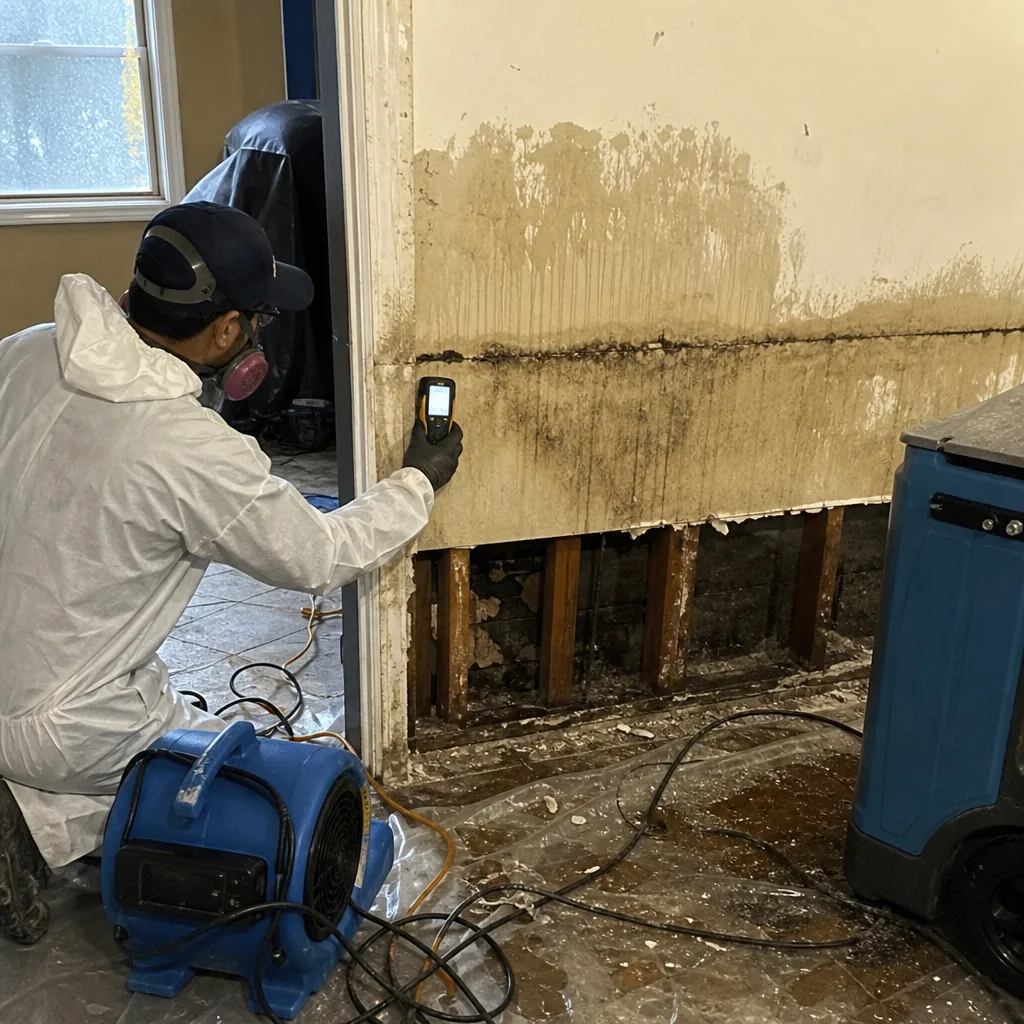 Before
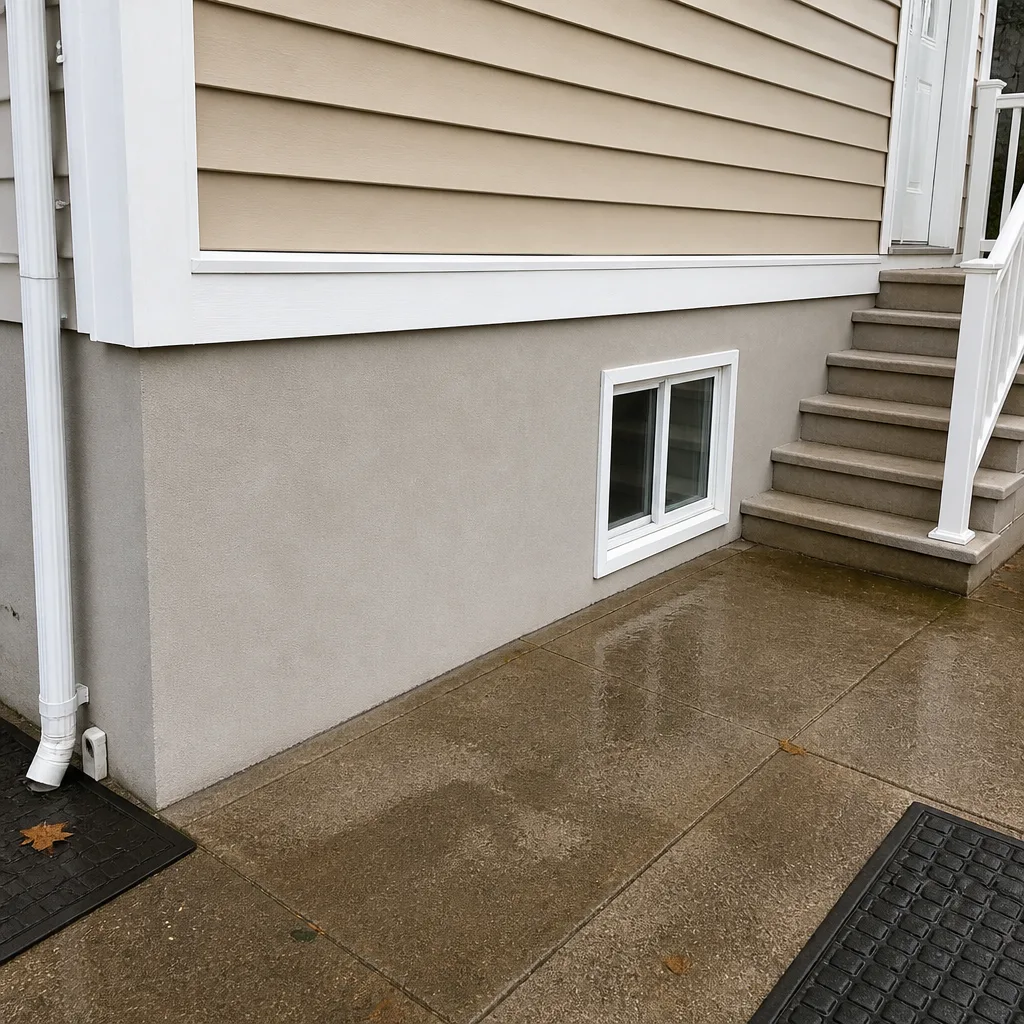 After
After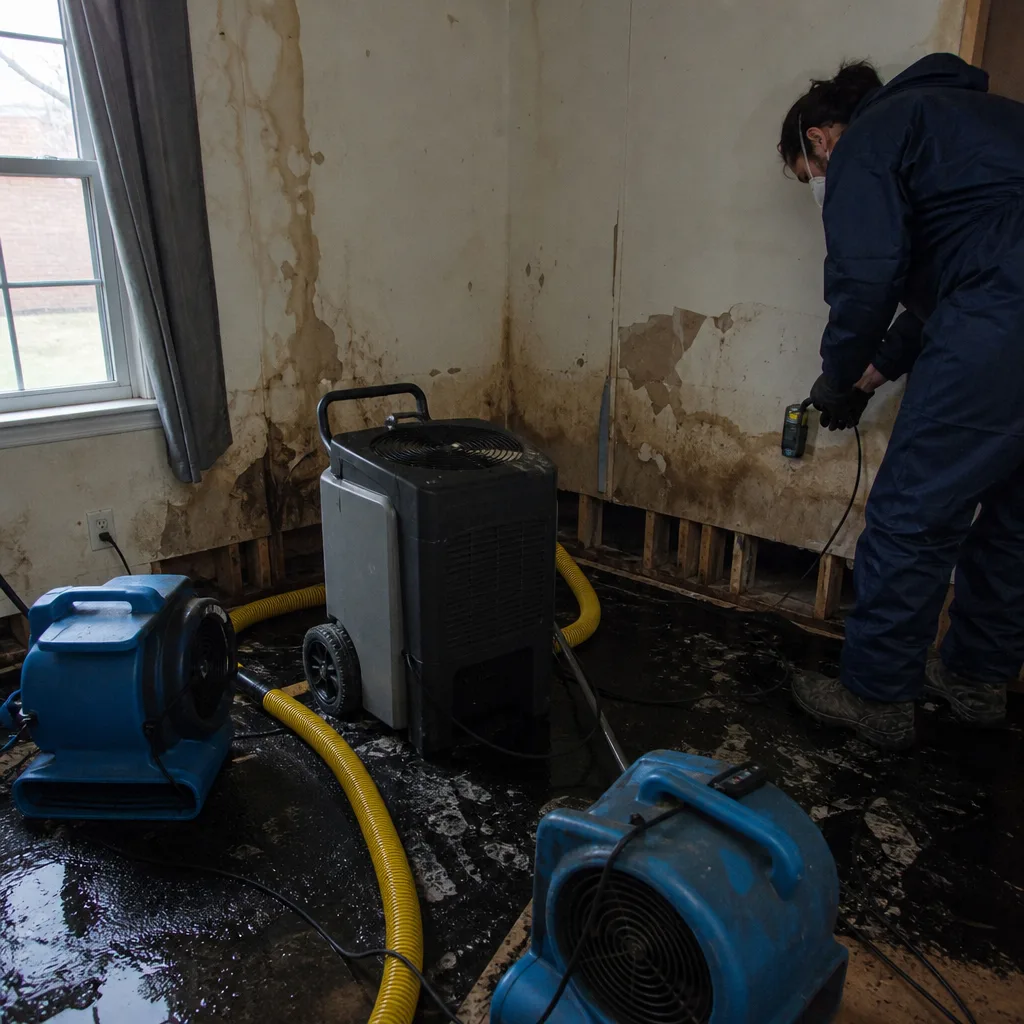 Before
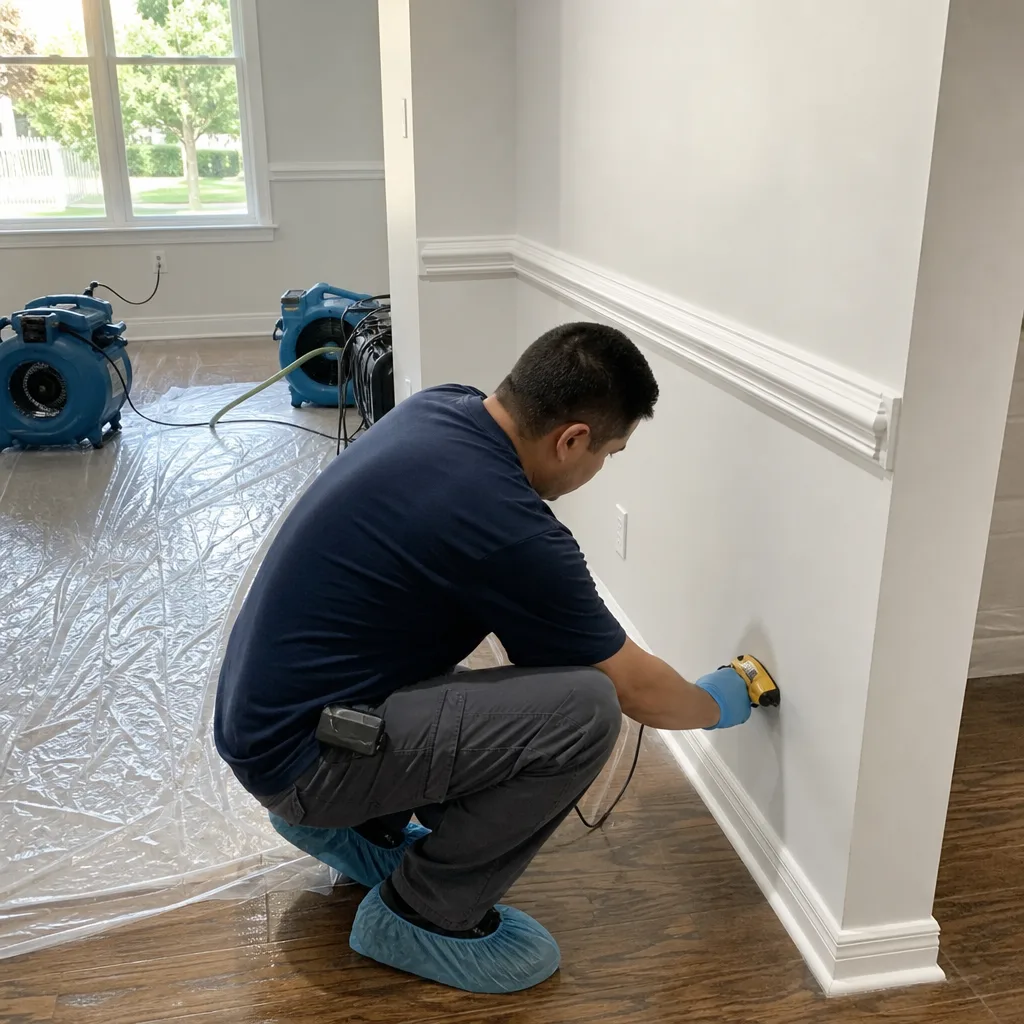 After
After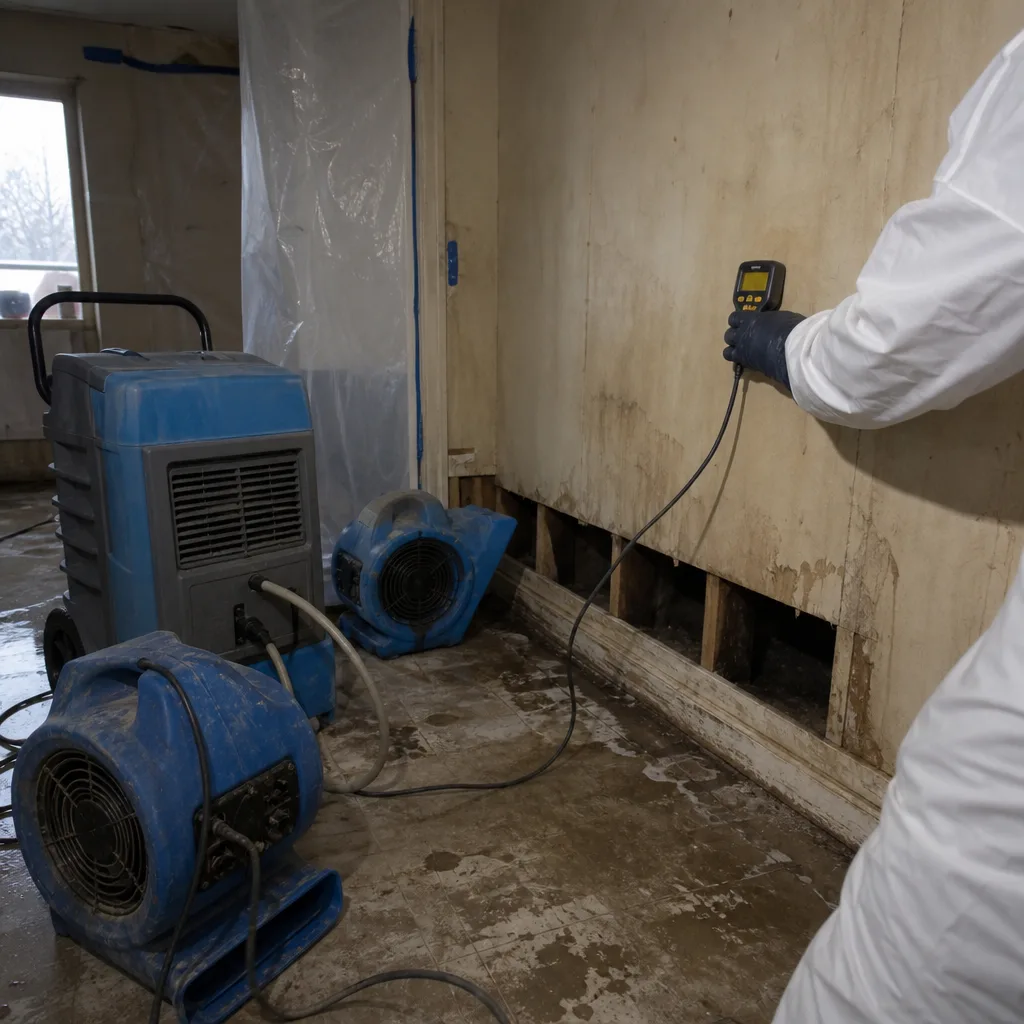 Before
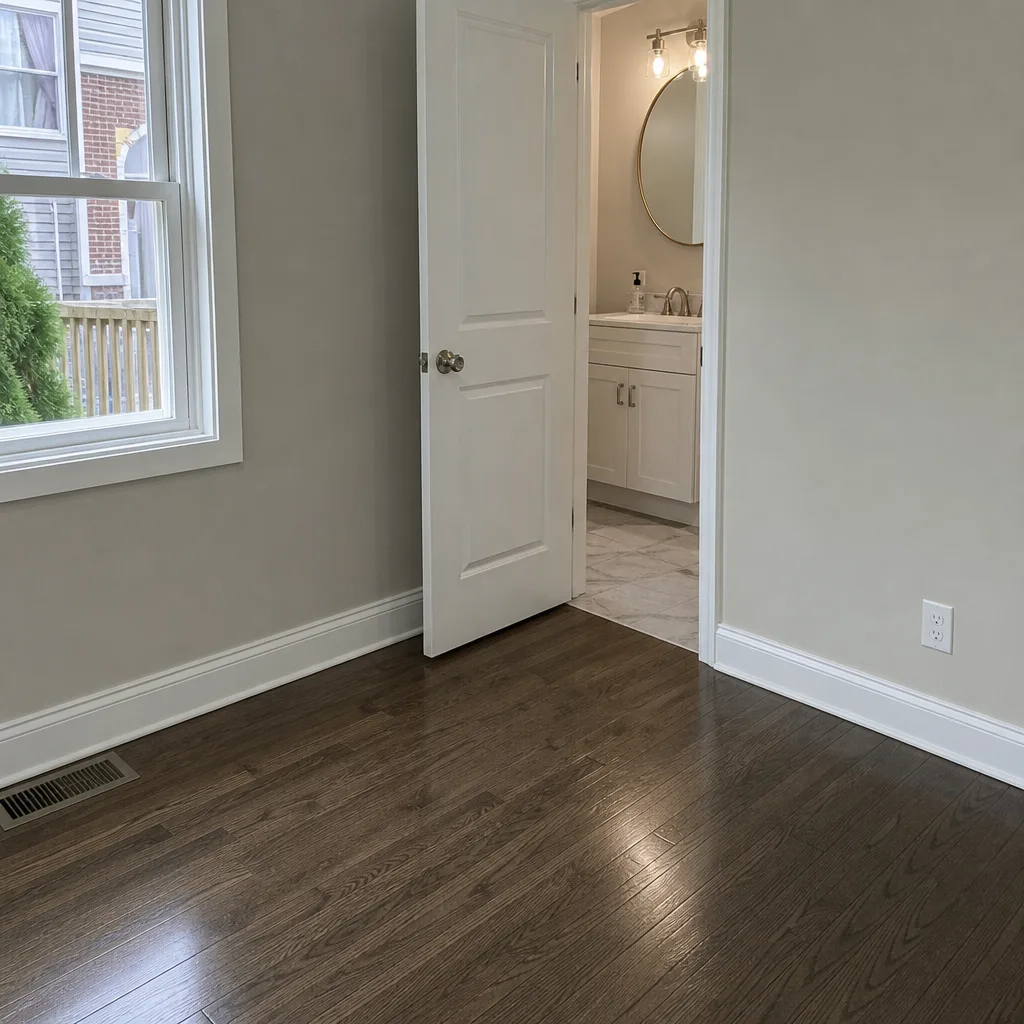 After
After24/7 Emergency Storm & Disaster Restoration in Jersey City
Storm & Disaster Restoration in Jersey City means getting real help, right now, not a voicemail. When a nor’easter pushes the Hudson over its banks or a summer squall sends Category 3 water up through the floor drains in your row house basement, our crews answer the phone at two in the morning. Not a recording. A live dispatcher who can put a certified crew on the road to your block within the hour. Call (551) 348-8481 for a free visual inspection. The first hour after a storm flood determines whether you’re drying a basement or rebuilding one. We know that clock. We’ve been watching it since 2010.
The faster water comes out and air starts moving, the fewer wall cavities you lose, the fewer floor joists you replace, and the less likely mold gets a foothold in your plaster. In Jersey City, where most basements are below grade and the water table sits just below the footings, that clock ticks faster than in inland towns. We handle the whole job: Storm & Disaster Restoration from the first extraction to the finishing trim, with one crew and one written scope. No mid-job handoff to a stranger.
Understanding Storm & Disaster Restoration Severity in Jersey City Properties
Here’s the thing most property owners in Jersey City only learn after a loss: not all storm water is the same, and in this city, it’s almost always the worst kind. The Institute of Inspection, Cleaning and Restoration Certification (IICRC) classifies water into three categories. Category 1 is clean water from a broken supply line. Category 2 is gray water from a washing machine or dishwasher. Category 3 is black water, contaminated with sewage, bacteria, and pathogens. If your basement flooded after a heavy rain in Jersey City, you’re almost certainly dealing with Category 3. The city’s combined sewer overflow system means storm drains and sanitary sewers run through the same pipes. When those pipes surcharge during a storm, the water that backs up into your basement carries raw sewage.
That distinction drives the entire response. Category 3 water requires antimicrobial treatment, containment, and often full removal of saturated drywall and insulation. You can’t simply dry it out. In Jersey City’s 07302 corridor, homes built on filled marshland sat directly in Superstorm Sandy’s AE-zone surge. The sediment that settled into those basements carried contaminants that ordinary fans and dehumidifiers will never remove. Technicians trained to IICRC WRT and FSRT standards moisture-map the whole affected area and test it until it’s dry, not just until it looks dry. That’s the only standard that holds up when a claim adjusts weeks later.
Why Jersey City Property Owners Choose Floodline Restoration Co.
- 45-minute response commitment. From our dispatch board to a crew on the road in Jersey City, we aim for 45 minutes or less. Not an automated callback. A truck, rolling.
- Live answer, 24/7. A human being picks up the phone at 2 a.m. We don’t triage through a call center in another state. The dispatcher you speak to sends the crew you’ll see.
- IICRC-certified crews. Our technicians hold IICRC WRT, FSRT, and AMRT certifications, plus RIA and IFA training. They can read a moisture map and write a drying log your adjuster will accept.
- Free visual inspection. We walk your property, map the damage, and show you what we see before any work begins. You get a written scope. No pressure, no oversell.
- Direct insurance billing. We handle the adjuster, the documentation, and the billing. You don’t carry paperwork between us and your carrier.
- One team, start to finish. Extraction, drying, remediation, and reconstruction happen under one roof. The crew that reads the moisture map on day one is the crew that rebuilds the wall on day thirty.
Our Storm & Disaster Restoration Process
Inspection & Assessment
We start with thermal imaging and Dri-Eaz moisture meters to map the extent of the water. In Jersey City row houses, that means checking party walls and common pipe chases, not just the obvious puddle. We document everything for your insurer from the first hour.
Extraction & Stabilization
Standing water comes out with truck-mounted extraction units. For Category 3 water, we set up containment before anything gets moved through the house. Roof tarping and emergency board-up happen in this phase if the storm breached the envelope.
Drying & Dehumidification
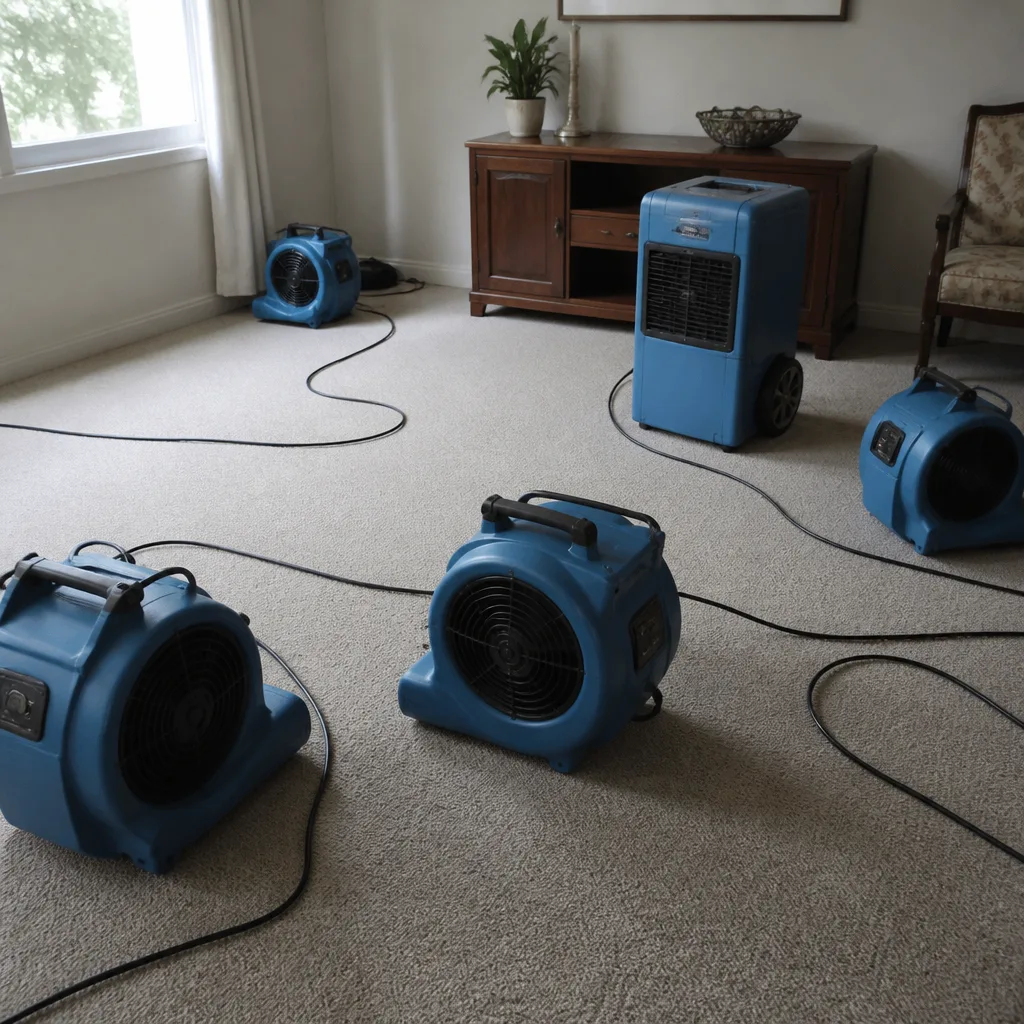
We place XL/XD high-volume air movers and LGR dehumidifiers, then adjust equipment daily based on hygrometer readings. In Meadowlands-fill basements, we watch for hydrostatic pressure pushing water back through the slab while we’re drying.
Cleaning & Sanitization
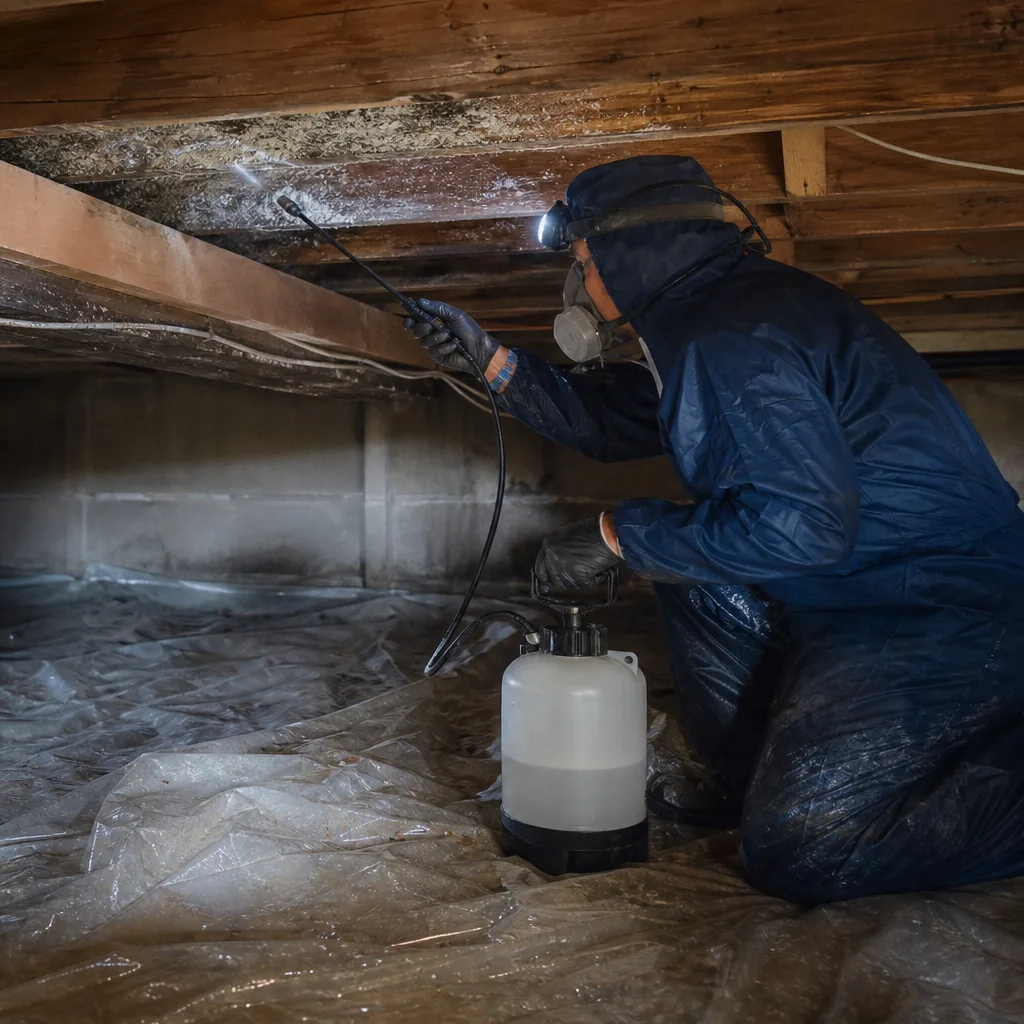
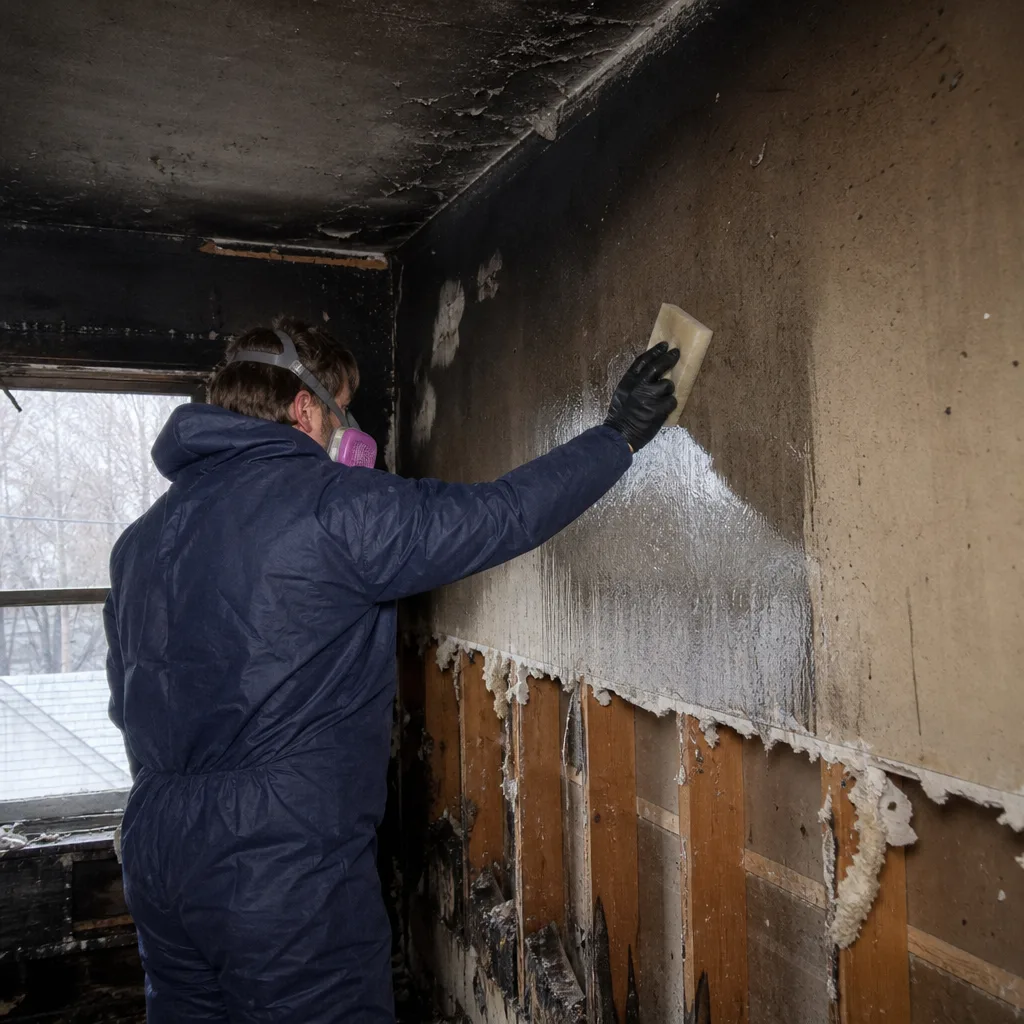
Category 3 water demands antimicrobial treatment on every surface it touched, including old brick and mortar. We treat, scrub, and sanitize before any rebuild work starts.
Specialty Treatment
For combined sewer overflow events, we run HEPA air scrubbers and negative air pressure to clear spore counts before clearance testing. This step is non-negotiable in Jersey City storm work.
Repairs & Restoration
Our carpenters rebuild stud walls, hang new drywall, and match trim to the rest of the house. Because we’re one company, we know exactly what was removed and what needs to go back. The 90-Day Done Right Promise applies to the finished result, in writing.
Need Emergency Storm & Disaster Restoration in Jersey City Now?
Crews minutes away, answering live 24 hours a day. The sooner we start, the less it costs.
Working With Your Insurance Company
Storm and sewer claims in Jersey City are not the same as a burst pipe in a single-family home. We’ve handled multi-unit brownstone losses on Mercer Street where one pipe chase fed three separate units, each with its own policy, its own adjuster, and its own deductible. We document from the first hour: photos room by room, moisture readings from every affected surface, daily drying logs, and a line-item scope of work written to the standards your carrier recognizes. We speak directly with your adjuster. You don’t relay messages. You don’t guess what’s covered. We tell you what we’re doing, what it costs, and how the claim is moving. Direct billing means the bill goes to the carrier, not to you, when coverage applies. That’s how it’s supposed to work.
What We Provide Your Insurer
- Thorough documentation of the loss
- Photos of all damage, room by room
- Moisture readings and drying logs
- A detailed, line-item scope of work
- Direct coordination with your carrier
Built for Jersey City’s Loss Calendar
Jersey City’s storm losses follow a pattern, and we plan our equipment and crews around it. January and February bring deep freezes that burst supply lines in unheated basements and attached garages. Those are almost always Category 1 or 2, and they respond well to fast extraction and structural drying. March and April bring spring thaw, which is when Meadowlands-fill groundwater rises and old fieldstone foundations start weeping hydrostatic water through the floor. May through August is thunderstorm season. These are the flash floods that overwhelm the combined sewer system in 07302 and 07303. That’s Category 3 water, every time. September through November is nor’easter season, when a full moon and a stiff easterly wind can push the Hudson and Newark Bay into the downtown corridors faster than pumps can keep up. We stage crews and equipment accordingly. When the storm hits, we’re not scrambling. We’re rolling.
Storm & Disaster Restoration Across Jersey City’s Neighborhoods
In the 07302 corridor, from Paulus Hook up through Van Vorst Park and Hamilton Park, the brownstones and converted tenements share party walls and common drains. A sewer backup that starts in one basement can wick laterally through the shared mortar and into the next unit within 48 hours. Our crews run moisture maps on both sides of every party wall in these blocks. In Bergen-Lafayette and the 07303 ZIP code, the homes are older, many with clay-tile drain pipes that collapsed decades ago and were never replaced. When a storm hits, those drains can’t carry the load, and water finds its way in from below. In the Heights, near Palisade Avenue, the elevation helps some blocks, but the old frame constructions with shallow foundations are vulnerable to wind-driven rain working through aging siding and flashing. Downtown high-rises have their own issues: sump pump failures in underground garages and mechanical rooms that flood when the CSO system backs up. Response routes matter. We know the one-way streets in Paulus Hook, the tight alleys behind brownstones in Van Vorst, and the parking realities near Journal Square. That local knowledge gets equipment on site faster than a dispatch from outside Hudson County.
Specialized Storm & Disaster Restoration Services We Offer in Jersey City
Flood Damage Restoration
This is the core of our storm work in Jersey City. Whether the water came from the Hackensack River breaching its banks, the Hudson surging into downtown, or the combined sewer backing up through your floor drain, we treat it with the full Category 3 protocol. Extraction, containment, antimicrobial treatment, structural drying, and rebuild. One team, one written scope, one phone number.
Emergency Board-Up
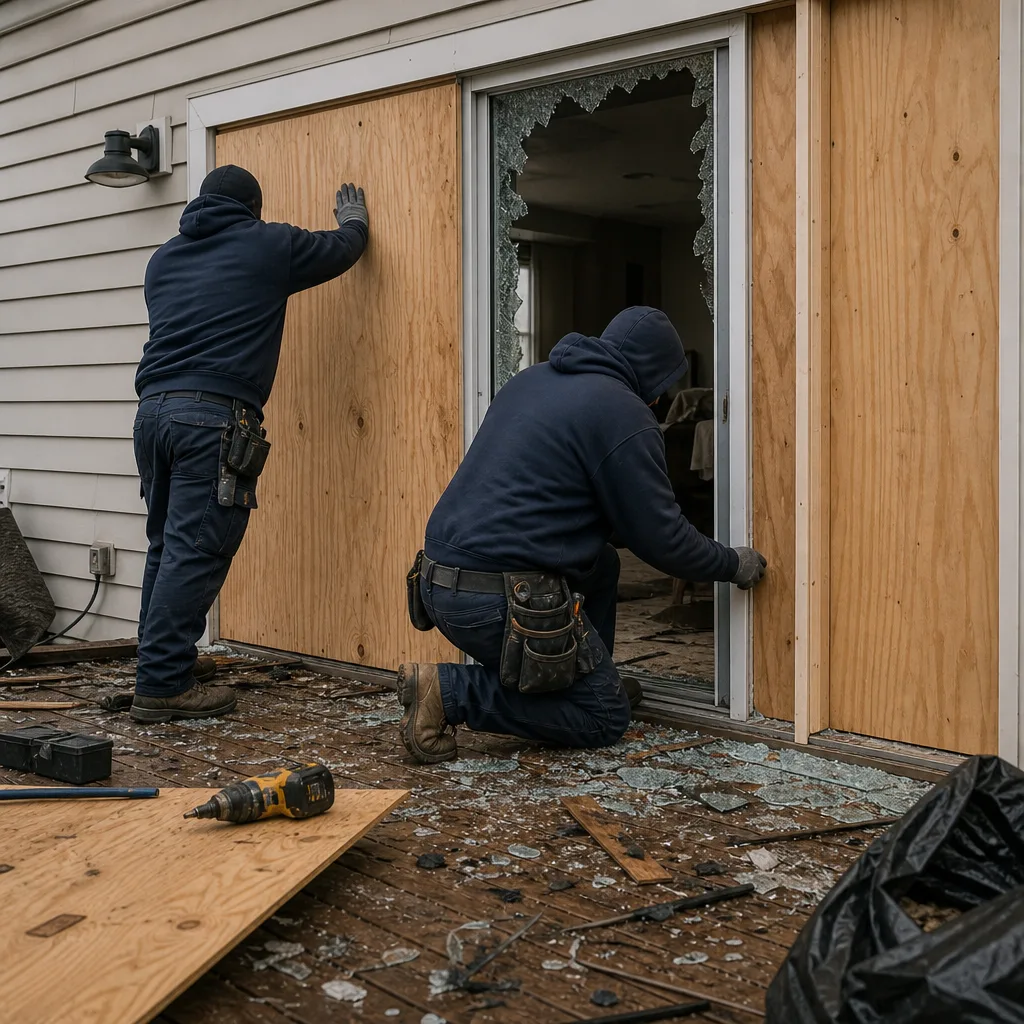
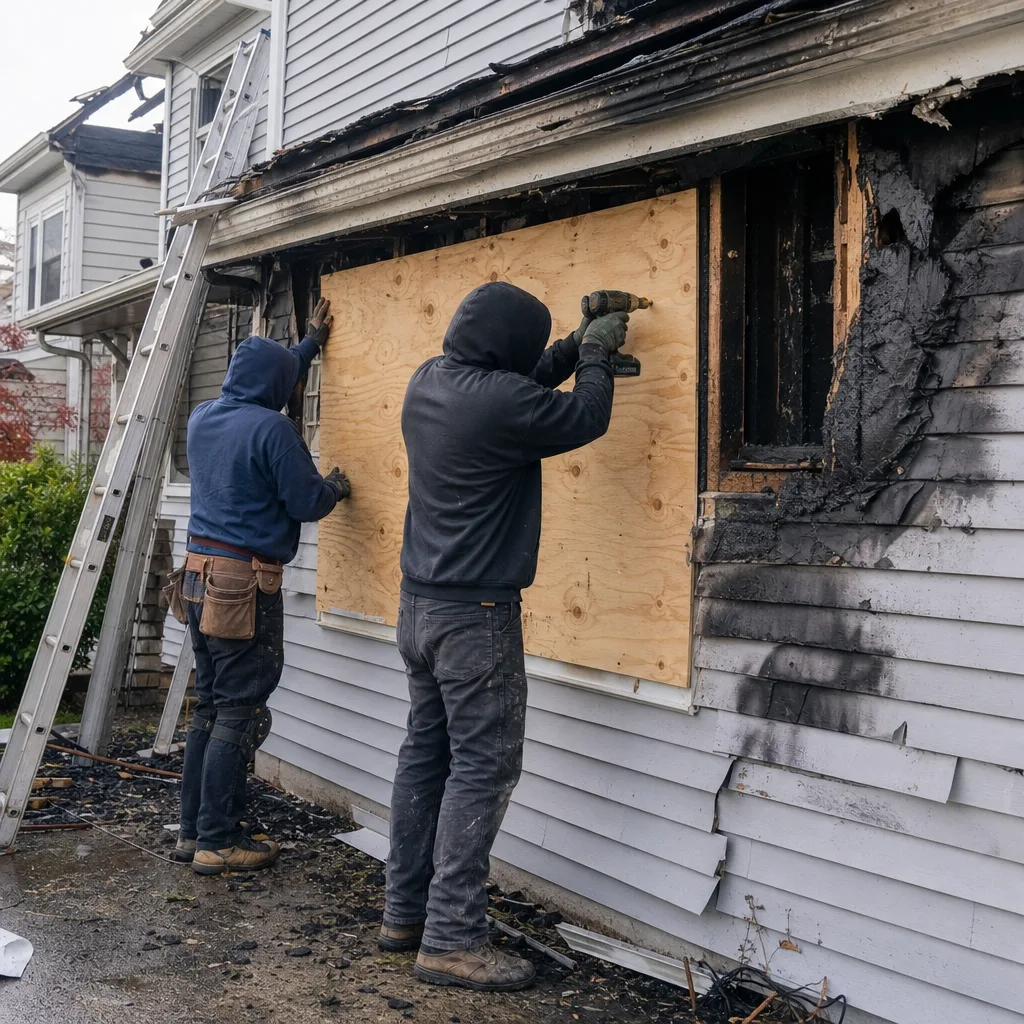
When a nor’easter tears a window out of your row house or a falling branch takes out a section of roof, the building is exposed. We board up openings the same visit, often within the hour. In Jersey City’s dense blocks, an exposed opening invites more than just weather. We secure the property, document the damage for your insurer, and get you weather-tight before the next squall.
Storm Damage Cleanup
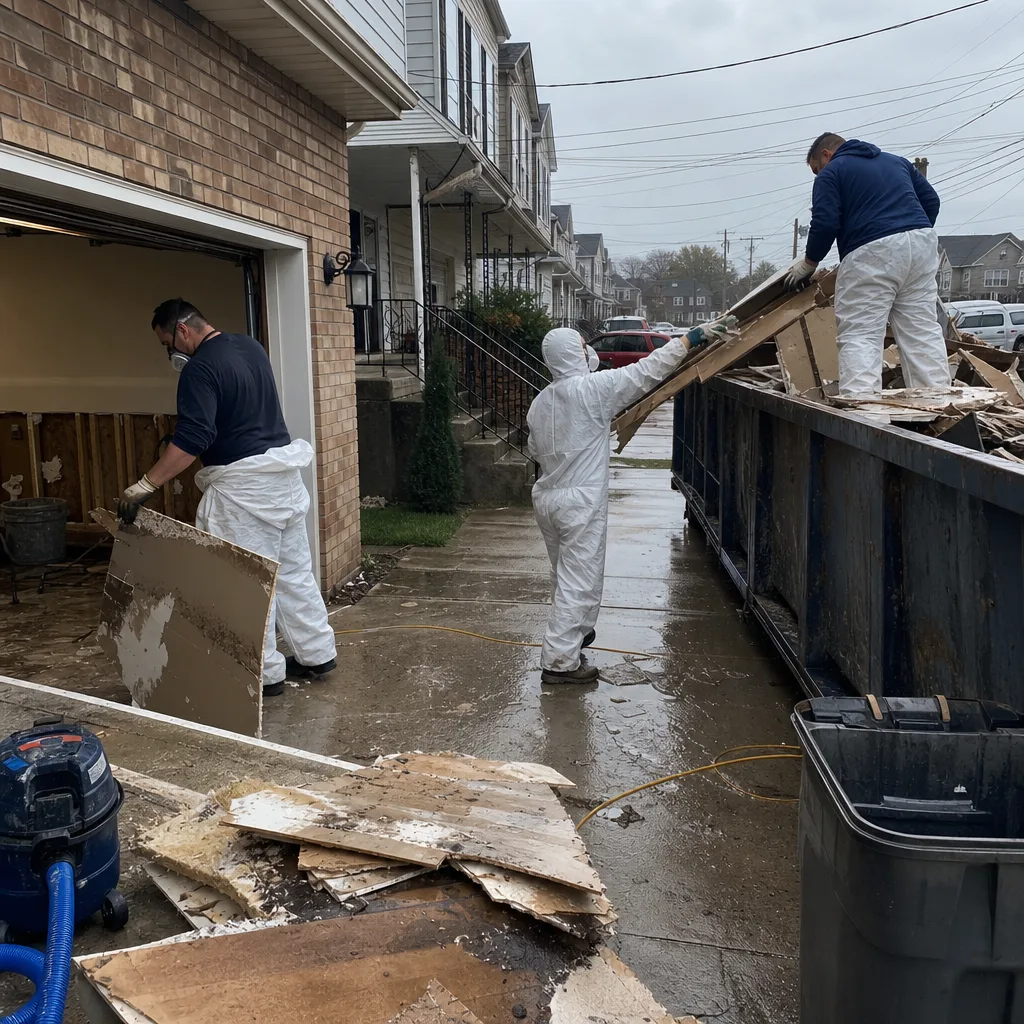
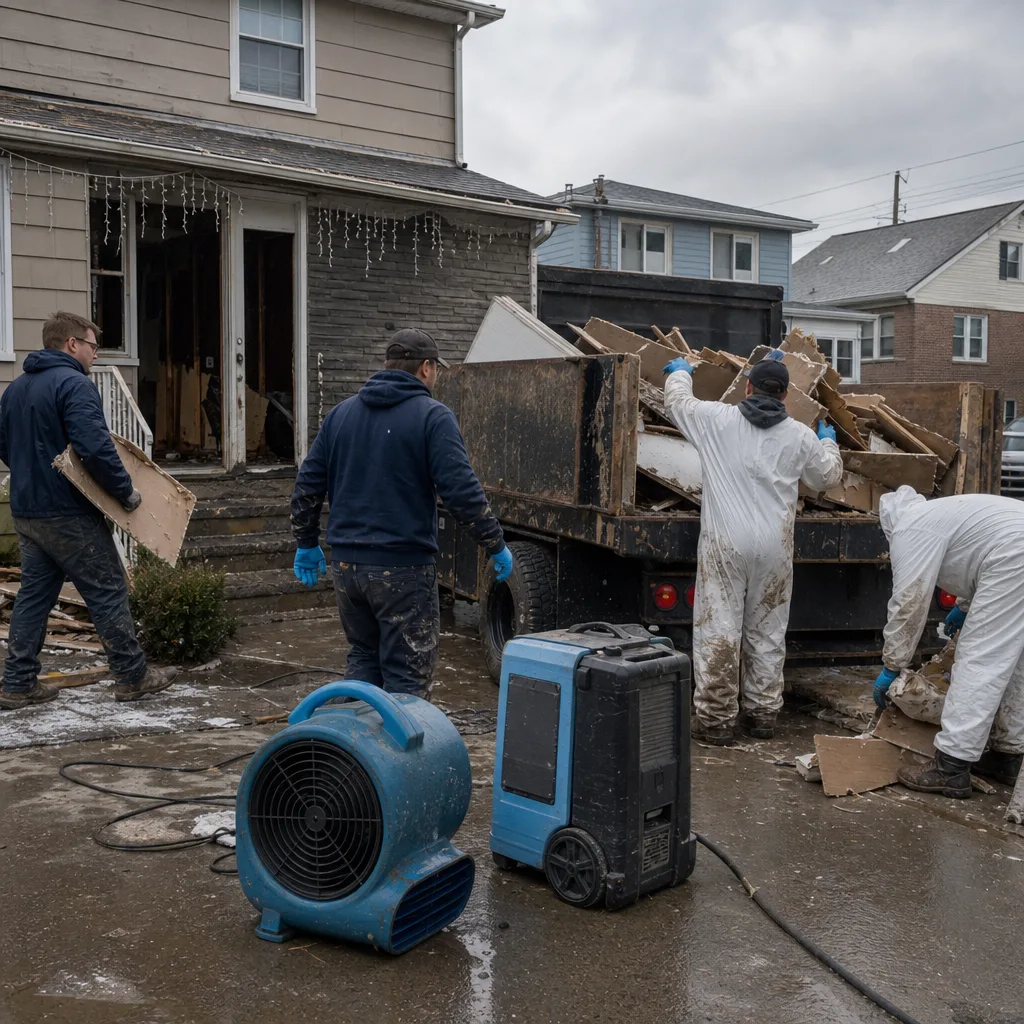
Storm debris, contaminated sediment, downed trees, and wind-blown glass make a property dangerous before restoration even begins. Our crew clears the debris, removes Category 3-soaked materials, and prepares the site for drying and rebuilding. We don’t just pile junk at the curb. We remove it efficiently and document what we took and why, so your claim stays clean.
Roof Tarping
A nor’easter can lift flashing and tear off shingles on a 19th-century row house as fast as on a new build. Roof tarping stops the water from pouring into the attic and running down three floors of plaster. We tarp the same day, then work with your adjuster on a permanent repair scope.
Debris Removal
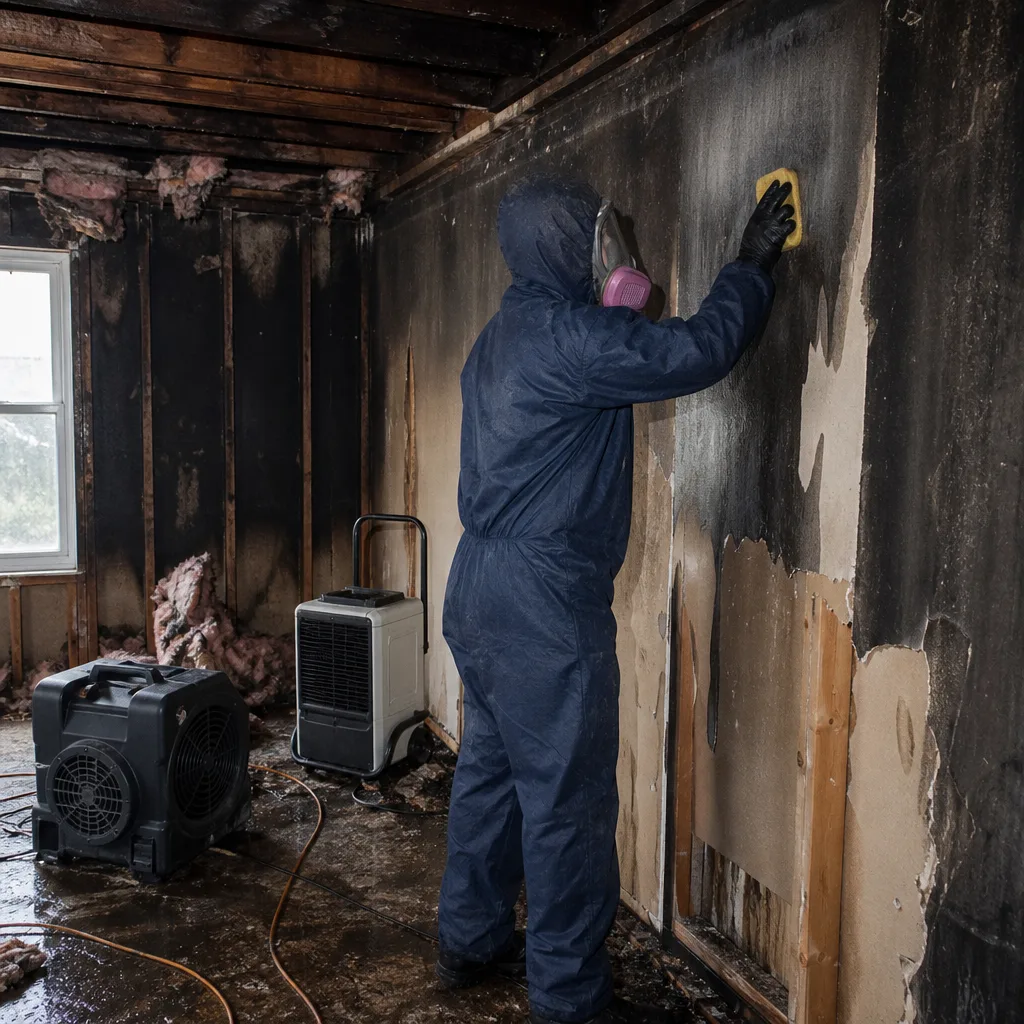
Wind damage in Jersey City means tree limbs, bricks, and sometimes whole sections of cornice that let go from old tenement roofs. We remove it, secure the area, and salvage what can be salvaged for restoration. In a dense neighborhood, debris removal has to happen fast before it blocks a neighbor’s door or becomes a liability.
What happens when you call
- 1
A real person answersNo phone trees - you reach a local pro.
- 2
You get an upfront price rangeHonest numbers before anyone is dispatched.
- 3
A background-checked tech heads outLicensed & insured, dispatched right away.
- 4
You approve before work beginsNothing starts until you say go.
Storm & Disaster Restoration Costs in Jersey City, NJ
In Jersey City, storm damage restoration costs run higher than in inland Hudson County towns because the water is usually Category 3 and the housing stock is older and denser. Flood damage restoration in a finished brownstone basement typically runs $4,000 to $12,000 depending on the square footage, the water depth, and how much drywall and insulation has to come out. Storm damage cleanup and debris removal run $900 to $3,500 for a typical single-unit loss. Emergency board-up runs $350 to $900 per opening. Roof tarping runs $500 to $1,200 depending on roof pitch and access. Full remdiation with rebuild of a below-grade basement in the 07302 corridor can run $15,000 to $35,000 when the sewer surcharge soaked every wall and the clay-tile drains collapsed. The best way to stop guessing is a free visual inspection. We walk the property, show you the damage, and hand you a written scope with firm numbers before any work starts. Call (551) 348-8481 for that inspection. It costs nothing to know exactly what you’re facing.
We Also Serve Cities Near Jersey City
Our crews respond to storm losses across the Hudson County waterfront and the nearby communities. We serve Hoboken, Secaucus, Union City, and Weehawken with the same 24/7 live dispatch and the same written guarantees. The phone number never changes and it’s always answered by a person. If you live near Jersey City and storm water is rising, call us. The same response clock applies.
Serving Jersey City, NJ - Our Local Coverage Area
We’re based in the Jersey City area and know this community well. Use the map below to see our service coverage - if you’re nearby, we can almost certainly help.
Jersey City Storm & Disaster Restoration Questions, Answered
Is the water in my Jersey City basement after a storm safe to dry myself?
No. In Jersey City, storm water in a basement is almost always Category 3 black water because the combined sewer system mixes storm runoff with sanitary sewage. Drying it yourself exposes you to pathogens and leaves contamination in the walls. Call us instead. We handle the Category 3 protocol properly from the first extraction.
Why did my finished basement flood in the western Heights area when no pipes burst?
What you’re seeing is hydrostatic pressure. The western sections of Jersey City sit on former Hackensack Meadowlands fill, right at the seasonal water table. When heavy rain raises that table, groundwater pushes up through the slab and foundation floor, even with no cracks. Interior drying alone won’t stop it. The fix requires drainage and waterproofing review before restoration holds. Call (551) 348-8481 and we’ll trace the water to its source.
How does a multi-unit brownstone in Jersey City handle a storm flood when the insurance policies differ?
We’ve done it on Mercer Street. One pipe chase served three units with three different carriers. Our crew documented the loss for all three policies, ran moisture maps across the party walls, and coordinated with each adjuster separately. The key is a scope of work that clearly attributes damage to each unit and the common elements. We write that scope and talk to every carrier directly.
Do I need board-up and roof tarping after a Nor’easter hits my 07302 row house?
If the storm opened a window, lifted flashing, or tore off roof membrane, yes. Board-up and roof tarping stop additional water from pouring in behind the lath and plaster of a 19th-century brownstone. We respond the same day, usually within the hour, and the work is documented for your insurer. It’s a stopgap until permanent repairs are scoped, but it’s a critical one.
How fast does mold start in a Jersey City storm-flooded basement compared to inland towns?
Faster. The humidity here, combined with below-grade construction and shared party walls, creates ideal mold conditions within 24 to 48 hours. Inland towns with drier air and detached homes get a little more time. In a Jersey City row house, mold travels laterally through common walls and can appear in a neighboring unit within days. Fast extraction and drying are the only real defense.
How fast can a crew actually get to Jersey City?
We aim for 45 minutes from dispatch to your door. We’re staffed around the clock with live dispatchers, and we stage crews in and near the city all year. In major storm events when demand spikes, we prioritize the worst losses first, but you’ll always talk to a person who tells you the truth about timing.
Will my insurance cover storm and sewer damage?
Most homeowner policies cover wind and roof damage, but sewer backup and flood water often require specific endorsements or separate flood policies, especially in the FEMA AE zone of 07302. We work with your adjuster to establish coverage and document everything to support your claim. Direct billing means we handle the carrier side while you focus on your home.
What should I do in the first 30 minutes after storm water enters my home?
Call us at (551) 348-8481. Then, if it’s safe, shut off power to the affected area, move valuable items up, and avoid walking through the water. Do not run fans or HVAC if the water smells like sewage, you’ll spread contamination through the house. We’ll be there fast enough to make the difference.
Written by Curt Bowman, Owner at Floodline Restoration Co., serving Jersey City with 24/7 storm and disaster restoration. Founded in 2010, staffed by certified technicians, held to the 90-Day Done Right Promise. Call (551) 348-8481. The line the water left is where we start.