
Free visual inspection and a written scope of work before any mitigation begins - photos, moisture readings, and drying logs go in your claim file
The scope we write is the scope we bill. Anything new gets shown to you, in writing, before we touch it.
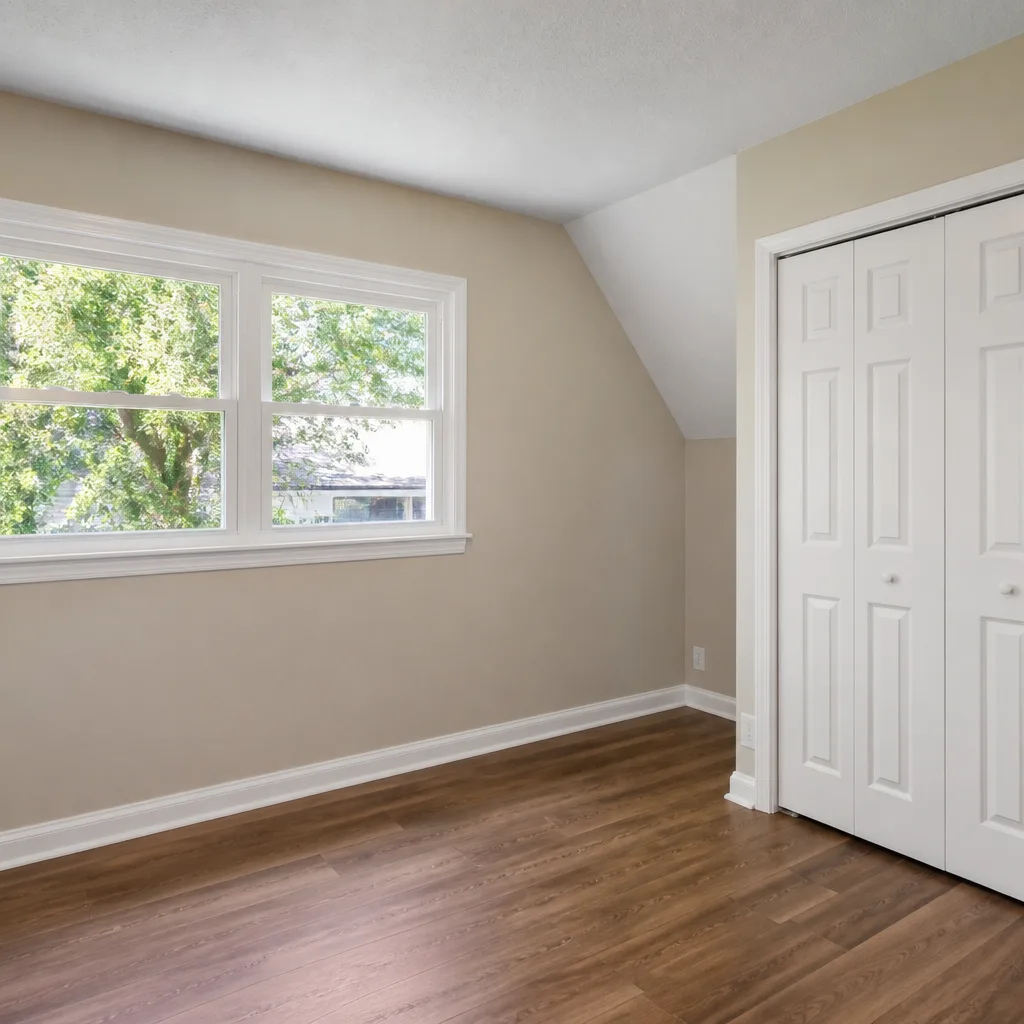
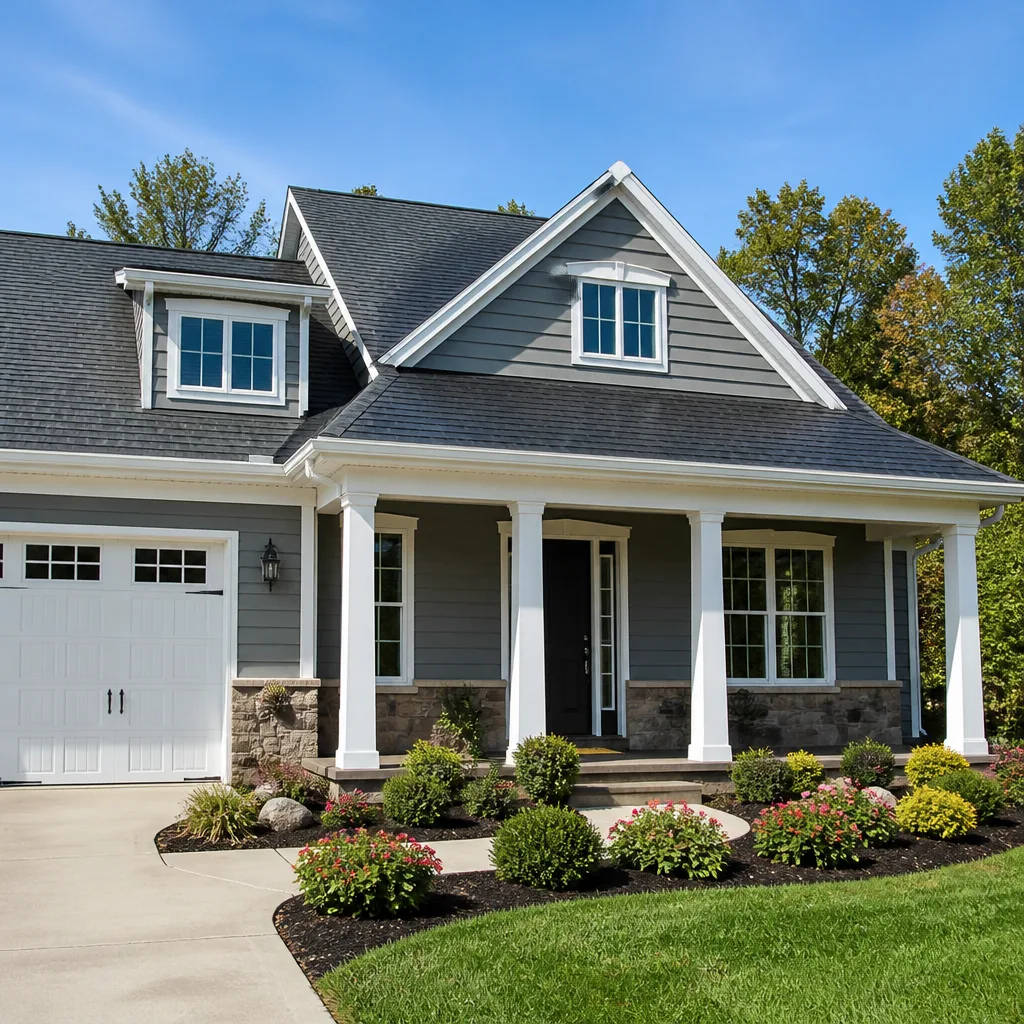
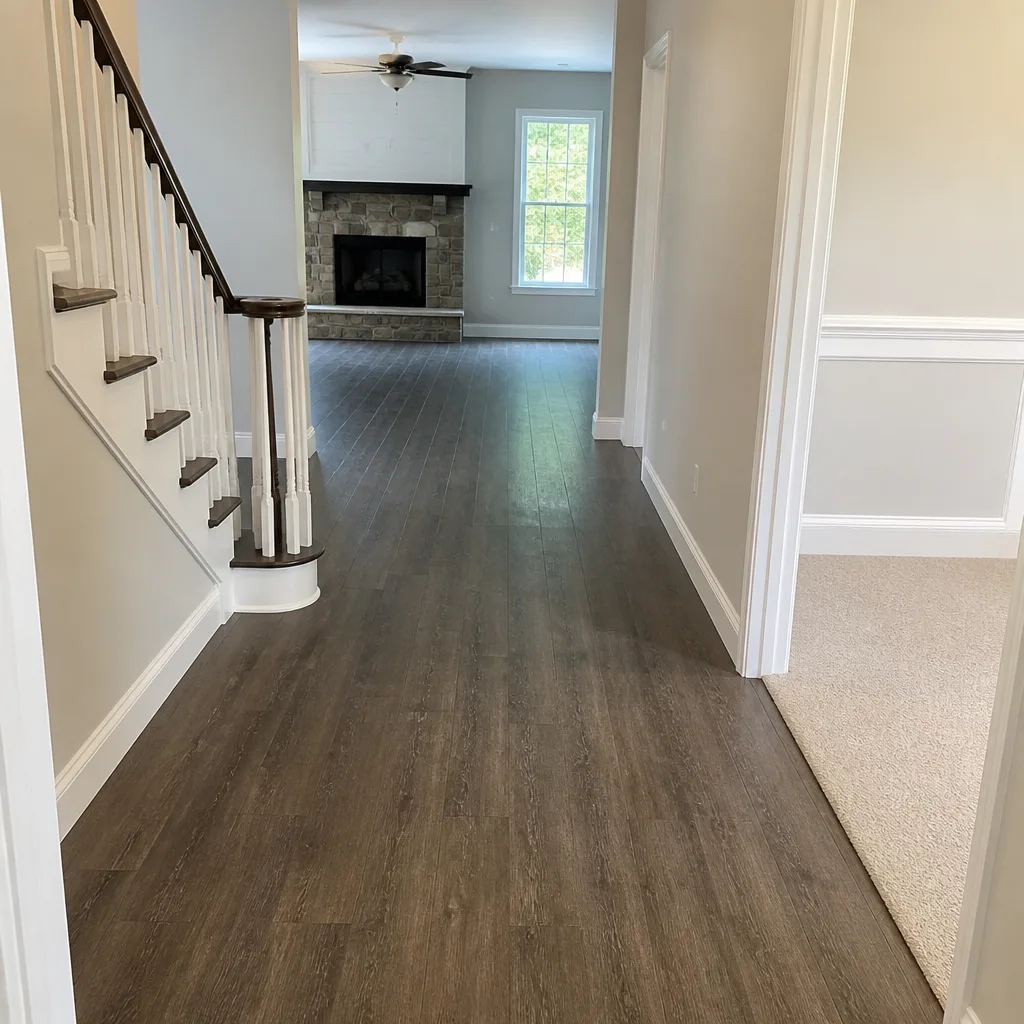
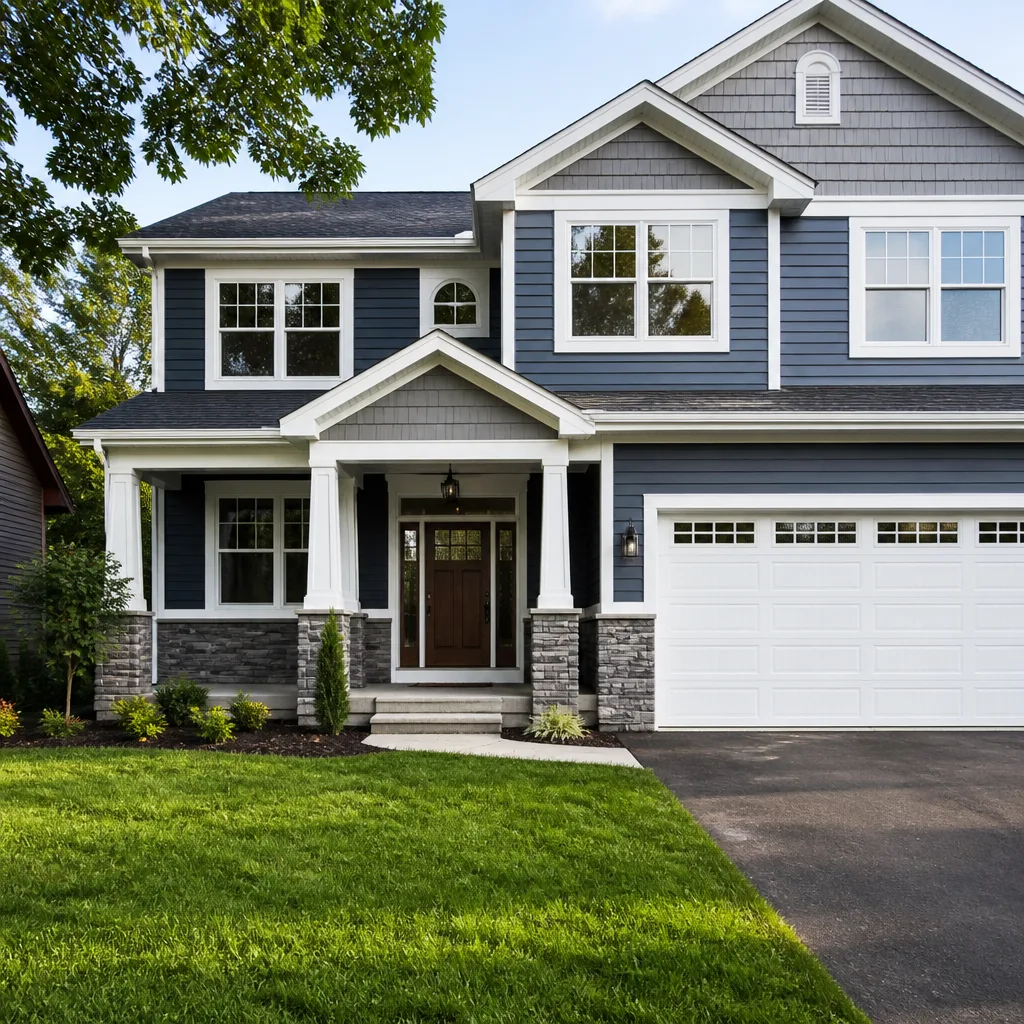
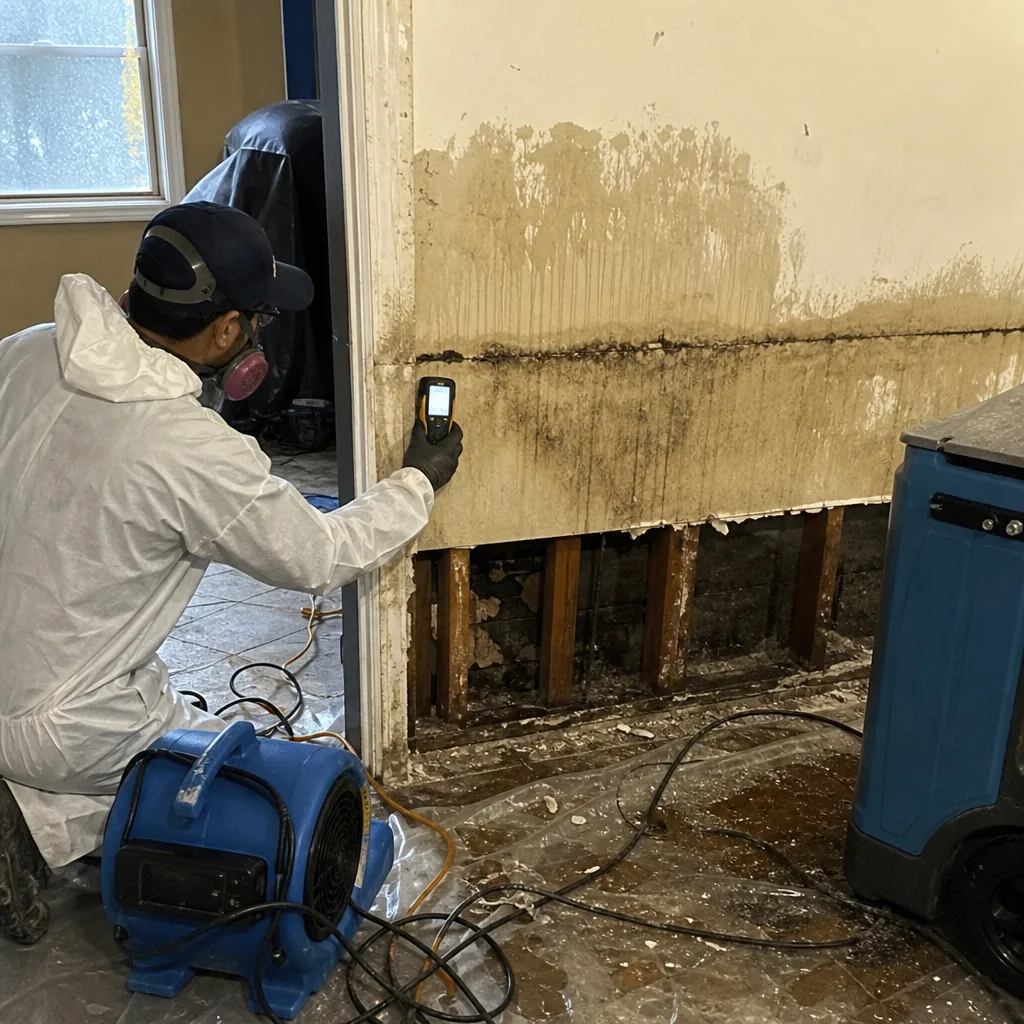 Before
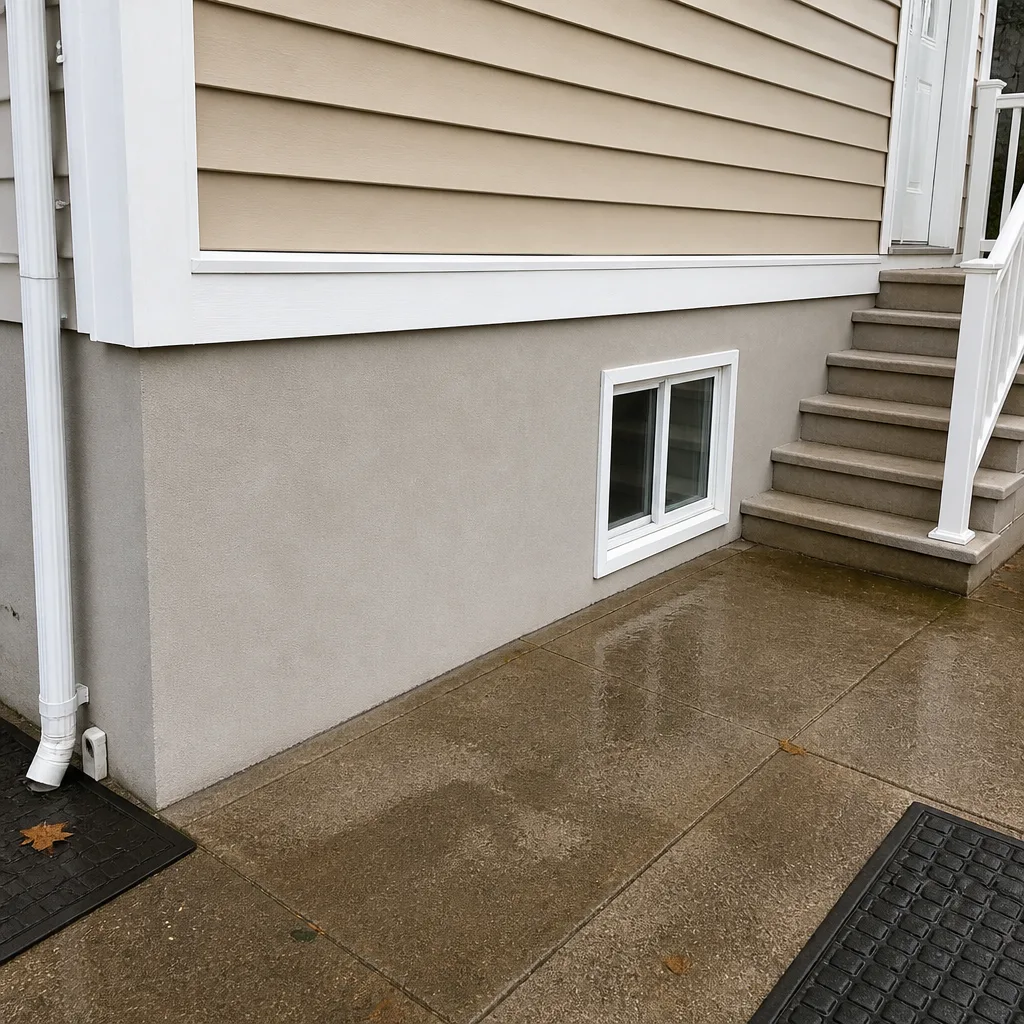 After
After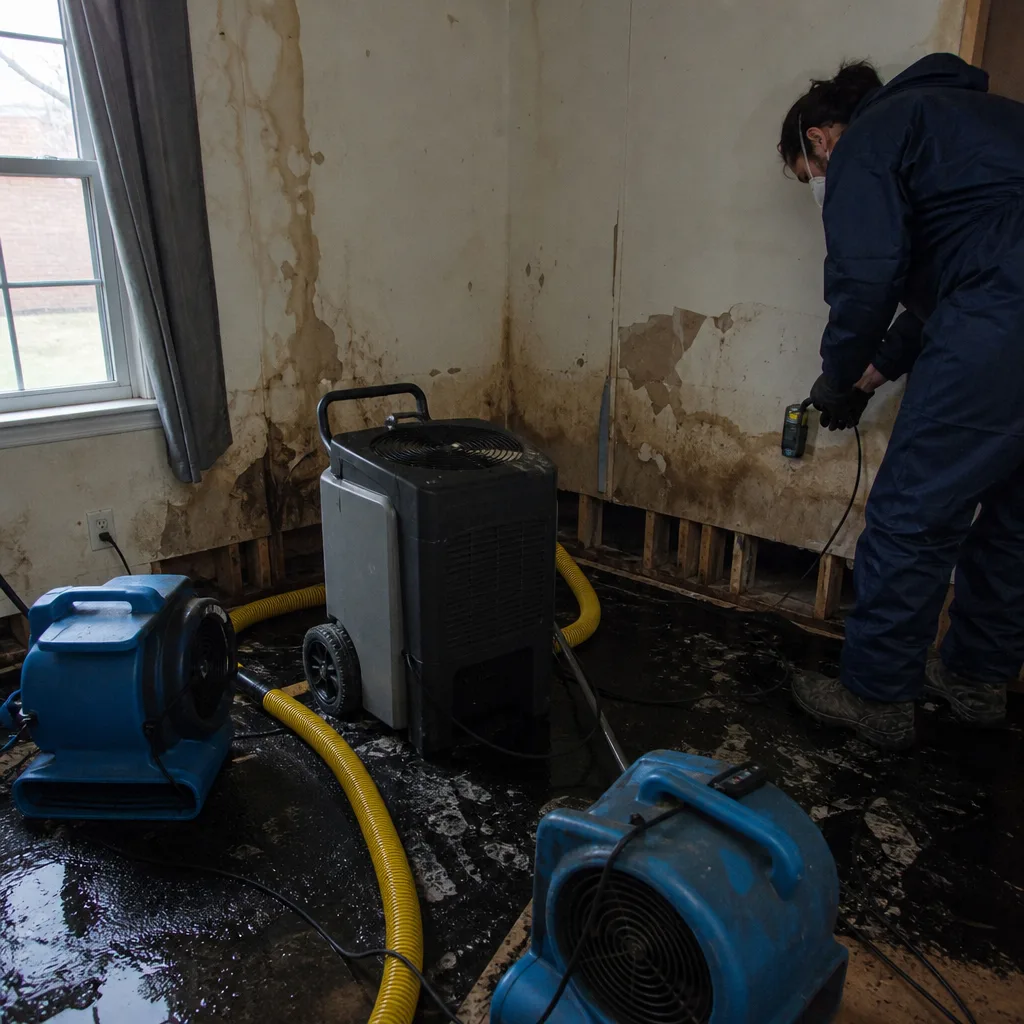 Before
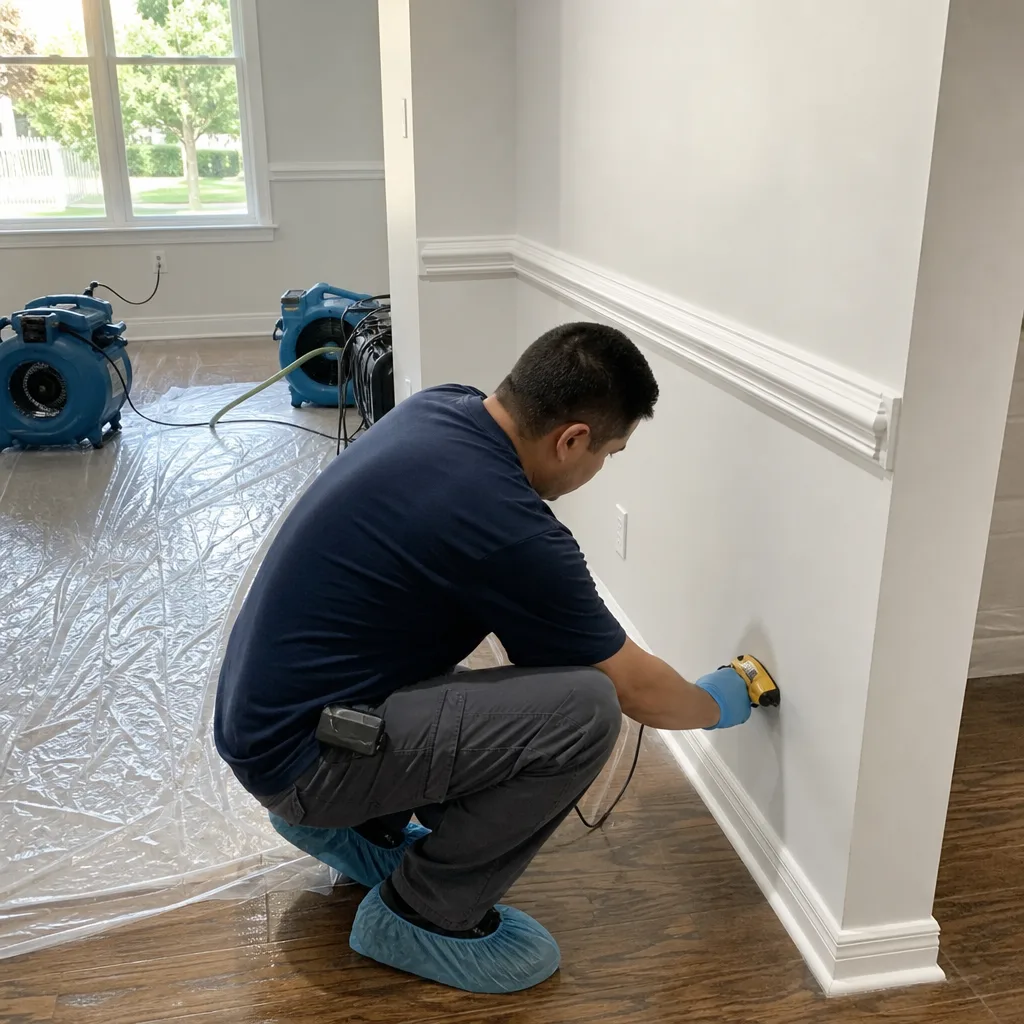 After
After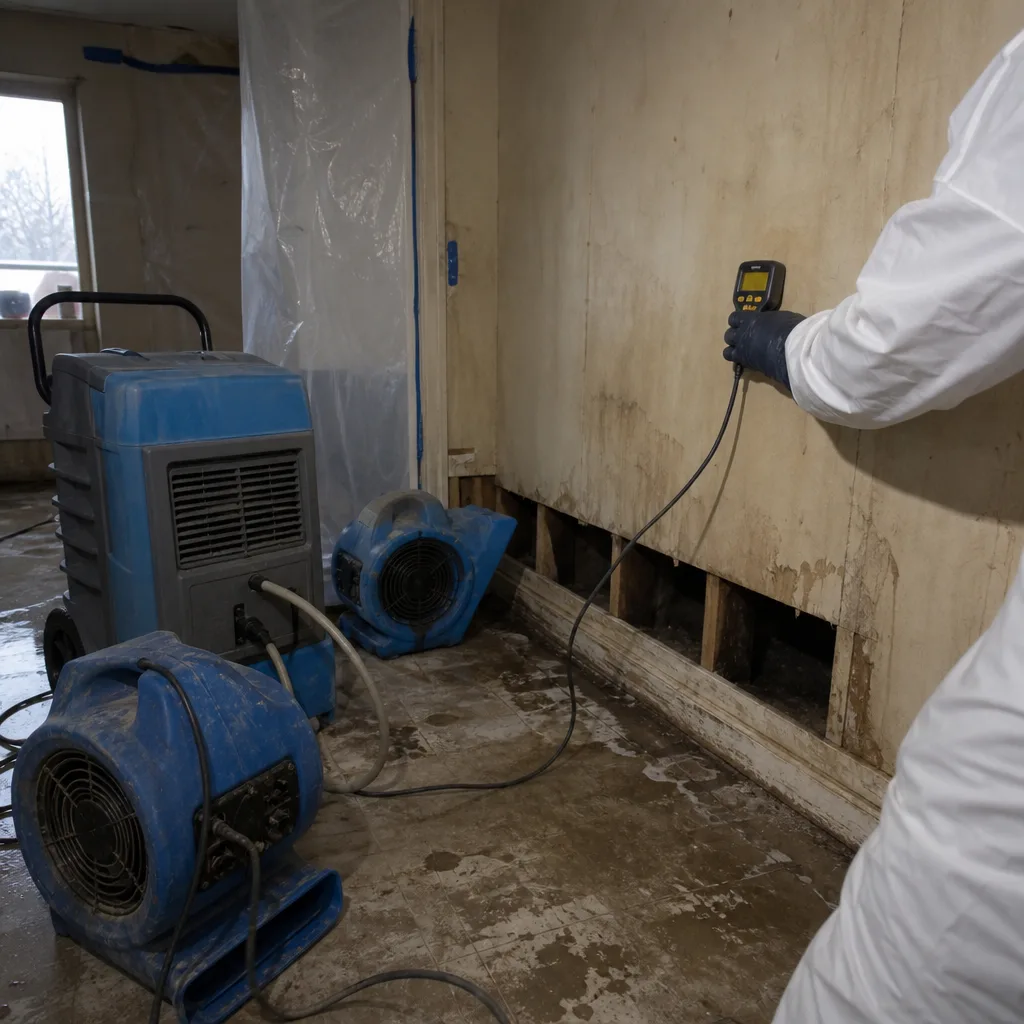 Before
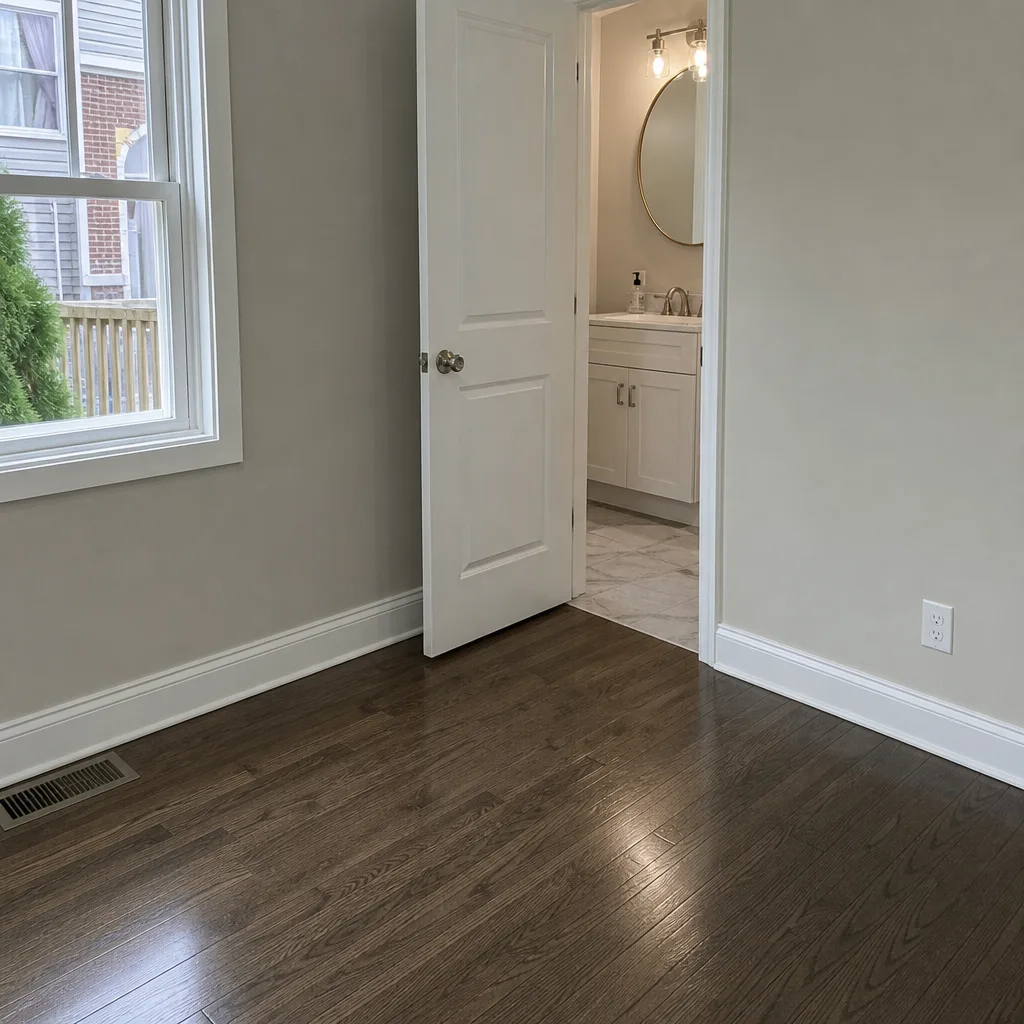 After
After24/7 Emergency Sewage Cleanup in Upper West Side
Sewage backup in a pre-war co-op on the Upper West Side is a different animal from a flooded basement in a single-family house. Black water moves through shared cast-iron waste stacks, behind plaster walls, and across parquet floors you’ll never replace in kind. Our crews reach Upper West Side buildings fast, assess the Category 3 contamination with moisture mapping and thermal imaging, and start extraction the same visit. Call (551) 348-8481 any hour. A live dispatcher answers, not a recording, and a certified crew is rolling toward your building within 45 minutes of confirmation.
The first hour matters because sewage water is aggressively invasive. It wicks upward through plaster-over-lath far faster than modern drywall, and in a 1910 through 1940 building that plaster often hides asbestos insulation. We contain, extract, and stabilize before the contamination spreads into the unit below. Free visual inspection on every job, with a written scope of work before any demolition begins.
Understanding Sewage Cleanup Severity in Upper West Side Properties
Sewage cleanup is defined by water categories, and what comes out of a failed waste stack on the Upper West Side is nearly always Category 3: grossly contaminated water carrying pathogens, bacteria, and raw sewage. Category 1 is clean water from a supply line. Category 2 is significantly contaminated. Category 3 requires full containment, antimicrobial treatment, and removal of porous materials that cannot be sanitized to a safe standard.
In Upper West Side pre-war buildings, severity is compounded by how the building was constructed. Plaster-over-lath wicks moisture upward at a rate modern drywall doesn’t match, which means the visible stain on your wall is usually the smallest part of the problem. Hidden cavities behind 1920s plaster, around cast-iron risers, and under herringbone parquet hold Category 3 water where air movers alone won’t reach it. Our techs use moisture mapping and hygrometers to track moisture through wall cavities and subfloors, and we log readings daily until the structure meets the dry standard. Asbestos-containing pipe insulation and floor tile mastic are nearly universal in pre-1978 construction here, so abatement testing happens before any wall comes down. This is not a job for a carpet cleaning crew with a wet-vac. It requires IICRC-certified technicians, professional-grade extraction equipment, and a written protocol.
Why Upper West Side Property Owners Choose Floodline Restoration Co.
- 45-minute response commitment. We dispatch from New York City and crews know the Upper West Side’s buildings, supers, and doormen. You’ll get a live ETA, not a vague window.
- 24/7 live answer. A real person picks up the phone at 2 a.m. The dispatcher knows sewage, knows the questions to ask, and gets a certified crew moving.
- IICRC-certified technicians. Our crews carry WRT and AMRT certifications, which matter when you’re dealing with Category 3 water and antimicrobial protocols. They know what containment means in a pre-war apartment, not just in theory.
- Free visual inspection. Before any work begins, we walk the loss with you, show you what we’re seeing, and explain the scope in plain English.
- Direct insurance billing. We deal with your adjuster directly, provide photo documentation and drying logs, and bill the carrier so you’re not playing messenger.
- One team from extraction to reconstruction. The same Floodline Restoration Co. crew that performs Sewage Cleanup also rebuilds what needs rebuilding. No mid-job handoff to a third party.
Our Sewage Cleanup Process
Inspection & Assessment
We start with a visual and moisture-mapped assessment of the affected area. Thermal imaging finds water you can’t see. We identify the sewage source, determine the category of water, and check for asbestos-containing materials before any wall is opened. You receive a written scope of work and a firm price before we start.
Extraction & Stabilization
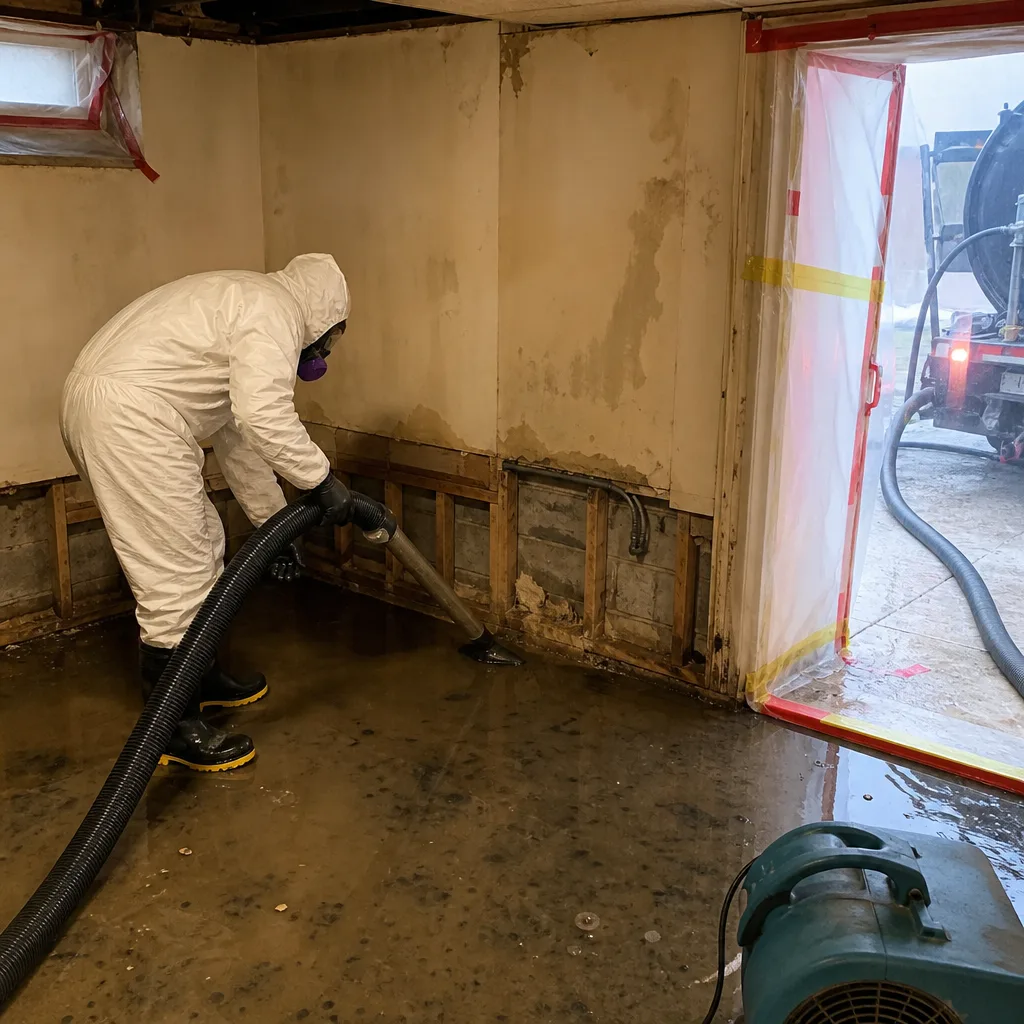
We remove standing sewage water using truck-mounted and portable extraction equipment. In a high-rise, that means working around elevator access and building staff. We extract until no standing water remains, then stabilize the area to stop further spread through wall cavities and floor penetrations.
Drying & Dehumidification
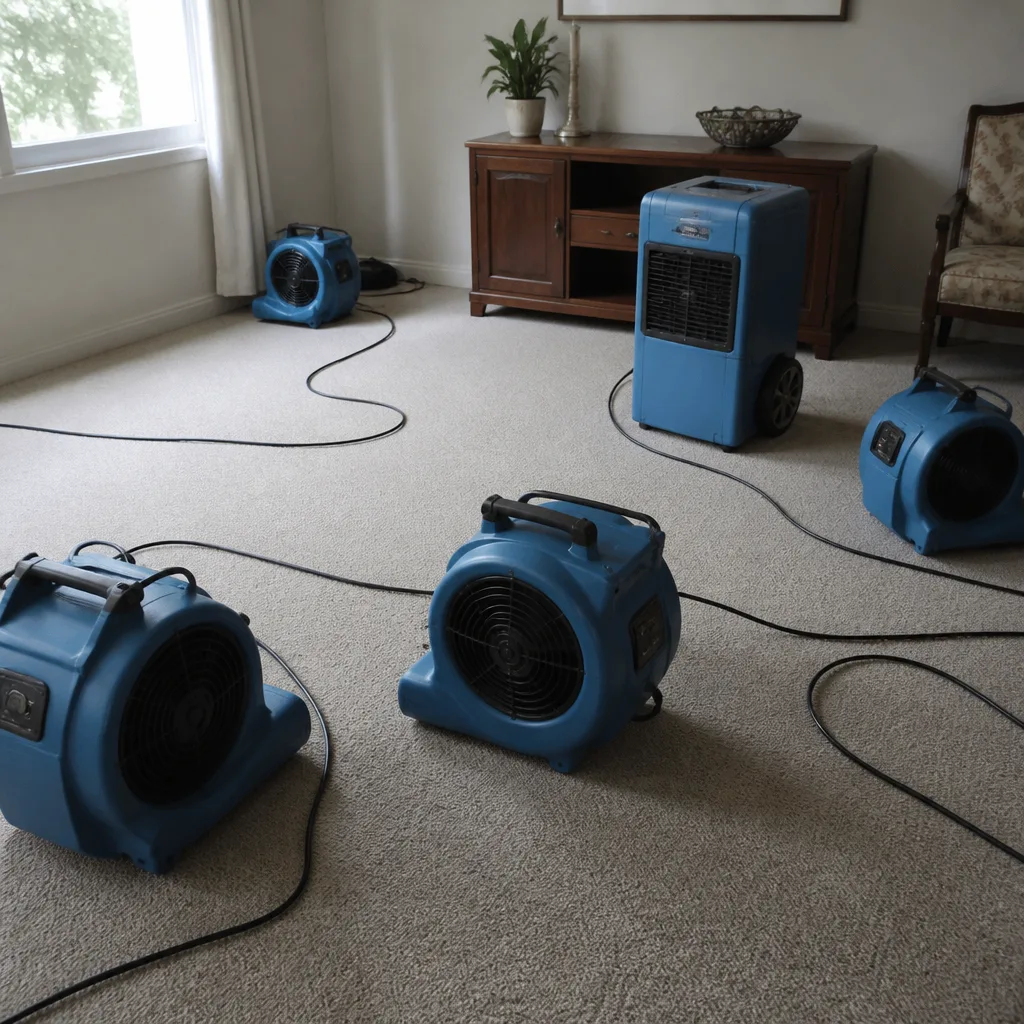
Professional-grade Dri-Eaz and Phoenix dehumidifiers and XPOWER air movers go in. Containment stays in place. We take daily moisture readings and log them, because your insurer wants proof the area actually dried to standard before rebuild starts.
Cleaning & Sanitization
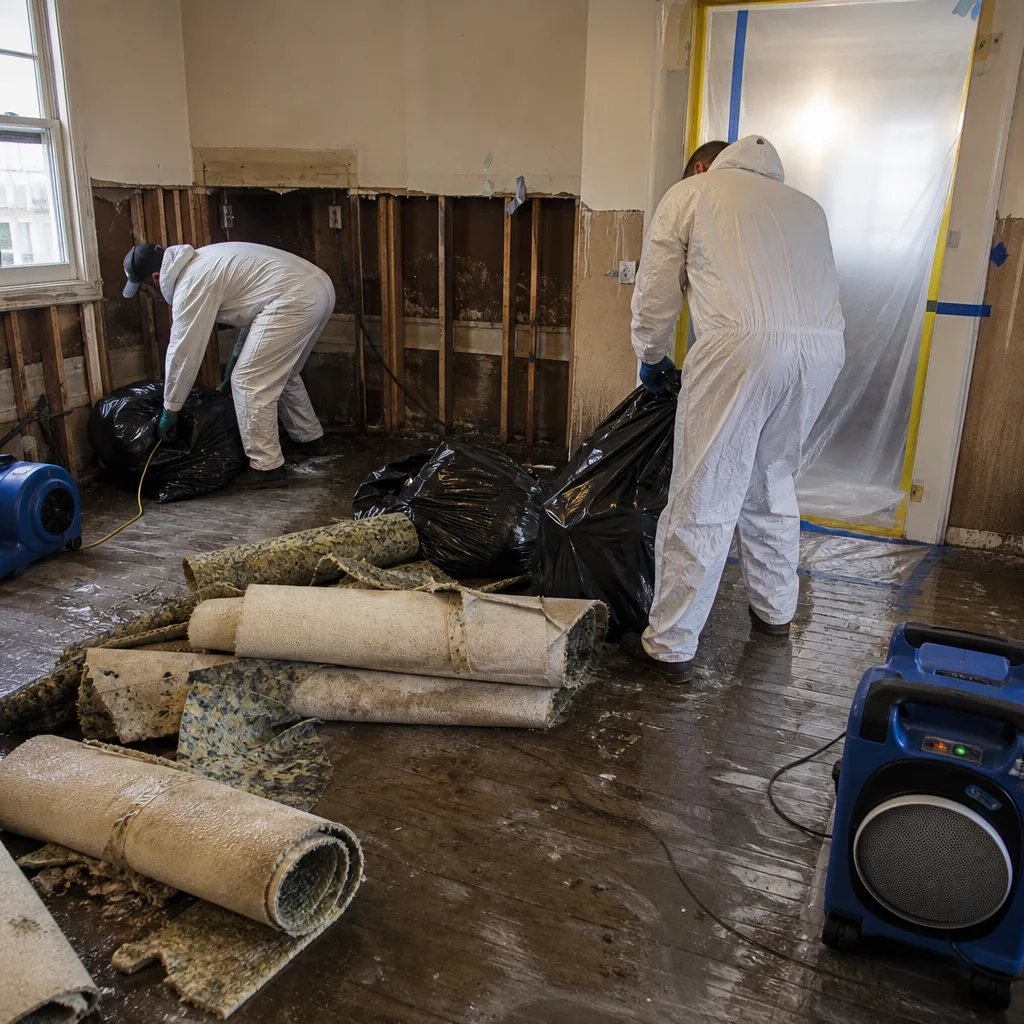
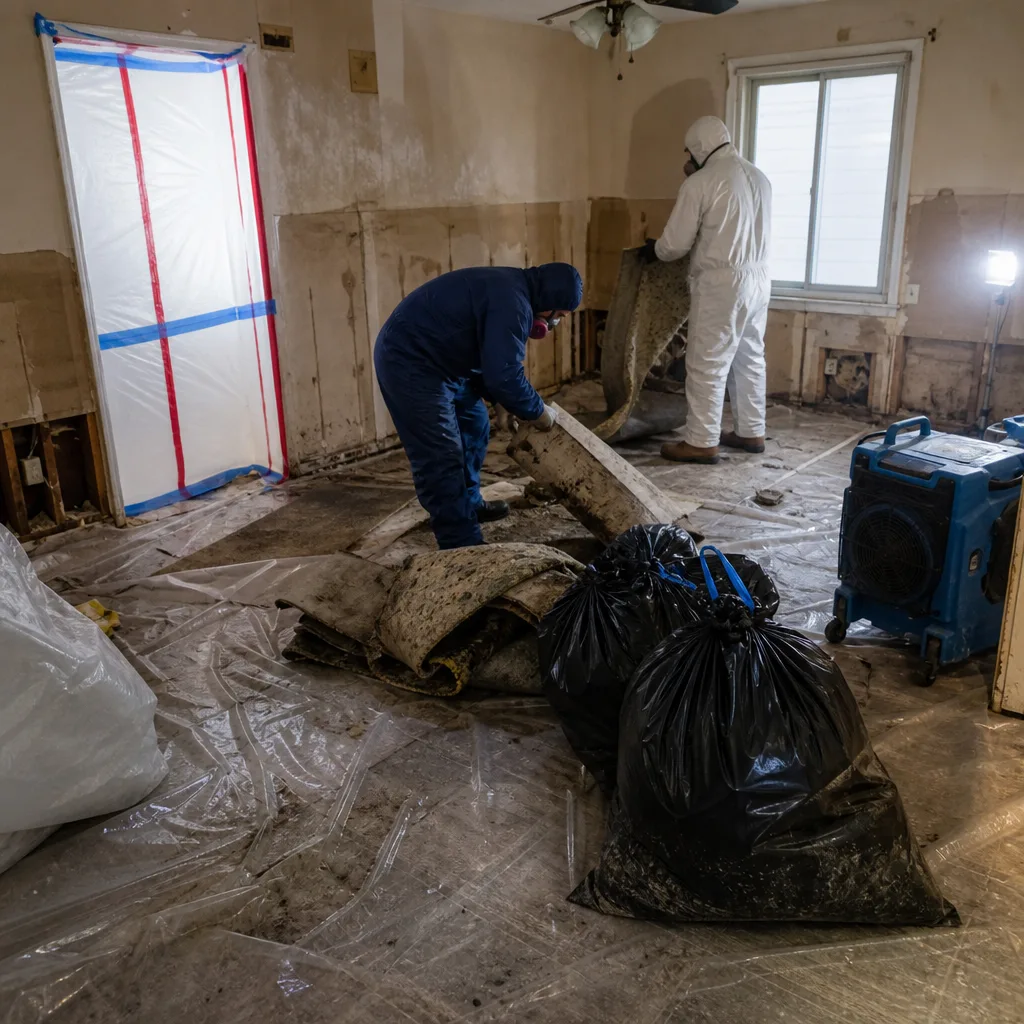
Every surface in the affected area is cleaned, then treated with an EPA-registered antimicrobial. Porous materials that cannot be sanitized, such as sewage-soaked carpet, pad, and certain insulation, are removed and disposed of following local regulations.
Containment & Air Scrubbing
For Category 3 sewage losses, we install physical containment with negative air pressure and HEPA-filtered air scrubbers. This prevents sewage-borne particles and mold spores from migrating into unaffected areas of your apartment or neighboring units through shared air pathways.
Repairs & Restoration
Floodline Restoration Co. rebuilds what we remove. That includes plaster repair, subfloor replacement, flooring restoration, and paint to match. The same crew that extracted the sewage handles the rebuild, and the work is covered by the 90-Day Done Right Promise in writing.
Need Emergency Sewage Cleanup in Upper West Side Now?
Crews minutes away, answering live 24 hours a day. The sooner we start, the less it costs.
Working With Your Insurance Company
Sewage backup coverage is not automatic on every policy, and on the Upper West Side the question gets more complicated when a shared waste stack is involved. Was the failure in your unit, or in the building’s common pipe? Your co-op or condo association may have its own policy with its own adjuster, and your individual policy may have a separate sewage backup rider. We document from the first hour so every party has a clear, defensible record of what happened and what was required.
We photograph everything, room by room, before demolition starts and during every phase. We provide moisture readings, daily drying logs, and a detailed line-item scope of work written to insurance industry standards. Our team communicates directly with your adjuster, and with the building’s managing agent, so you’re not chasing paperwork while your apartment is under containment. Direct billing to your carrier is standard on every Floodline Restoration Co. job.
What We Provide Your Insurer
- Thorough documentation of the loss
- Photos of all damage, room by room
- Moisture readings and drying logs
- A detailed, line-item scope of work
- Direct coordination with your carrier
Built for Upper West Side’s Loss Calendar
Sewage losses on the Upper West Side do not happen at random. They follow a pattern, and that pattern is tied to the neighborhood’s aging infrastructure and abrupt temperature swings. In January and February, Manhattan’s freeze-thaw cycles punish aging brick and limestone facades, but indoors the bigger problem is radiators firing hard after a cold snap. Steam heat systems that sat dormant since October come back under pressure, and the first deep freeze sends condensate through failed traps and into units below. When that water picks up sewage from a cracked waste line, you have a Category 3 mess disguised as a heating failure.
Spring thaw brings its own problems. Snowmelt and heavy rain find their way into building foundations and basement sumps, and in older buildings on side streets off Broadway, floor drains that haven’t moved water in decades back up when the municipal system surges. Summer thunderstorms drop enough rain in an hour to overload aging sewer laterals across Upper West Side blocks from West 72nd to West 96th. Each season has a signature failure mode, and our crews have seen every one of them in this neighborhood’s buildings. Curt Bowman founded Floodline Restoration Co. in 2010 around a dispatch board, not a sales desk, and the company has built its local reputation on showing up prepared for what the season is actually doing to Upper West Side plumbing.
Sewage Cleanup Across Upper West Side’s Neighborhoods
The Upper West Side stretches from West 59th to West 110th, from Central Park to the Hudson River, and the building stock shifts block by block. Along Riverside Drive, we routinely handle losses in grand pre-war co-ops where original cast-iron waste stacks run through multiple units and the building’s managing agent has a strict approved-vendor requirement. A toilet overflow on the seventh floor means coordinating with the super to shut the riser, the board to approve scope, and the unit owner to authorize our Sewage Cleanup team’s access.
In the West 80s and 90s off Amsterdam and Columbus Avenues, the housing stock is dense with early-1900s tenement conversions and mid-rise co-ops, many with original one-pipe steam systems and cast-iron drains. Sewage backup in these buildings often involves multiple adjacent units because the waste stack serves a vertical column of apartments, and ceiling penetrations let Category 3 water drop into the unit below within hours.
The blocks near Lincoln Center, between West 62nd and West 66th, are a mix of high-rise co-ops and older rental buildings where building management typically moves fast on mitigation but wants a documented scope before any wall is opened. Around Columbia University’s southern edge, from Morningside Heights down West 106th through 110th, we see a concentration of 1910s and 1920s buildings with original plumbing still in service. The response route along Broadway and West End Avenue puts our crews within minutes of all of it.
Specialized Sewage Cleanup Services We Offer in Upper West Side
Sewage Backup Cleanup
When a shared waste stack backs up on the Upper West Side, the sewage usually enters through the lowest open point in the line: a toilet, a bathtub drain, or a floor drain in a lower-floor unit. We isolate the source first, coordinate with the building super to shut the riser, then extract and contain. This is the service most co-op and condo owners need when they call us at 11 p.m. on a Sunday.
Toilet Overflow Cleanup
Toilet overflows in pre-war UWS buildings rarely stay in one bathroom. Contaminated water moves through the floor, into the cavity between the plaster ceiling and the unit below, and often into common areas. We handled one on Riverside Drive where a 90-year-old cast-iron waste line had rusted through behind the plaster wall. Our techs set up containment with negative air in the bathroom closet, moisture-mapped the contamination into the adjacent parquet floor, and coordinated with the super to shut the riser while we completed black water extraction.
Black Water Extraction
Black water is the classification for sewage, flood water from rising rivers, and any water containing fecal matter or harmful biological agents. In Upper West Side apartment buildings, black water extraction almost always requires containment, HEPA air scrubbing, and removal of saturated porous materials. Our Injectidry systems reach into wall cavities and under cabinets where standing extraction equipment cannot reach.
Sanitization & Disinfection
After extraction and removal, every affected surface gets cleaned and treated with an EPA-registered antimicrobial. In Category 3 losses, we also fog the contained area where indicated. This is not a surface spray-and-go. We treat the cavity behind the wall, the subfloor, and any material that can be safely retained, and we document the antimicrobial treatment for your insurer.
Septic Failure Cleanup
True septic systems are rare in Upper West Side buildings, but several older properties along the neighborhood’s western edge and a handful of converted townhouses still have private waste systems or aging laterals that behave like septic failures. We identify the source, extract the contamination, and coordinate with licensed plumbers to repair the failure before it recurs.
Crawl Space Sewage Removal
Some Upper West Side townhouses and smaller pre-war buildings have shallow crawl spaces or cellar-level cavities beneath the first floor, where a broken waste line can pool sewage for days before anyone notices. We remove the standing contamination, dry the space to standard, and treat the area for odor and microbial growth.
What happens when you call
- 1
A real person answersNo phone trees - you reach a local pro.
- 2
You get an upfront price rangeHonest numbers before anyone is dispatched.
- 3
A background-checked tech heads outLicensed & insured, dispatched right away.
- 4
You approve before work beginsNothing starts until you say go.
Sewage Cleanup Costs in Upper West Side, NY
Sewage cleanup in Upper West Side buildings runs higher than the metro average because the work almost always requires containment, asbestos testing, and coordination with building management. A straightforward toilet overflow involving a single bathroom and minimal demolition typically costs $1,800 to $4,200. A multi-room sewage backup with black water extraction, containment, antimicrobial treatment, and plaster removal in a pre-war co-op routinely falls between $5,000 and $12,000. When the contamination reaches into a neighboring unit, total restoration can exceed $15,000 once rebuild and flooring are included.
What moves the price is demolition. If the sewage soaked into plaster-over-lath walls or under herringbone parquet, the cost rises because those materials must be removed, tested for asbestos, and replaced to match the building’s original character. Access also matters: a fifth-floor walk-up with no service elevator costs more than a first-floor unit off a service entrance. Insurance coverage depends on your policy’s sewage backup rider and whether the source was in your unit or a common pipe. Call (551) 348-8481 for a free visual inspection and a firm written estimate before any work begins.
We Also Serve Cities Near Upper West Side
Our Sewage Cleanup teams regularly respond to losses in Sewage Cleanup across the surrounding Manhattan neighborhoods, including Midtown West, Washington Square, Midtown Manhattan, and Murray Hill. If your building sits just outside the Upper West Side boundary, call us. We’ll be there when we say.
Upper West Side Sewage Cleanup Questions, Answered
Why does sewage cleanup in an Upper West Side pre-war building take so much longer than in a suburban house?
Because in a suburban house, one owner, one policy, and one structure means a crew can start demolition the same day. In an Upper West Side pre-war co-op or condo, a sewage backup in one unit usually involves a shared waste stack, a building super with control of the riser shut-off, a managing agent with an approved vendor list, and a co-op board that must review the scope before a single piece of plaster comes down. Add in mandatory asbestos testing on pre-1978 construction and the timeline expands from two days to two weeks. That’s the coordination burden of this building type, and we’ve built our process around it. Call (551) 348-8481 to get a written scope started the same day.
Can you dry out sewage-contaminated plaster in a landmark-adjacent co-op, or must it always be removed?
You cannot safely dry and keep sewage-contaminated plaster. Plaster is porous, and Category 3 water forces pathogens deep into the material. Antimicrobial surface treatment won’t reach what’s inside the wall cavity. In landmark-adjacent buildings, that means the board and sometimes the Landmarks Preservation Commission may require matching replacement work, which we can coordinate. But attempting to save sewage-soaked plaster creates a hidden contamination problem that will show up as odor or mold months later. We remove it, treat the cavity, and rebuild to match.
What does containment really mean for a sewage backup in a UWS apartment building?
Containment means setting up a physical barrier around the affected area and creating negative air pressure so that airborne sewage particles and mold spores cannot flow into your hallway or your neighbor’s unit. In an apartment building, this matters more than in a house because shared corridors, elevator shafts, and pipe chases all move air between units. Our techs install containment with HEPA-filtered air scrubbers running before demolition starts, and the barrier stays up until the area is clean and dry to standard. Without it, the building’s shared air system spreads the problem.
How do you handle a sewage backup when the co-op board requires its own approved vendor list?
Co-op boards and managing agents on the Upper West Side sometimes maintain an approved vendor list, which means the board must approve any restoration contractor before work starts. This is exactly the bottleneck that can leave a sewage-soaked apartment sitting untreated for 48 to 72 hours while mold begins colonizing saturated plaster. We’ve navigated this many times. We provide a written scope, certifications, and insurance documentation to the board immediately, and while approval is pending we can take stabilization steps that don’t require demolition, such as extraction and containment, to prevent the damage from spreading. Call us at (551) 348-8481 and we’ll start the process right away.
Do you need to test for asbestos before removing sewage-soaked plaster in a pre-1978 UWS building?
Yes. Pre-1978 construction on the Upper West Side almost universally contains asbestos in pipe insulation, floor tile mastic, and sometimes textured plaster. Federal, state, and city regulations require testing before demolition when these materials may be disturbed. We coordinate with certified asbestos inspectors to sample before any wall or floor comes out. If asbestos is present, we work with licensed abatement contractors to remove it properly before we continue mitigation. Skipping this step is illegal and dangerous, and no legitimate restoration company will do it. Call (551) 348-8481 for guidance on your specific building.
How fast can crews actually reach an Upper West Side address?
Our crews respond within 45 minutes of confirmation on sewage emergencies in Upper West Side buildings. That’s from our New York City dispatch to your door, whether you’re on Riverside Drive at West 105th or on Columbus Avenue at West 75th. A live dispatcher answers the phone 24/7 and starts the process immediately, no recording, no call center runaround. The sooner extraction begins, the less contamination spreads into wall cavities and the unit below. Call (551) 348-8481 for immediate dispatch.
Does the homeowner’s insurance typically cover sewage cleanup in an Upper West Side co-op?
It depends on where the sewage came from and what your policy covers. If the backup originated in your unit’s own plumbing, your individual policy and its sewage backup rider will typically respond. If the source was a common waste stack or building pipe, the building’s master policy, the managing agent, and your individual carrier all come into play. We document the source, photograph everything, and provide the drying logs and line-item scope your adjuster needs to sort out responsibility. Our team talks to all parties directly, so you’re not left arguing with a co-op board while your apartment sits under containment. Call (551) 348-8481 for a free inspection and documentation start.
Can we stay in our apartment during sewage cleanup on the Upper West Side?
For a small contained loss in one bathroom, you can usually remain in the unit. For larger Category 3 losses requiring full containment, negative air pressure, and demolition across multiple rooms, we recommend relocating temporarily, especially if drying equipment will run continuously for several days. The drying phase is loud and the air inside the contained area is not safe to occupy. In pre-war buildings where the loss extends into a neighboring unit, the board may also require temporary restrictions. We’ll give you an honest answer at the first inspection, not after equipment is already in your living room. Call (551) 348-8481 for a free visual assessment.
Serving Upper West Side, NY - Our Local Coverage Area
We’re based in the Upper West Side area and know this community well. Use the map below to see our service coverage - if you’re nearby, we can almost certainly help.
Contact Floodline Restoration Co. for Upper West Side Sewage Cleanup
If you’re dealing with a sewage backup right now, call (551) 348-8481. A live dispatcher will answer, ask the right questions, and get a certified crew moving toward your Upper West Side building. If the situation isn’t an emergency yet but you suspect a slow leak or a failing waste stack, call the same number for a free visual inspection and a firm written scope before the problem spreads. Curt Bowman built Floodline Restoration Co. around the 90-Day Done Right Promise because a contractor should be willing to put the guarantee in writing and stand behind it. Done right, and backed in writing. That’s the standard.
Written by Curt Bowman, Owner at Floodline Restoration Co., serving Upper West Side, New York.