
Free visual inspection and a written scope of work before any mitigation begins - photos, moisture readings, and drying logs go in your claim file
The scope we write is the scope we bill. Anything new gets shown to you, in writing, before we touch it.
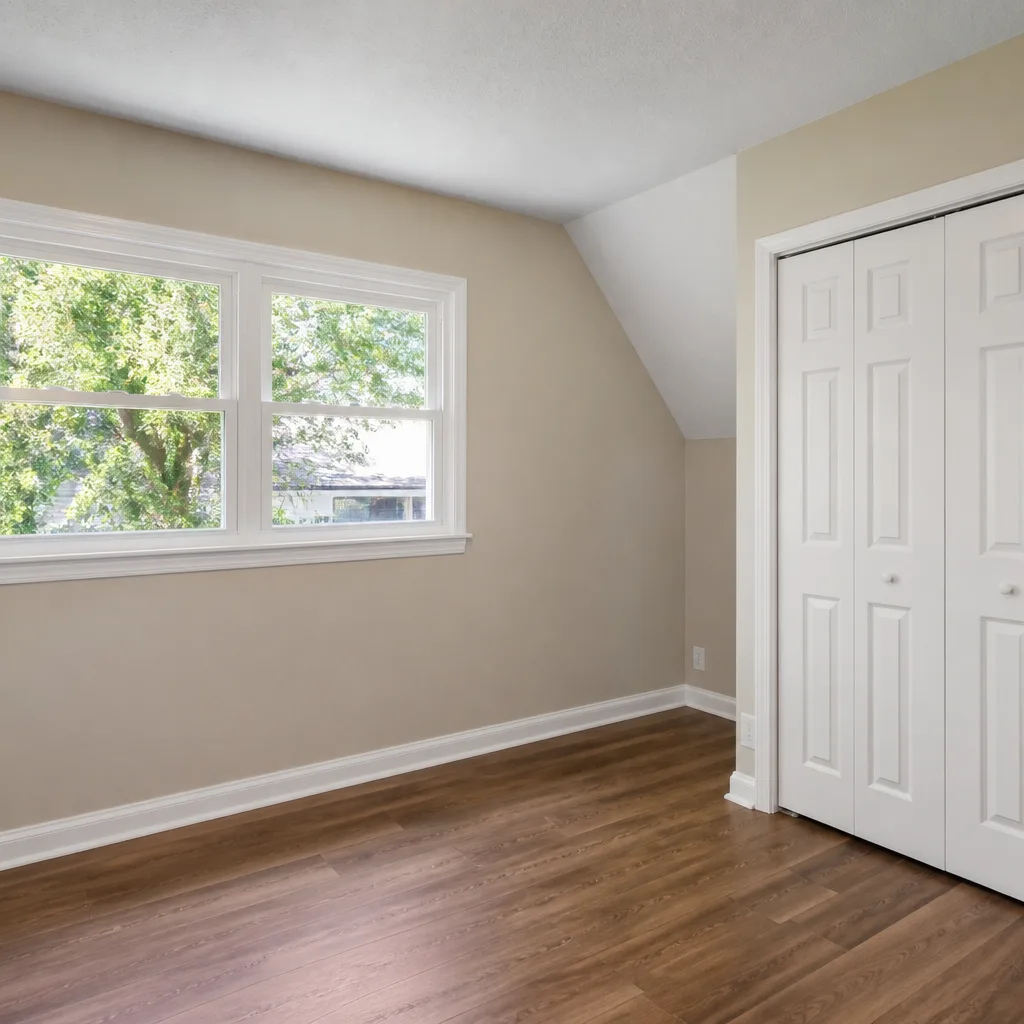
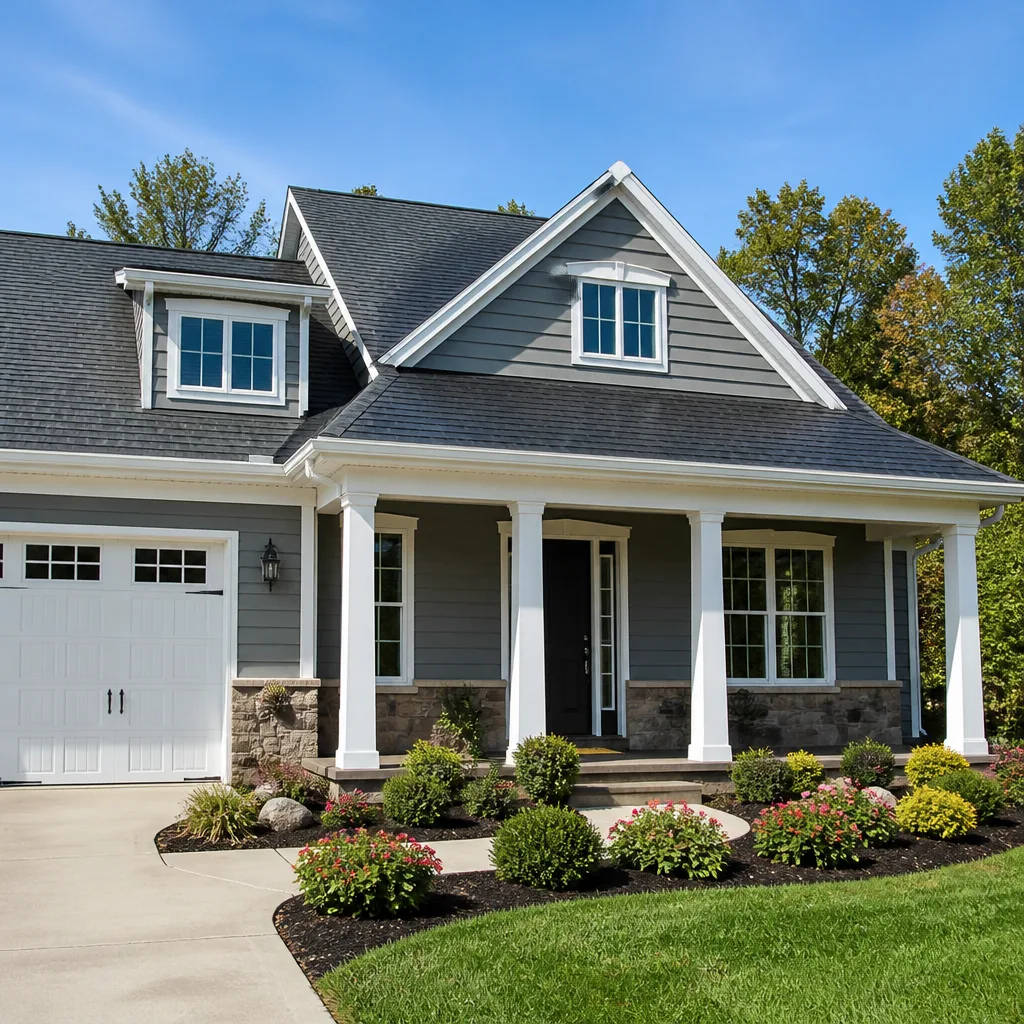
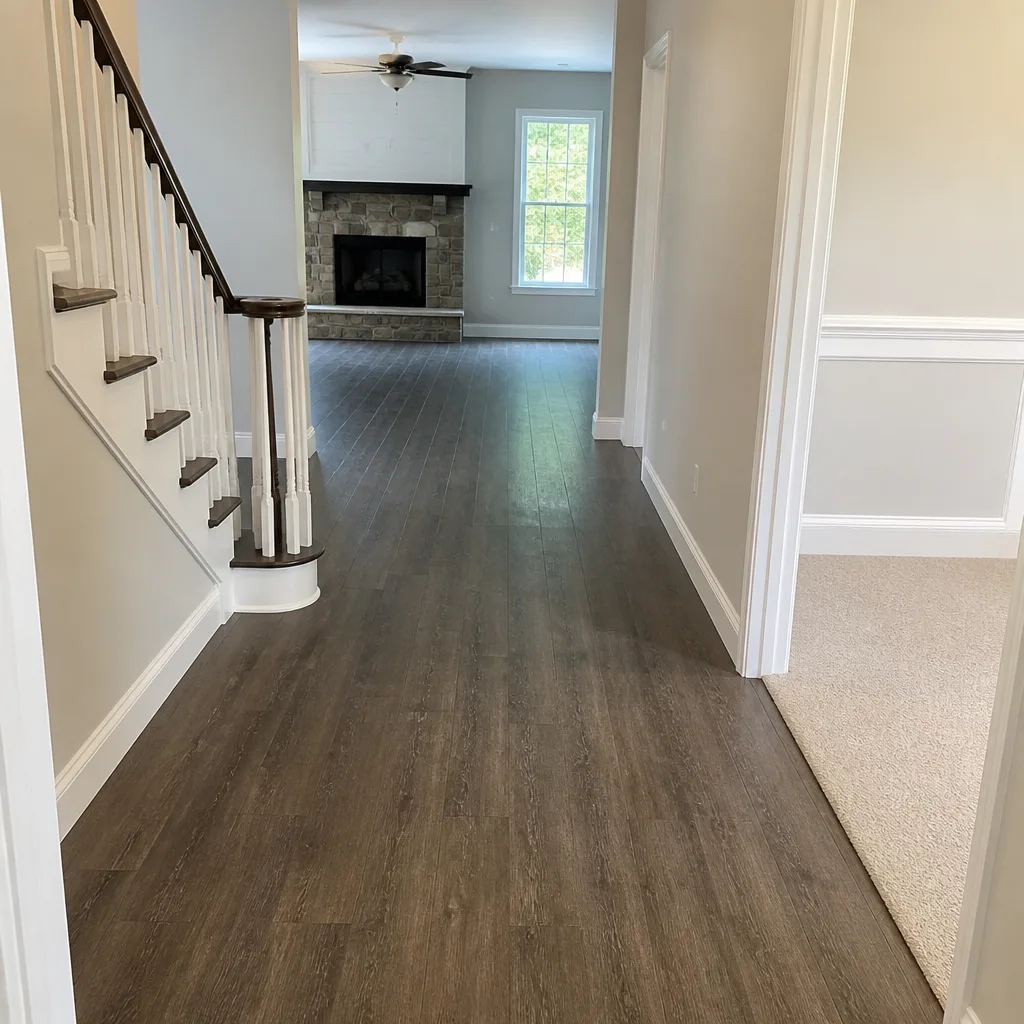
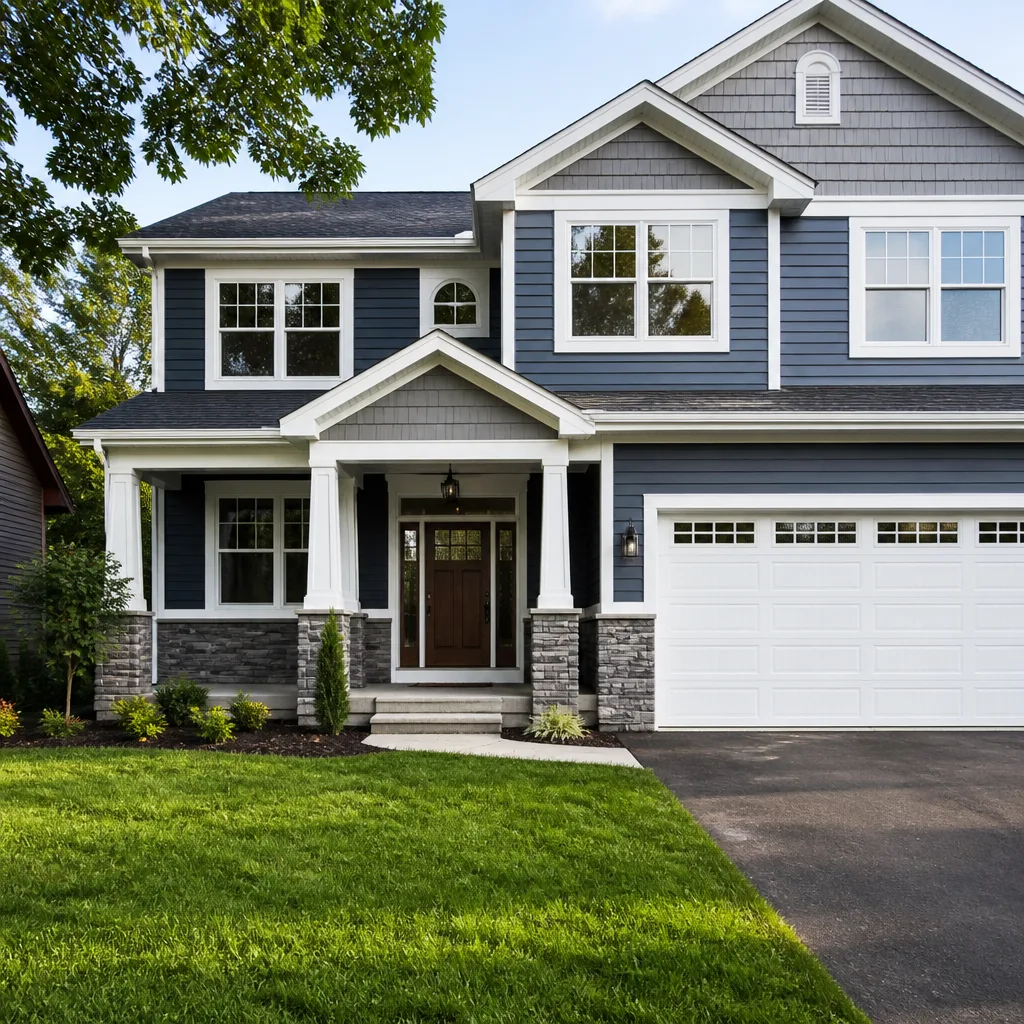
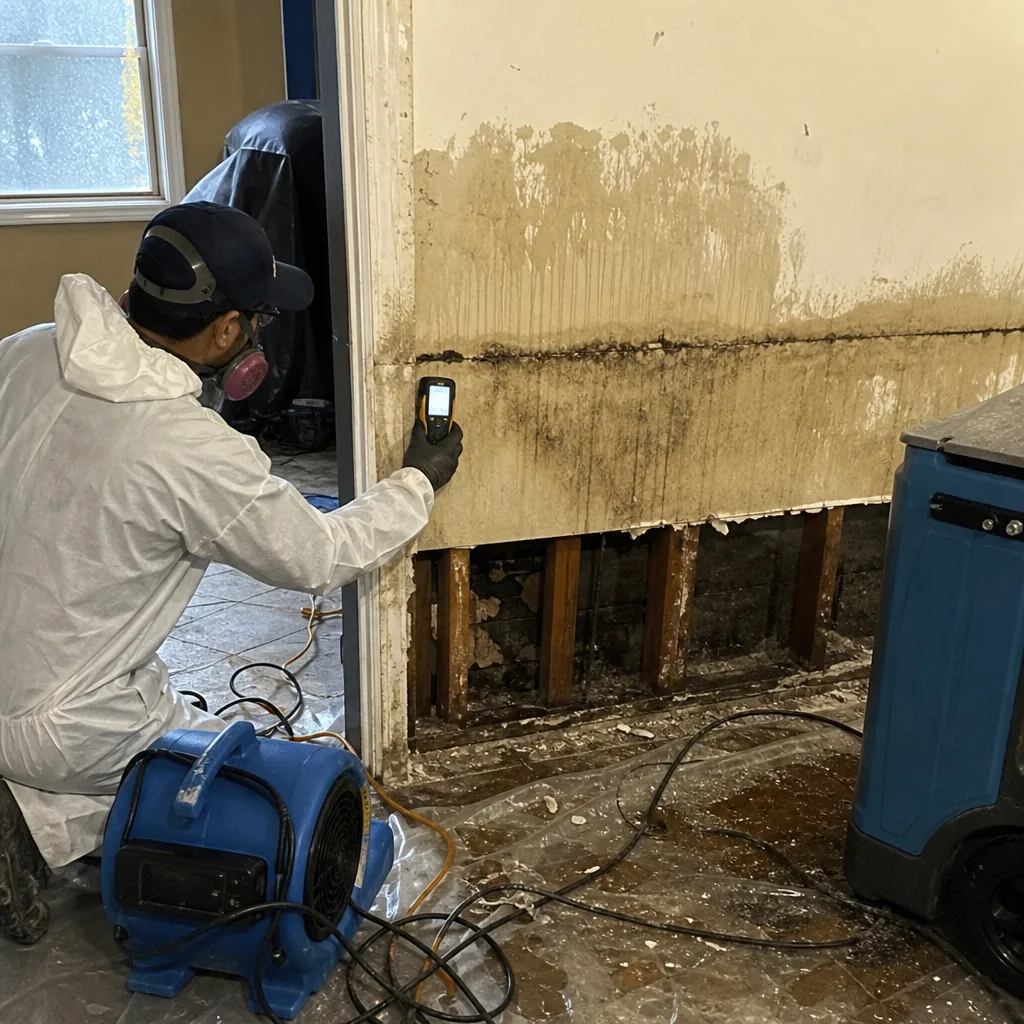 Before
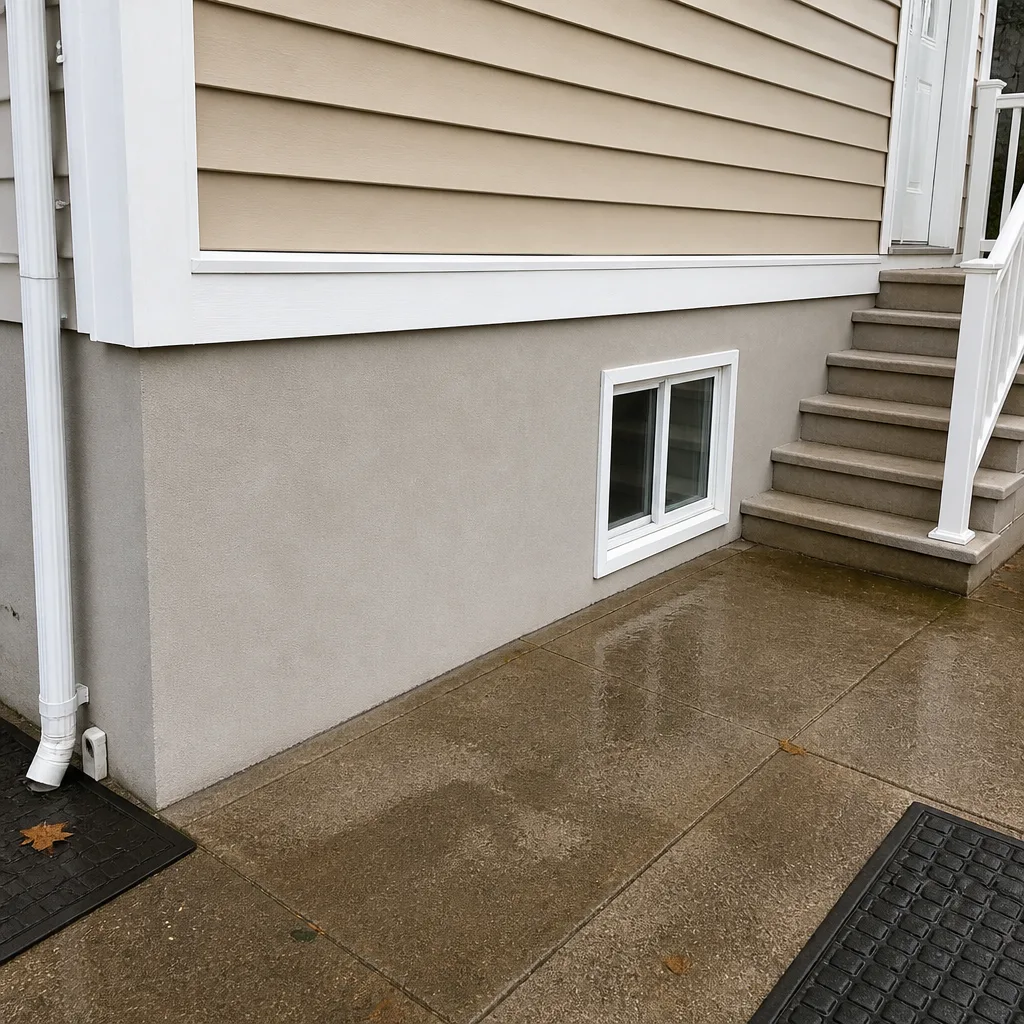 After
After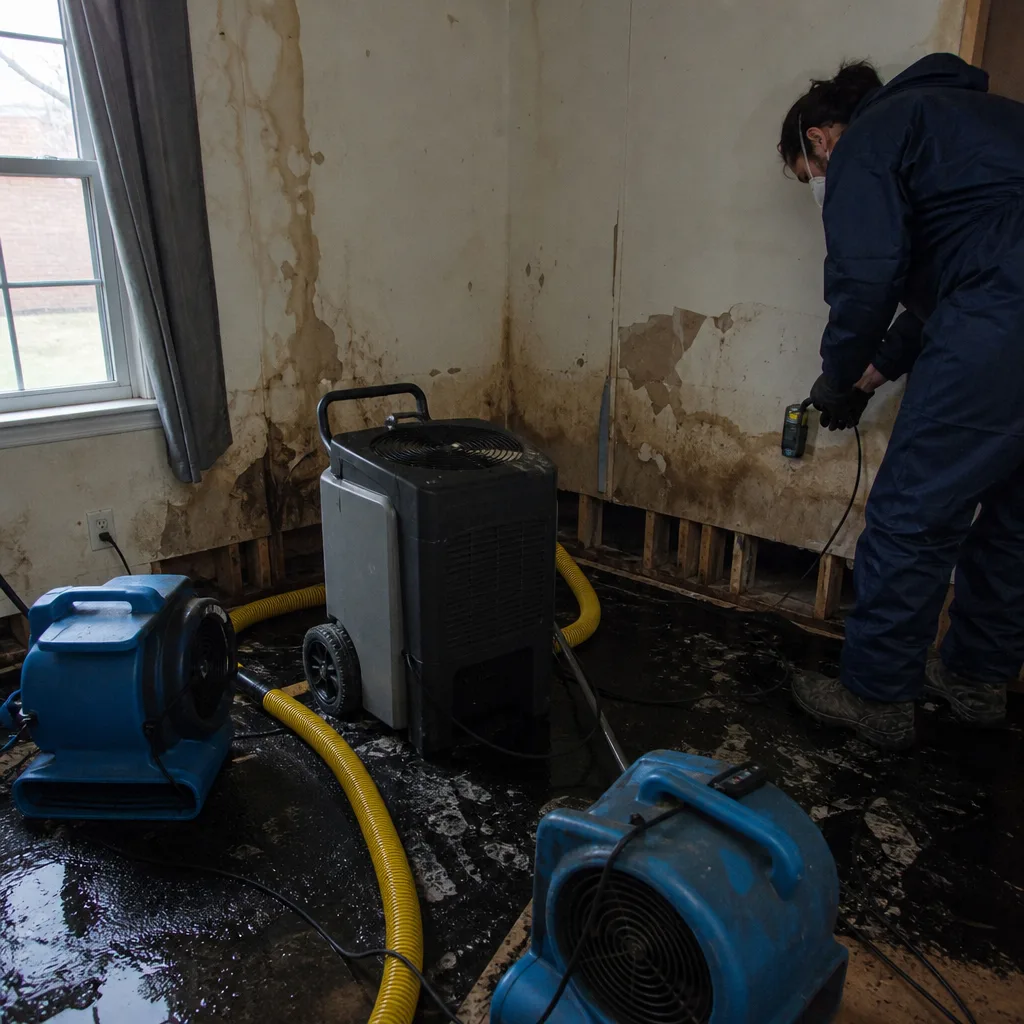 Before
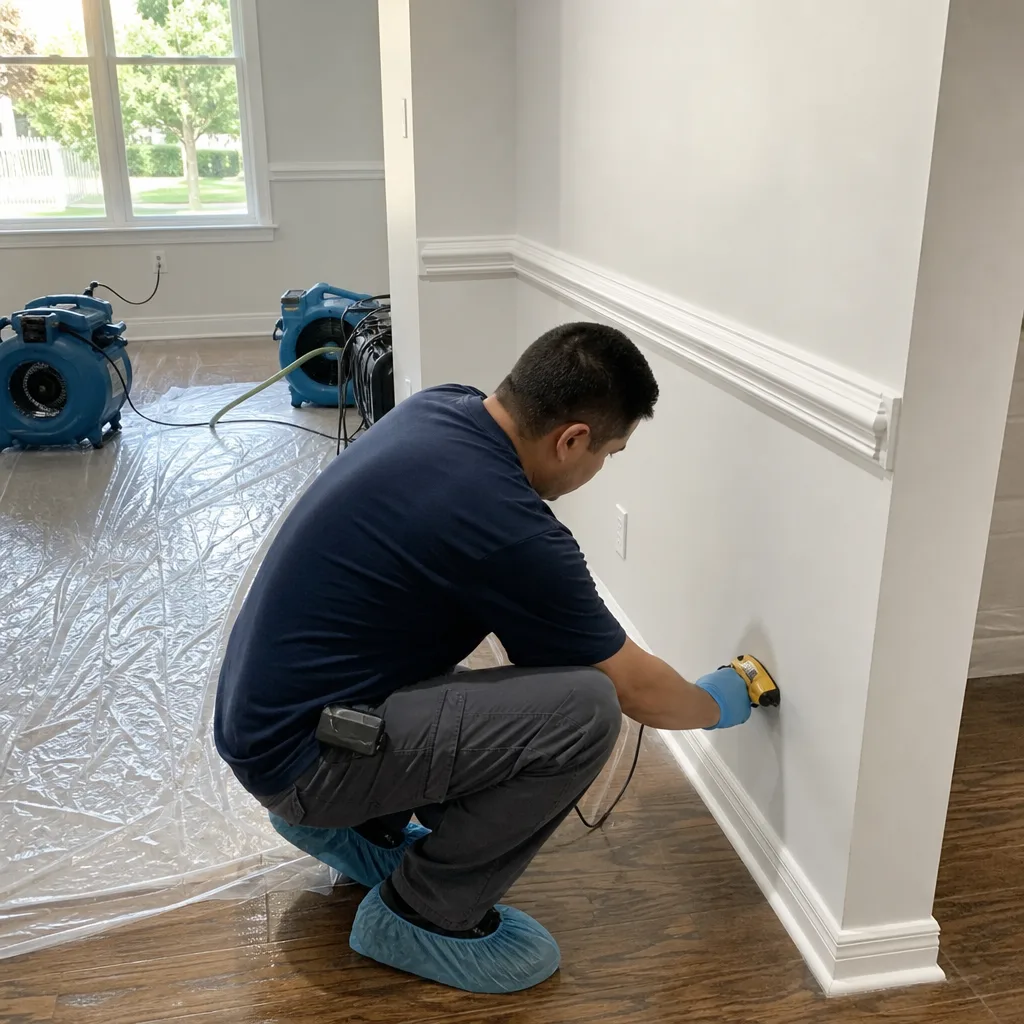 After
After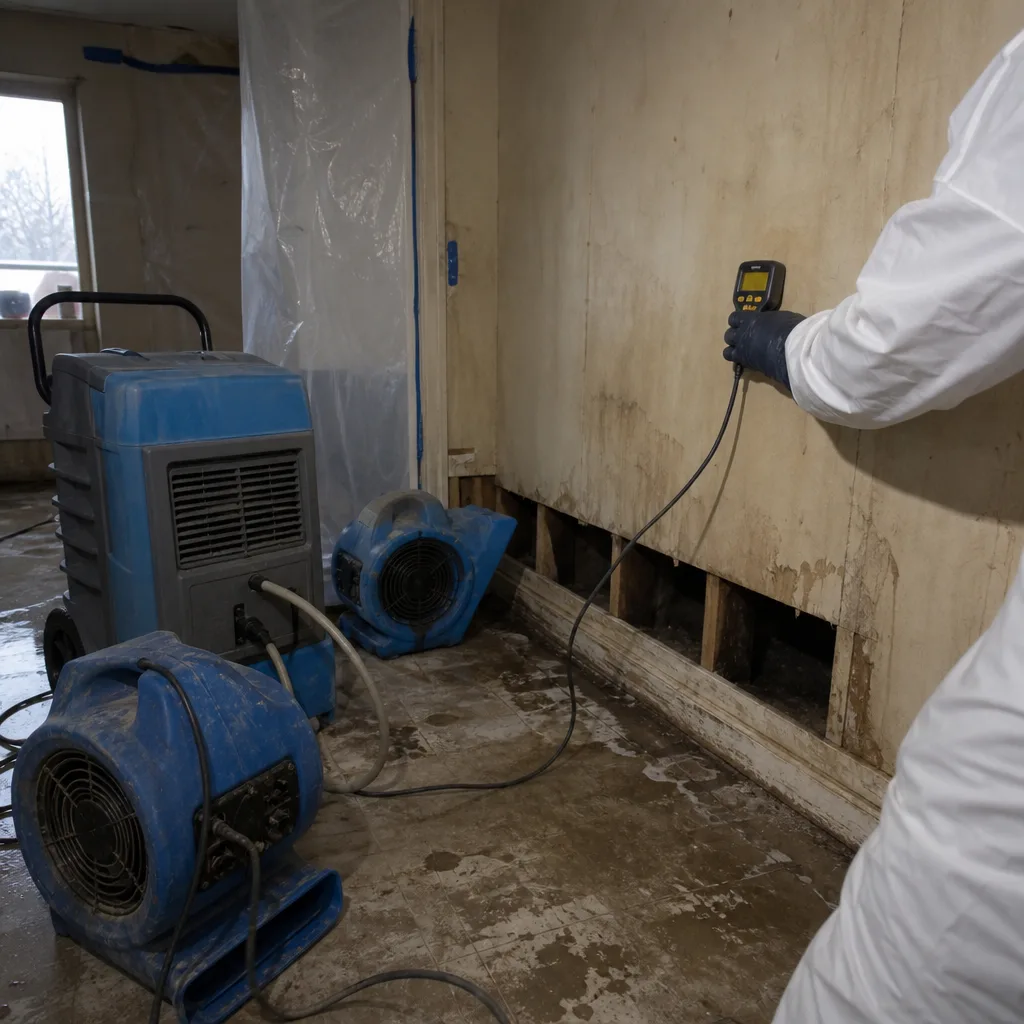 Before
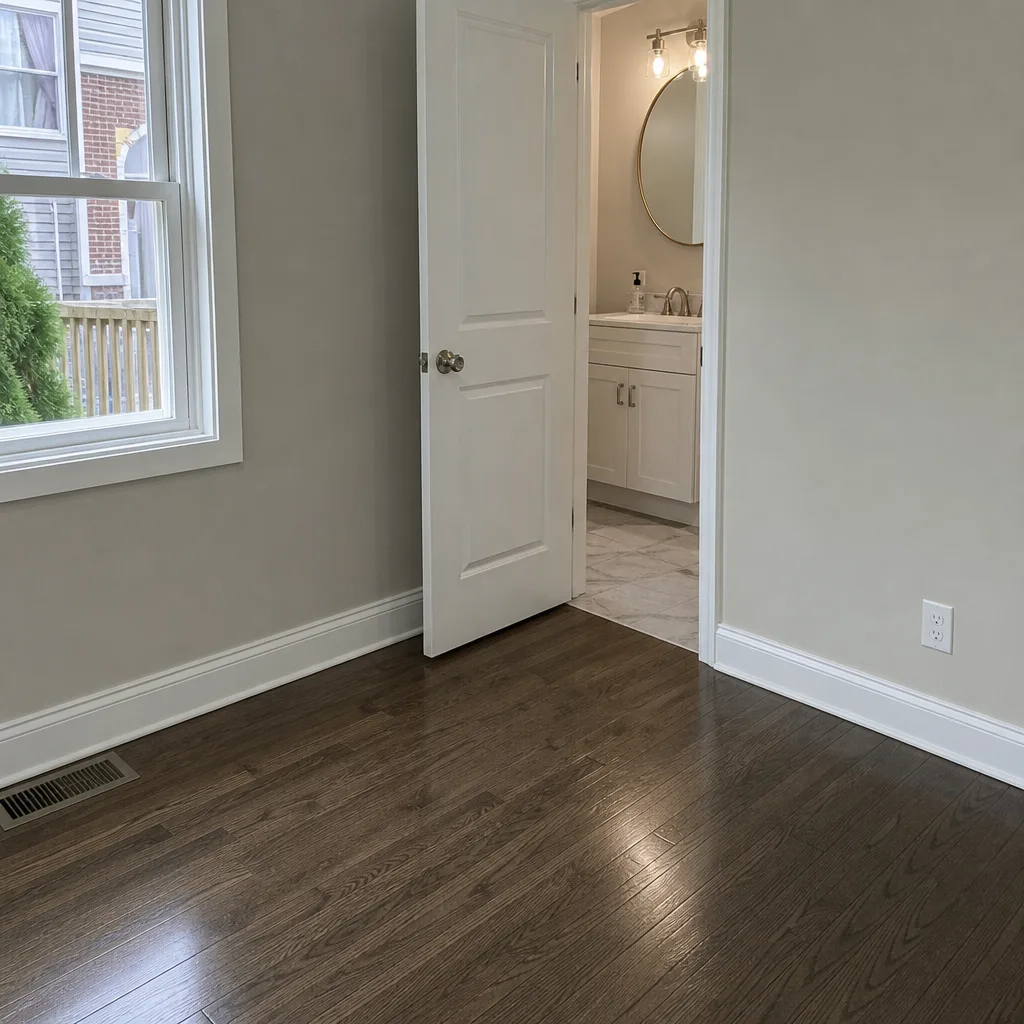 After
After24/7 Emergency Sewage Cleanup in Washington Square
A sewage backup in Washington Square is a Category 3 water event: pathogen-laden blackwater that contaminates everything it touches and can push through a rowhouse cellar or pre-war apartment in under an hour. That first hour matters more than any other factor in what gets saved, what gets replaced, and what gets documented for your insurance carrier. Floodline Restoration Co. answers the phone live, 24 hours a day, with a dispatcher who knows the Washington Square grid and can have a certified crew at your door inside 45 minutes. Call (551) 348-8481 the moment you see water backing up from a floor drain, toilet, or basement cleanout. The visual inspection is free, and because we bill your insurer directly, the paperwork never becomes your second job.
Understanding Sewage Cleanup Severity in Washington Square Properties
Every water loss gets classified before any work begins. Category 1 comes from a clean supply line. Category 2 carries contaminants. Category 3 is sewage, also called blackwater: human waste, bacteria, viruses, and whatever the combined sewer under Manhattan pushed into your cellar. In Washington Square, Category 3 is not the exception; it is the rule. The neighborhood’s 19th-century street grid sits above aging combined sewer lines. During heavy rain, those lines surcharge, and backflow through failed check valves or cracked cast-iron drains surfaces inside basement apartments and sub-grade cellars. We use thermal imaging and moisture mapping to trace contamination pathways behind horsehair plaster and under wide-plank floors before containment goes up. Because sewage aerosols move through stud bays and subfloor cavities faster than visible water does, we set negative air pressure with HEPA scrubbers early. Not after the fact.
Why Washington Square Property Owners Choose Floodline Restoration Co.
- 45-minute response commitment. Our Washington Square crews dispatch from the metro office and know the Village’s one-way streets and service entrances. We’ll be there when we say.
- A live person answers. Always. No phone tree, no answering service that takes a message. A dispatcher picks up at 2 a.m. and a certified crew reaches the job the same visit.
- IICRC-certified crews. Our technicians hold WRT, ASD, and AMRT certifications from the IICRC, with additional training through the RIA and IFA. They know what Category 3 water does inside an 1850s rowhouse.
- Free visual inspection. We assess the loss, scope the work, and give you a written plan before any equipment comes off the truck. No charge for looking.
- Direct insurance billing. We bill your carrier directly and coordinate with your adjuster. You never play messenger between us and the insurer.
- One crew, start to finish. The certified team that performs black water extraction also runs the drying logs, the antimicrobial treatment, and the plaster restoration. No mid-job handoff to a sub you never met.
Our Sewage Cleanup Process
Inspection & Assessment
We begin with a full visual walkthrough plus thermal imaging and moisture mapping. In Washington Square, that includes documenting original plaster, flooring, and any element that falls under Greenwich Village Historic District review before a single wall cut is planned.
Extraction & Stabilization
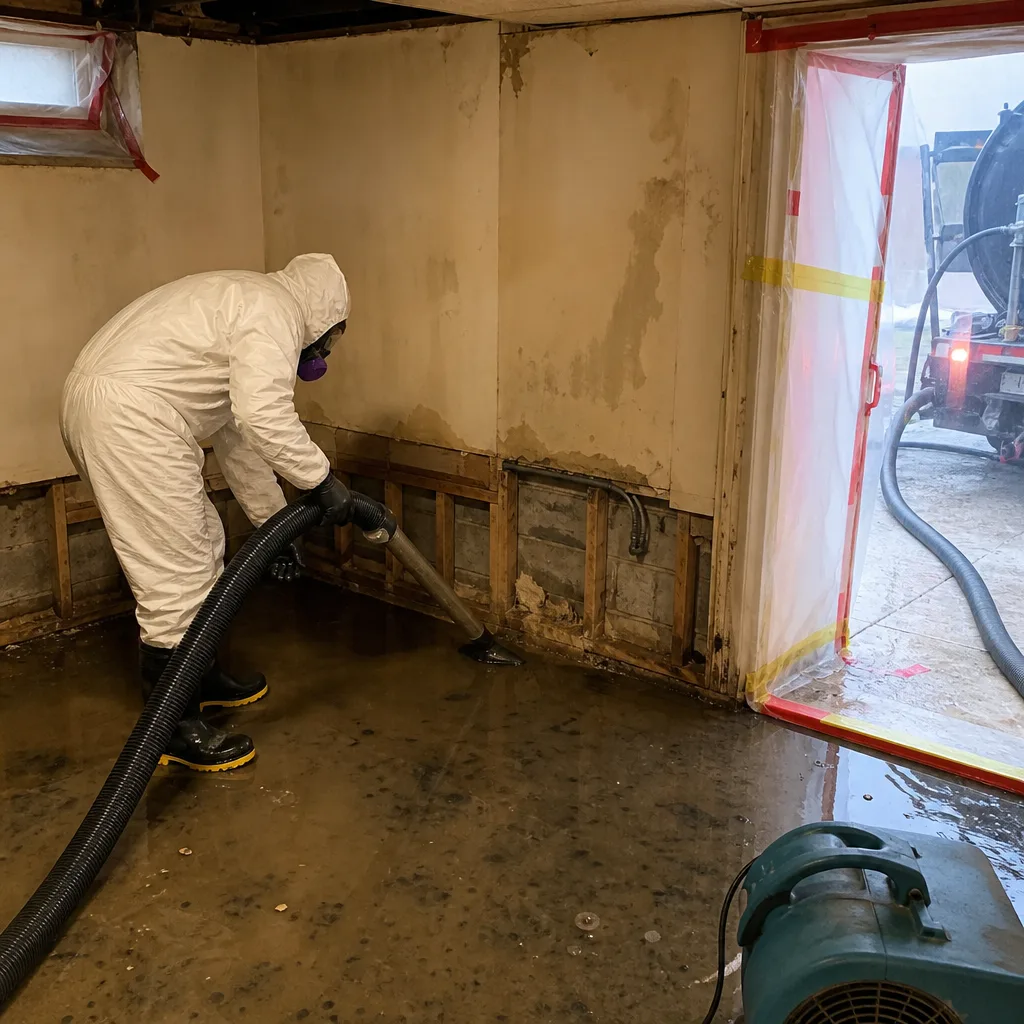
We remove standing blackwater with truck-mounted extraction units and set containment. Negative air pressure with HEPA filtration goes up immediately to stop sewage aerosols from migrating through the building.
Drying & Dehumidification
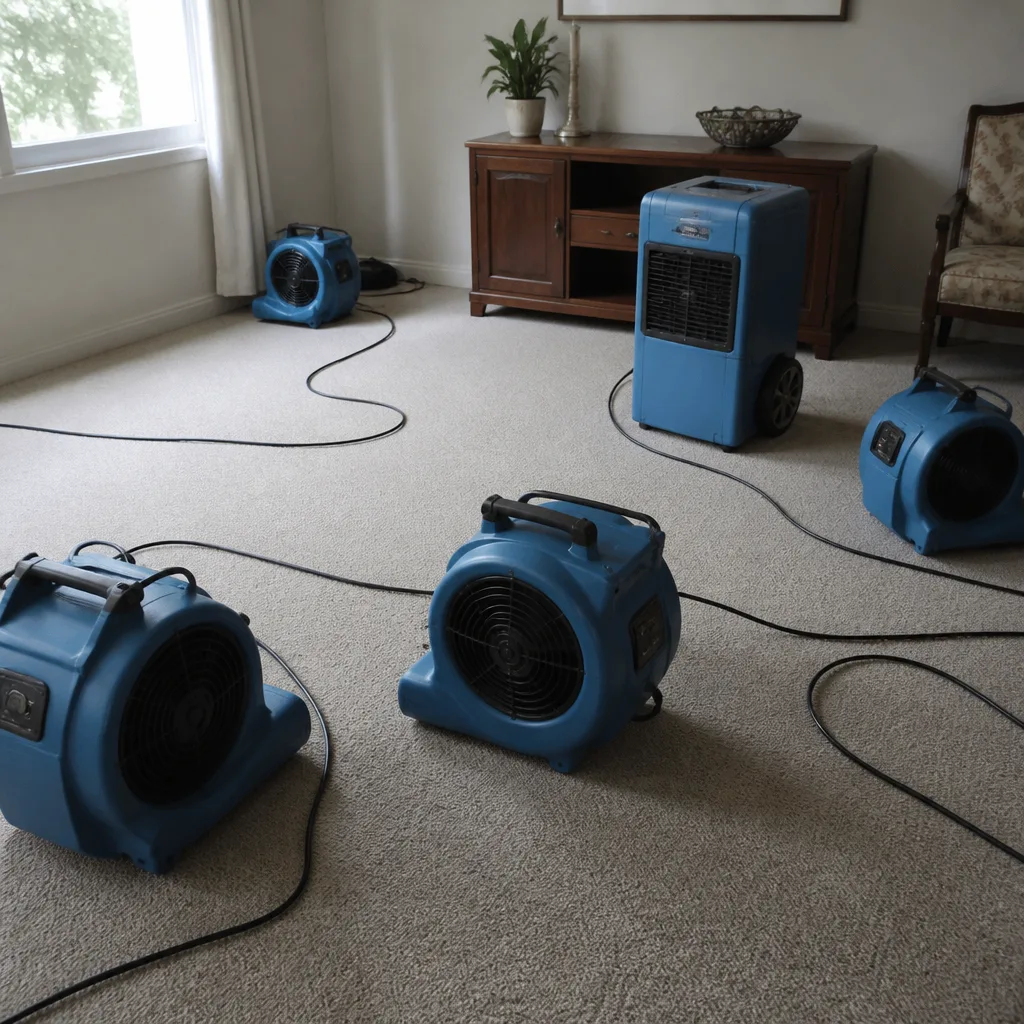
Professional-grade dehumidifiers and high-efficiency air movers from Dri-Eaz and Phoenix run on a moisture map that gets read daily. In historic construction, drying masonry behind horsehair plaster requires controlled air exchange, not brute force. We log every reading until the dry standard is met.
Cleaning & Sanitization
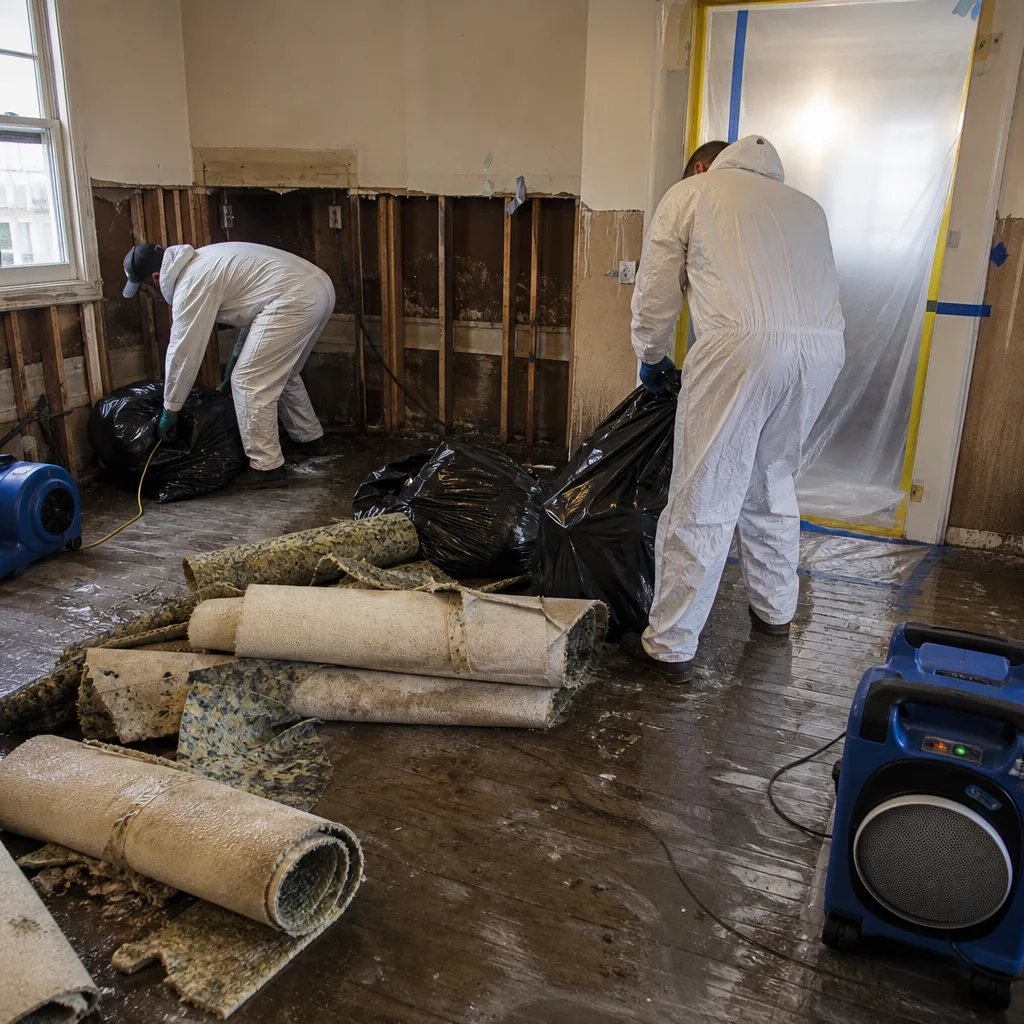
Every affected surface gets treated with an EPA-registered antimicrobial. Hard surfaces are cleaned and disinfected. Porous materials that cannot be fully sanitized are removed under containment protocols.
Historic Material Coordination
If wall cuts or flooring removal will expose original fabric, we photograph, sample, and log every section before work proceeds. We coordinate with the LPC so mitigation never trades a sewage problem for a stop-work order.
Repairs & Restoration
We rebuild to spec: lime plaster where the original was lime plaster, cast iron where the original drain needed cast iron. The line the water left is where we start; done right, and backed in writing, is where we finish.
Need Emergency Sewage Cleanup in Washington Square Now?
Crews minutes away, answering live 24 hours a day. The sooner we start, the less it costs.
Working With Your Insurance Company
A Category 3 backup in a landmarked Washington Square building generates claims that adjusters scrutinize line by line. Our documentation starts in the first hour: time-stamped photos, moisture readings, a written scope of work, and a drying log that shows every reading from day one through the final dry standard. We communicate with your adjuster directly, in their language, with industry-standard line items. If your policy includes sewer backup coverage or a service-line endorsement, our documentation gives the carrier what it needs to approve the claim the first time. If a dispute arises over scope, you are not the one arguing it. We are.
What We Provide Your Insurer
- Thorough documentation of the loss
- Photos of all damage, room by room
- Moisture readings and drying logs
- A detailed, line-item scope of work
- Direct coordination with your carrier
Built for Washington Square’s Loss Calendar
Washington Square’s sewage backup season follows the weather and the age of its infrastructure. Winter brings ground shifts that crack cast-iron waste lines under the old rowhouses; when a January thaw follows a deep freeze, the ground moves and 170-year-old pipes separate at the joints. Spring rains combine with Manhattan’s combined sewer system to surcharge lines under the Village, and basement toilets and floor drains become relief valves. Summer thunderstorms drop an inch of rain in 30 minutes, overwhelm the catch basins along Fifth Avenue and University Place, and send Category 3 water into sub-grade cellars that have been dry for decades. Nor’easters in fall produce the same pattern. The constant is this: older buildings with older clay or cast-iron laterals, original backwater valves that have rusted open, and basements that sit below the crown of the street. If your Washington Square property has not had its backwater valve inspected in the past decade, now is the time.
Sewage Cleanup Across Washington Square’s Neighborhoods
Washington Square runs from the landmarked Row on Washington Square North, where Federal and Greek Revival townhouses from the 1820s and 1830s hold original horsehair plaster and wide-plank floors, south to the pre-war elevator buildings around Washington Square South and the NYU-adjacent blocks. On the north side, we respond to backups where the only access to a waste line means cutting through two inches of plaster that the LPC considers protected fabric. The side streets off MacDougal Street and Sullivan Street hold pre-war walk-ups with cellars that flood from floor drains when a nor’easter hits; those jobs need extraction and antimicrobial treatment fast, before sewage aerosols reach tenant spaces. Around Washington Mews, a private cobblestone street with converted stables and carriage houses, drainage is almost entirely original, and cracked clay laterals are the usual culprit. West toward Sixth Avenue, pre-war co-ops with basement mechanical rooms report combined-sewer backups during summer thunderstorms. Each block has its own failure pattern. We know them because we work them.
Specialized Sewage Cleanup Services We Offer in Washington Square
Sewage Backup Cleanup
A sewage backup is not a plumbing problem that leaves a stain. It is a Category 3 contamination event. In Washington Square, backups typically originate from surcharged combined sewers, failed backwater valves, or cracked cast-iron laterals under the sidewalk. We extract, contain, treat, and dry, then rebuild to spec.
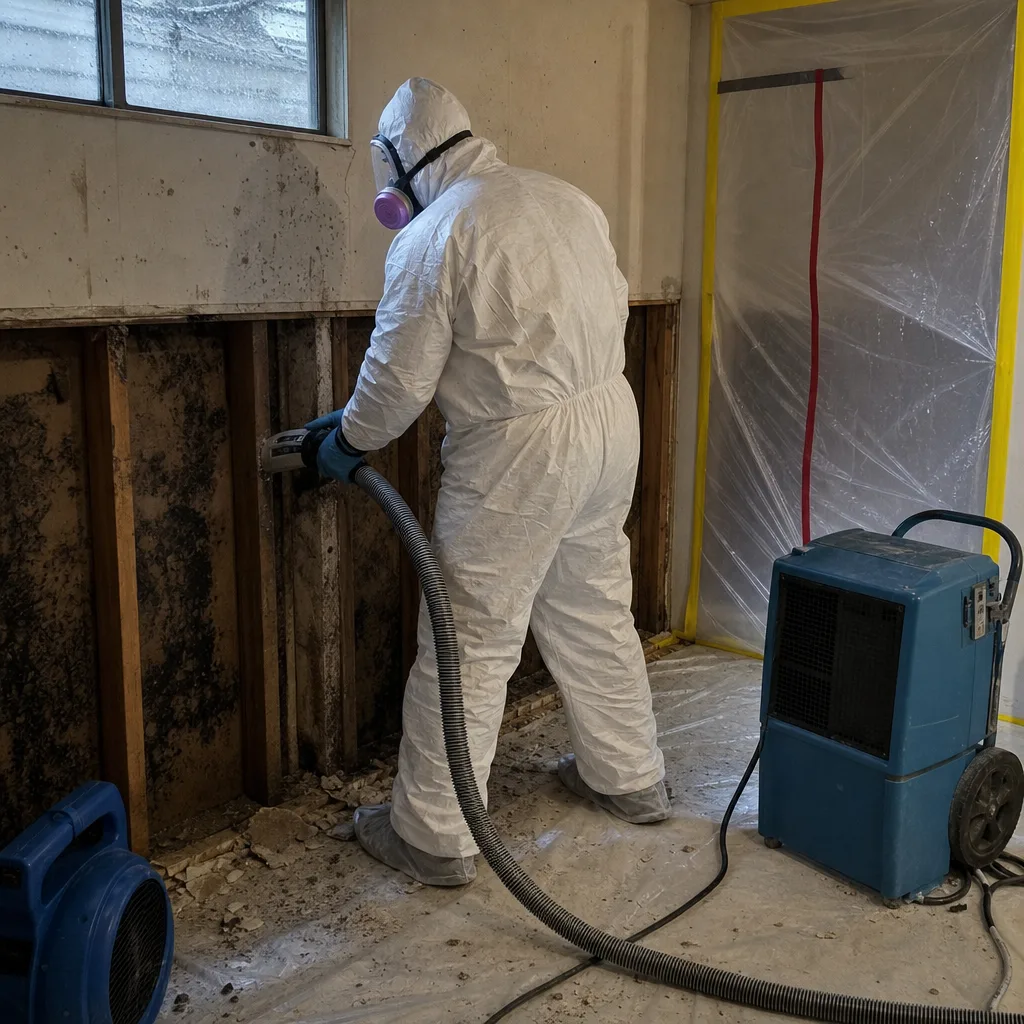
Black Water Extraction
Blackwater extraction in a Washington Square rowhouse means more than removing visible water. Sewage carries solids and biofilm into floor cavities and behind baseboards. Our truck-mounted extractors pull standing water fast; our HEPA-scrubbed containment stops the aerosol before it spreads. We then map the moisture in the masonry and subfloor so drying targets the actual pathways, not just the puddle.
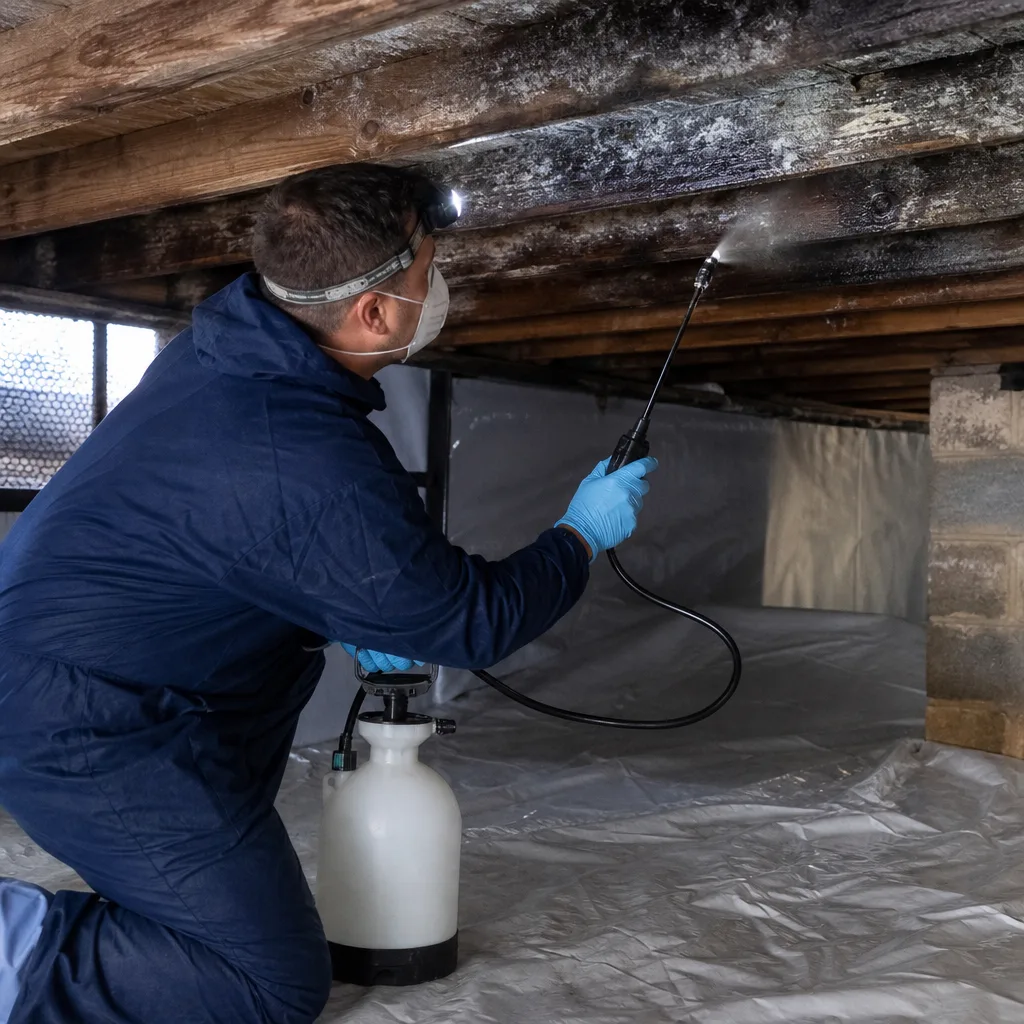
Sanitization & Disinfection
After extraction and drying, every affected surface gets treated with an EPA-registered antimicrobial. For historic interiors, that means careful application to wide-plank floors and plaster walls without saturating original wood. For sub-grade cellars, we treat masonry surfaces and mechanical areas where sewage aerosols settled.
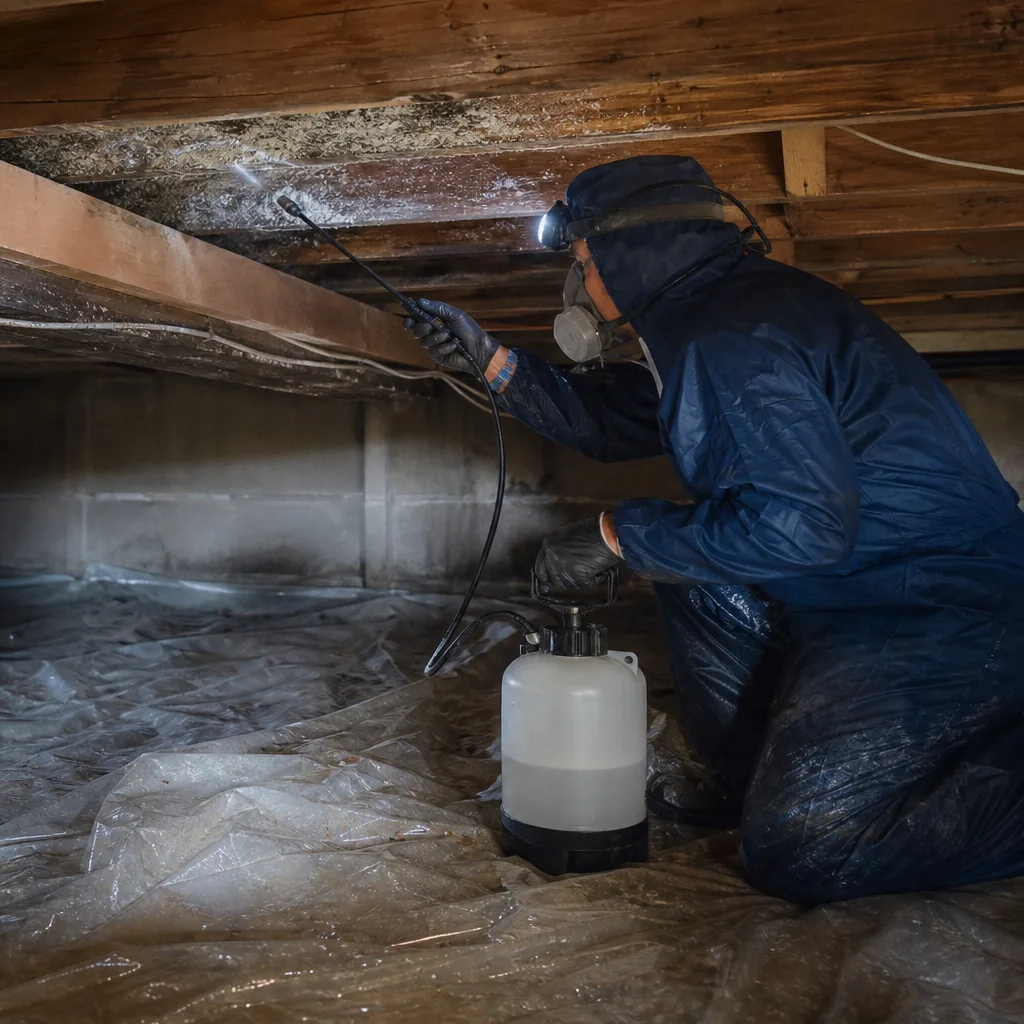
Toilet Overflow Cleanup
A toilet overflow in a pre-war Washington Square apartment often routes through floor penetrations into the unit below. We extract, sanitize, and dry both levels, documenting the spread path so your insurer sees the full scope.
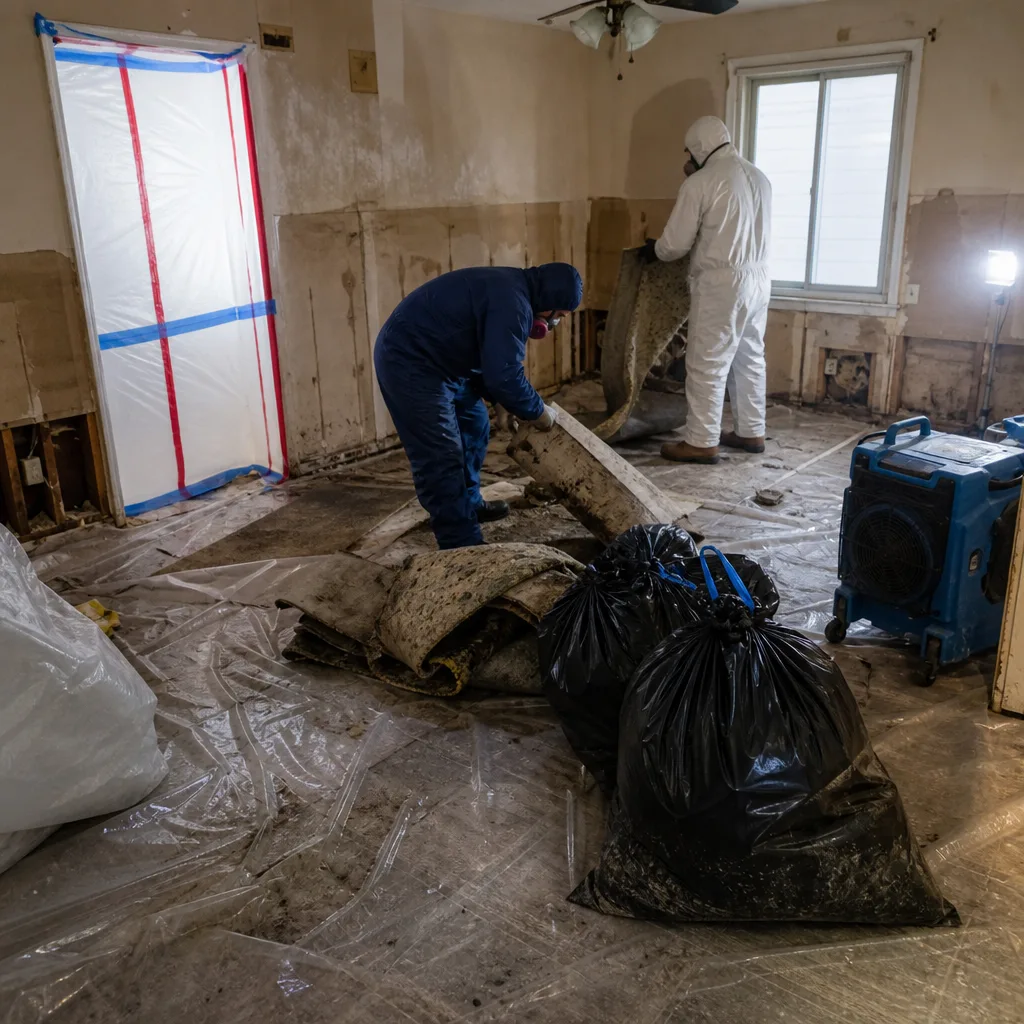
Septic Failure Cleanup
Most Washington Square properties tie into the city sewer, but a handful of older buildings and the converted mews retain private systems. When a septic field or holding tank fails, we handle the contamination inside the structure the same way we would a sewer backup: containment first, then extraction, treatment, and controlled drying.
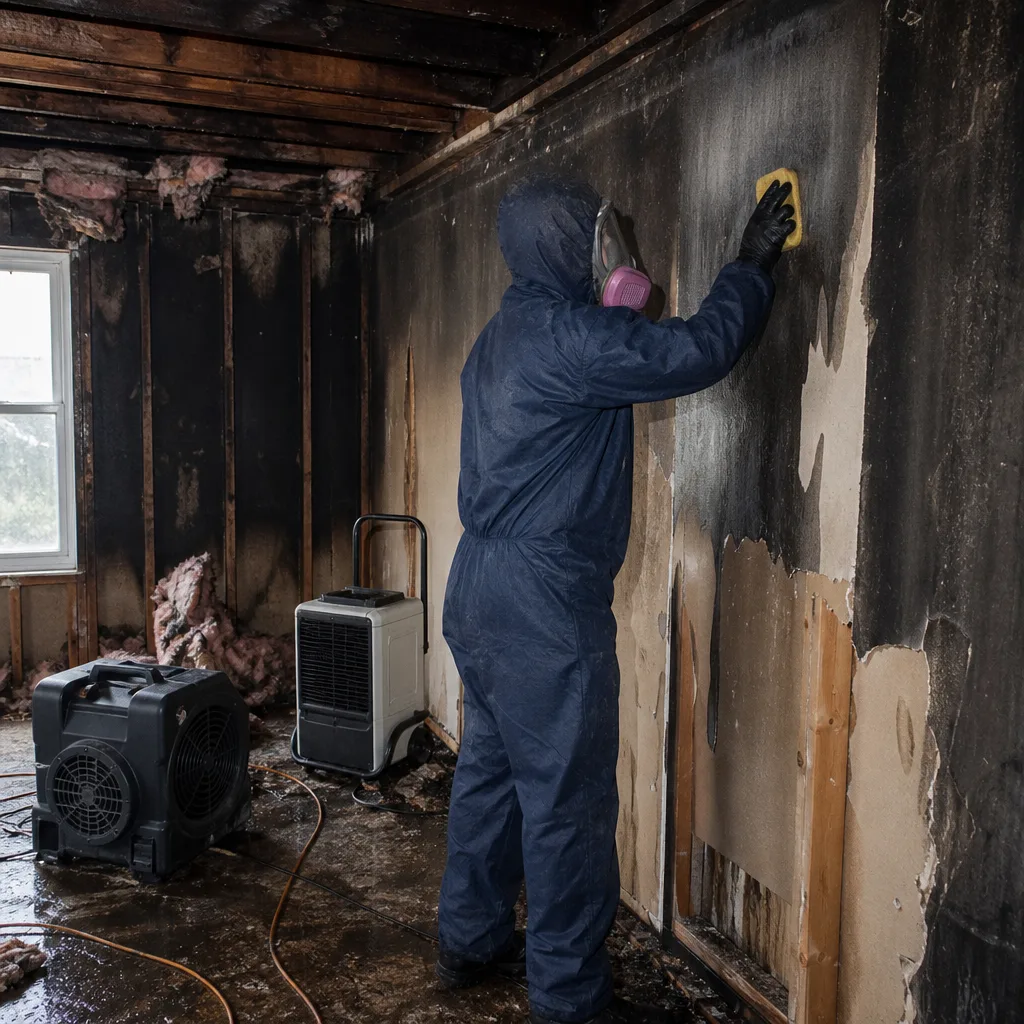
Crawl Space Sewage Removal
Some of the oldest buildings around the Square have shallow crawl spaces under timber floors. A backup can fill a crawl space with blackwater that migrates upward through the floorboards. We extract, treat, and dry those spaces with air movers and dehumidifiers sized for confined access, protecting the historic floor above.
What happens when you call
- 1
A real person answersNo phone trees - you reach a local pro.
- 2
You get an upfront price rangeHonest numbers before anyone is dispatched.
- 3
A background-checked tech heads outLicensed & insured, dispatched right away.
- 4
You approve before work beginsNothing starts until you say go.
Sewage Cleanup Costs in Washington Square, NY
A typical sewage cleanup in Washington Square runs between $2,500 and $7,500 for a contained backup involving extraction, sanitization, and drying. Smaller toilet overflows in a single bathroom start around $1,200 to $2,000. A Category 3 backup that spreads through multiple rooms, requires plaster wall cuts, and triggers LPC coordination runs $8,000 to $18,000 or more because of the documentation, period-material restoration, and extended drying times that historic construction demands. The single biggest cost driver in this neighborhood is not the water volume; it is what the water touched. Horsehair plaster that cannot be cut without sampling, wide-plank floors that hold contamination in the subfloor, cast-iron drains that need period-appropriate replacement: each adds scope that a modern drywall-and-PVC building never incurs. The free visual inspection gives you a firm written scope before any equipment comes off the truck. Call (551) 348-8481 for a free estimate; there is no cost to look and no pressure to proceed.
We Also Serve Cities Near Washington Square
Floodline Restoration Co. crews serve Washington Square and the surrounding neighborhoods, including Sewage Cleanup in Washington Square, Midtown West, Midtown Manhattan, Murray Hill, and the Upper West Side. If you face a Category 3 backup just outside the Square, the same certified team, same 24/7 dispatch, and same written guarantee apply.
Washington Square Sewage Cleanup Questions, Answered
Why does a sewage backup in a Washington Square rowhouse need LPC approval before wall cuts for drying equipment?
Because Washington Square sits within the Greenwich Village Historic District, and the NYC Landmarks Preservation Commission reviews any work that alters protected interior fabric like original horsehair plaster or historic flooring. Cutting into a two-inch-thick plaster wall without prior documentation can produce a stop-work order mid-mitigation. Our Sewage Cleanup team photographs, samples, and logs every affected section before any wall cut happens.
How do you dry a 1820s brick basement after a combined-sewer backup without ruining the historic plaster?
We use controlled air exchange and dehumidification with moisture-mapped drying rather than high-velocity air aimed directly at plaster. The goal is evaporation at a rate the historic material can handle. We read the masonry daily until the dry standard is met, and we keep the log for both you and your insurer.
Can you replace a failed cast-iron sewer line in a landmarked Washington Square rowhouse with modern pipe?
Not without triggering LPC review. Modern PVC or ABS replacements under a landmarked rowhouse can draw a permit violation. The compliant approach is period-appropriate cast iron, and we coordinate that with the LPC so the repair stays within the historic district’s requirements and avoids a stop-work order.
What makes Washington Square’s sewage backups worse than a typical pipe-burst water loss?
The water is Category 3, not Category 1. A burst supply line floods with clean water. A combined-sewer backup carries human waste, bacteria, and pathogens. In Washington Square, the 19th-century combined sewers under the Village surcharge during heavy rain, and that blackwater surfaces inside cellars and basements through drains and failed backwater valves. The contamination pathway is deeper, and the remediation standard is stricter.
Do we need to pack out antique furniture before sewage mitigation in our Washington Square apartment?
Yes, in most cases. Wood furniture, upholstered pieces, rugs, and anything porous that contacted blackwater should be professionally cleaned or discarded. We document every item for your insurer and coordinate pack-out where the contamination zone requires it. We move the pieces carefully; some of them have been in Washington Square families for generations.
How long does sewage cleanup and drying take in a Washington Square building?
Most Category 3 cleanups run three to seven days from extraction to final dry standard, depending on how far the contamination traveled. Historic masonry behind horsehair plaster dries slower than gypsum board, and LPC coordination can add time when wall cuts are needed. Restoration and rebuild are scoped separately, in writing.
Are your Washington Square crews certified for sewage work?
Yes. Our technicians hold IICRC certifications including WRT for water damage, ASD for applied structural drying, and AMRT for applied microbial remediation. They train to RIA and IFA standards and have decades of combined experience in historic New York construction.
What should I do in the first 30 minutes after a sewage backup in Washington Square?
Call (551) 348-8481. Keep children and pets away from the affected area. Do not flush toilets or run water in sinks that drain into the same line. If electricity is safe to reach, do not enter standing blackwater. Shut nothing off that you cannot reach without walking through the water. Our crew arrives and handles the rest.
Serving Washington Square, NY - Our Local Coverage Area
We’re based in the Washington Square area and know this community well. Use the map below to see our service coverage - if you’re nearby, we can almost certainly help.
Call Floodline Restoration Co. for Sewage Cleanup in Washington Square
When sewage backs up into a Washington Square rowhouse, apartment, or commercial cellar, the first call should be to a crew that knows the Village’s historic fabric and its sewer infrastructure. We answer live at (551) 348-8481, any hour, every day. You get a free visual inspection, a written scope before work begins, and a crew that stays with the job from first extraction to final restoration. Done right, and backed in writing.
Written by Curt Bowman, Owner at Floodline Restoration Co., serving Washington Square and the surrounding New York City area since 2010.