
Free visual inspection and a written scope of work before any mitigation begins - photos, moisture readings, and drying logs go in your claim file
The scope we write is the scope we bill. Anything new gets shown to you, in writing, before we touch it.
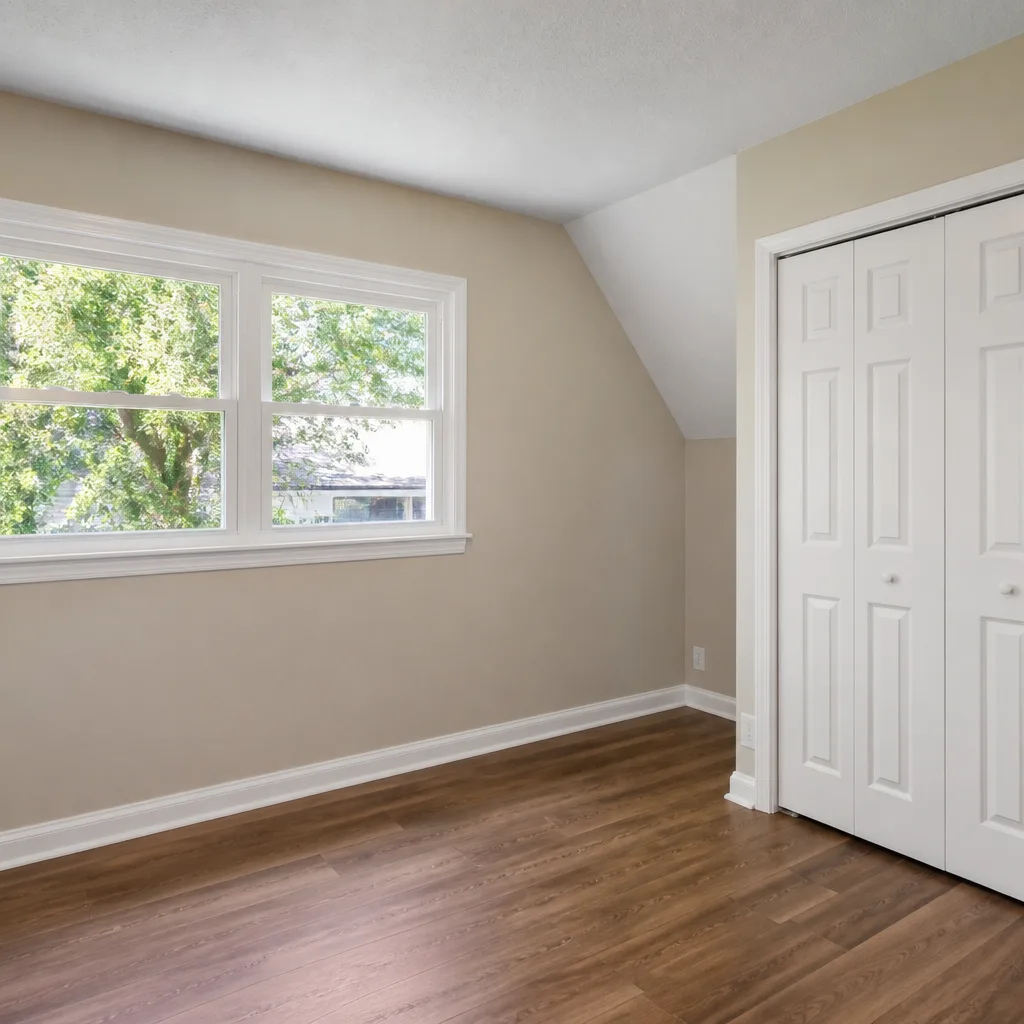

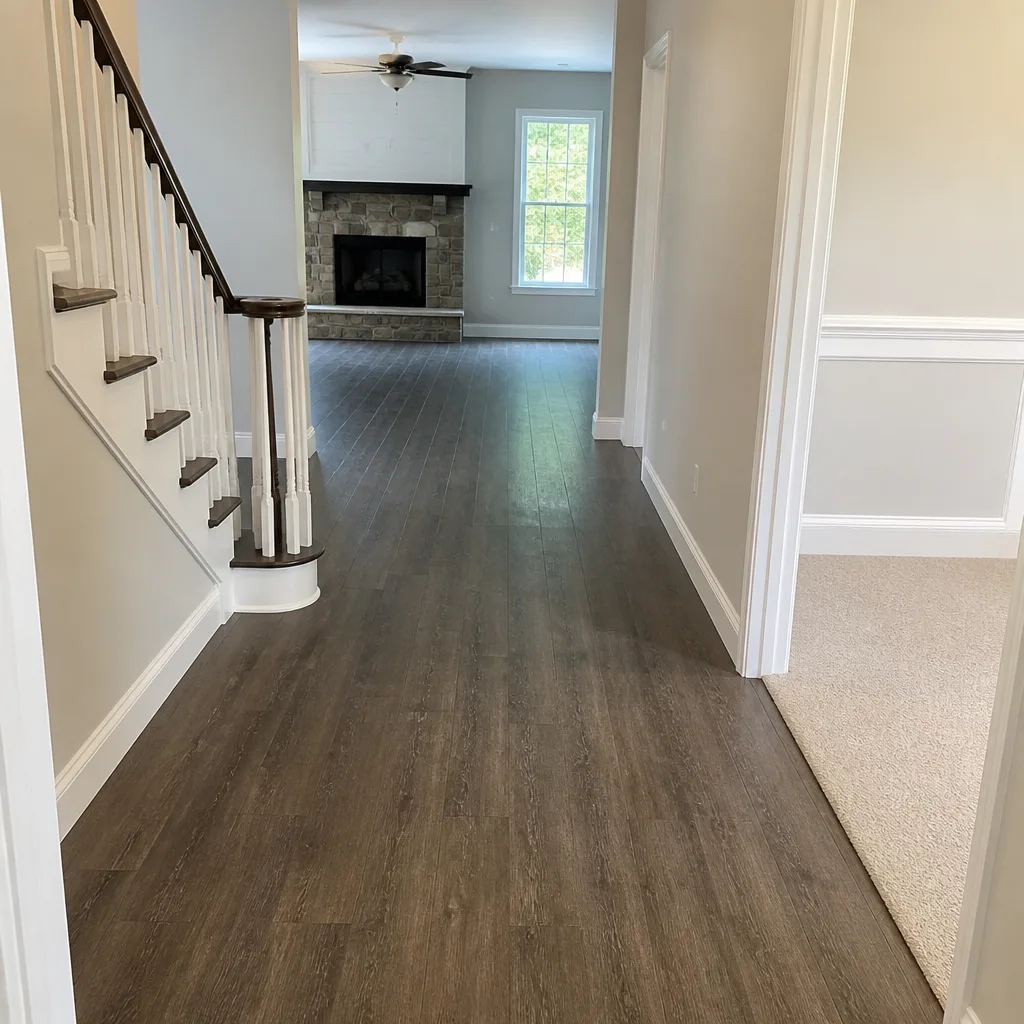

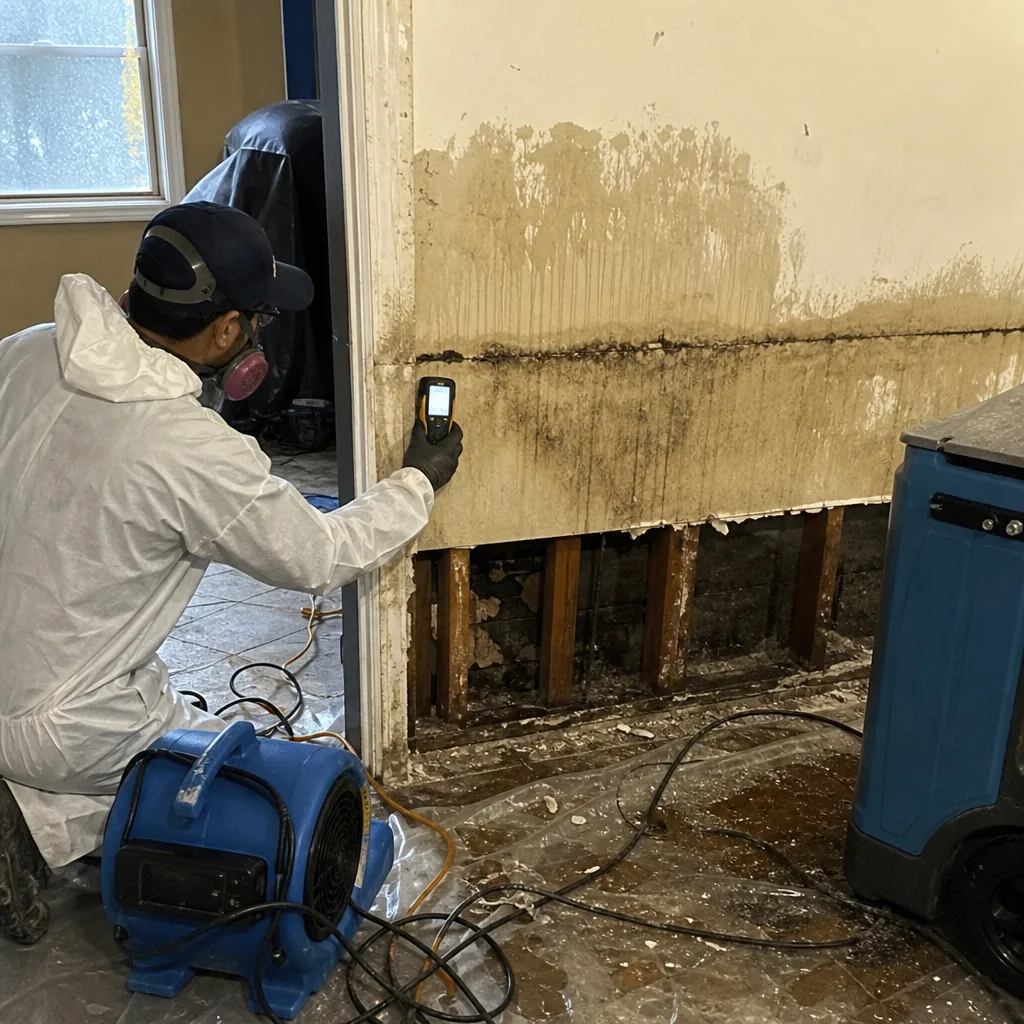 Before
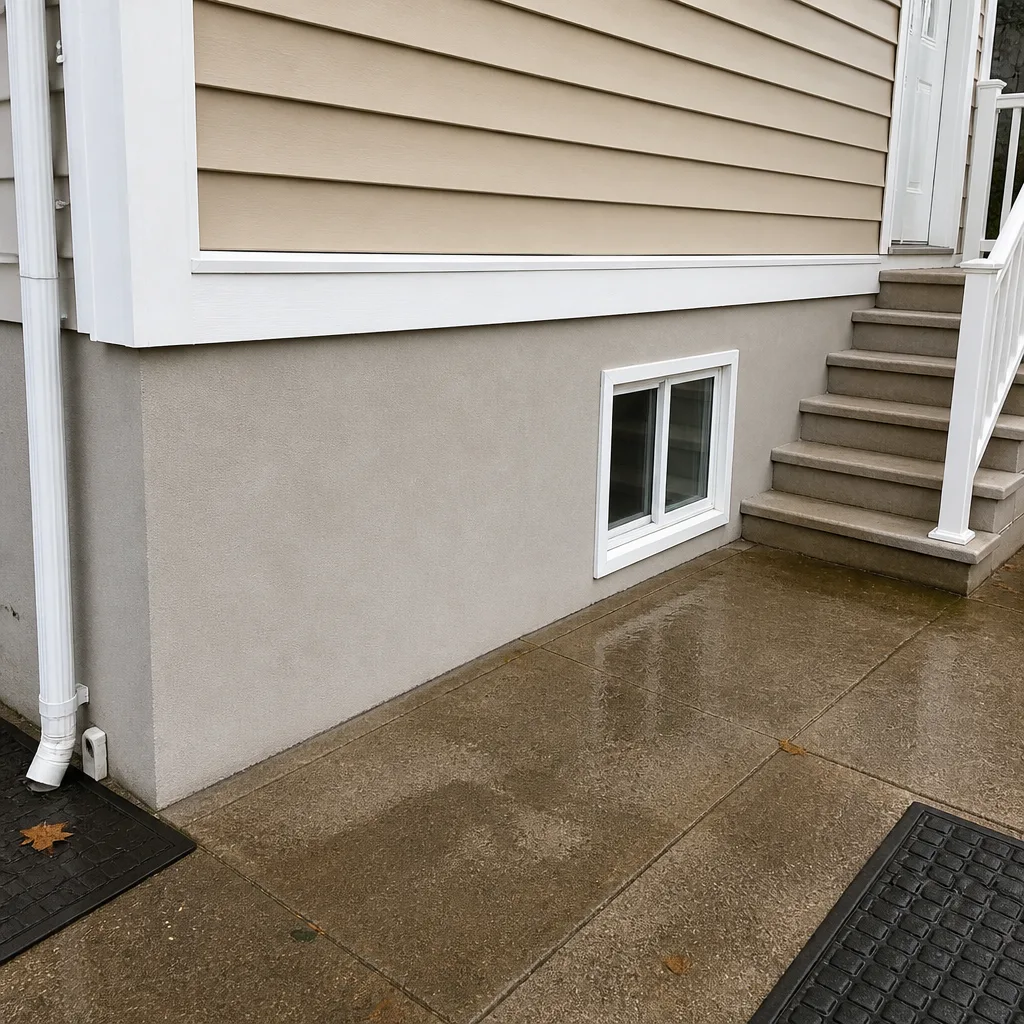 After
After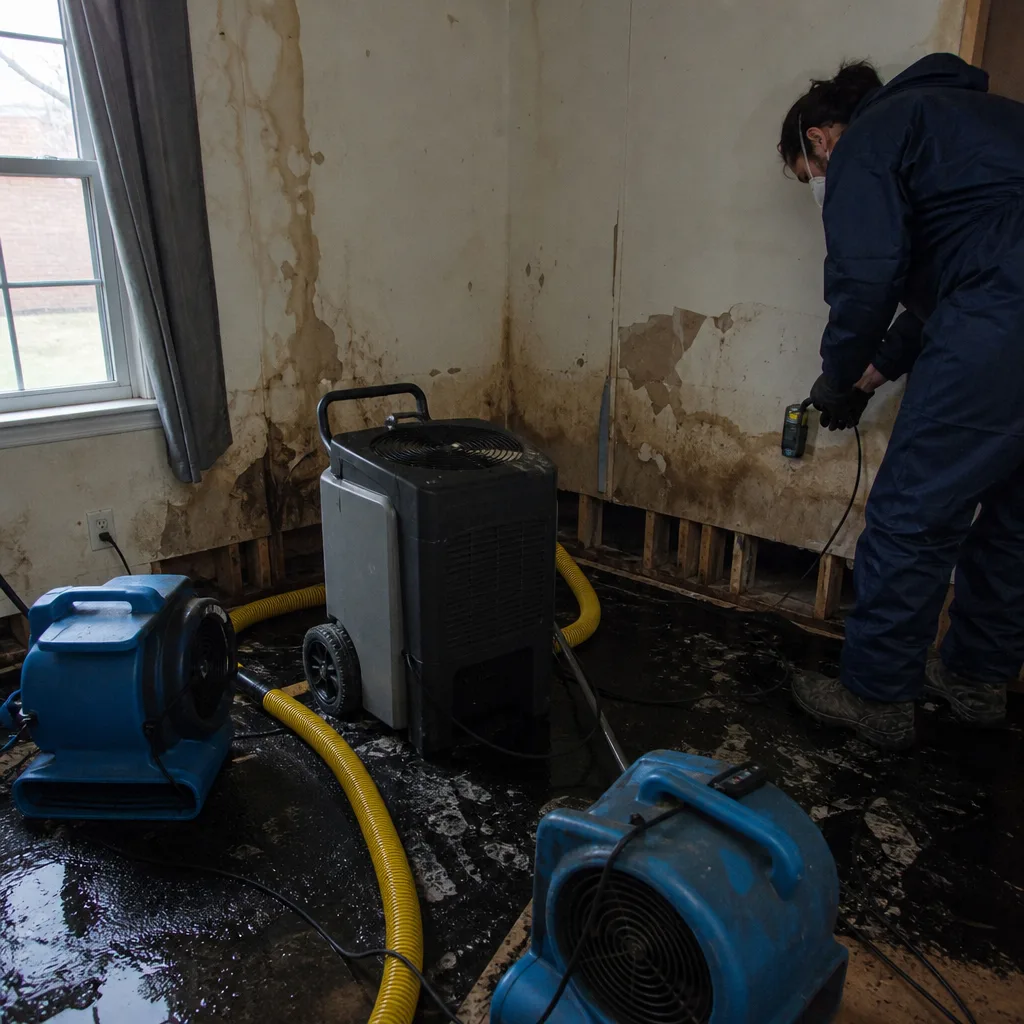 Before
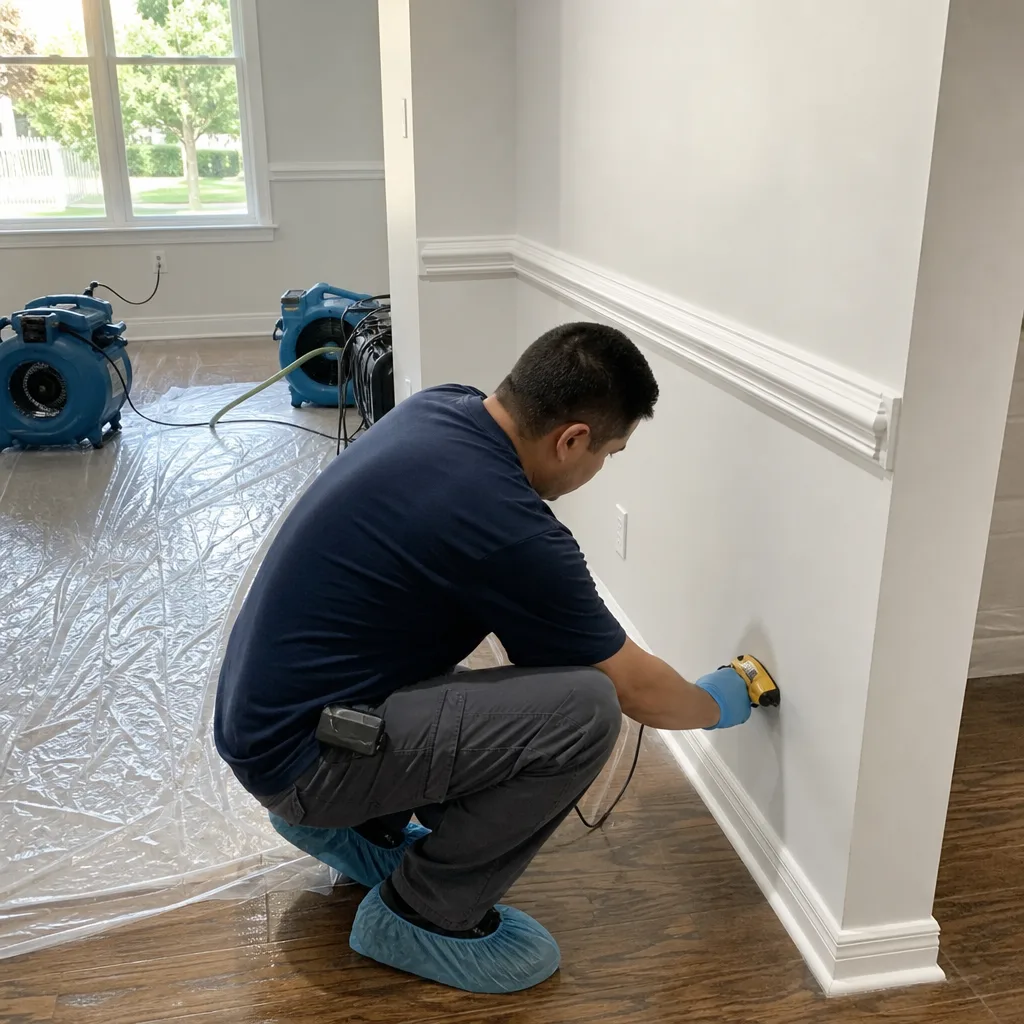 After
After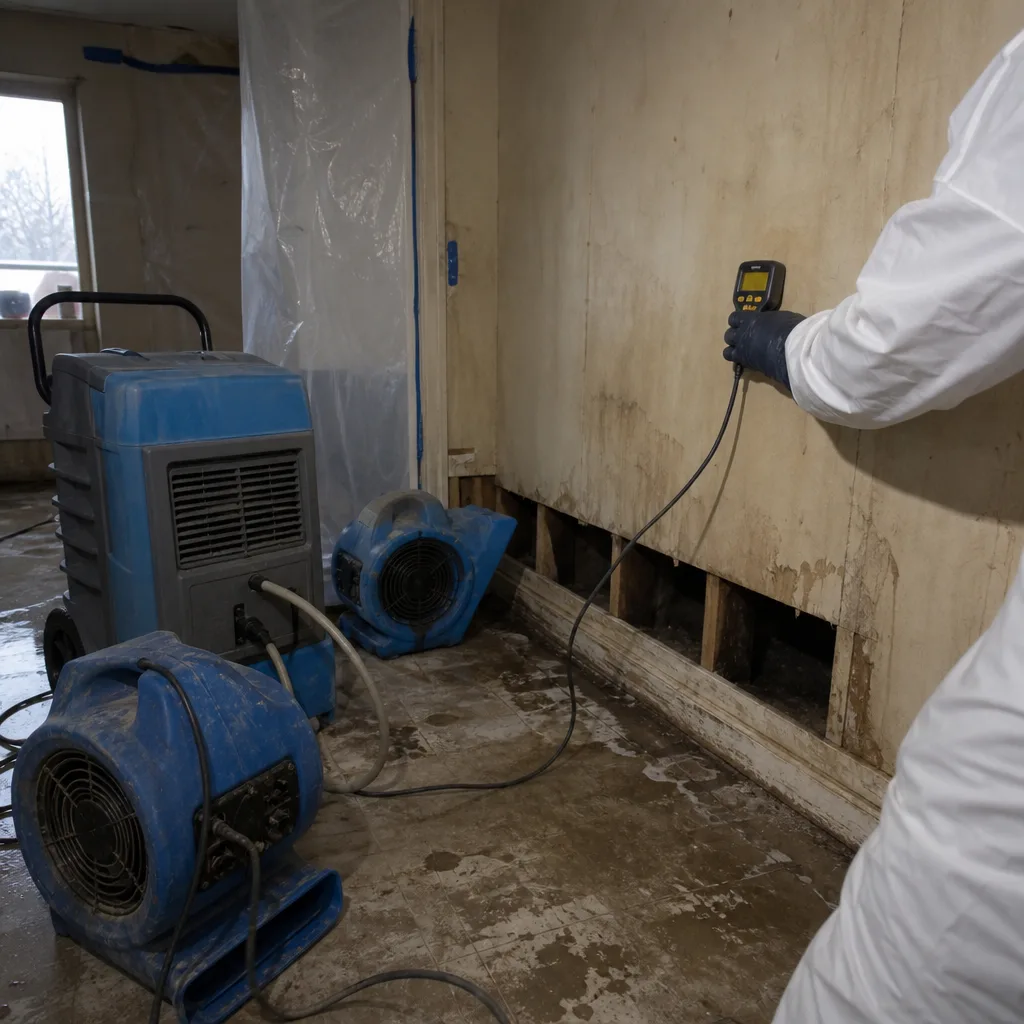 Before
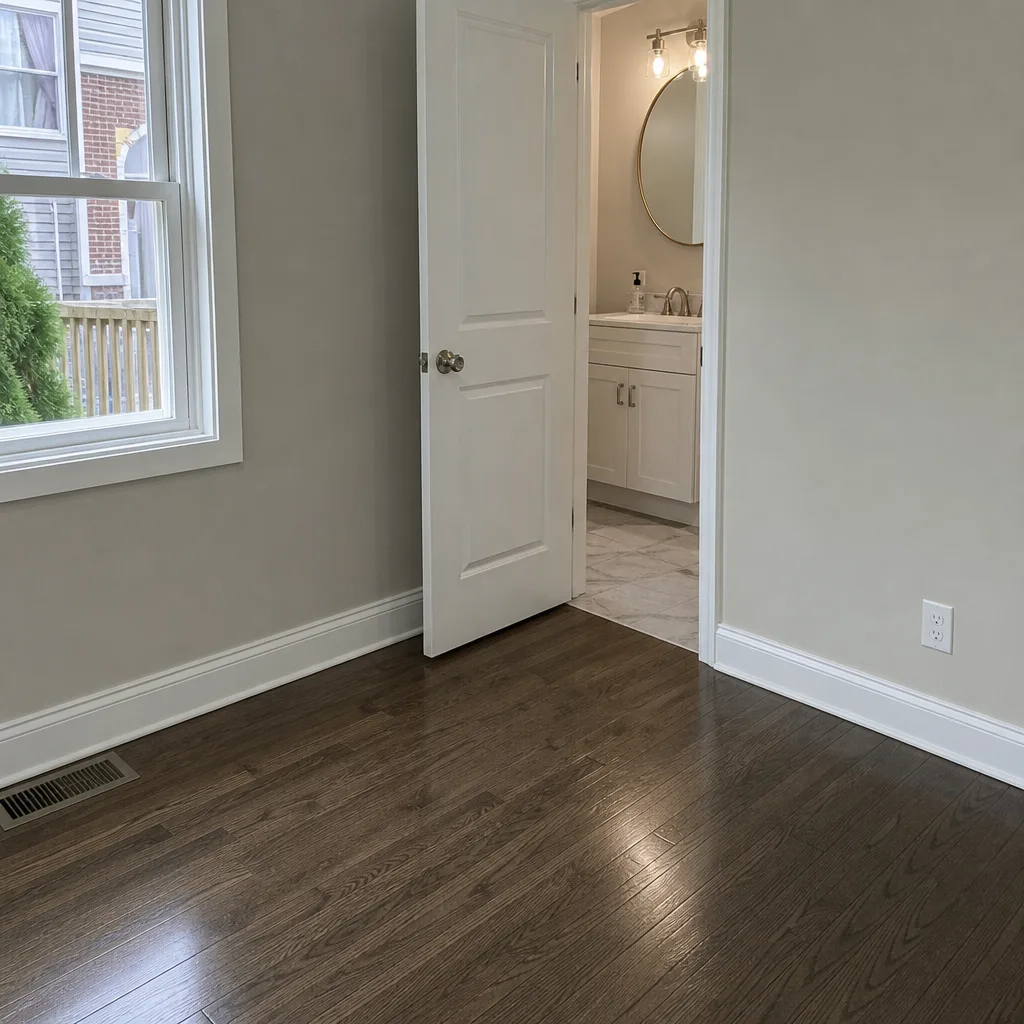 After
After24/7 Emergency Storm & Disaster Restoration in Midtown Manhattan
Storm damage in Midtown Manhattan moves fast, and so do we. Our Storm & Disaster Restoration crews are on call around the clock, with a live dispatcher answering at (551) 348-8481 any hour, any day. The first hour after a wind breach or water intrusion matters most: the longer storm water sits inside a pre-war wall cavity or a shared utility chase, the more it migrates, the more it contaminates, and the more it costs to dry. We dispatch crews stationed minutes from Midtown Manhattan for a free visual inspection, and we get extraction and mitigation running the same visit. You won’t leave a message. You’ll talk to a person, and a uniformed, background-checked technician will be on the way.
Understanding Storm & Disaster Restoration Severity in Midtown Manhattan Properties
Storm water in Midtown Manhattan is rarely clean water. When wind tears a roof membrane on a mid-century office tower or blows a steel roof door off its hinges on a 1930s Art Deco co-op, the water that enters is Category 2, or worse. Category 1 comes from a supply line. Category 2 carries significant contamination from roof debris, pigeon waste, and decades of settled rooftop particulate. Category 3, the worst, arrives when storm surge from the Hudson or East pushes sewage-tinged water into lower-lying blocks near Hell’s Kitchen or the FDR corridor. The distinction matters because it changes every decision downstream: what gets packed out, what gets discarded, and whether we run HEPA air scrubbers during mitigation. In Midtown’s pre-war high-rises, with cast-iron supply lines and original two-pipe steam risers running through shared vertical chases, misclassifying storm water as Category 1 leads to wrong pack-out calls and mold inside 48 hours. We moisture-map every affected surface, track migration through common wall cavities, and log daily readings until the structural dry standard is met. That’s the only honest way to close a storm loss in a building where water travels floors before it surfaces.
Why Midtown Manhattan Property Owners Choose Floodline Restoration Co.
- 45-minute response commitment for Midtown Manhattan. Our crews stage from the New York City office and reach most Midtown addresses within 45 minutes of dispatch.
- A live person answers, 24/7. At 2 a.m. during a nor’easter, you get a dispatcher on the line, not a recording. That’s been true since 2010, when Curt Bowman built this company around a dispatch board, not a sales desk.
- IICRC-certified crews. Our technicians hold WRT, FSRT, and AMRT certifications and train to RIA and IFA standards. They arrive uniformed and background-checked.
- Free visual inspection. We assess the damage, document it, and give you a written scope before any work begins. No pressure. No surprise line items.
- Direct insurance billing. We bill your carrier directly and coordinate with your adjuster. You’re never the messenger between us and the insurance company.
- One team from extraction to reconstruction. The same certified crew that reads the moisture map on day one handles daily readings and rebuilds what needs rebuilding. No mid-job handoffs.
Our Storm & Disaster Restoration Process
Inspection & Assessment
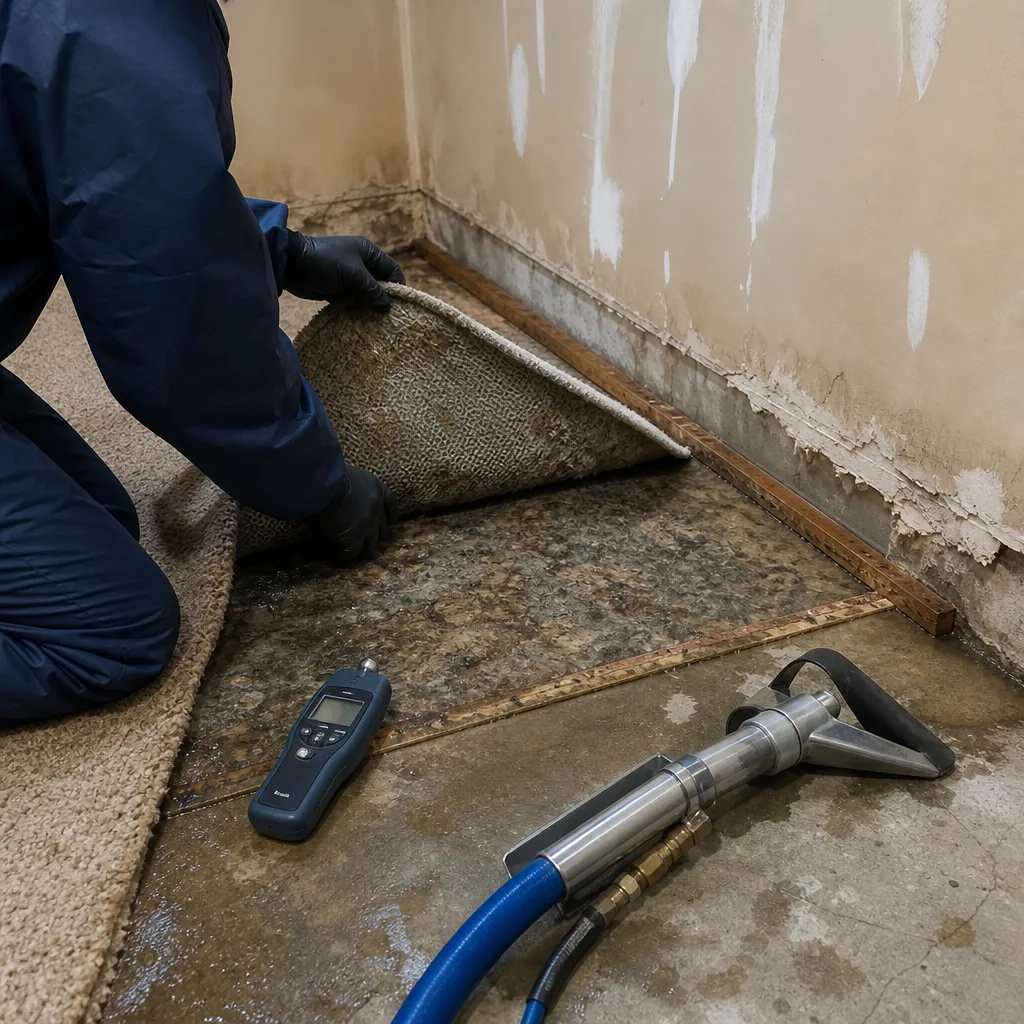
We arrive, walk the full affected area, and document everything. Thermal imaging and moisture meters map the water or wind damage, including migration inside shared utility chases and wall cavities. You get a clear explanation of what we found and what needs to happen, in plain English.
Extraction & Stabilization
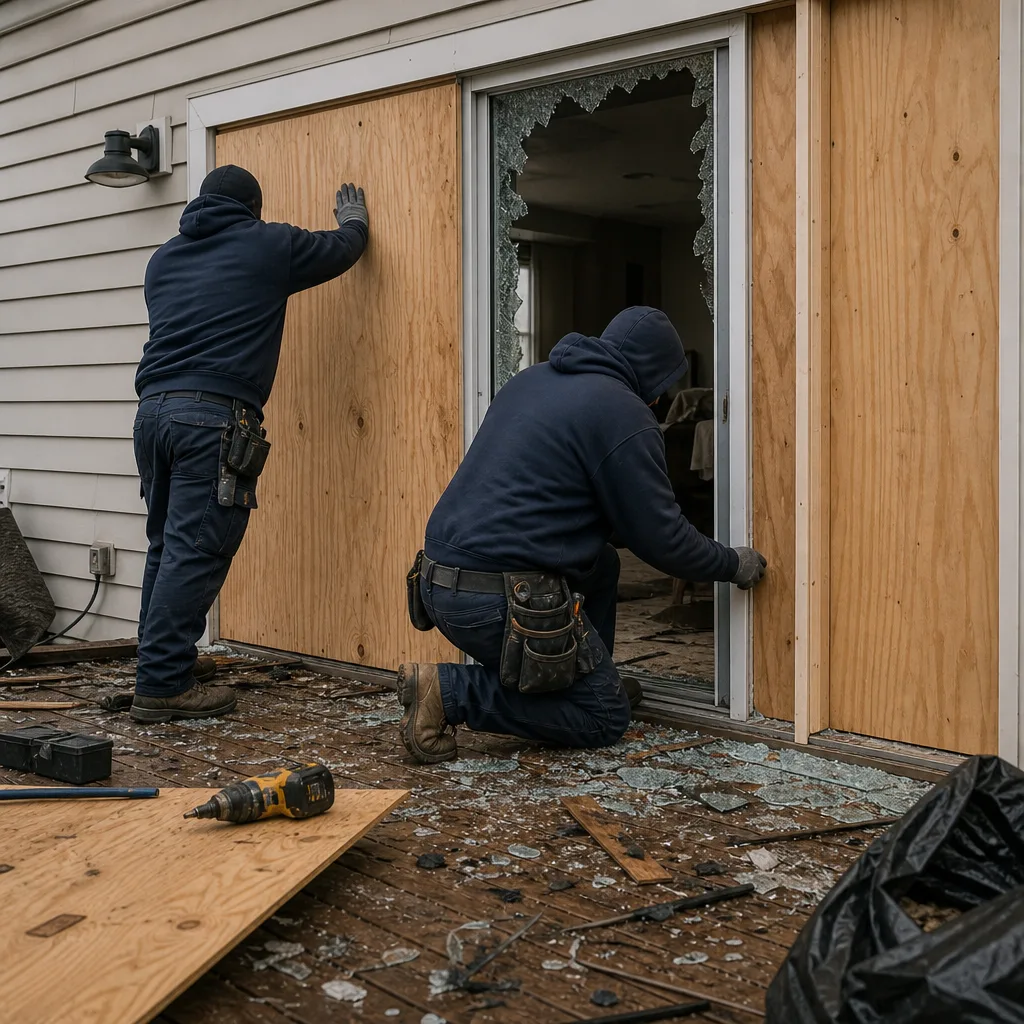
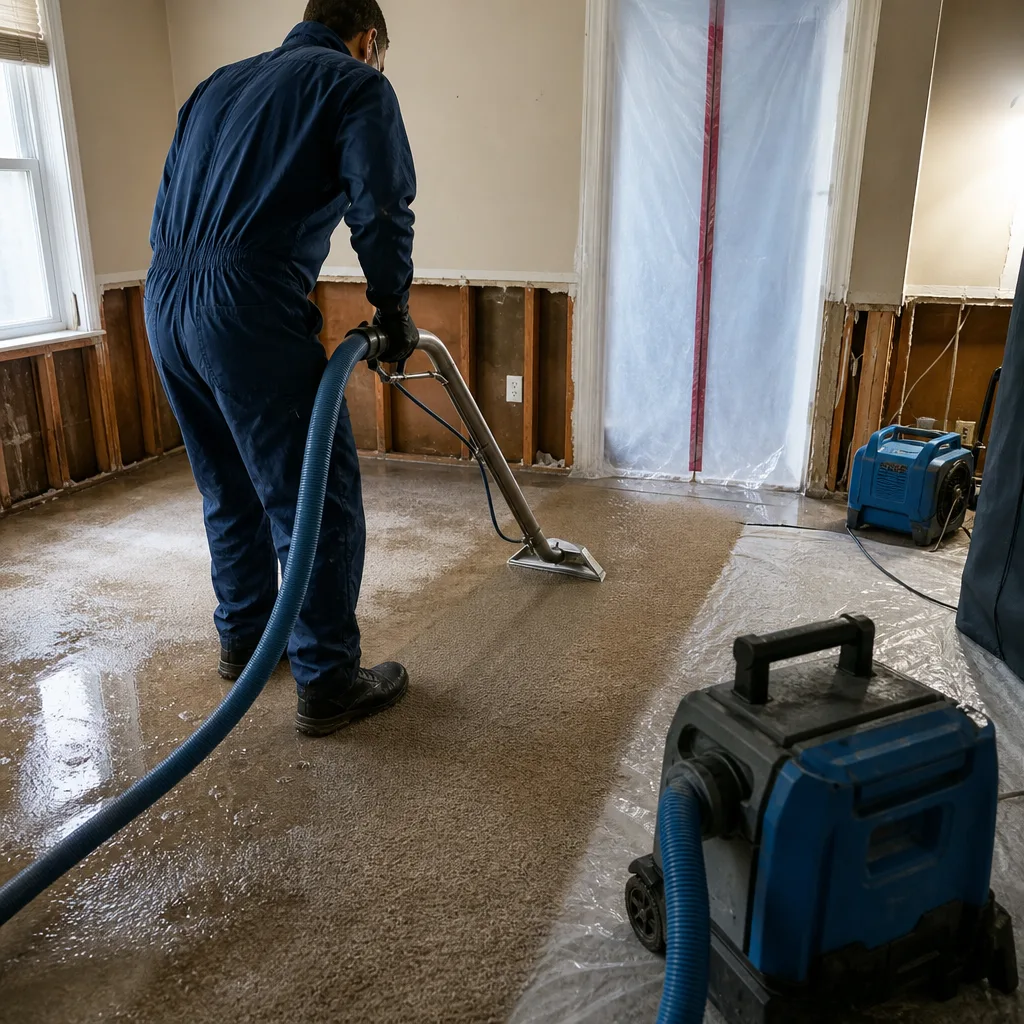
We remove standing water with truck-mounted extraction units and stabilize the structure immediately. That means temporary board-up on breached windows or roof doors, roof tarping where needed, and shoring if structural framing was compromised by wind.
Drying & Dehumidification
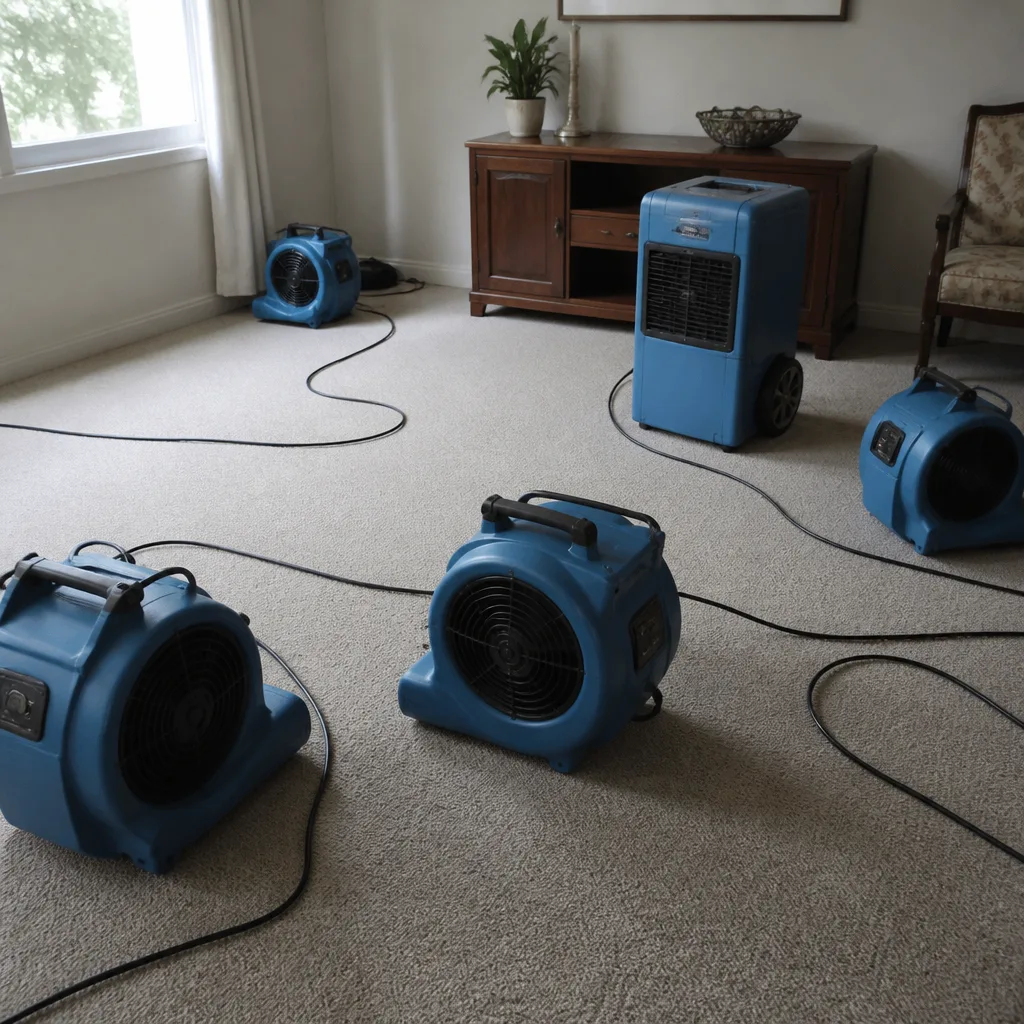
Professional-grade Dri-Eaz dehumidifiers and Phoenix air movers are placed based on a calculated drying plan, not guesswork. In Midtown’s urban canyon geometry, we account for trapped humidity between tower facades that slows evaporation and extends drying timelines. Daily readings get logged until the dry standard is met.
Cleaning & Sanitization
Affected surfaces are cleaned and sanitized with EPA-registered antimicrobials. For Category 3 water or sewage-tinged storm surge, we set up containment and run HEPA air scrubbers to keep contaminants from spreading through the building’s HVAC and hallways.
Storm-Specific Structural Treatment
Wind-rated door failures and compromised roof membranes get specific attention: reinforcement or replacement of wind-rated doors, evaluation of door frames and track hardware, repair of roof membranes, and sealing of any envelope breach that could admit more water during the next storm event.
Repairs & Restoration
The same Floodline Restoration Co. crew that handled mitigation now rebuilds: drywall, flooring, millwork, paint, and any structural framing. We do the full Storm & Disaster Restoration cycle, from first extraction to finished rebuild, backed by our 90-Day Done Right Promise in writing.
Need Emergency Storm & Disaster Restoration in Midtown Manhattan Now?
Crews minutes away, answering live 24 hours a day. The sooner we start, the less it costs.
Working With Your Insurance Company
Storm damage in Midtown Manhattan rarely involves one insurance policy. In a pre-war co-op or a mixed-use tower, you could be dealing with the building’s master policy, a commercial lease rider, and a unit-owner policy all at once. We’ve handled that stack many times. From the first hour on site, we photograph every affected area room by room, log moisture readings with timestamps, and generate a line-item scope of work using industry-standard estimating software that carriers recognize. Our team talks to your adjuster directly, provides the drying logs and documentation as they develop, and makes sure the claim reflects the actual scope, not a sanitized version. You get the same documentation we give your insurer. No withheld information, no surprises on the back end.
What We Provide Your Insurer
- Thorough documentation of the loss
- Photos of all damage, room by room
- Moisture readings and drying logs
- A detailed, line-item scope of work
- Direct coordination with your carrier
Built for Midtown Manhattan’s Loss Calendar
Storm and disaster restoration in Midtown Manhattan follows a calendar as old as the neighborhood’s building stock. January and February bring the deep freezes that blow century-old radiator supply valves and corroded expansion joints on upper floors of pre-war towers. The first hard freeze of the season is a reliable dispatch call, and because those steam risers can’t be isolated without shutting heat to an entire stack, building staff face a brutal triage: leave heat off for every tenant or let the leak continue until a riser shutdown window opens. By the time we arrive, that water has usually traveled through three or four occupied apartments. March and April bring the thaw, when the city’s combined sewer pressure and saturated sub-basements push groundwater into the lower mechanical rooms of older buildings. Summer brings thunderstorm flash flooding, which hits the lower-lying western blocks near the Hudson and the FDR-adjacent eastern edges hardest. Fall is nor’easter season, and in Midtown that means wind-driven rain breaching roof doors, windows, and aging roof membranes. Hurricane Sandy showed what storm surge can do to this narrow island. We plan our Midtown Manhattan dispatch and equipment staging around this calendar, because the damage doesn’t wait for a convenient hour.
Storm & Disaster Restoration Across Midtown Manhattan’s Neighborhoods
Midtown Manhattan is not one uniform grid. The 1930s Art Deco and Beaux-Arts co-ops and rental towers along West 57th Street and Central Park South carry original steam risers and cast-iron supply lines through shared chases, which means a single storm-driven roof breach can drop water through a dozen floors before anyone notices. The office towers around Grand Central and Madison Avenue, many of them mid-century concrete frames with deep sub-basement mechanical rooms, present a different challenge: water travels far from its source through conduits and elevator shafts before surfacing in an occupied space. Over in Hell’s Kitchen and the Hudson Yards corridor, the lower-lying western blocks are the storm-surge exposure point, and pre-war tenement-style buildings there have tight floor plates and shared vent stacks that complicate drying. Along Second and Third Avenues in Murray Hill, mixed-use buildings with ground-floor commercial spaces mean restoration work often has to schedule around restaurant hours and retail operations. When we serve Midtown Manhattan, our crews know these corridors, the building types on each, and what a wind event or a hard rain actually does to them.
Specialized Storm & Disaster Restoration Services We Offer in Midtown Manhattan
Emergency Board-Up
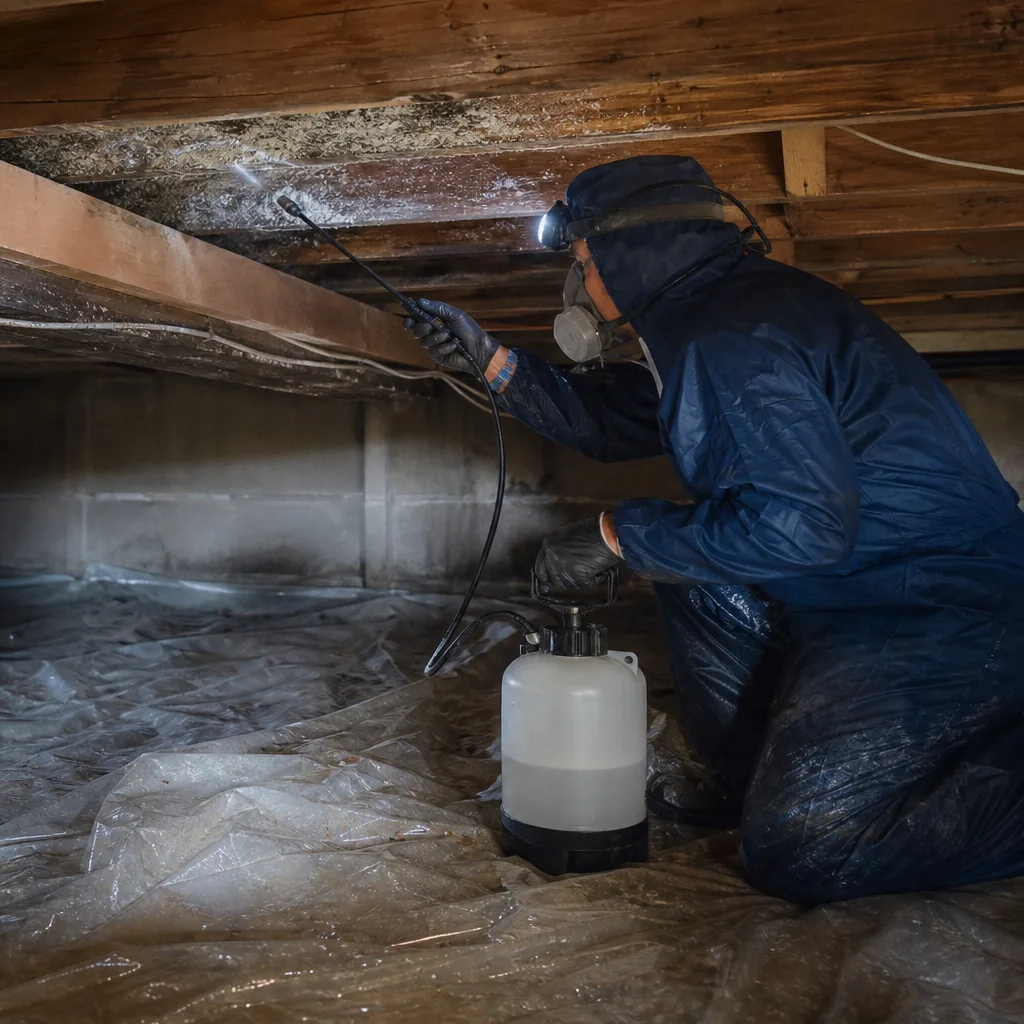
When a wind-rated steel roof door blows off its hinges on a West 57th Street co-op or a window gives way in a Midtown office floor, the building is open to weather, pests, and unauthorized access. We board up with plywood rated for the opening and the exposure, installed to hold until permanent repairs are scheduled. In mixed-use buildings, we work within the building management’s required windows, including nights and weekends for commercial floors.
Roof Tarping
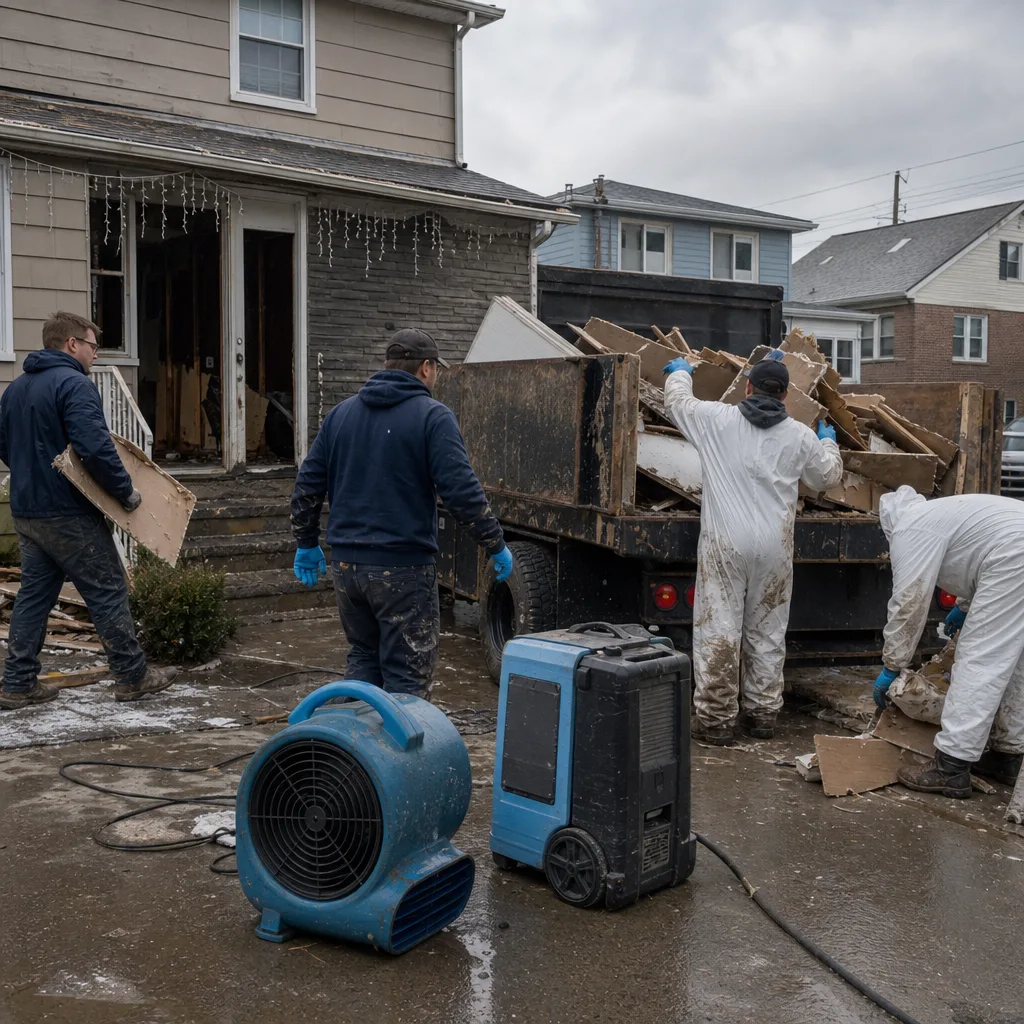
Midtown’s roof stock ranges from 1920s tar-and-gravel membranes to modern single-ply and green-roof assemblies. When wind tears a membrane or lifts a seam, water gets in fast and travels down through the building’s utility chases. We tarp the breached area with heavy-duty, wind-secured coverings that stay put through the next storm while permanent roof repair or replacement is scoped.
Wind Damage Repair
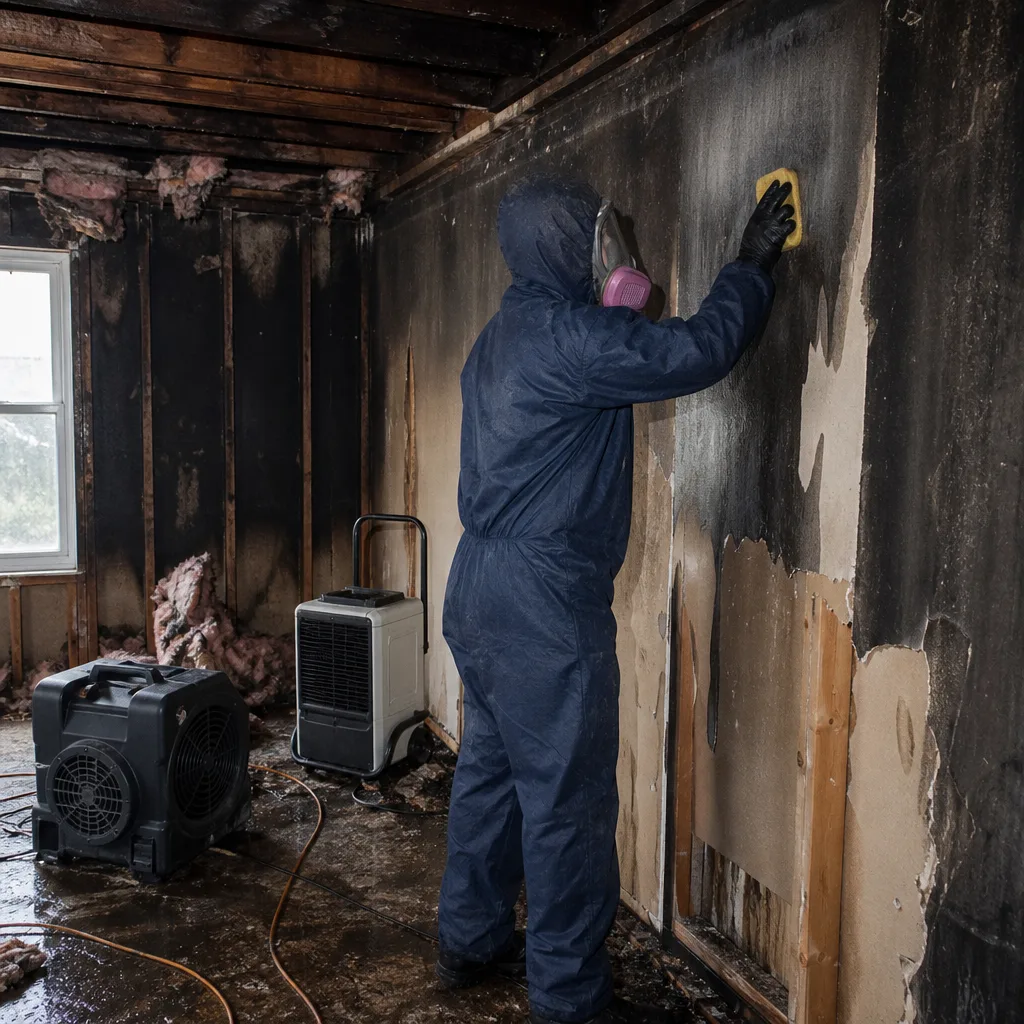
Nor’easters and hurricane remnants do not just tear roof membranes. They fold door panels, wreck door tracks, snap hinges on wind-rated doors, and crack window frames. We repair or replace wind-rated doors to code, evaluate the frame and hardware, and seal envelope breaches. In Midtown, any structural door or window replacement on a facade-facing opening may require a DOB permit. We know the paperwork and the filing path, and we handle it.
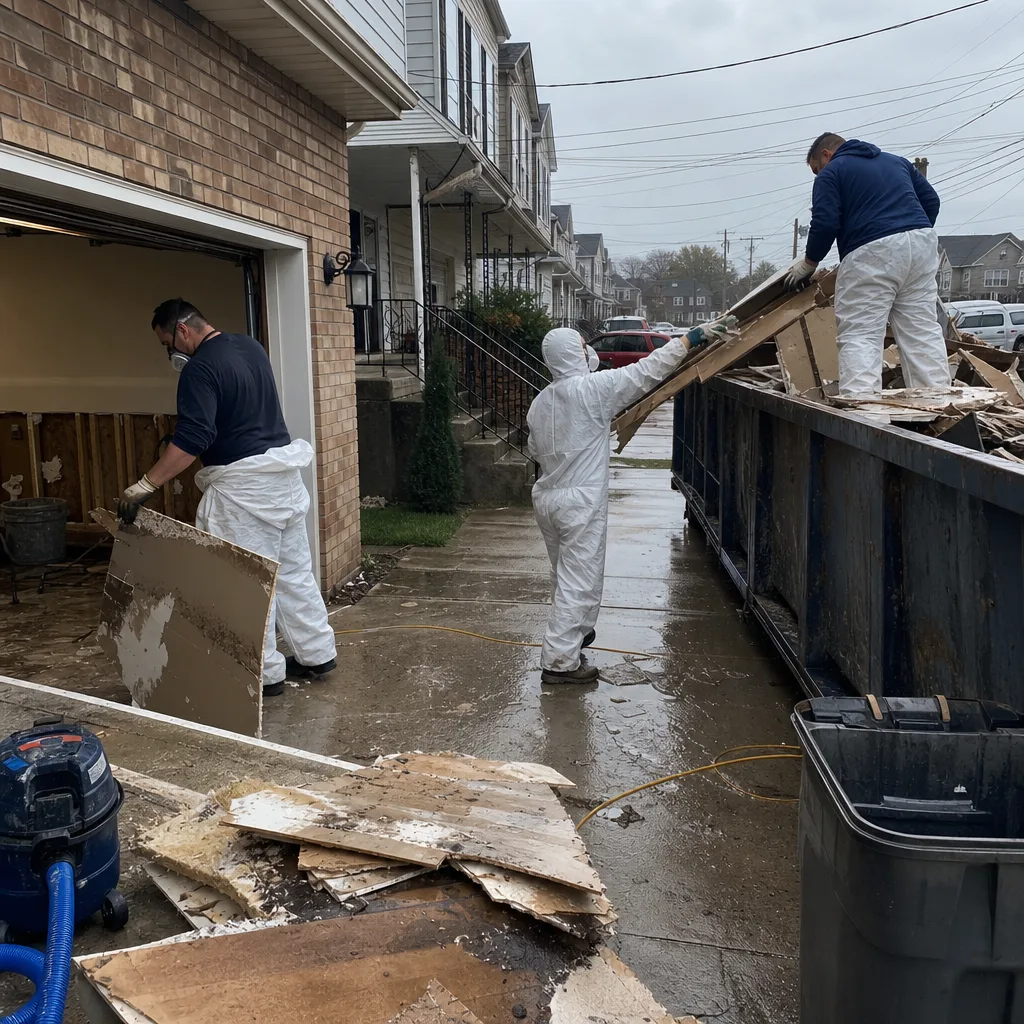
Storm Damage Cleanup
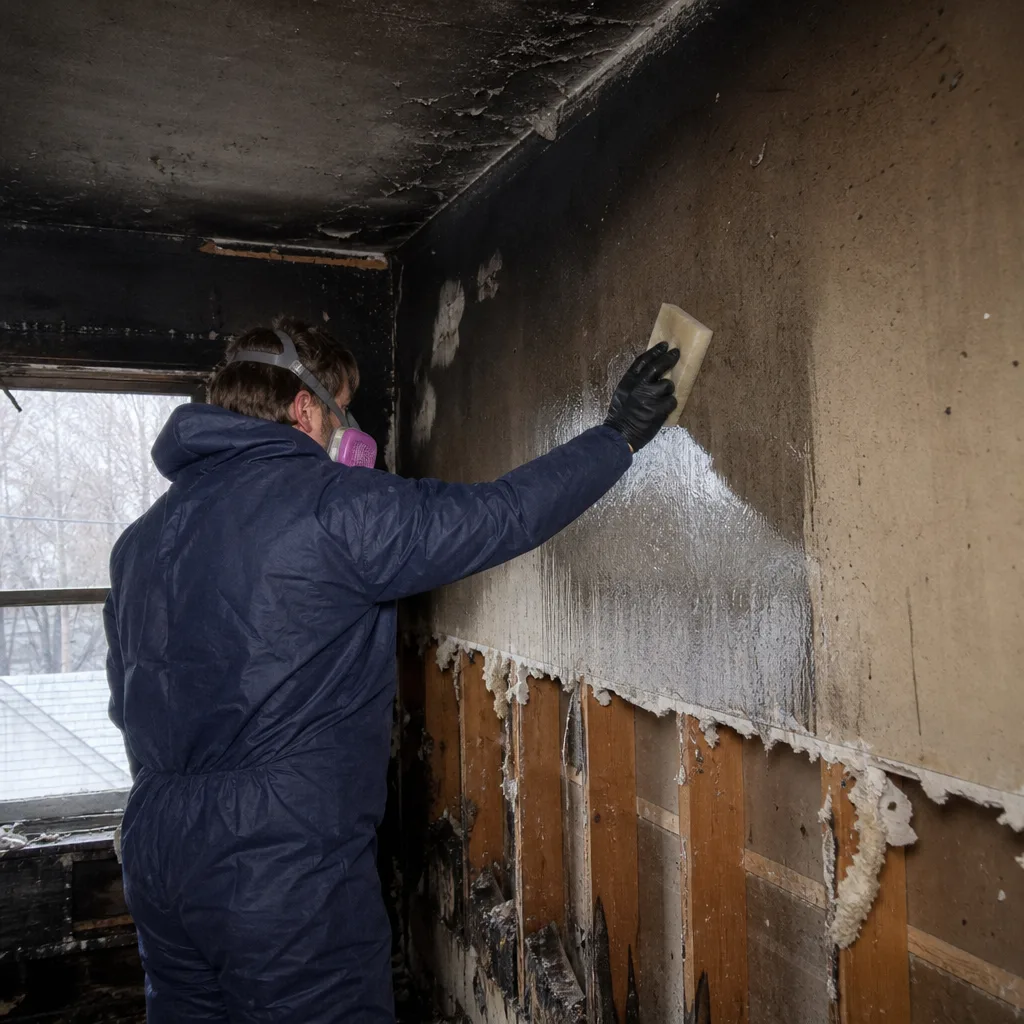
Wind-driven debris, saturated drywall, ruined insulation, and contaminated carpet all come out in a controlled sequence after a storm. We set up containment where needed, HEPA-vac the affected zones, and dispose of debris in compliance with NYC Department of Sanitation and DOB requirements. The goal is a clean, dry, structurally stable space ready for reconstruction.
Flood Damage Restoration
Storm-surge flooding from the Hudson or East Rivers is Category 3 water by default. Sewage-tinged, debris-loaded, and biologically active. Flood damage restoration in Midtown means full containment, Extraction with truck-mounted units, antimicrobial treatment, and aggressive structural drying with Dri-Eaz dehumidifiers and Phoenix air movers. Only then do we rebuild.
Debris Removal
After a storm tears through a Midtown rooftop or courtyard, the debris is more than unsightly. It is a secondary hazard that blocks drainage, adds weight to compromised roofs, and creates trip hazards on sidewalks and terraces. We remove it, sort what can be salvaged, and dispose of the rest legally and quickly.
What happens when you call
- 1
A real person answersNo phone trees - you reach a local pro.
- 2
You get an upfront price rangeHonest numbers before anyone is dispatched.
- 3
A background-checked tech heads outLicensed & insured, dispatched right away.
- 4
You approve before work beginsNothing starts until you say go.
Storm & Disaster Restoration Costs in Midtown Manhattan, NY
A typical emergency board-up in Midtown Manhattan runs $450 to $950 per opening, depending on size and floor height. Roof tarping on a pre-war co-op or a mid-century office roof typically lands between $650 and $1,800, driven by the area of the breach, roof access, and wind-exposure during installation. Structural drying after a storm-driven water intrusion runs $2,200 to $5,500 per affected floor for a typical Midtown apartment or office floor, and more when water has migrated through shared utility chases across multiple levels. Full wind damage repair on a wind-rated steel door, including frame replacement and hardware, runs $1,900 to $4,800 before any DOB permit fees, which are separate and set by the city. What moves the price? The category of the water, the number of floors affected, whether building management restricts work to nights or weekends, and whether the loss is inside a pre-war building with original cast-iron risers that require isolation before extraction. Most storm losses in Midtown Manhattan are covered under a building master policy or a unit-owner HO-6 policy, minus the applicable deductible. Call (551) 348-8481 for a free visual inspection and a written scope with firm numbers. We bill your carrier directly, and you’ll know the price before we start.
We Also Serve Cities Near Midtown Manhattan
Our crews regularly dispatch just as quickly to Midtown West, Washington Square, Murray Hill, and the Upper West Side. If you own or manage a property in any of those adjacent neighborhoods, the same 24/7 live answer and 45-minute response commitment applies.
Serving Midtown Manhattan, NY - Our Local Coverage Area
We’re based in the Midtown Manhattan area and know this community well. Use the map below to see our service coverage - if you’re nearby, we can almost certainly help.
Midtown Manhattan Storm & Disaster Restoration Questions, Answered
How does Midtown’s density change the scope of storm water intrusion in a high-rise?
In Midtown Manhattan, water rarely stays where it enters. A storm-driven breach on the 15th floor of a pre-war tower sends water down shared utility chases, through cast-iron riser penetrations, and behind common wall cavities until it surfaces four or more floors below. That means containment may be needed on multiple floors at once, drying plans must account for hidden migration paths, and building management’s access windows determine when mitigation can proceed on commercial floors. We routinely scope these losses by mapping the entire vertical chase, not just the visibly wet area.
Do I need a DOB permit for wind-rated door replacement after a storm in Midtown?
In most Midtown Manhattan buildings, yes. Replacement of any door or window on a facade-facing opening, especially in a landmarked or DOB-filed building, typically requires a permit and may also require Landmarks Preservation Commission review if the building is designated. We handle the DOB filing, coordinate with the building’s architect or expediter when one is required, and schedule the work within building management’s permitted hours. Doing it without the permit risks a stop-work order and fines. Call (551) 348-8481 and we’ll walk the path before work begins.
What happens if a pre-war steam riser is breached during storm restoration?
A breached steam riser in a pre-war Midtown building is a serious complication. The riser runs from the basement boiler through 20-plus floors of apartments, and it cannot be isolated without shutting heat to the entire stack. If storm water has already contacted the riser or its insulation, we coordinate with building staff on a riser shutdown window, isolate the affected section, and extract any standing water before it migrates further into the chase. Leaving it running while water sits invites accelerated corrosion of century-old cast iron and cross-contamination into adjacent apartments. This is exactly why we moisture-map vertical chases on every high-rise storm loss.
Why does structural drying take longer in Midtown than in the suburbs?
Midtown’s urban canyon geometry changes the drying equation. Tall tower facades trap humidity between buildings, slowing evaporation and extending structural drying timelines well beyond what portable dehumidification specs assume for open-air suburban environments. A drying plan that works in a detached house on Long Island can underperform by days in a Midtown courtyard-facing apartment. Our techs read daily moisture levels with hygrometers and adjust equipment placement and count until the dry standard is met, not until a calendar date says we’re done.
Can mold be prevented if storm water sits in a Midtown pre-war wall cavity for two days?
Two days is the danger line. Mold can establish in 48 hours in a warm, humid wall cavity, especially in a pre-war Midtown building where lath-and-plaster walls and decades of accumulated dust provide organic food sources. The answer is speed and containment. If water has already sat for two days, we may need to open the cavity, remove saturated material, and run HEPA air scrubbers while drying the framing. Not every wet cavity molds in 48 hours, but enough do that we treat any 48-hour-old intrusion as a potential mold event. Call (551) 348-8481 and we’ll assess the cavity with moisture meters and thermal imaging.
How fast can someone actually get to a Midtown Manhattan storm loss?
Our dispatch commitment for Midtown Manhattan is 45 minutes, day or night. We stage equipment and crews from our New York City office precisely so Midtown calls get answered with a response time, not a wait list. During a nor’easter or heavy storm event, demand spikes, but the live dispatcher on the line tells you the real ETA honestly. If we cannot reach you within our commitment window, we’ll say so upfront.
Will my insurance cover storm damage, or is this all out of pocket?
Most storm damage in Midtown Manhattan is a covered peril under a building’s master policy or a unit-owner’s HO-6 policy, subject to the deductible. Wind-driven rain and roof breaches are typically covered, though flood damage from storm surge may require a separate flood policy depending on the carrier and the specific loss. We document the loss from the first hour, provide your carrier with the line-item scope and daily drying logs, and bill directly so you are not floating the cost. If a claim gets denied, you’ll know why from the documentation, not from a surprise bill.
What should I do in the first 30 minutes after storm damage in Midtown?
Shut off electrical power to any affected area if it is safe to do so, and do not walk through standing water in a building with live electrical. Move what you can lift safely out of the water’s path, but do not touch anything soaked in Category 3 water with bare hands. Photograph the visible damage with your phone, then call (551) 348-8481. A live dispatcher answers, and we will walk you through the first steps while the crew is en route. The faster we start extraction and drying, the smaller the final scope.
Written by Curt Bowman, Owner at Floodline Restoration Co., serving Midtown Manhattan with storm, flood, and disaster restoration since 2010.