
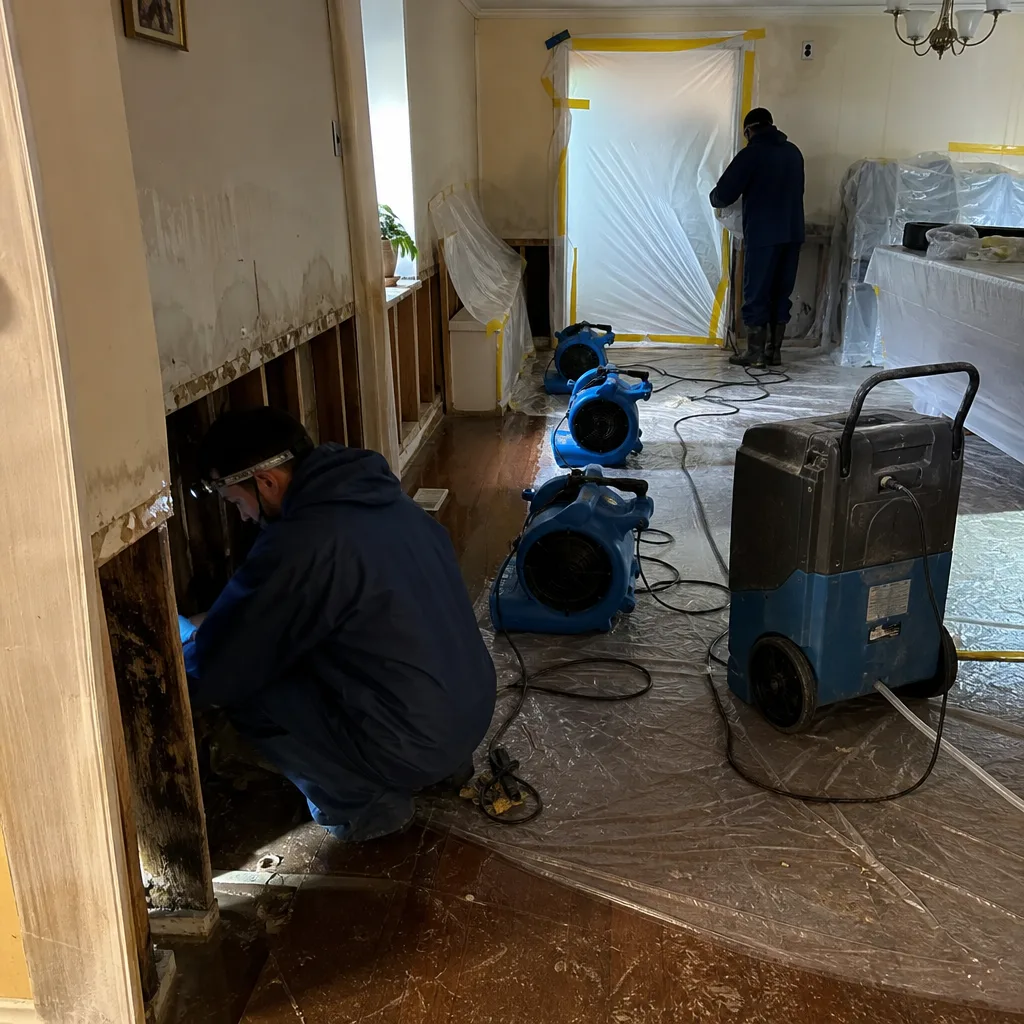
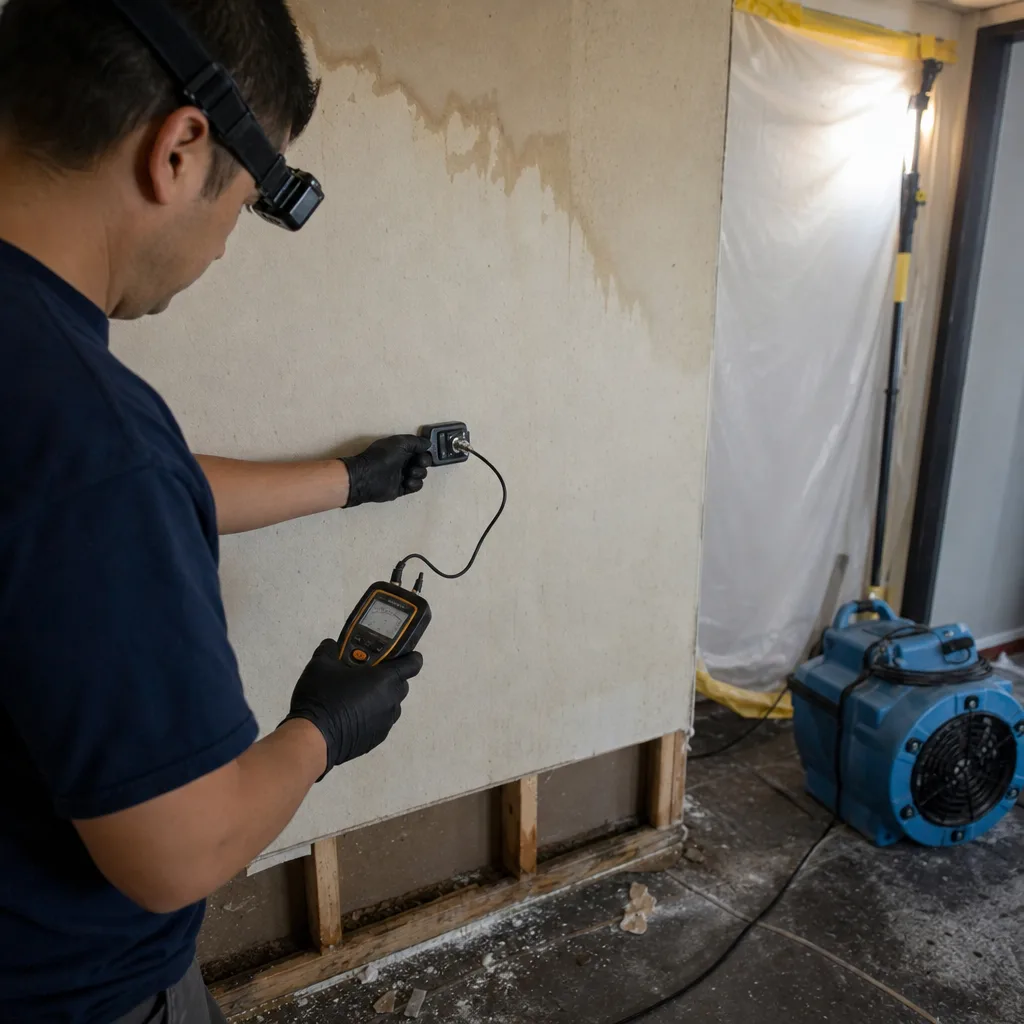
Free visual inspection and a written scope of work before any mitigation begins - photos, moisture readings, and drying logs go in your claim file
The scope we write is the scope we bill. Anything new gets shown to you, in writing, before we touch it.
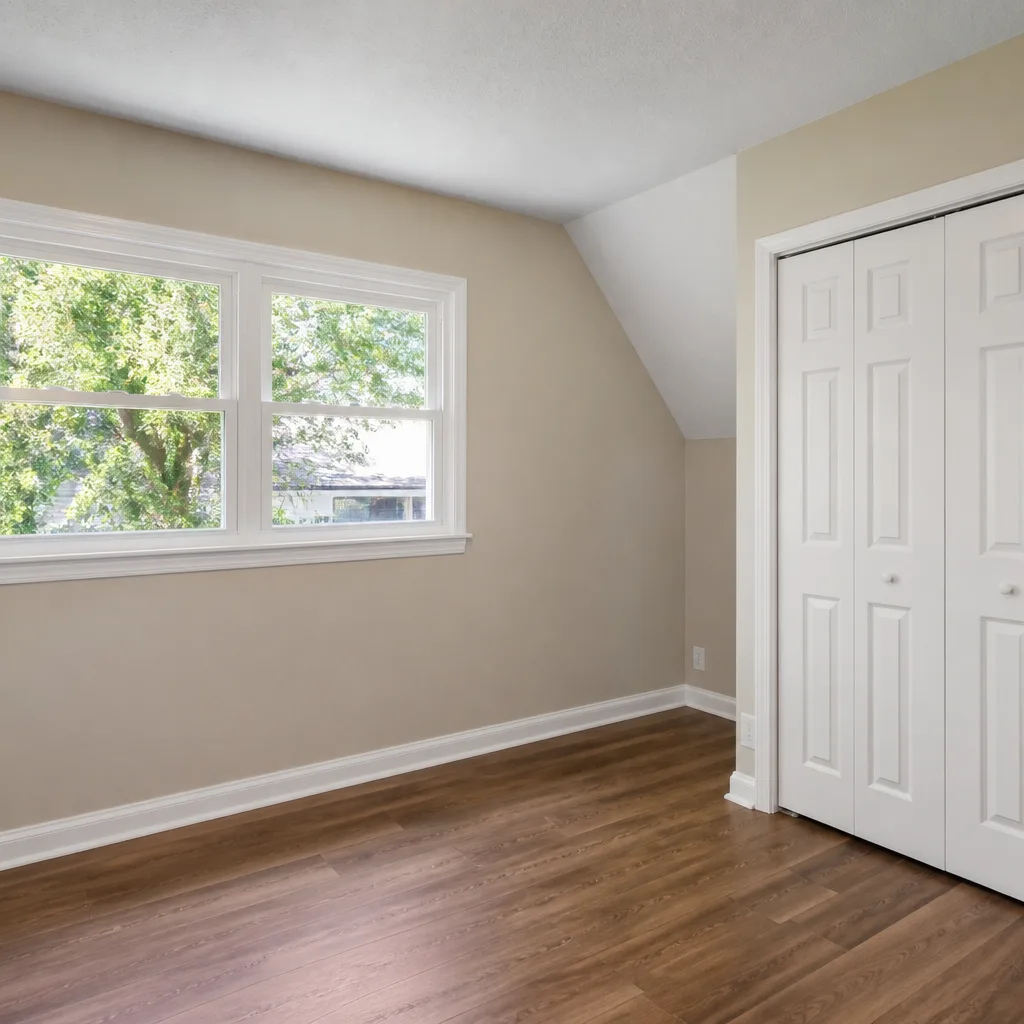

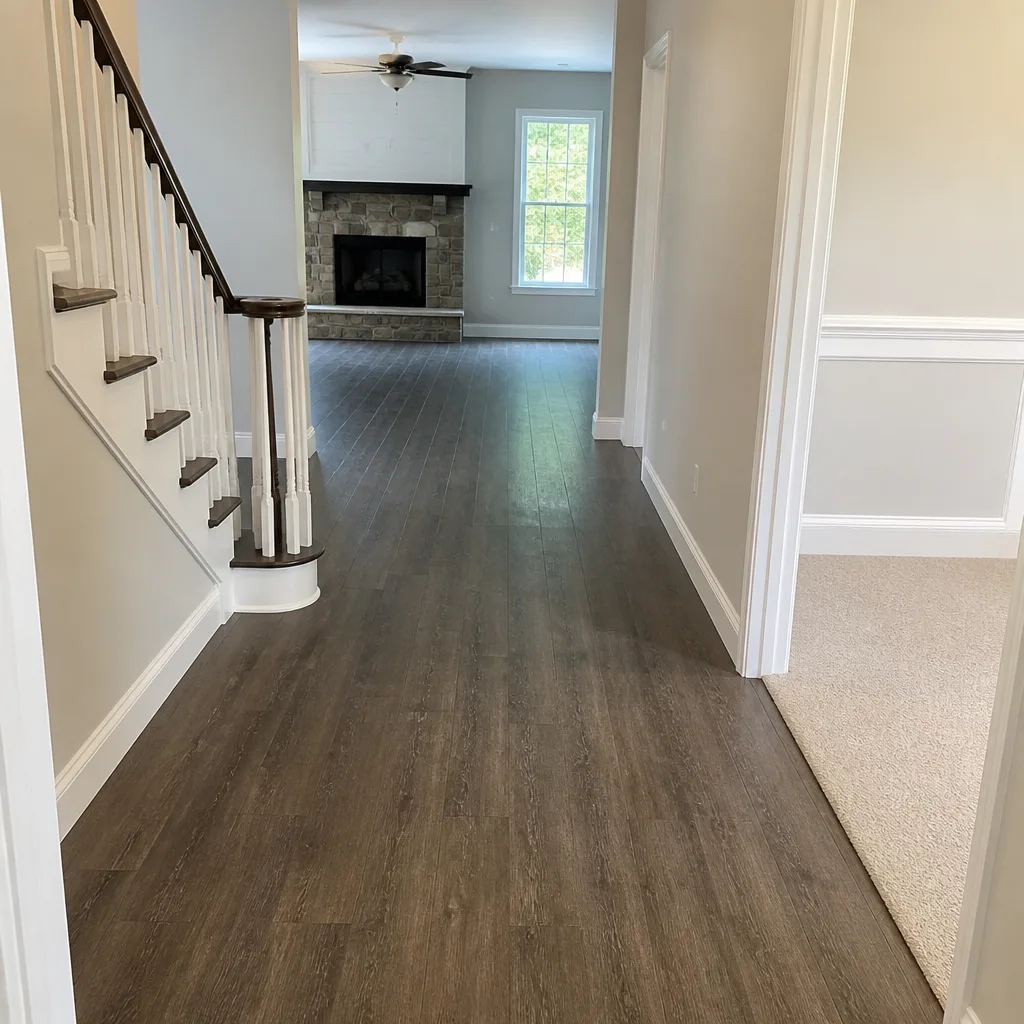

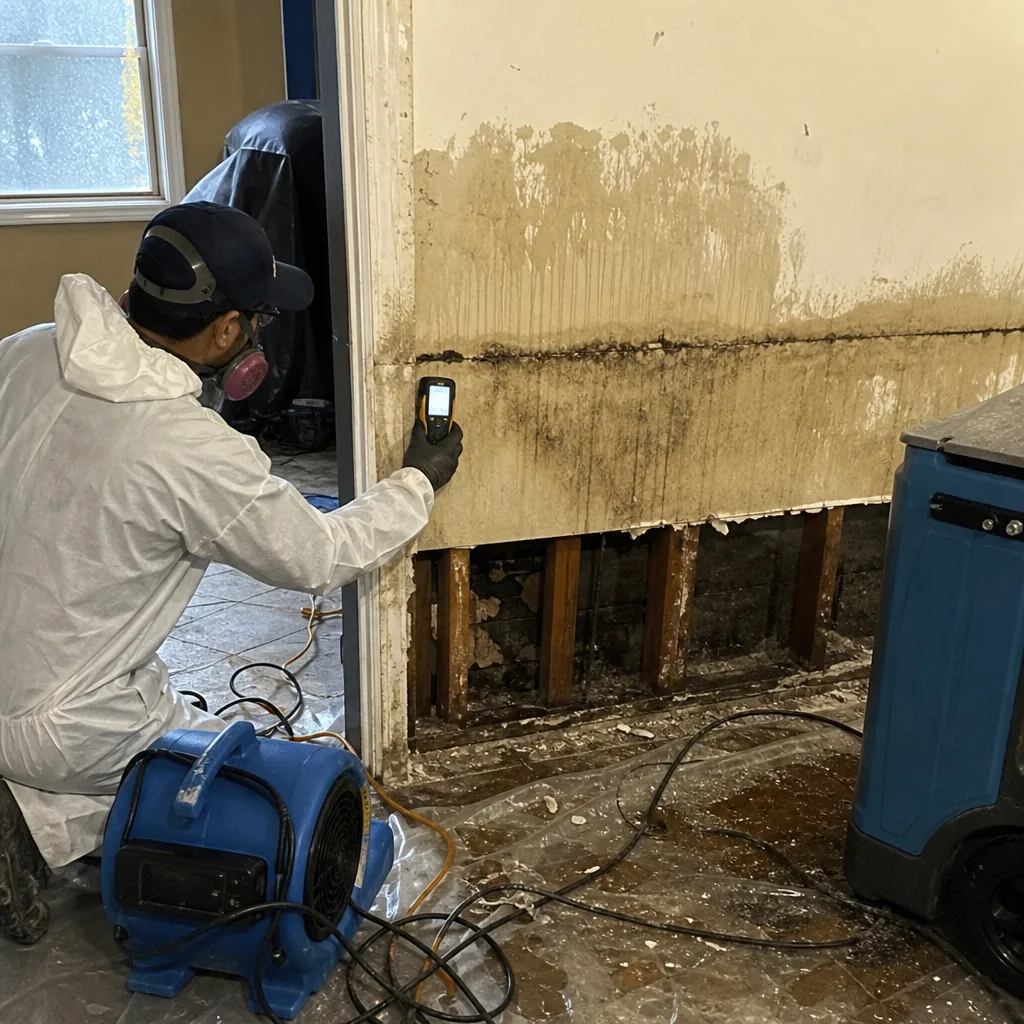 Before
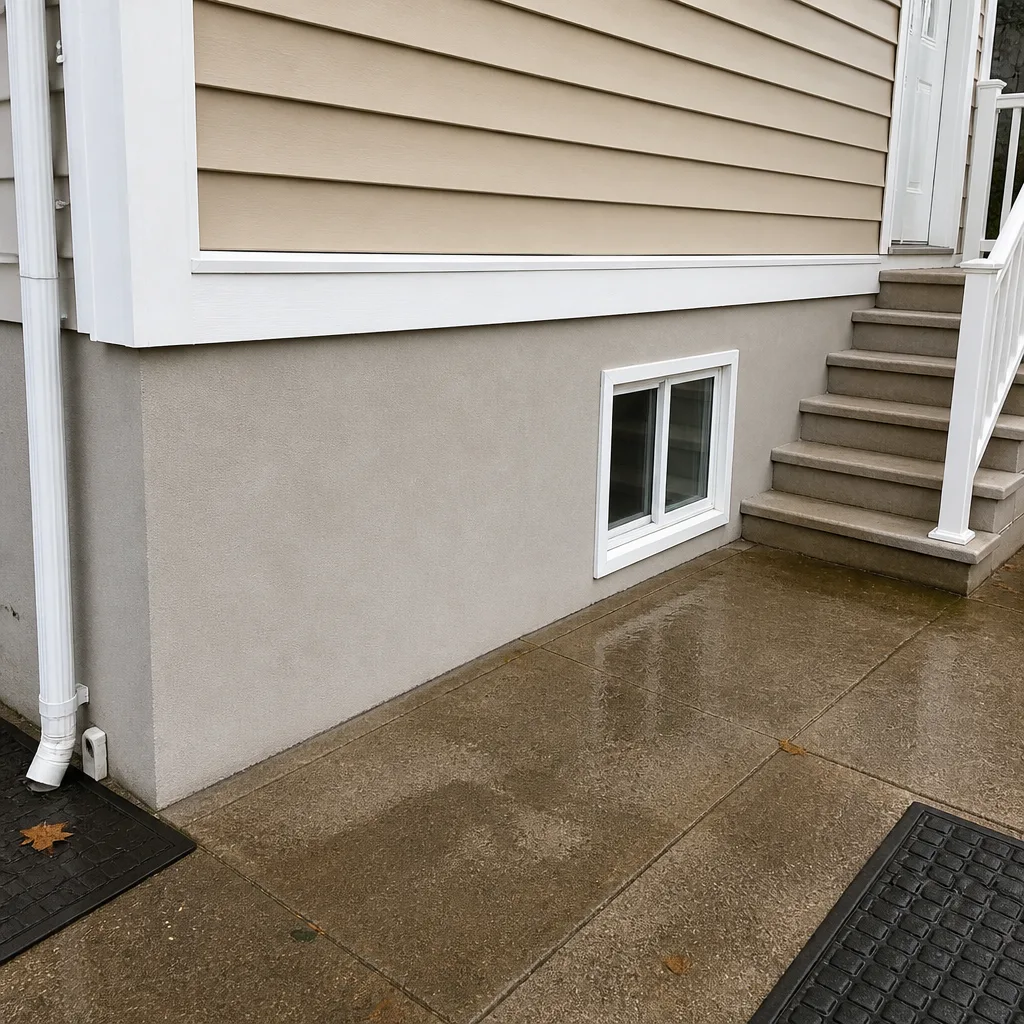 After
After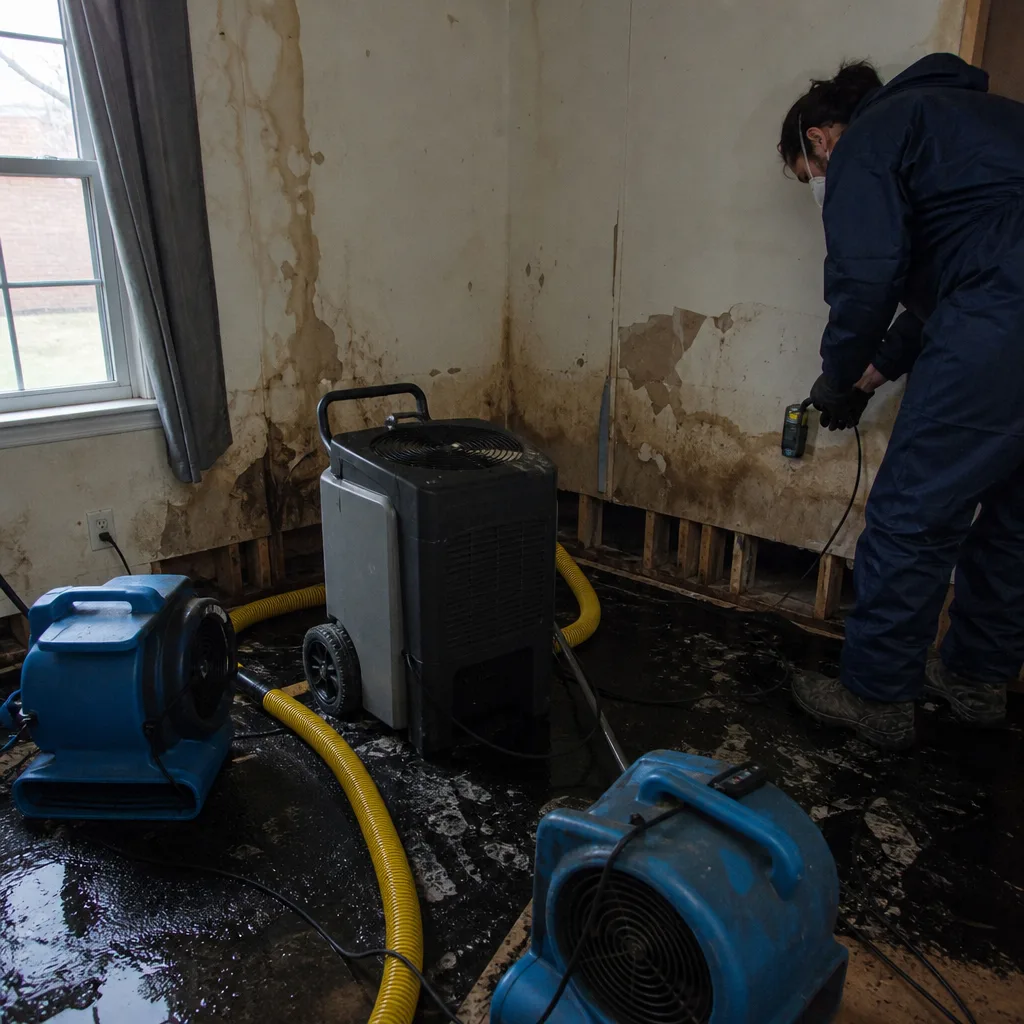 Before
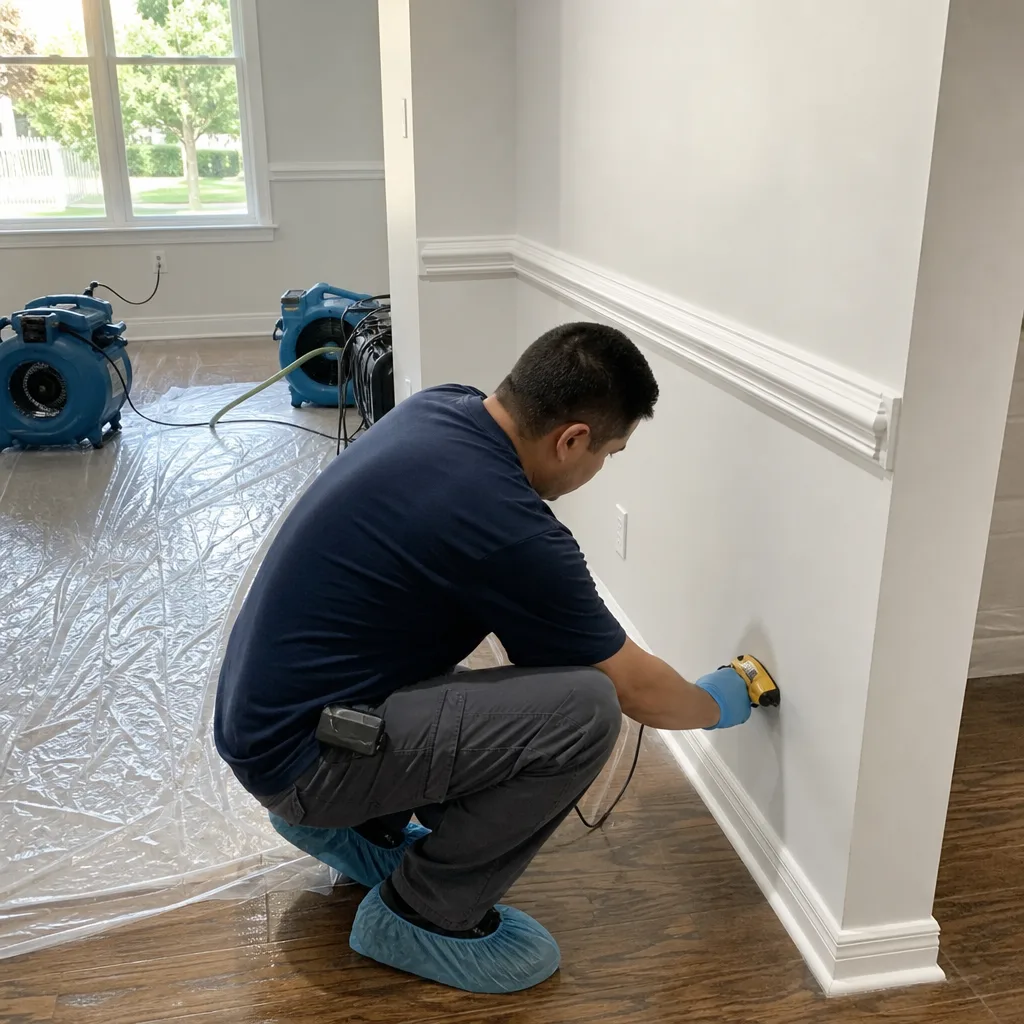 After
After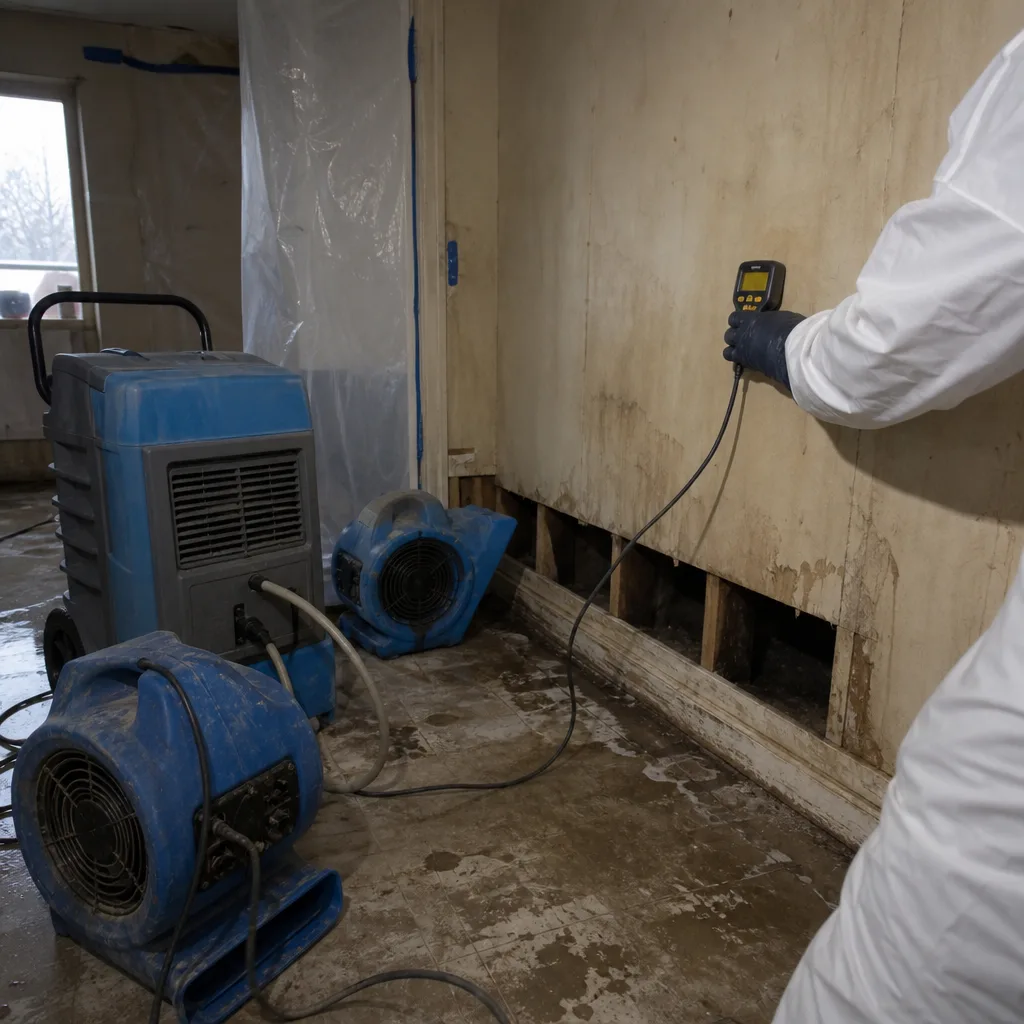 Before
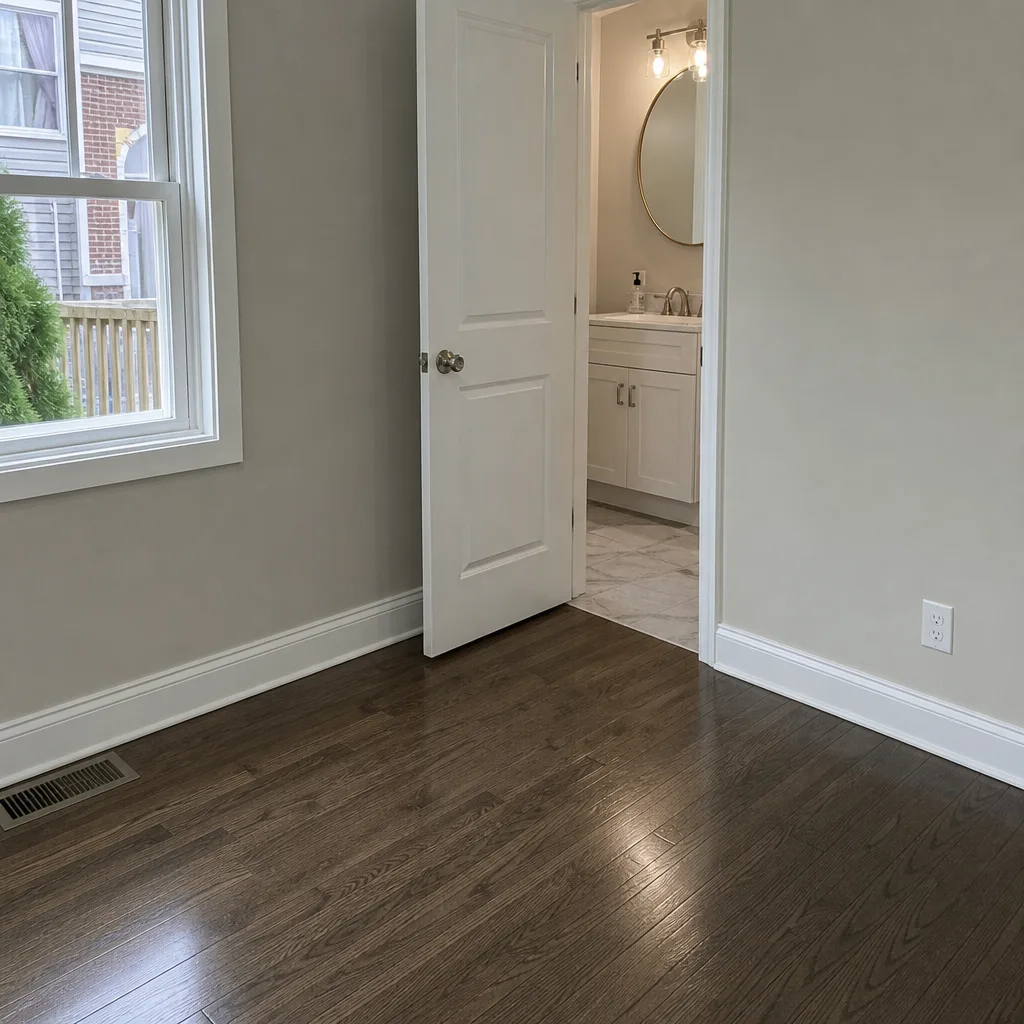 After
After24/7 Emergency Commercial Restoration in Jersey City
Commercial water damage in Jersey City rarely starts small. A backed-up combined sewer line pushes Category 3 black water through a row-house basement at 2 a.m., or a nor’easter sends Hudson River surge through a storefront on Newark Avenue, and the clock starts before you’ve found the flashlight. Floodline Restoration Co. answers the phone live at every hour, and a certified crew reaches your Jersey City property fast. The first hour determines whether you’re drying materials or tearing out contaminated drywall, whether inventory is salvageable or a write-off. Call (551) 348-8481 now for a free visual inspection and an honest read on what you’re facing. The line the water left is where we start.
Understanding Commercial Restoration Severity in Jersey City Properties
Not all water is the same, and in Jersey City the distinction matters more than in almost any surrounding town. Clean water from a burst supply line is Category 1. Gray water from a washing machine or dishwasher carries some contamination and is Category 2. But most commercial basement flooding in Jersey City involves Category 3 black water: sewage, river surge, or groundwater that has mixed with the city’s combined sewer overflow system. That water carries pathogens, and it saturates porous building materials that line the basement walls of 19th-century brownstones and brick tenements.
We classify the loss, moisture-map every affected surface with Dri-Eaz meters, and document lateral migration through the shared party walls and common pipe chases that define Jersey City’s attached housing stock. Severity is not a guess. It’s a read: hydrostatic pressure in the former Hackensack Meadowlands fill zones, FEMA AE-zone exposure in the 07302 corridor, the type and age of the foundation. That read determines whether we dry, treat, or remove. Skipping that step in a city where black water is the default, not the exception, leaves a biohazard liability hiding behind a fresh coat of paint.
Why Jersey City Property Owners Choose Floodline Restoration Co.
- 45-minute response commitment. We dispatch crews from inside the Jersey City metro area, not across two bridges. When a CSO backup is spreading through three units, the crew that gets there first changes the scope.
- 24/7 live answer, every call. A real dispatcher picks up at 2 a.m. on a Sunday. Not a recording, not a callback service. You tell us what happened; we launch a crew.
- IICRC-certified crews. Our technicians hold IICRC certifications in water damage restoration (WRT), applied structural drying (ASD), and fire and smoke restoration (FSRT). Background-checked and uniformed on every job.
- Free visual inspection. We walk the loss with you before any work starts. You hear what we see: the actual moisture readings, the actual contamination level, the actual scope. Then we put it in writing.
- Direct insurance billing. Floodline communicates directly with your carrier, adjuster, and property manager. We hand over a line-item scope, photo documentation, and drying logs. You never play messenger.
- One team from extraction to reconstruction. We do not hand your building to a subcontracted rebuild crew. The same team that reads the moisture map on day one rebuilds what needs rebuilding. That is the whole point of full-cycle restoration.
Our Commercial Restoration Process
Inspection & Assessment
We arrive, walk the property, and classify the water. Thermal imaging and moisture meters find what you can’t see: water inside cavities, behind baseboards, under flooring. Then we give you a written scope before any equipment is unloaded.
Extraction & Stabilization
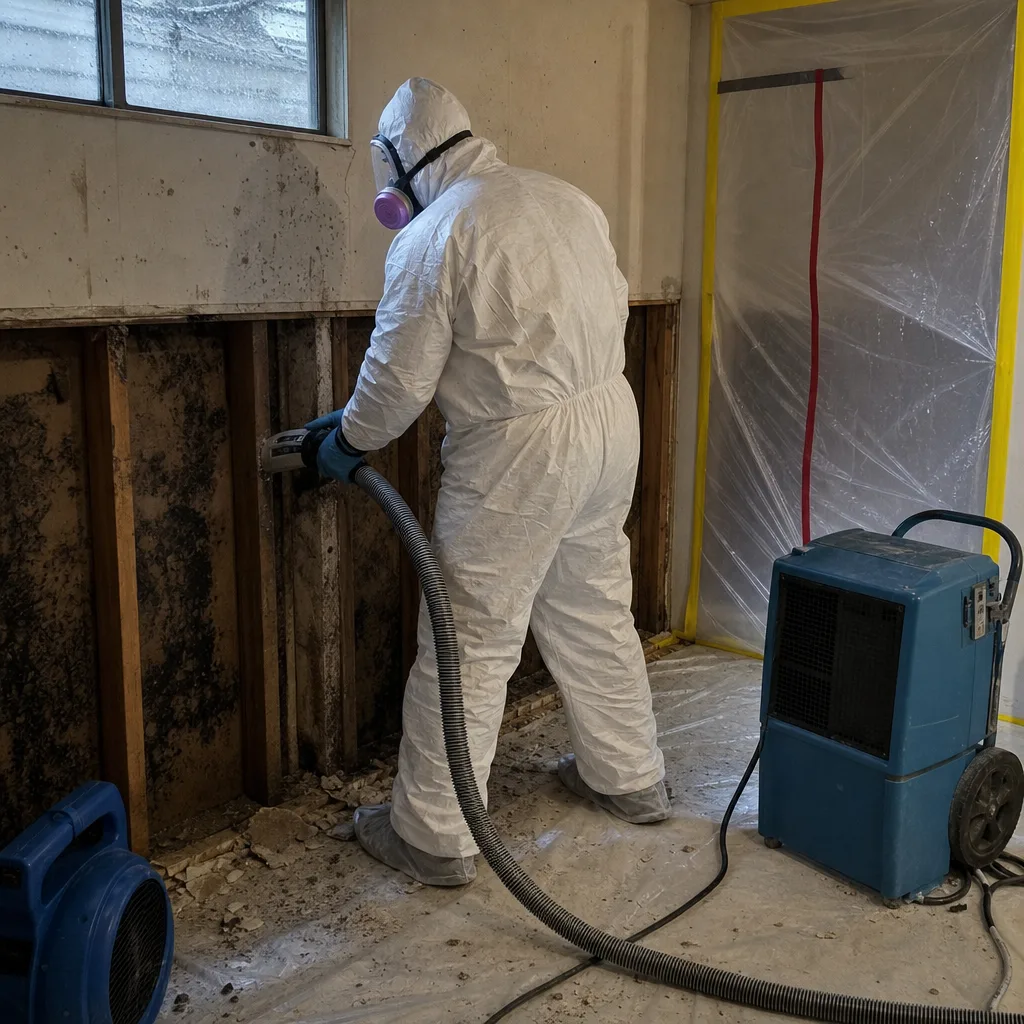
We extract standing water with truck-mounted and portable extraction units. For sewage-contaminated loss, we contain the affected zones with 6-mil poly barriers and establish negative air pressure to stop cross-contamination.
Drying & Dehumidification
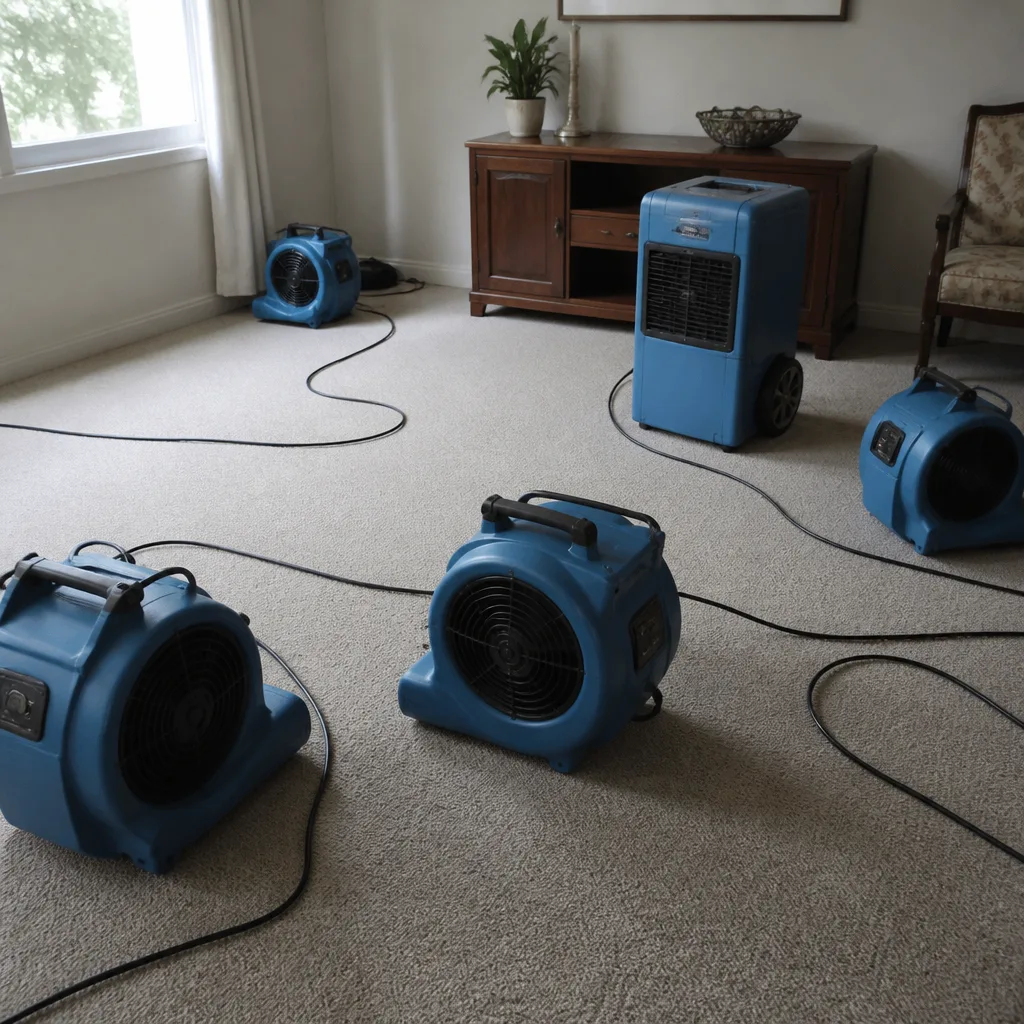
Professional-grade Dri-Eaz, Phoenix, and XPOWER air movers and dehumidifiers are placed according to a psychrometric drying plan. Daily moisture readings are logged until the dry standard is met, and the log goes to you and your carrier.
Cleaning & Sanitization
For Category 3 losses, we apply EPA-registered antimicrobial treatments to all exposed structural materials. HEPA air scrubbers run throughout. Porous materials that cannot be sanitized are cut out and disposed of as contaminated waste.
Document & Inventory Recovery
For commercial clients, we conduct a pack-out of salvageable inventory, contents, and records. Each item is photographed and logged. Injectidry systems dry documents, files, and workspace materials that cannot be replaced.
Repairs & Restoration
The same Floodline crew that extracted the water rebuilds what needed removing: drywall, framing, flooring, trim. One team, one standard, one 90-Day Done Right Promise in writing at the end.
Need Emergency Commercial Restoration in Jersey City Now?
Crews minutes away, answering live 24 hours a day. The sooner we start, the less it costs.
Working With Your Insurance Company
In Jersey City, the most common restoration claim is not a single-policy loss. It’s a multi-unit event. One backed-up CSO line on a row-house block can flood three basements with three different carriers, three adjusters, and three sets of policy limits. Floodline handles that coordination as a routine part of the job. From the first hour, we photograph the loss room by room, log moisture readings daily, and build a line-item scope that follows industry-standard estimating formats your carrier recognizes. Our project managers speak directly with adjusters, submit documentation proactively, and fight for the scope the building actually needs, not the scope that is cheapest to approve.
What We Provide Your Insurer
- Thorough documentation of the loss
- Photos of all damage, room by room
- Moisture readings and drying logs
- A detailed, line-item scope of work
- Direct coordination with your carrier
Built for Jersey City’s Loss Calendar
Jersey City’s restoration calendar follows the waterfront. January and February bring deep freezes that burst supply lines in unheated basement utility rooms of pre-war buildings. March and April thaw saturated ground, and hydrostatic pressure pushes groundwater through foundation walls in the western Meadowlands fill sections, often through 19th-century brick that was never waterproofed. July and August thunderstorms overwhelm the combined sewer system in minutes, and the CSO outfalls back up into the lowest drains in the building. September and October nor’easters raise the Hudson and Newark Bay enough to flood the AE-zones of the 07302 corridor, exactly what happened in a storm our crews worked off Newark Avenue, where tidal surge and sewage mixed in basements that shared party walls. None of this is seasonal guesswork. It’s the city’s actual risk profile, and it shapes when we staff extra crews and where our dispatchers expect calls.
Commercial Restoration Across Jersey City’s Neighborhoods
Response routes matter in Jersey City. We run crews through Downtown (07302) on a regular basis, where converted warehouse and brownstone storefronts sit inside the FEMA AE-zone and flood during coastal surge events. Over in Journal Square, the high-density residential-over-commercial buildings mean a water loss on the fourth floor migrates down through three businesses before anyone notices. The Heights runs on aging combined sewer laterals, and basement shops along Central Avenue see CSO backups after heavy rain. West of Kennedy Boulevard toward West Side and the former Meadowlands fill, the water table sits so high that even a dry week leaves moisture pushing through block foundations. Each of those areas needs a different first response, and our dispatchers know the difference.
Specialized Commercial Restoration Services We Offer in Jersey City
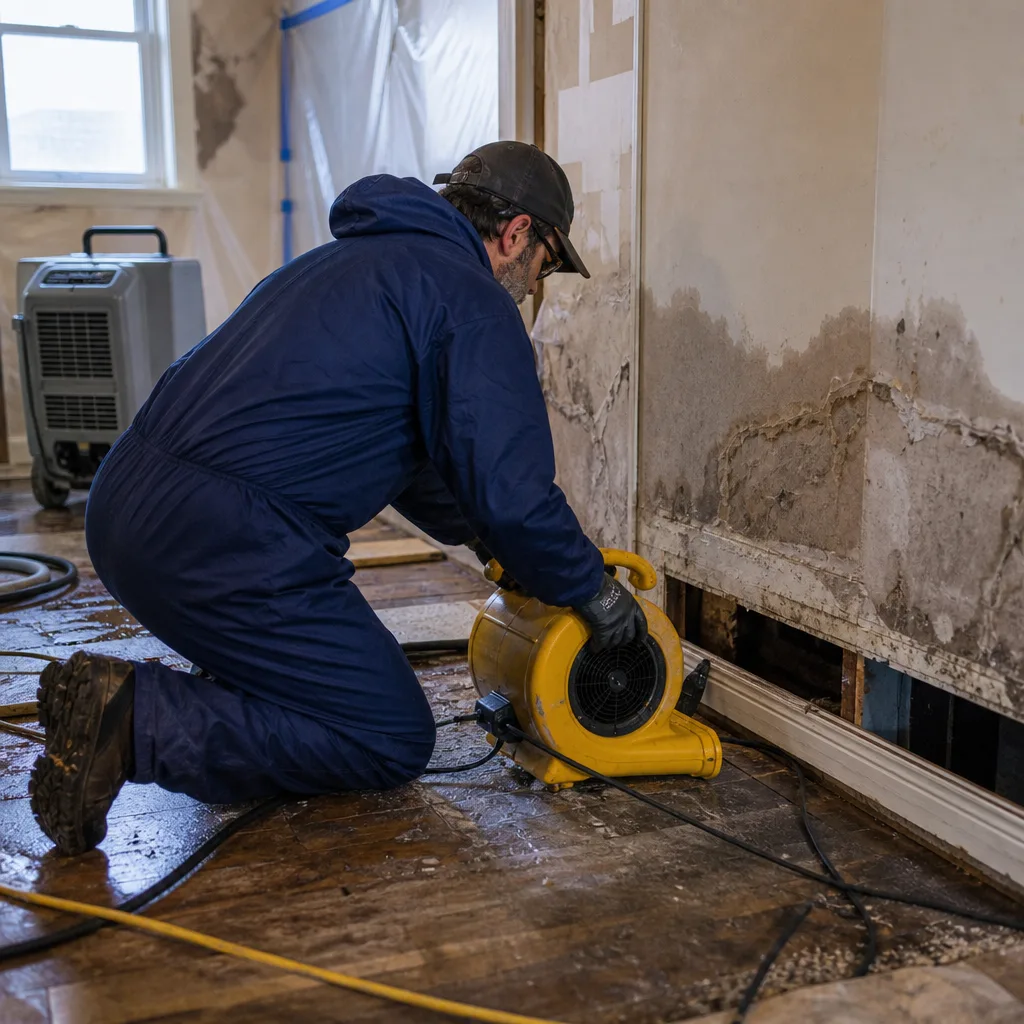
Office & Retail Restoration
A closed storefront in Jersey City burns revenue by the hour. We extract, contain, and dry while keeping your business hours front of mind. Pack-out of retail inventory, document recovery for back-office records, and fast structural drying so you can re-open as soon as the dry standard is met.
Multi-Unit & HOA Restoration
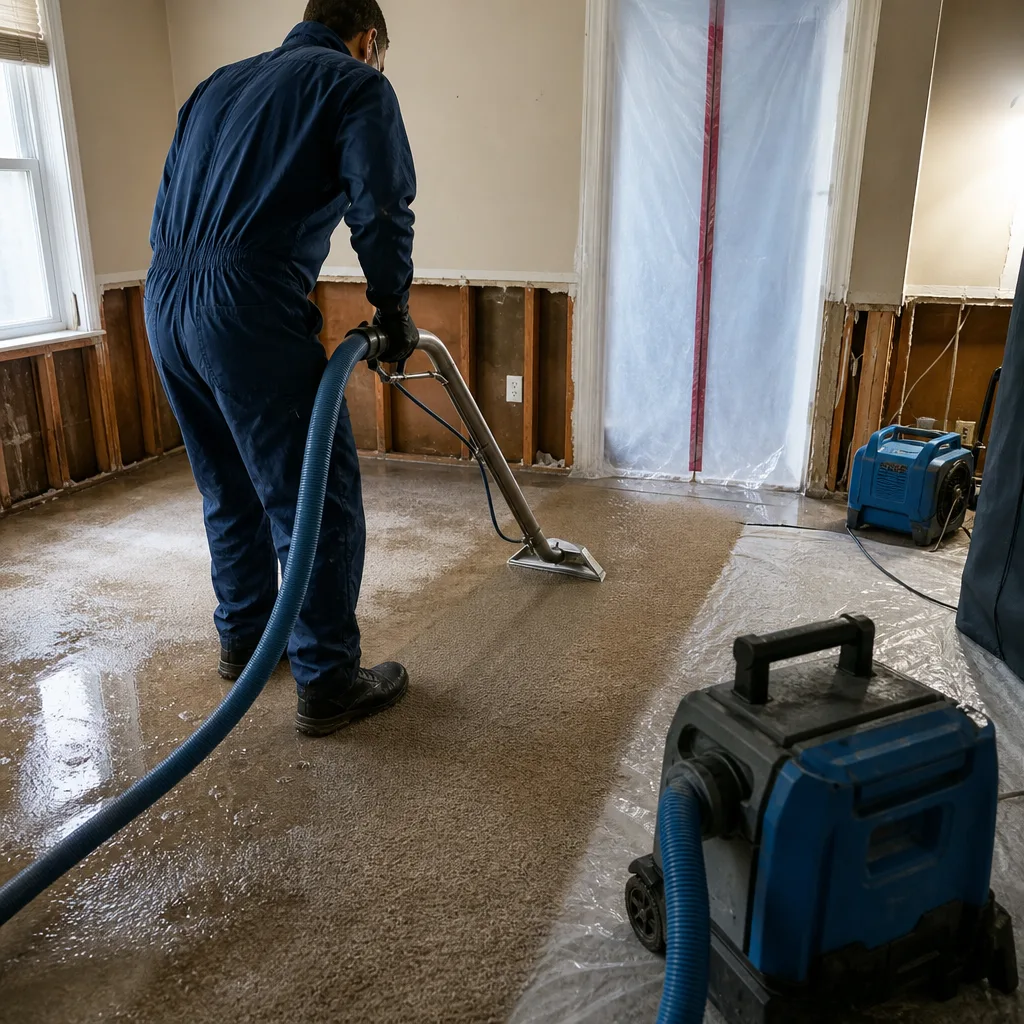
Brownstone rows and condo conversions share walls, floors, and pipe chases. One water event becomes a multi-unit claim before the hour is out. We document scope of loss separately for each affected unit and coordinate with the HOA, property manager, and each carrier. That coordination is not an add-on here. It is the baseline for how restoration has to work in attached Jersey City housing.
Industrial Facility Cleanup
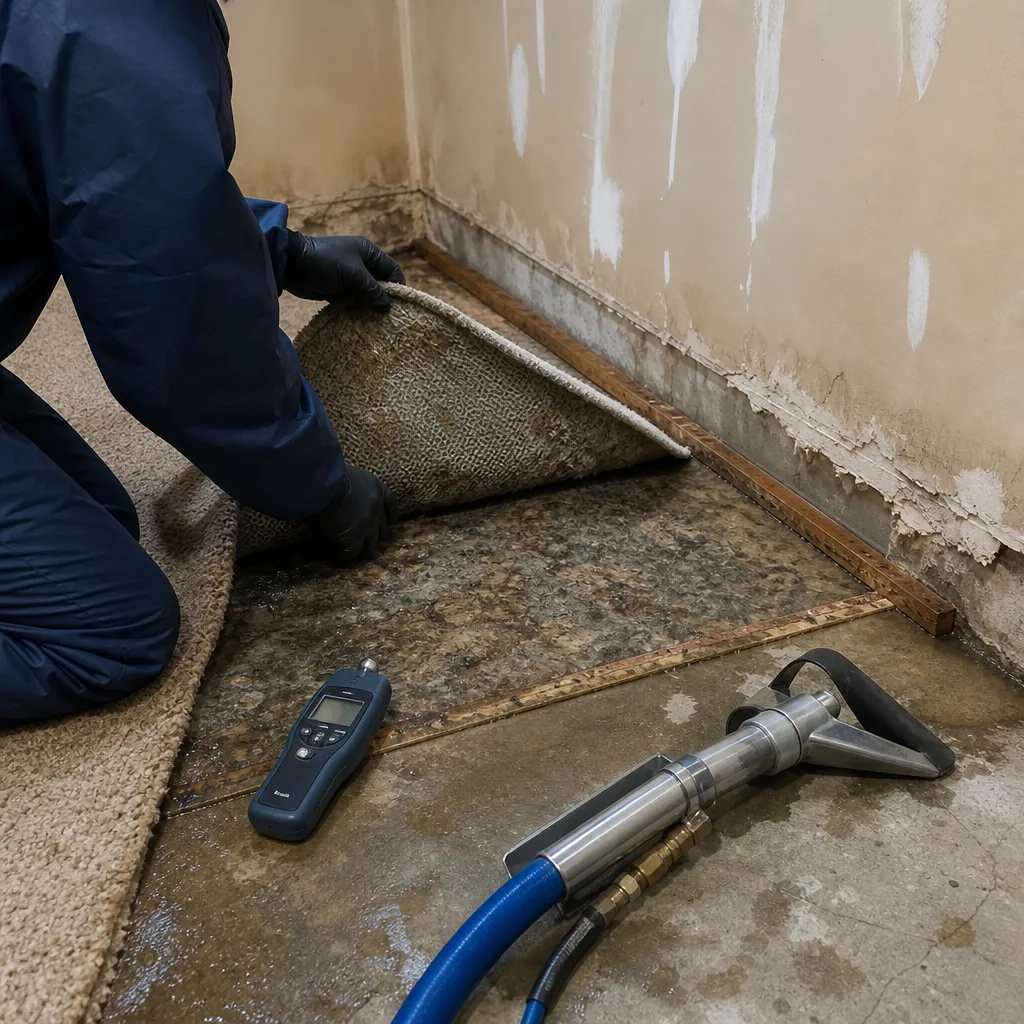
Warehouse and light-industrial spaces near the waterfront and along Routes 1&9 face floodwater that carries more than sewage: oils, solvents, and debris from the streets. We assess contamination beyond water class, set containment, and dispose of hazardous waste through licensed haulers. Moisture mapping at scale with Dri-Eaz and Phoenix equipment keeps a large-bay drying plan on schedule.
Large-Loss Response
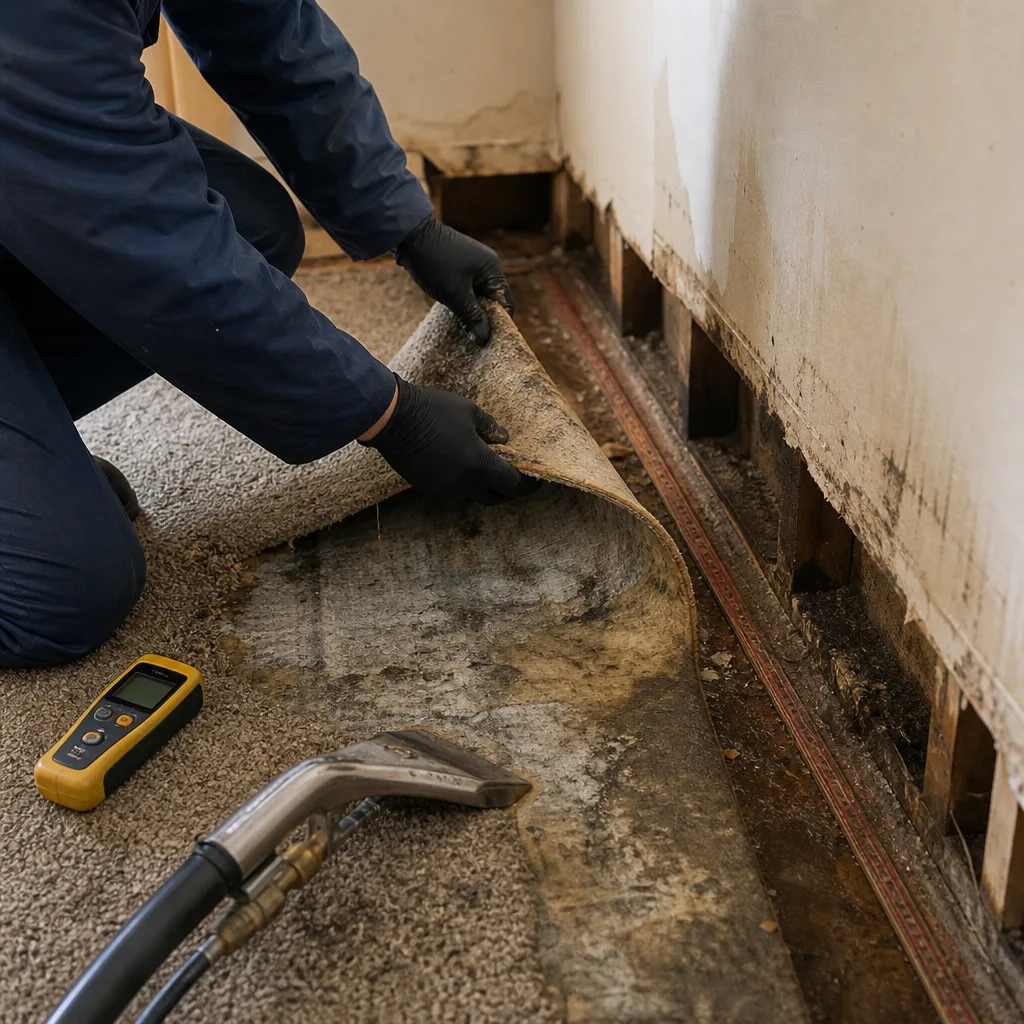
When a nor’easter floods an entire block or a broken main floods a commercial building’s lower floors, standard crews are not enough. Floodline runs multiple crews with a single project lead, a single moisture map, and a single drying log. One scope, one line of communication, one name accountable for getting the building dry and back in service.
Business Interruption Minimization
The real cost of a Jersey City flood is not always the drywall. It’s the weeks of lost revenue. We sequence the work to get your doors back open: contain the affected area, dry it fast, and phase the rebuild around your operating hours where possible. For a storefront knocked out by a CSO backup, that can mean the difference between a week of lost sales and a month.
What happens when you call
- 1
A real person answersNo phone trees - you reach a local pro.
- 2
You get an upfront price rangeHonest numbers before anyone is dispatched.
- 3
A background-checked tech heads outLicensed & insured, dispatched right away.
- 4
You approve before work beginsNothing starts until you say go.
Commercial Restoration Costs in Jersey City, NJ
What should you expect to pay in Jersey City? The honest answer is that black water costs more than clean water, and most of the commercial floods here are black water. A Category 1 or 2 loss, like a burst supply line, runs roughly $3.50 to $7 per square foot for extraction and drying. A Category 3 sewer backup in a Jersey City basement runs $7 to $15 per square foot because of containment, antimicrobial treatment, disposal, and the removal of contaminated porous materials. A large commercial space with pack-out and rebuild can push past $20 per square foot. What moves the price: the contamination category, whether structural drying is even possible given the high water table in the western fill zones, the number of units affected, and whether the exterior drainage needs correction before restoration holds. Most commercial policies in this market cover Category 3 work when the documentation is right. Our free visual inspection gives you a firm written scope before any work starts. Call (551) 348-8481 for an exact quote.
We Also Serve Cities Near Jersey City
Floodline Restoration Co. runs crews to Hoboken, Secaucus, Union City, and Weehawken, covering the full Hudson County waterfront and the Meadowlands towns where flood and sewer losses follow similar patterns. If your building is in one of those communities, the same live dispatch and the same 90-Day Done Right Promise apply.
Serving Jersey City, NJ - Our Local Coverage Area
We’re based in the Jersey City area and know this community well. Use the map below to see our service coverage - if you’re nearby, we can almost certainly help.
Jersey City Commercial Restoration Questions, Answered
What makes most commercial basement flooding in Jersey City a Category 3, black water situation?
Jersey City runs most of its older neighborhoods on a combined sewer system, meaning stormwater and sewage share the same pipes. When heavy rain overwhelms the system, the overflow backs up into the lowest drains and carries raw sewage into basements. Add low-lying filled-marshland terrain and Hudson River surge in the AE-zones, and the result is Category 3 contamination in most flooding events, not the exception. That changes everything about the restoration: containment, antimicrobial treatment, and removal of porous materials, rather than drying alone.
Why do we need to cut open walls in a brownstone after a small water leak when a neighbor inland might just dry them out?
Because a brownstone’s walls are not drywall over modern framing. They are often plaster on brick or wood lath, built before waterproofing membranes existed. Water moves through them laterally via shared party walls and common chases. If the water is Category 3, the porous materials hold pathogens even after surface drying. Cutting open the wall, removing contaminated material, and treating the framing is the only way to eliminate the biohazard. In an inland town with Category 1 water, drying alone can work. In Jersey City, it often can’t.
How do you document scope of loss for multiple insurance carriers when one flood affects several units in a Jersey City building?
We photograph every affected room separately, run moisture readings unit by unit, and log drying progress per unit. Each carrier receives its own line-item scope tied to its policyholder’s space. Shared building components, like a common wall or a basement utility room, get documented for the HOA or building owner’s policy. It is methodical, it takes time, and it prevents the finger-pointing that delays multi-unit claims.
Can you really dry out a commercial basement in the former Hackensack Meadowlands fill zones without fixing the exterior drainage?
No. In the western sections of Jersey City built on former Meadowlands fill, the seasonal water table sits at or just below the basement floor. Hydrostatic pressure pushes groundwater through foundation walls even when there is no crack or visible leak. Drying equipment alone will pull some moisture, but the pressure re-saturates the materials within days. The exterior drainage has to be corrected, or the restoration will not hold. We tell you that up front, in writing, before you spend money on drying that cannot work.
What does business interruption minimization look like for a Jersey City storefront after a CSO backup?
We contain the affected zone, extract and dry it on a phased schedule, and sequence the rebuild around your operating hours where the building will allow. For a storefront on a block like Newark Avenue, that can mean re-opening the front of the shop while the back storage area is still drying. The point is to cut the days of lost revenue, not to make the damage disappear overnight.
How fast can a crew actually reach my Jersey City property?
We commit to a 45-minute response for emergency calls in Jersey City, and in most neighborhoods our crews are faster. Live dispatch means the call is answered immediately, and the crew is rolling as soon as we know the address. For sewage backups, the first hour changes the scope: the longer Category 3 water sits, the more porous material it contaminates.
Will my insurance cover black water restoration in Jersey City?
Most commercial policies in this market cover Category 3 loss when the documentation is complete and the scope matches industry standards. That means classification photos, daily moisture logs, containment records, and a line-item removal and treatment schedule. Floodline handles that documentation and coordinates directly with your carrier from the first visit.
What should I do in the first 30 minutes after I discover the flooding?
Cut power to the affected area if you can do so safely from a dry location, then call (551) 348-8481. Do not enter standing water in a commercial basement; it may carry sewage or energized wiring. Do not open walls or move contaminated materials, which spreads the contamination deeper into the space. The first 30 minutes are about containment: stop the source if possible, keep people out, and get a certified crew on the road.
Written by Curt Bowman, Owner at Floodline Restoration Co., serving Jersey City with a live dispatcher, a certified crew, and the 90-Day Done Right Promise in writing.