
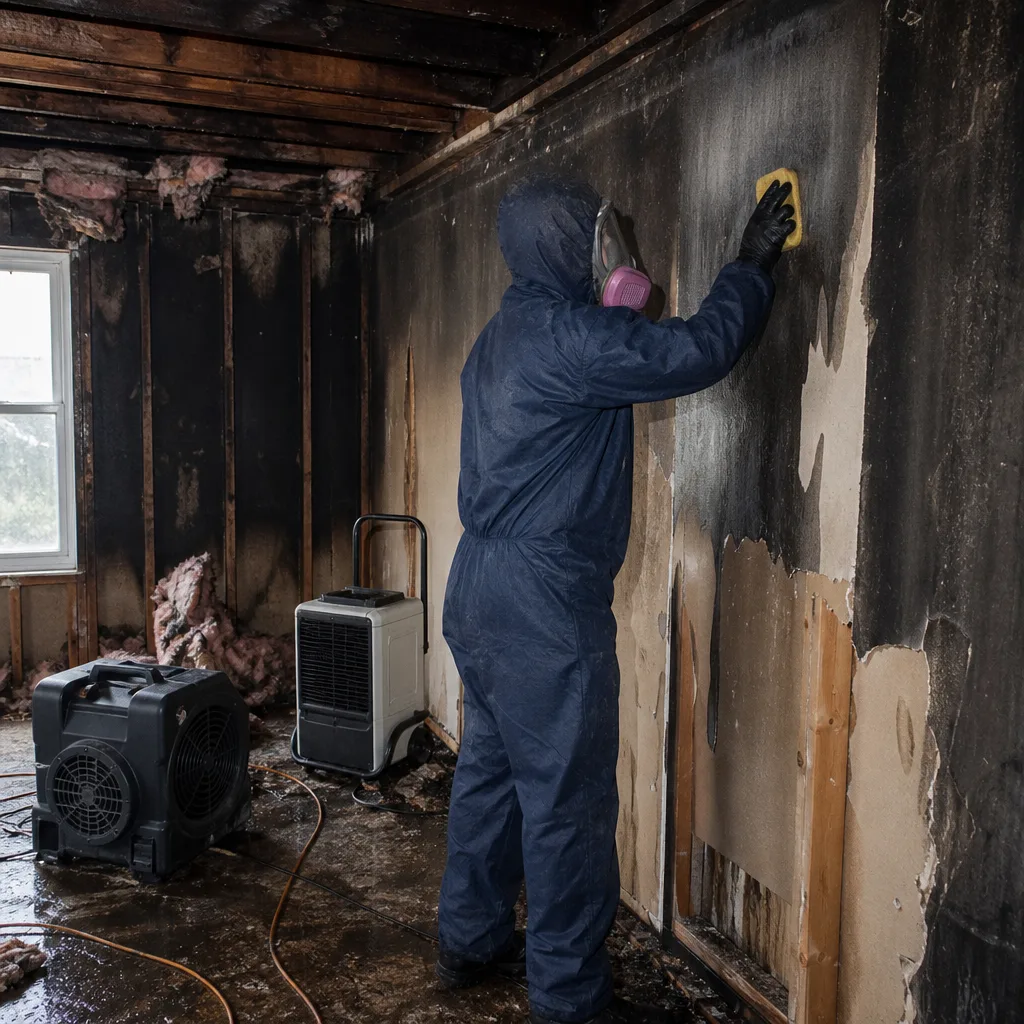
Free visual inspection and a written scope of work before any mitigation begins - photos, moisture readings, and drying logs go in your claim file
The scope we write is the scope we bill. Anything new gets shown to you, in writing, before we touch it.
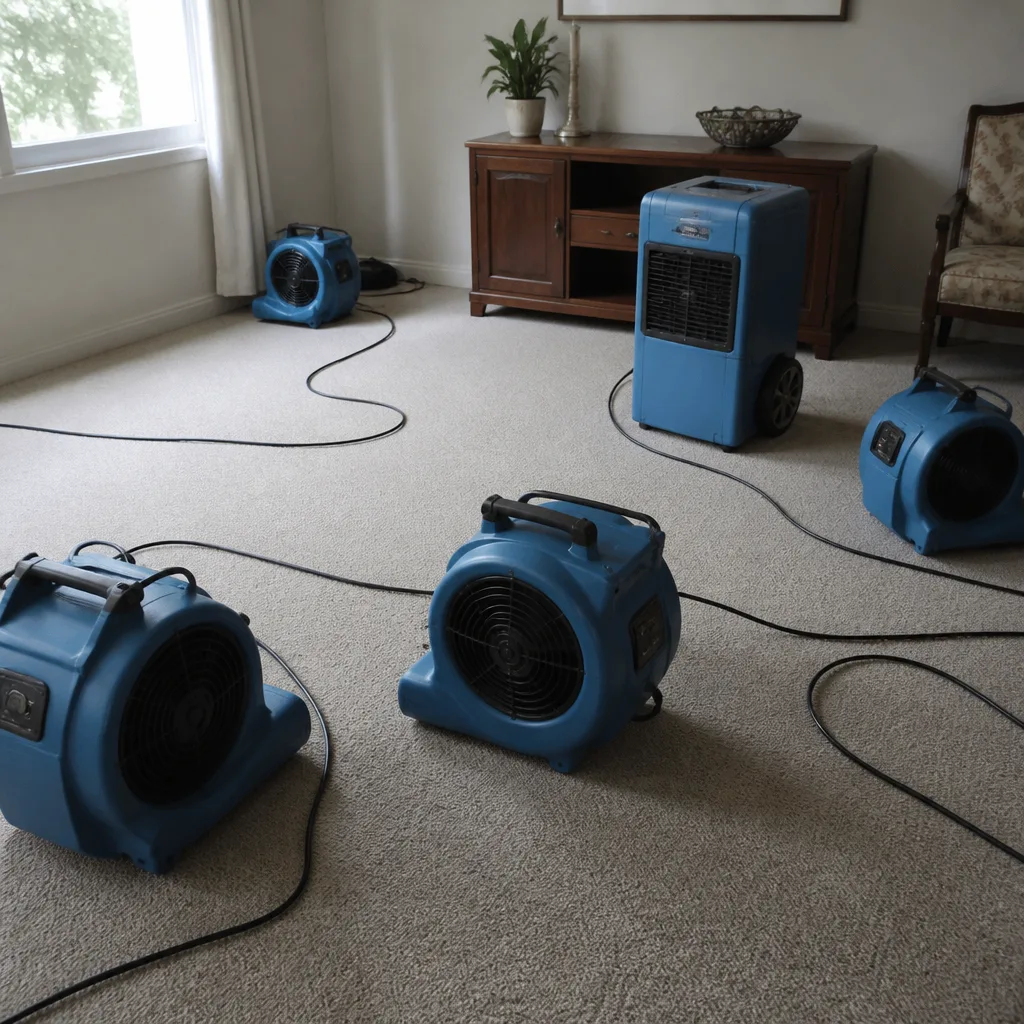
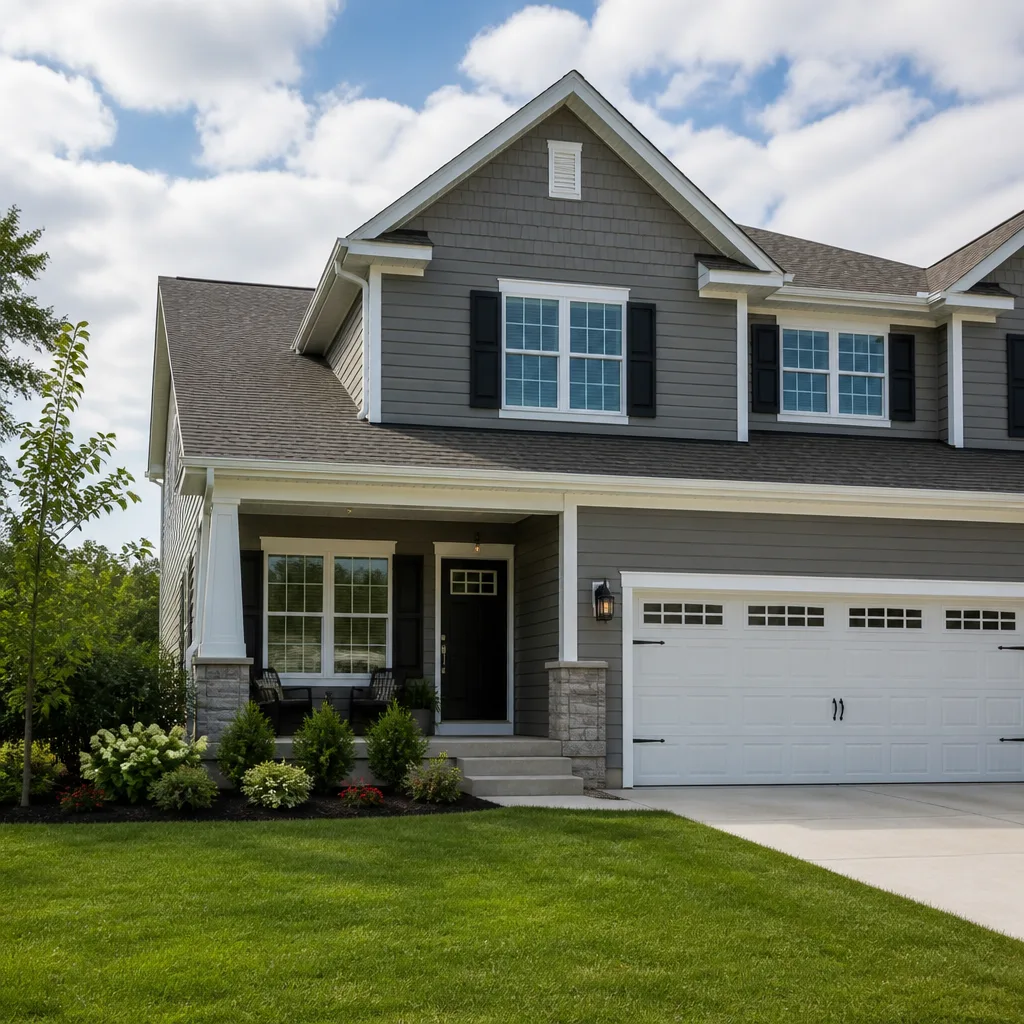
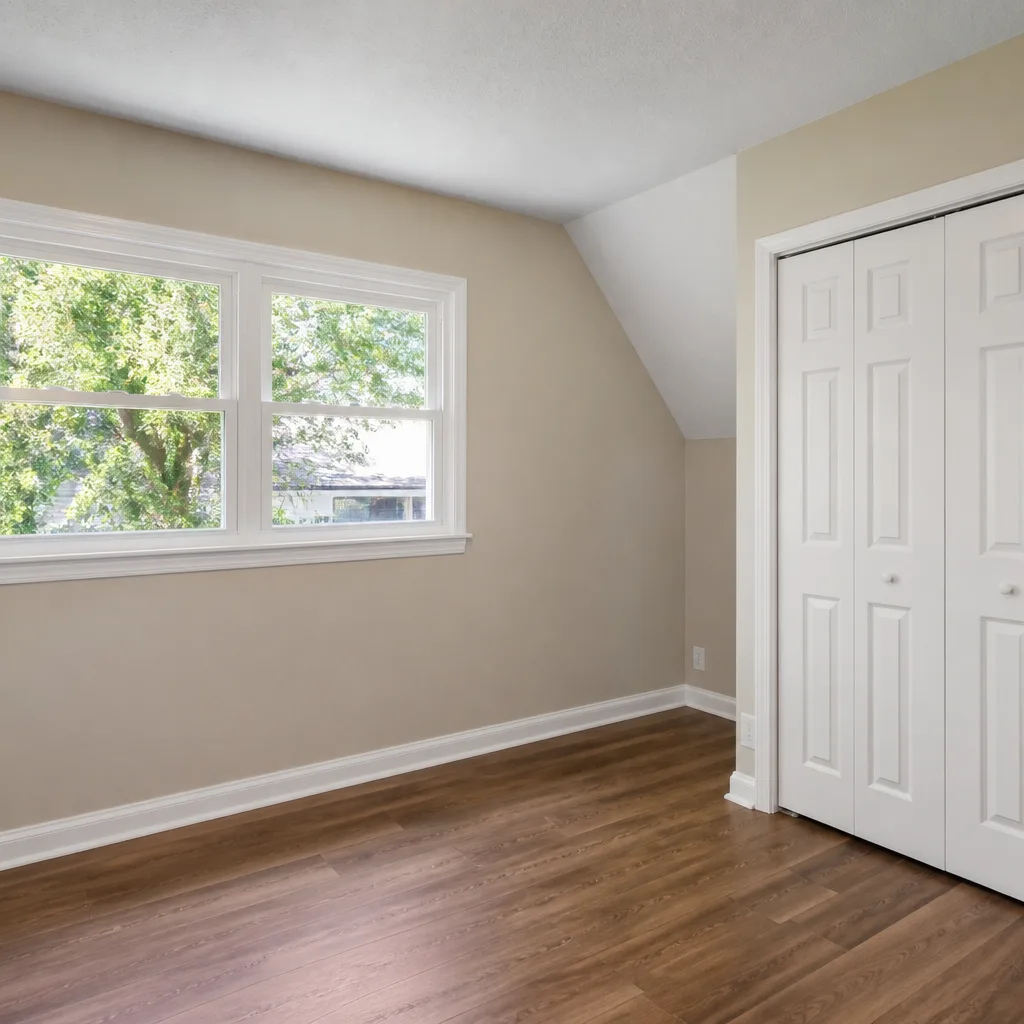
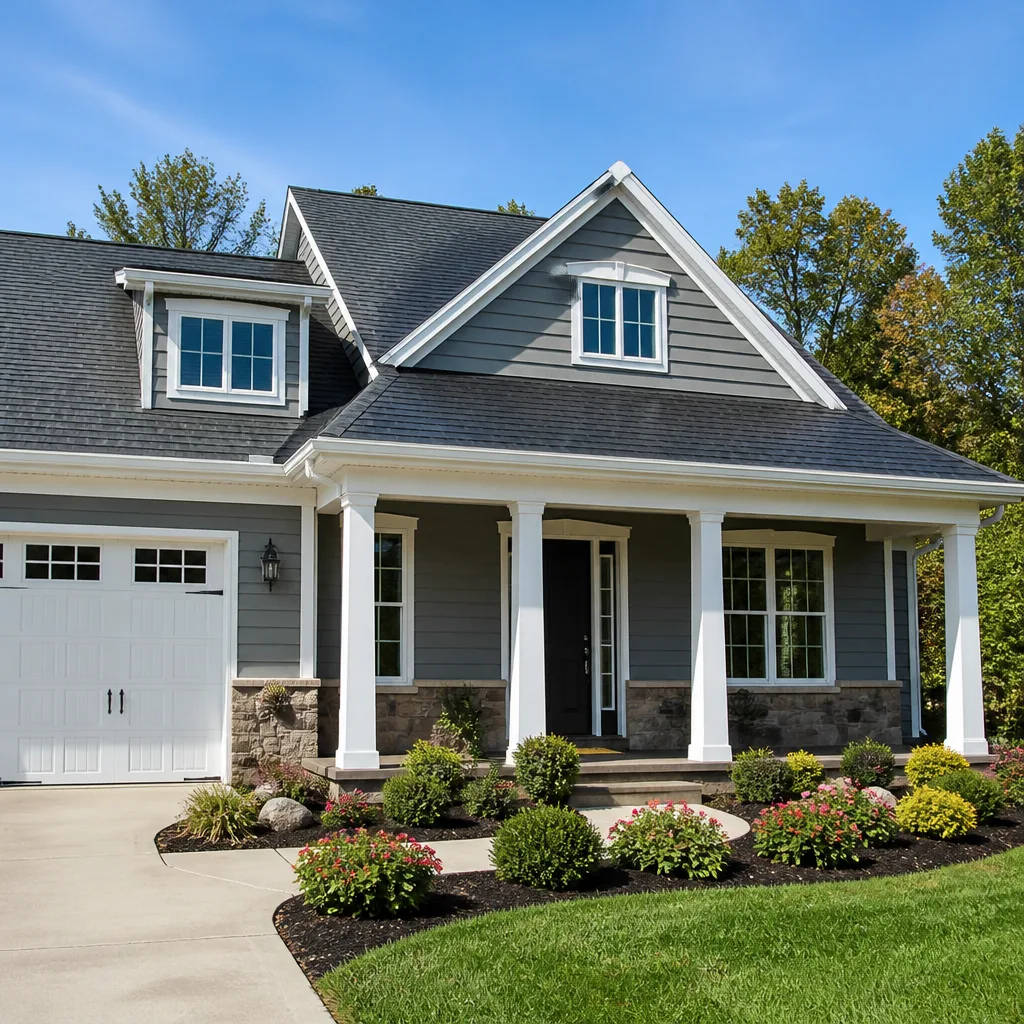
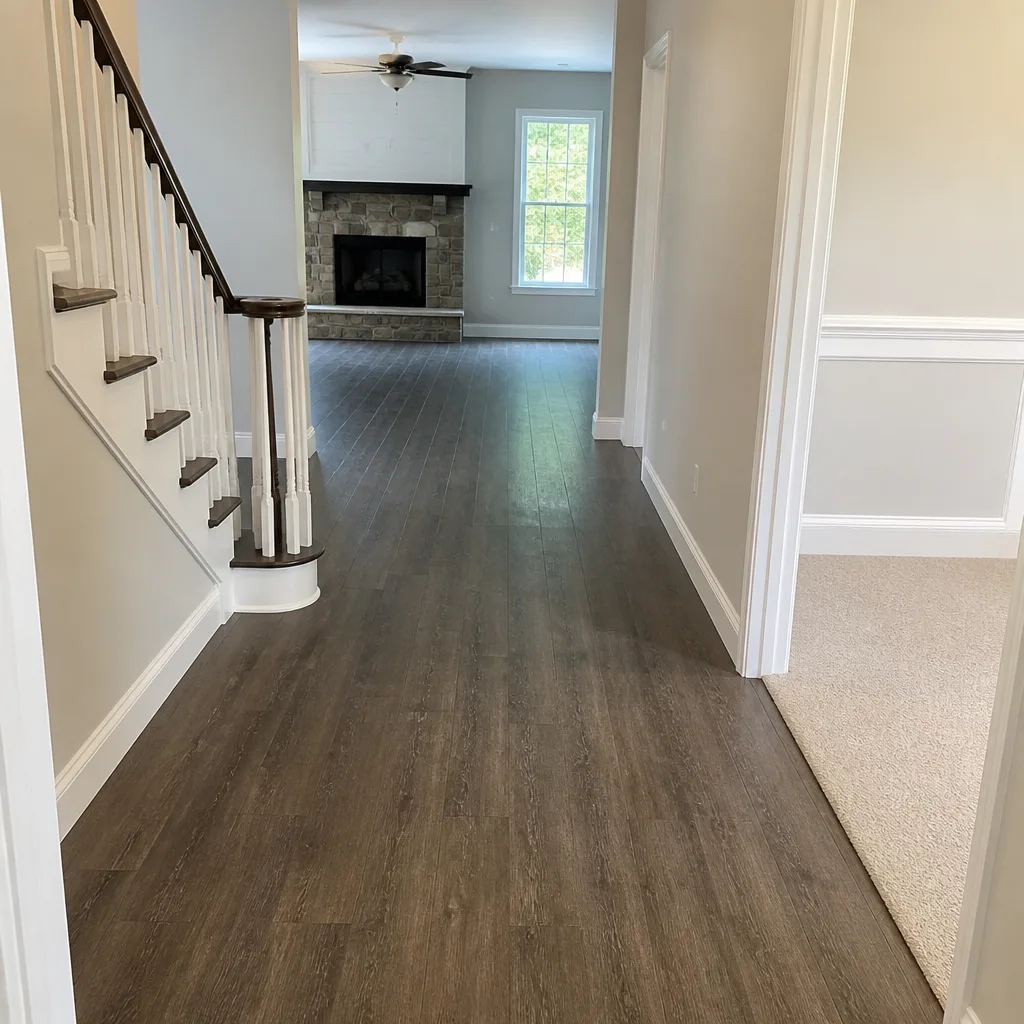
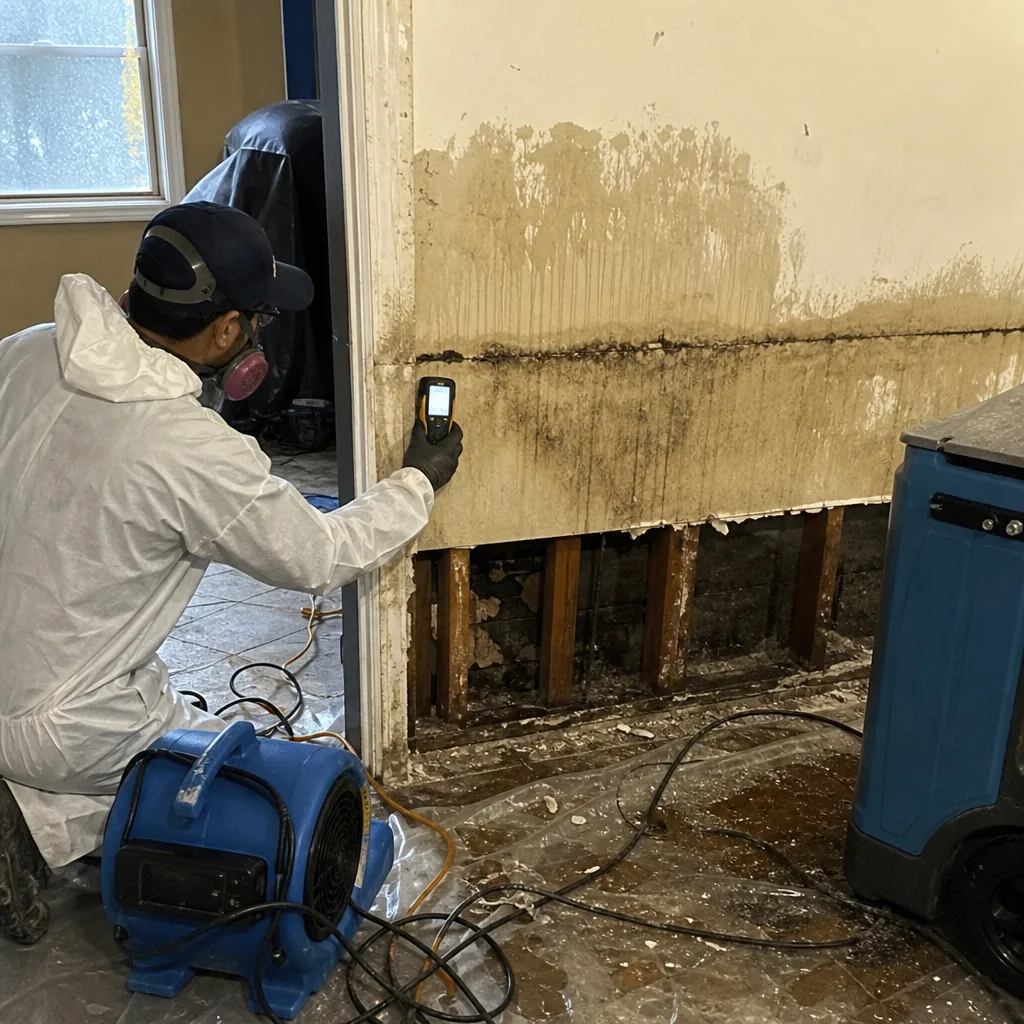 Before
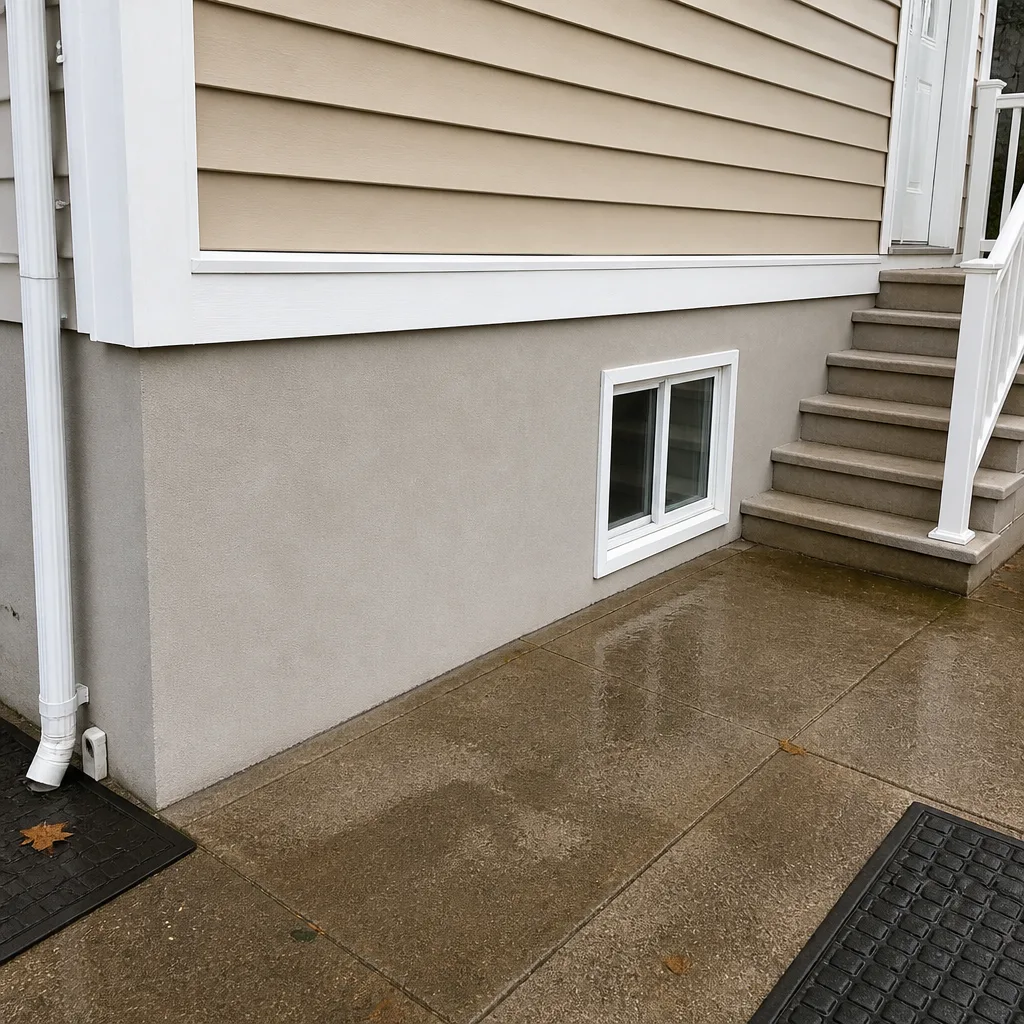 After
After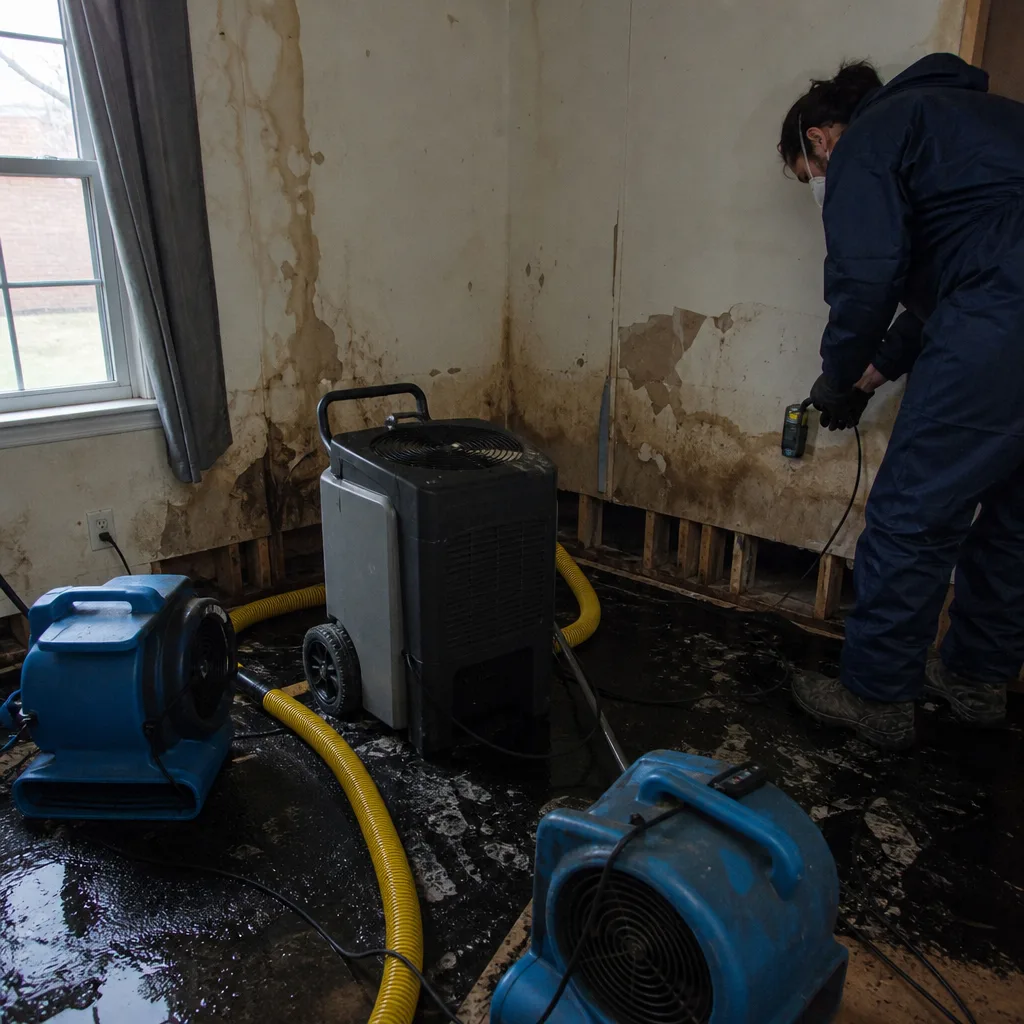 Before
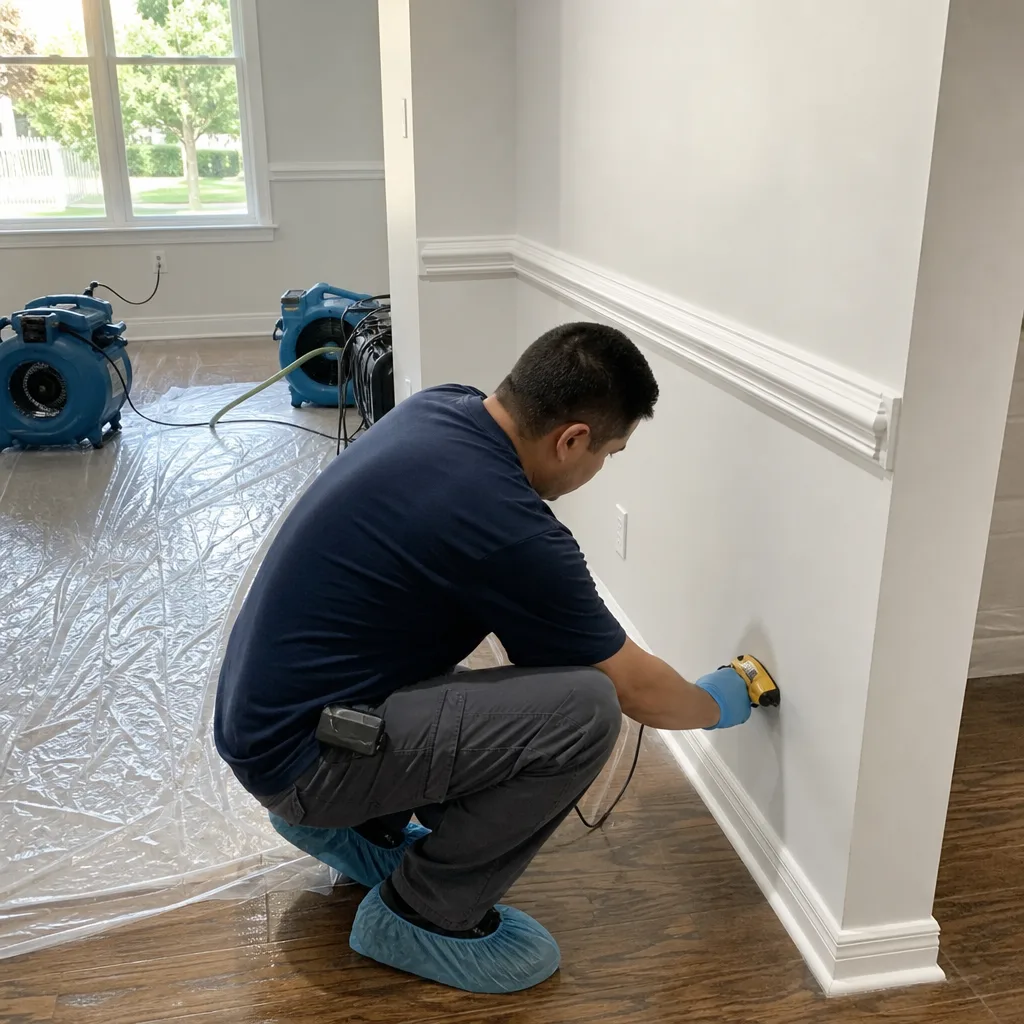 After
After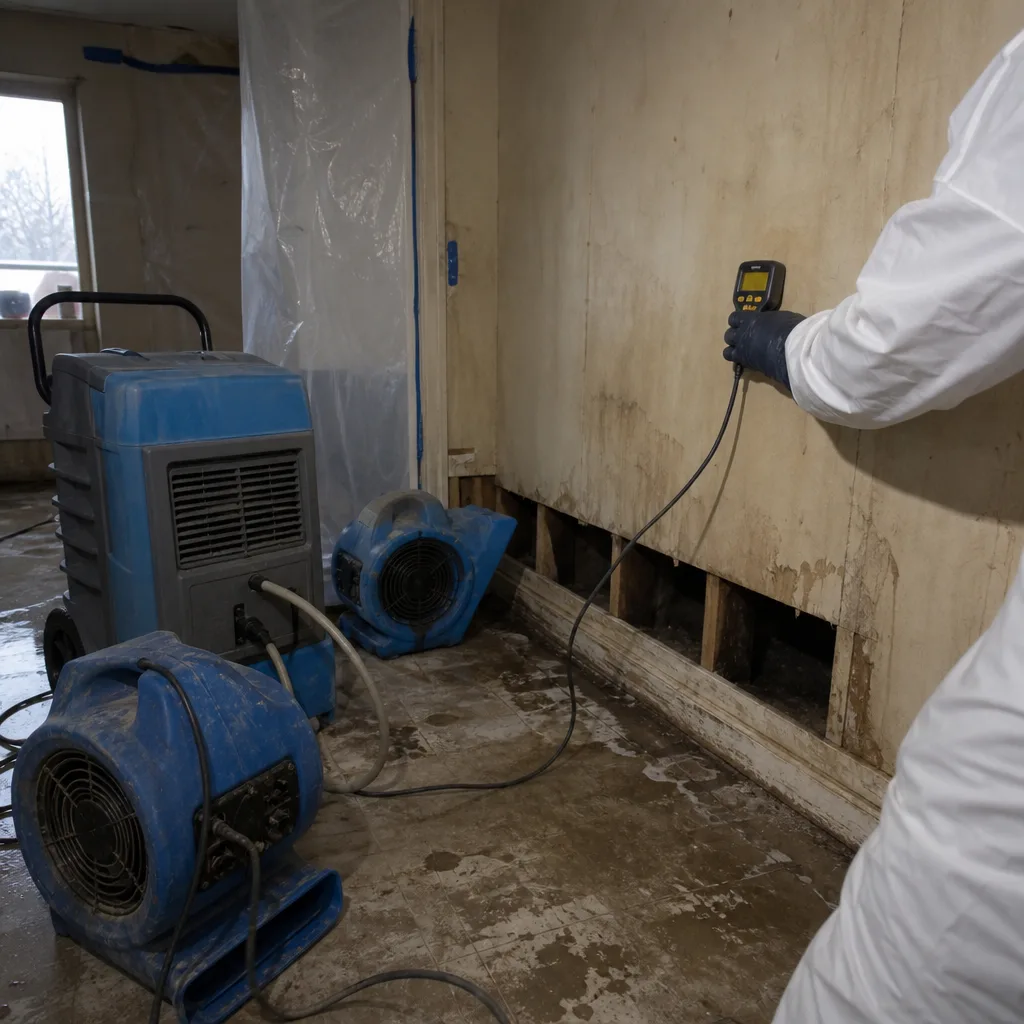 Before
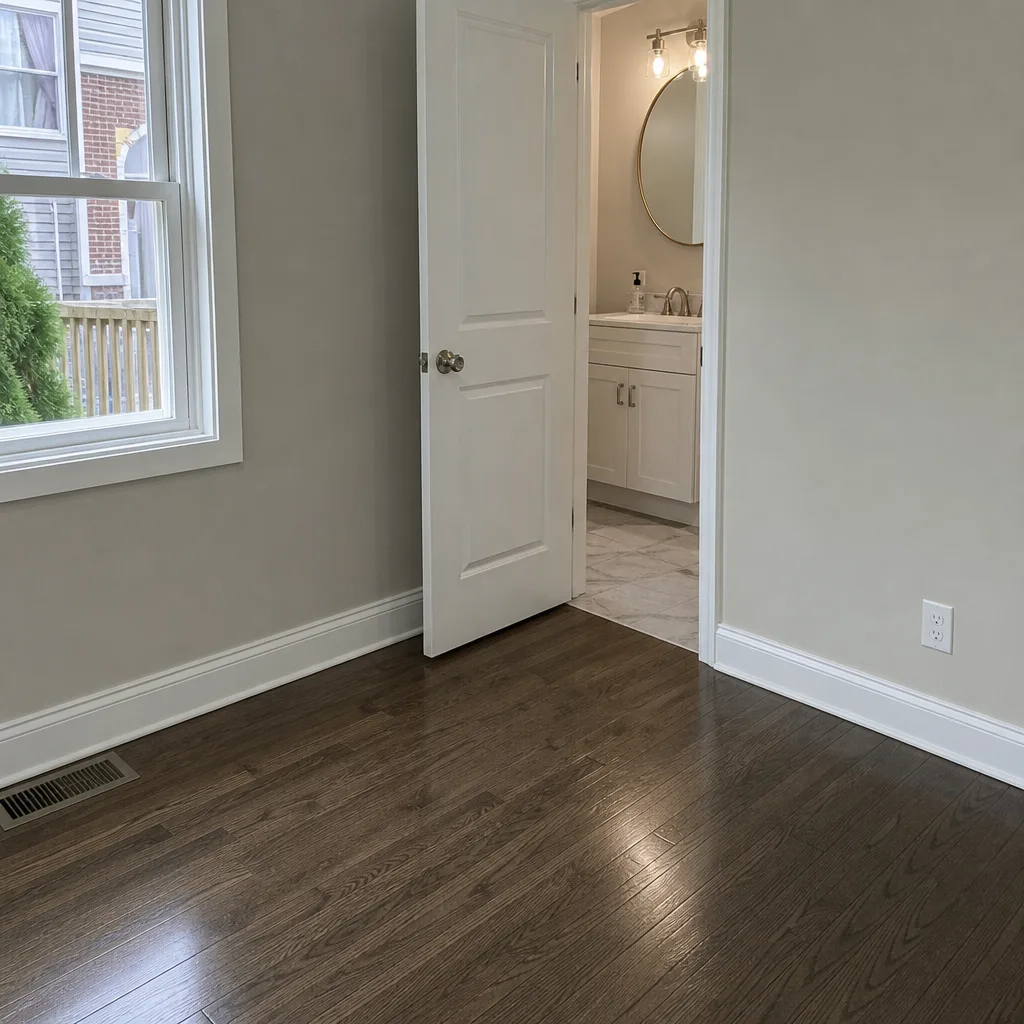 After
After24/7 Emergency Fire & Smoke Damage Restoration in West New York
Fire damage in West New York moves fast, and so do we. A live dispatcher answers (551) 348-8481 around the clock, every day of the year, and crews reach most West New York addresses within 45 minutes of your call. The first hour after a fire matters because acidic soot from burned synthetics begins etching glass, brass, and stone surfaces immediately. We arrive, assess the damage at no charge, and start containment before smoke residue migrates into neighboring units through shared walls and chases. Our Fire & Smoke Damage Restoration crews carry professional-grade air scrubbers and hydroxyl generators on every truck, so extraction and odor control begin the same visit. In a town as dense as West New York, every minute you wait gives soot more time to travel across unit lines and into hallways.
Understanding Fire & Smoke Damage Restoration Severity in West New York Properties
West New York’s building stock splits into two distinct fire profiles. The inland blocks, mostly pre-war brick walk-ups from the 1920s through the 1950s, have plaster-over-lath ceilings and steam riser chases that act as highways for smoke. A kitchen fire on the sixth floor pushes soot down through five ceiling cavities before anyone below notices a smell. We classify soot residue in three ways: dry soot from paper and wood burns, oily soot from plastics and synthetics, and protein residue from kitchen fires, which is nearly invisible but bonds aggressively to painted surfaces. Each type requires a different cleaning chemistry, and in a six-story walk-up, you’ll often find all three present on different floors. The waterfront high-rises built after 2000 present a different problem: curtain-wall assemblies trap smoke against aluminum framing, and shared HVAC systems redistribute particulates across vertically adjacent condos. Corrosive soot neutralization in those buildings is not optional. Untreated, it pits aluminum framing and fails inspection within months. Our technicians are trained to IICRC, RIA, and IFA standards, and we moisture-map every affected assembly before scoping work, because the fire department’s water left its own damage behind.
Why West New York Property Owners Choose Floodline Restoration Co.
- 45-minute response commitment to anywhere in West New York. A live person answers, a crew is dispatched, and we call you when we’re pulling onto your block.
- Live answer, 24/7, never an automated system. Two in the morning, Sunday afternoon, no difference. A person picks up.
- IICRC-certified crews with FSRT and WRT credentials. Fire and smoke restoration techs plus water damage techs, because fire suppression water is part of the job.
- Free visual inspection with a written scope. We walk the unit, check every floor below for smoke travel, and hand you a line-item scope before any work starts.
- Direct insurance billing. We deal with your carrier, your adjuster, and your co-op board’s insurance requirements. You don’t play messenger.
- One team from board-up to finish paint. The same crew that sets containment rebuilds the ceiling and matches the brass hardware. No mid-job handoff.
Floodline Restoration Co. has served communities for over 42 years with a simple rule: done right, and backed in writing. Every job carries the 90-Day Done Right Promise, the Keystone Standard. If it’s not right, we make it right. No paperwork battles, no arguing. We also offer $50 off any repair over $250, an $89 seasonal tune-up, and an always-on 5% discount for seniors and veterans. A square deal, in writing.
Our Fire & Smoke Damage Restoration Process
Inspection & Assessment
We walk the fire unit and every floor below it. In West New York walk-ups, that means opening the steam riser chase, checking plaster keys for soot penetration, and testing adjacent units for odor. Thermal imaging and hygrometers map hidden moisture from suppression water. You get a written scope and a straight answer about what can be saved.
Emergency Board-Up & Containment
We secure windows and roof openings, then set negative air containment with HEPA scrubbers. In a stacked multi-unit building, containment is not optional. Without it, soot and odor push into neighboring apartments and you’ve got complaints from tenants, co-op boards, and your own insurance carrier.
Water Extraction & Structural Drying
Fire suppression water has to come out before soot cleaning starts. We pull standing water with truck-mounted extractors, then set Dri-Eaz and Phoenix air movers and dehumidifiers. Moisture readings are logged daily until the dry standard is met, and the log goes to you and your insurer.
Soot & Smoke Removal
Every surface gets the right treatment for its soot type. Dry soot vacuums off with HEPA filtration. Oily soot requires chemical sponges and alkaline cleaners. Protein residue from kitchen fires needs enzyme-based agents. We clean walls, ceilings, floors, and every chase and cavity where smoke traveled.
Odor Removal & Deodorization
Hydroxyl generators and ozone treatments break down odor molecules rather than masking them. In plaster-over-lath ceilings, the odor lives inside the plaster keys, so we treat the cavity, not just the surface. In waterfront high-rises with shared HVAC, we install charcoal filtration at the returns to stop cross-unit recirculation.
Contents Cleaning, Pack-Out & Reconstruction
We inventory, photograph, and pack out salvageable contents for cleaning at our facility. Structural repairs follow: new drywall or plaster, refinished wood, matched hardware and paint. The same crew that started extraction finishes the job. There is no handoff, no inherited crew, no surprises.
Need Emergency Fire & Smoke Damage Restoration in West New York Now?
Crews are minutes away, answering live 24 hours a day. The sooner we start, the less it costs.
Working With Your Insurance Company
Fire claims in West New York are complicated by density. A single kitchen fire can trigger claims across three or four vertically adjacent condos, each with its own policy, its own adjuster, and its own co-op board rules. We have handled hundreds of these stacked-unit losses, and we document from the first hour in a way that makes adjusters’ jobs easier. Photos are time-stamped and room-by-room. The scope of work is line-itemed with industry-standard pricing, not a round number. We communicate directly with your carrier and your adjuster, and we bill them directly. You won’t carry costs waiting for reimbursement. Curt Bowman built Floodline Restoration Co. in 2010 around a dispatch board, not a sales desk, and that is how claims get handled: one accountable name from first call to final inspection.
What We Provide Your Insurer
- Thorough documentation of the loss
- Photos of all damage, room by room
- Moisture readings and drying logs
- A detailed, line-item scope of work
- Direct coordination with your carrier
Built for West New York’s Loss Calendar
West New York’s fire damage calls follow a pattern. January and February bring space-heater fires in pre-war walk-ups where tenants supplement aging steam heat, and those fires push smoke through five floors of plaster and lath. Spring brings kitchen fires as families cook more at home and older wiring strains under the load. Summer thunderstorms and extreme heat stress window units and overloaded circuits in older buildings. Nor’easters from October through March batter the Hudson riverfront, and wind-driven rain infiltrates curtain-wall assemblies in the waterfront high-rises, creating moisture that sits behind aluminum framing until mold follows. The Palisades bluff accelerates runoff toward lower-elevation waterfront blocks during heavy rain, so below-grade mechanical rooms in those buildings take water more often than the inland blocks just a few hundred feet west. Fire season in West New York is not one season. It is every season, and the buildings hold the memory of every event. That is why we scope for smoke travel through concealed cavities, not just the visible burn damage.
Fire & Smoke Damage Restoration Across West New York’s Neighborhoods
Response routes in West New York follow the building stock. The blocks around 60th Street and Hudson Avenue are dense 1930s walk-ups, five and six stories, where a top-floor fire requires containment on every floor below and a pack-out in a stairwell with no elevator. We send extra techs for those jobs because the equipment has to walk up. The Boulevard East corridor runs along the Palisades edge with pre-war brick buildings that have steam risers running through every apartment, so soot travel is vertical and predictable. The waterfront high-rises near Port Imperial Boulevard have concierge desks, freight elevators, and strict building management rules, which changes how we sequence containment and how we handle contents cleaning. In the residential blocks near Columbus Park and the Public Library, post-war garden apartments and converted two-families sit shoulder to shoulder, so a fire in one unit often means smoke intrusion in the attached neighbor. Each area has its own loss pattern, and our crews know them all by name.
Specialized Fire & Smoke Damage Restoration Services We Offer in West New York
Fire Damage Cleanup
We remove charred structural materials, clean salvageable framing, and neutralize corrosive soot before it etches into glass and metal. In West New York’s older walk-ups, that often means carefully cutting out damaged plaster without disturbing the lath beneath, then matching the patch to the original wall thickness. Waterfront high-rise jobs get different treatment for the aluminum curtain-wall assemblies, which pit badly if corrosive soot is left untreated.
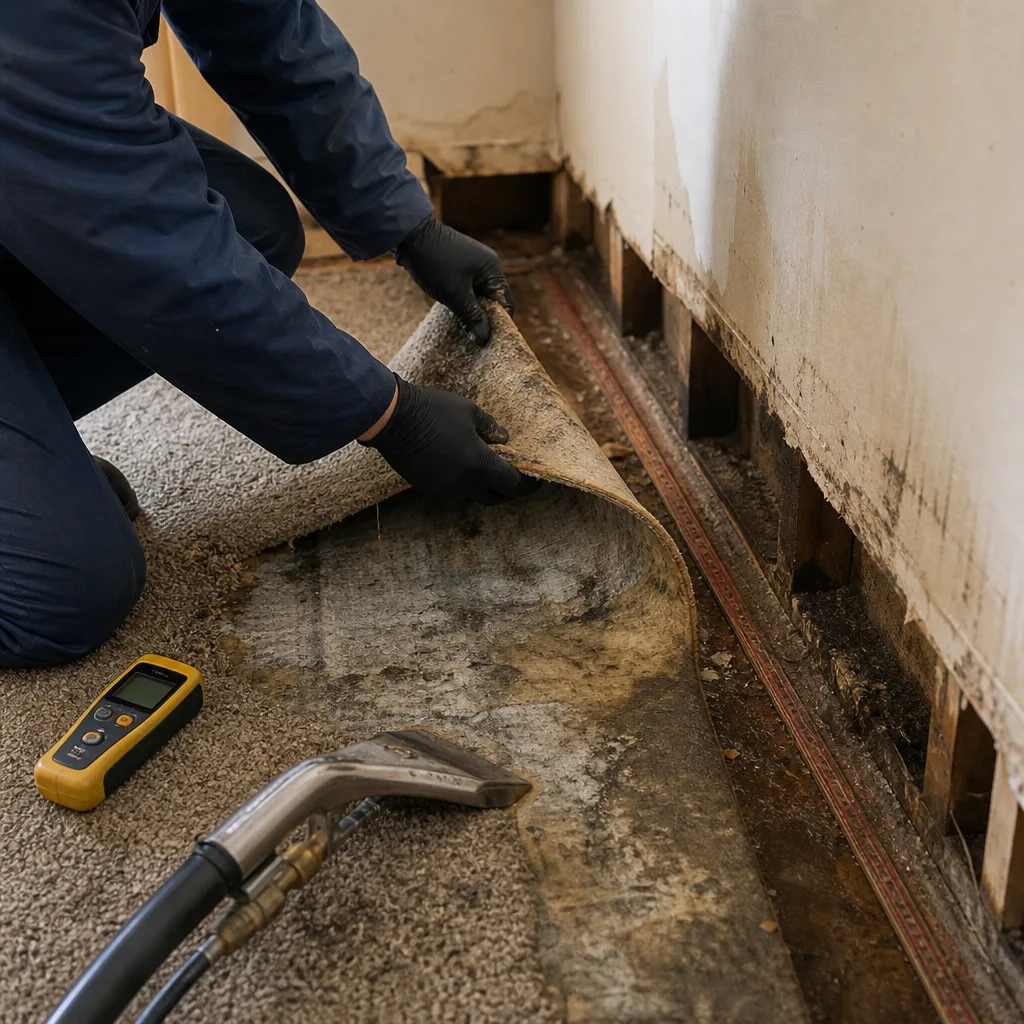
Smoke & Soot Removal
Soot from a burn unit in a five-story walk-up does not stay in the burn unit. It travels through pipe chases, steam risers, and the gaps around old cast-iron plumbing stacks. We clean every surface type with the chemistry that matches the soot. Dry soot from wood and paper comes off with HEPA vacuuming and dry sponges. Oily soot from burning synthetics needs alkaline cleaners. Protein soot from kitchen fires is nearly invisible but bonds hard to painted surfaces and needs enzyme treatment. We clean ceilings, walls, floors, trim, and the inside of every chase we can access, because the smell lives where the soot landed, not where the fire was.
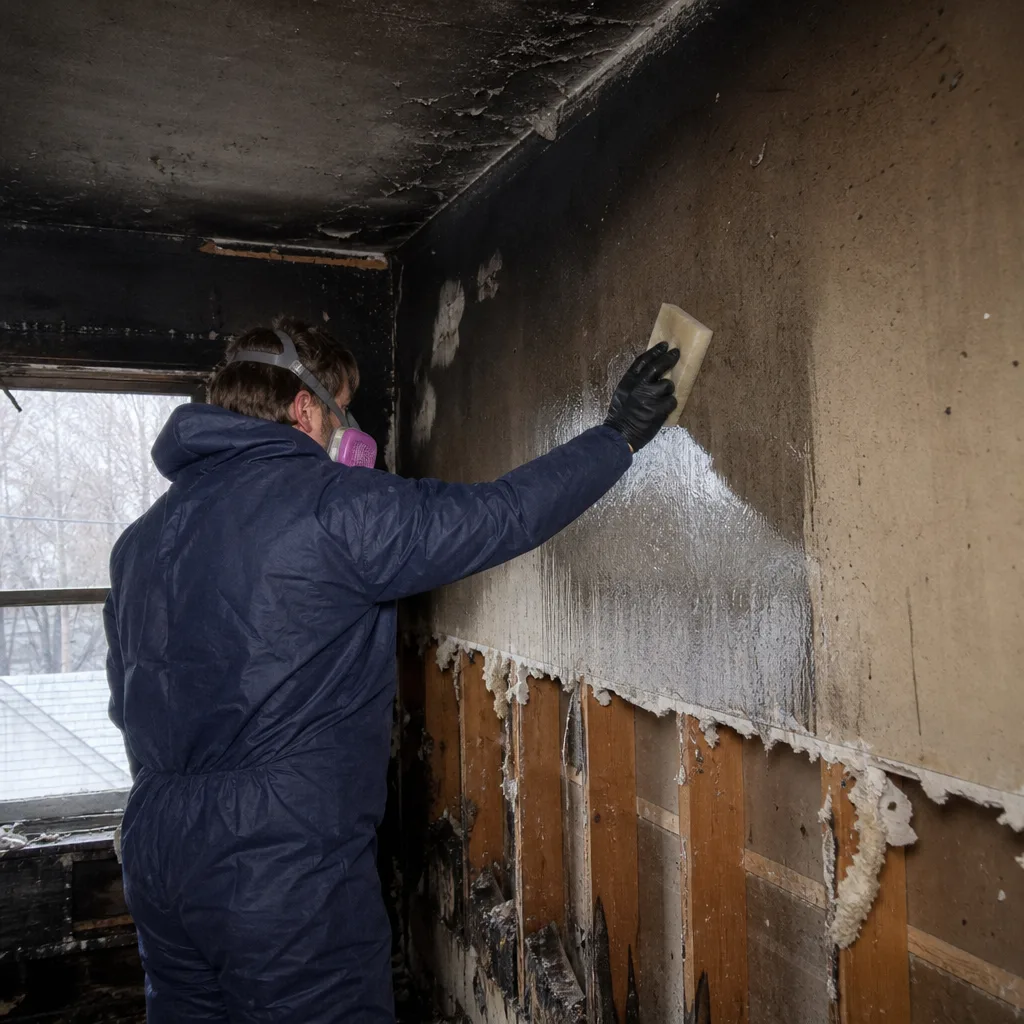
Odor Removal & Deodorization
Masking agents fail in West New York’s stacked buildings because the odor is trapped inside plaster keys, lath cavities, and steam riser chases. We use hydroxyl generators, which are safe for occupied spaces, and ozone treatments in sealed, unoccupied areas. For waterfront high-rises with shared HVAC, we install charcoal filtration at the returns so the odor does not keep recirculating through your neighbor’s unit. The goal is complete odor elimination, not a temporary cover-up that fails the first humid week.
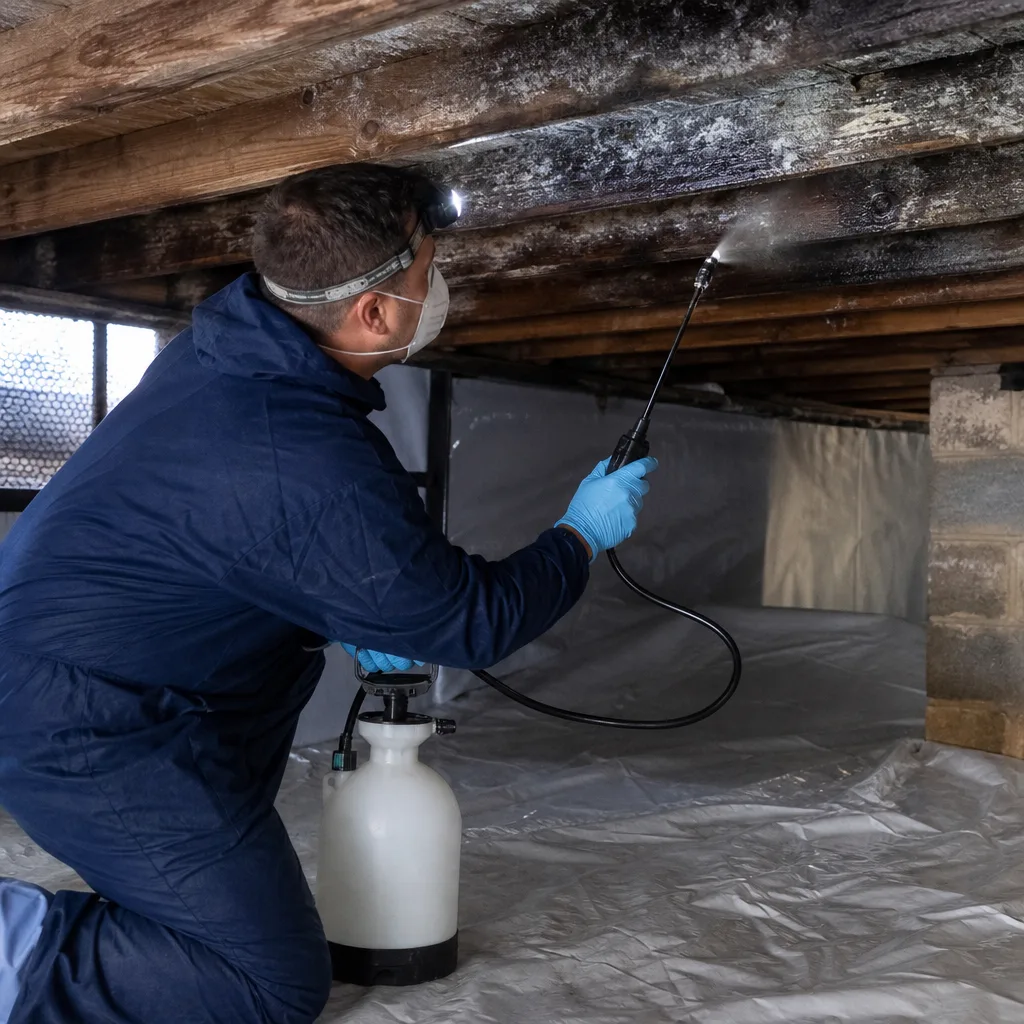
Contents Cleaning & Pack-Out
Most West New York walk-ups have no on-site space to clean contents. We inventory everything with photos, pack it out to our facility, clean and deodorize each item, and store it until your unit is ready for move-back. In the 60th Street kitchen fire near Hudson Avenue, we packed out the entire top-floor kitchen, cleaned the custom cabinetry, and matched the original 1930s brass hardware and hand-rubbed finish to pre-loss condition. Insurance adjusters get a complete inventory list with replacement-cost values for anything that could not be saved.
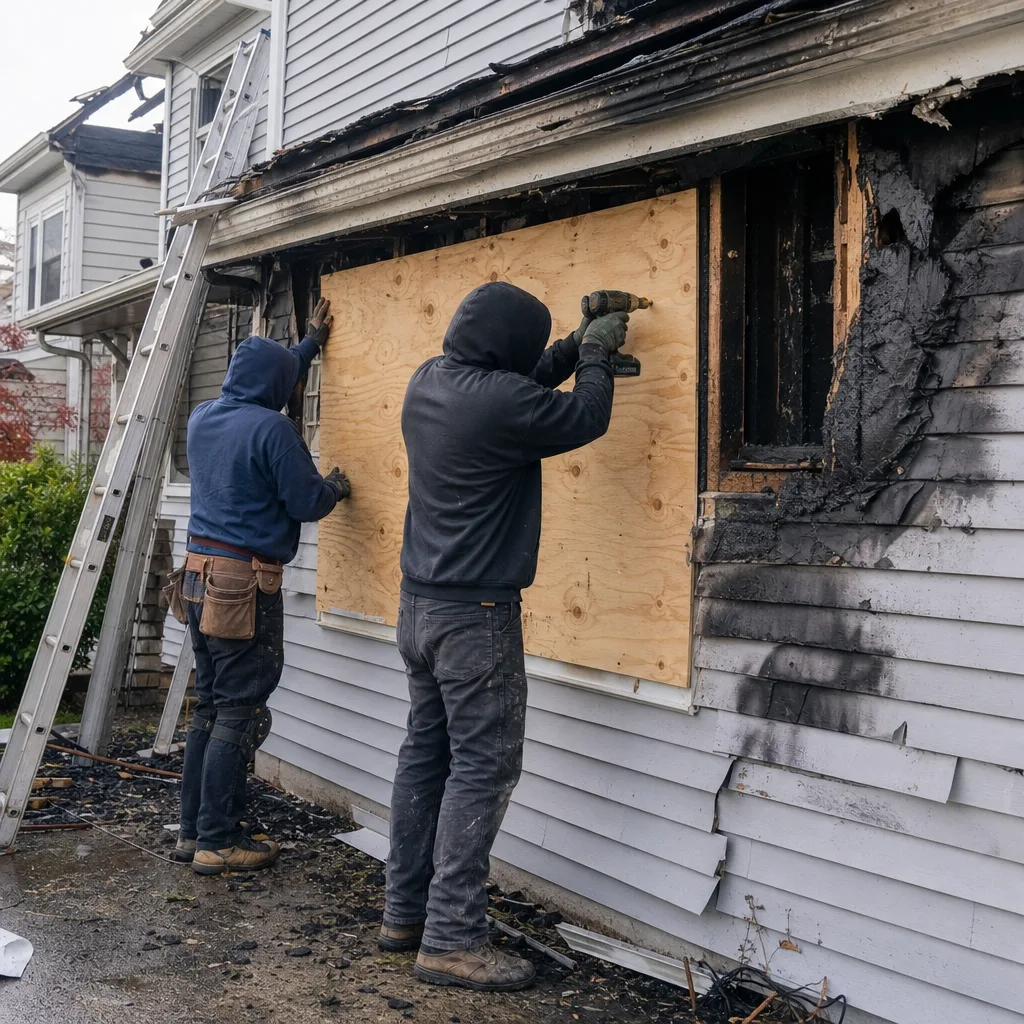
Emergency Board-Up & Tarping
After the fire department leaves, your unit is open to weather, animals, and people who should not be inside. We board up windows and doors, tarp the roof if needed, and secure the property the same day we are called. In West New York, where buildings stand shoulder to shoulder, we also check for smoke or water intrusion into attached neighboring units and document what we find. That documentation protects you when the neighbor’s adjuster calls.
Structural Fire Repair
Rebuild is not a handoff. The same Floodline Restoration Co. crew that extracted water and cleaned soot repairs the framing, replaces the plaster or drywall, refinishes the floors, and paints. The 90-Day Done Right Promise covers the entire job, from board-up to final walk-through. In the Keystone Standard, we write it down: if it is not done right, we make it right.
What happens when you call
- 1
A real person answersNo phone trees - you reach a local pro.
- 2
You get an upfront price rangeHonest numbers before anyone is dispatched.
- 3
A background-checked tech heads outLicensed & insured, dispatched right away.
- 4
You approve before work beginsNothing starts until you say go.
Fire & Smoke Damage Restoration Costs in West New York, NJ
Fire and smoke restoration in West New York’s stacked walk-ups typically runs higher than the national average because the work almost always extends beyond the burn unit. A small kitchen fire with smoke damage to one apartment typically lands between $4,000 and $9,000. Smoke and soot removal alone across a unit with plaster ceilings runs $2,500 to $6,000. Odor removal and deodorization, including hydroxyl treatment of concealed cavities, adds $1,800 to $4,500. Contents cleaning and pack-out for a full apartment ranges from $3,000 to $12,000 depending on volume and soot type. Emergency board-up and tarping is $800 to $2,500. Structural fire repair is priced per scope after demolition exposes the framing, but most West New York units land between $8,000 and $35,000 depending on the finish level. Insurance covers most fire losses. Your out-of-pocket is usually the deductible plus any code upgrades your building requires. Call (551) 348-8481 for a free visual inspection and a firm written scope before anyone starts swinging a hammer.
We Also Serve Cities Near West New York
Our crews regularly work in Union City, Weehawken, North Bergen, and Hoboken. The building stock, the density, and the fire loss patterns are similar across these Hudson County towns, and our response time to all of them is under an hour. If you own or manage property in any of these cities, the same dispatch line, same crews, and same 90-Day Done Right Promise apply.
Serving West New York, NJ - Our Local Coverage Area
We’re based in the West New York area and know this community well. Use the map below to see our service coverage - if you’re nearby, we can almost certainly help.
West New York Fire & Smoke Damage Restoration Questions, Answered
After a fire in a West New York pre-war walk-up, why do you inspect every floor below the fire unit before writing a scope of work?
Because in five- and six-story walk-ups, smoke and soot travel through plaster keys, lath cavities, and steam riser chases, and the visible damage almost never reflects the true extent of travel. A fire on the top floor can saturate ceilings four floors down before anyone smells it. We open the riser chase and test adjacent units before we write a single line item, because a scope written after one look at the burn unit is a scope that will need a change order. Call (551) 348-8481 to schedule a free inspection, and we will check every floor before quoting.
How do you handle smoke odor in a waterfront high-rise where the HVAC is shared and the condo board restricts access?
We install charcoal filtration at the HVAC returns in your unit, which stops recirculated smoke from feeding back through shared ductwork. Condo boards in West New York’s waterfront high-rises usually approve this because it is contained to your unit and does not require shutting down building systems. We coordinate directly with the management office and your board’s insurance requirements, and we provide documentation that the work meets the building’s standards. Call (551) 348-8481 and we will talk through your building’s specific rules.
My West New York co-op board says the plaster ceiling in the fire unit doesn’t need to come down. Is that true?
Almost always no. Soot penetrates the plaster keys and the lath behind the surface, and sealing over it just traps the odor until the first humid week pushes it back into the room. We can test the ceiling by drilling a small access point and checking behind the plaster. If soot is present in the cavity, the plaster has to come down or be treated through the cavity side. We will document what we find and put it in writing for your co-op board and your insurer. A half-fixed ceiling is the most common source of recurring odor complaints in West New York walk-ups.
After Superstorm Sandy, many West New York waterfront buildings had recurring moisture problems. Does fire restoration differ in those buildings?
Yes. Sandy-impacted waterfront buildings carry persistent moisture intrusion in below-grade mechanical rooms, curtain-wall assemblies, and slab assemblies. When we restore fire damage in those buildings, we treat the moisture as part of the same scope, because corrosive soot plus existing moisture equals accelerated pitting of aluminum framing and structural steel. We also run moisture mapping on every assembly the fire suppression water touched, because the water does not drain the way it does in the inland walk-ups. The drying standard has to be hit before reconstruction starts, or the mold and corrosion come back. Call (551) 348-8481 for a moisture-mapped assessment of your building.
What happens to contents from a fire-damaged unit in a West New York walk-up where there’s no space for on-site cleaning?
We pack everything out to our cleaning facility. Every item gets inventoried, photographed, cleaned, deodorized, and stored until your unit is ready for move-back. Adjusters receive the full inventory with replacement-cost values for anything unsalvageable. In a five-story walk-up with no freight elevator, our techs carry every box down the stairs by hand. It is slow, careful work, and it is the only way to do it right. We have handled hundreds of West New York pack-outs, including kitchens, bedrooms, and full-apartment contents.
How fast can you actually get to my West New York apartment after a fire?
We commit to 45 minutes or less from your call to most addresses in West New York. A live dispatcher answers (551) 348-8481 at any hour, every day, and a crew is rolling within minutes. The fire department takes time to ventilate and release the scene, but we can be staged outside, ready to start board-up and containment the moment we get access. In a dense building, that speed matters because soot starts corroding brass, glass, and aluminum immediately.
Will my insurance cover fire and smoke restoration in a West New York co-op or condo?
Most policies cover fire damage, smoke damage, and the water from fire suppression. In stacked buildings, the specific coverage depends on your unit’s policy, the master policy held by the co-op or condo board, and the building’s bylaws. We document everything from the first hour, write line-item scopes with industry-standard pricing, and bill your carrier directly. You will not be the messenger between us and your adjuster. Call (551) 348-8481 and we will walk you through what your policy covers.
What should I do in the first 30 minutes after a fire in my West New York apartment?
Call (551) 348-8481 first. Then shut off electricity at the panel if you can do so safely, and do not touch any surfaces. Soot is acidic and the oils from your skin make it bond harder to painted surfaces. Do not run ceiling fans or the HVAC system, because that pushes soot into concealed cavities and neighboring units. Do not try to clean walls yourself. Open a window if the outside air is clean. Then wait for us. We will be there in under an hour.
Written by Curt Bowman, Owner at Floodline Restoration Co., serving West New York, NJ since 2010 with crews on call 24 hours a day. If it’s not done right, we make it right. That’s the Keystone Standard.