
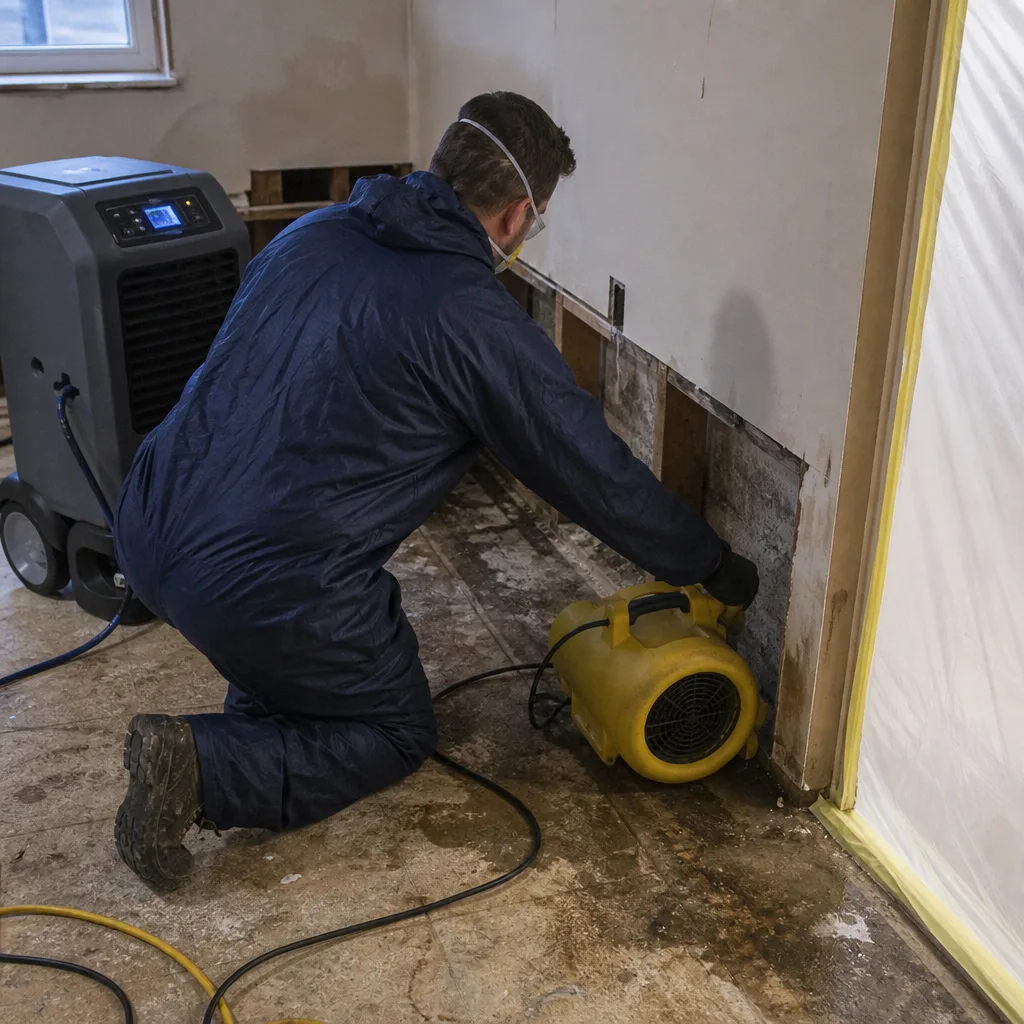
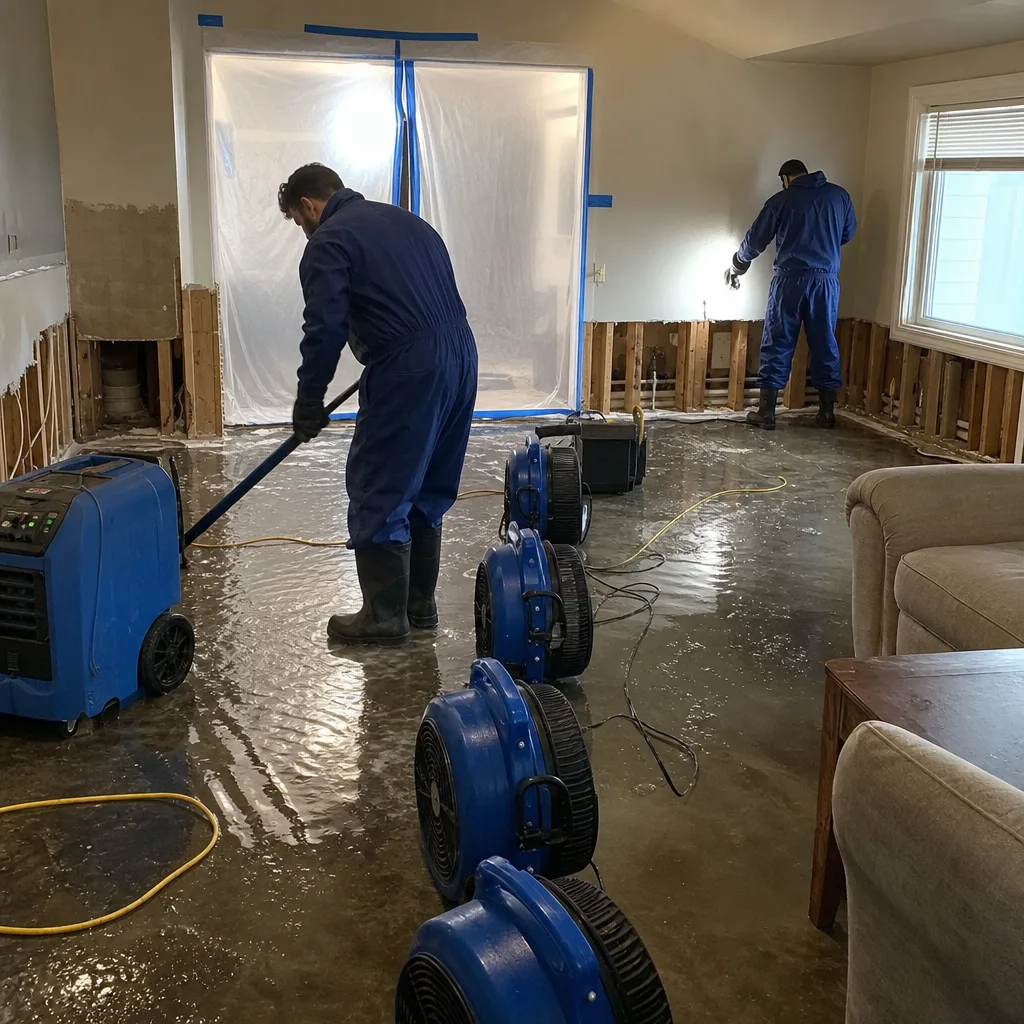
Free visual inspection and a written scope of work before any mitigation begins - photos, moisture readings, and drying logs go in your claim file
The scope we write is the scope we bill. Anything new gets shown to you, in writing, before we touch it.
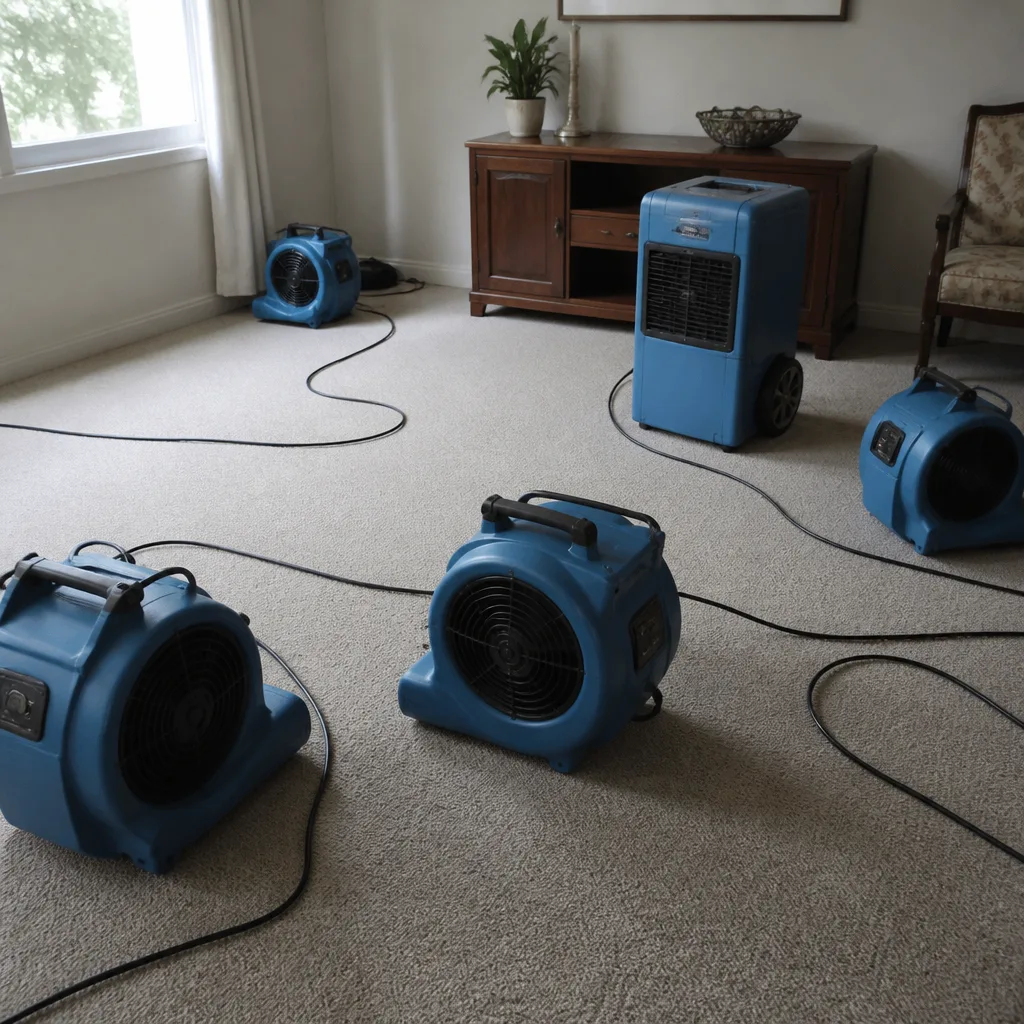
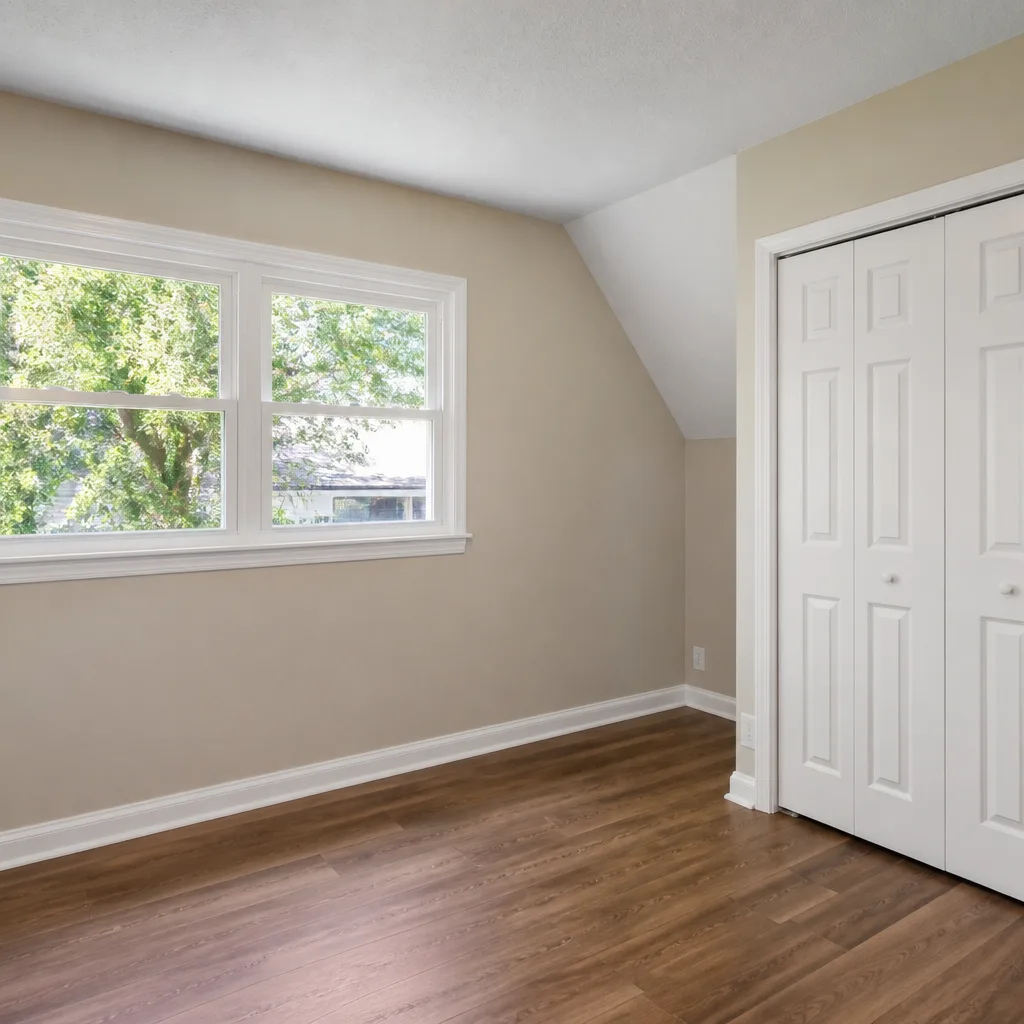
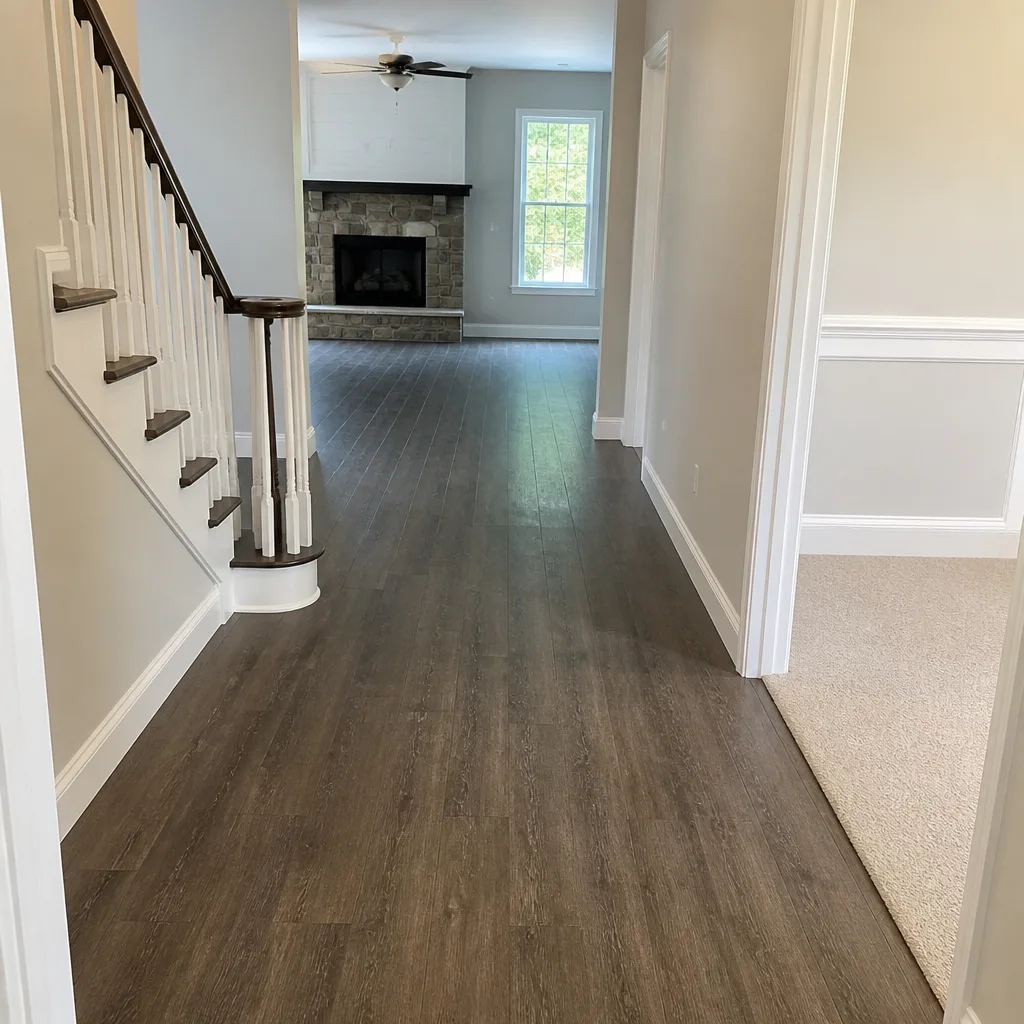
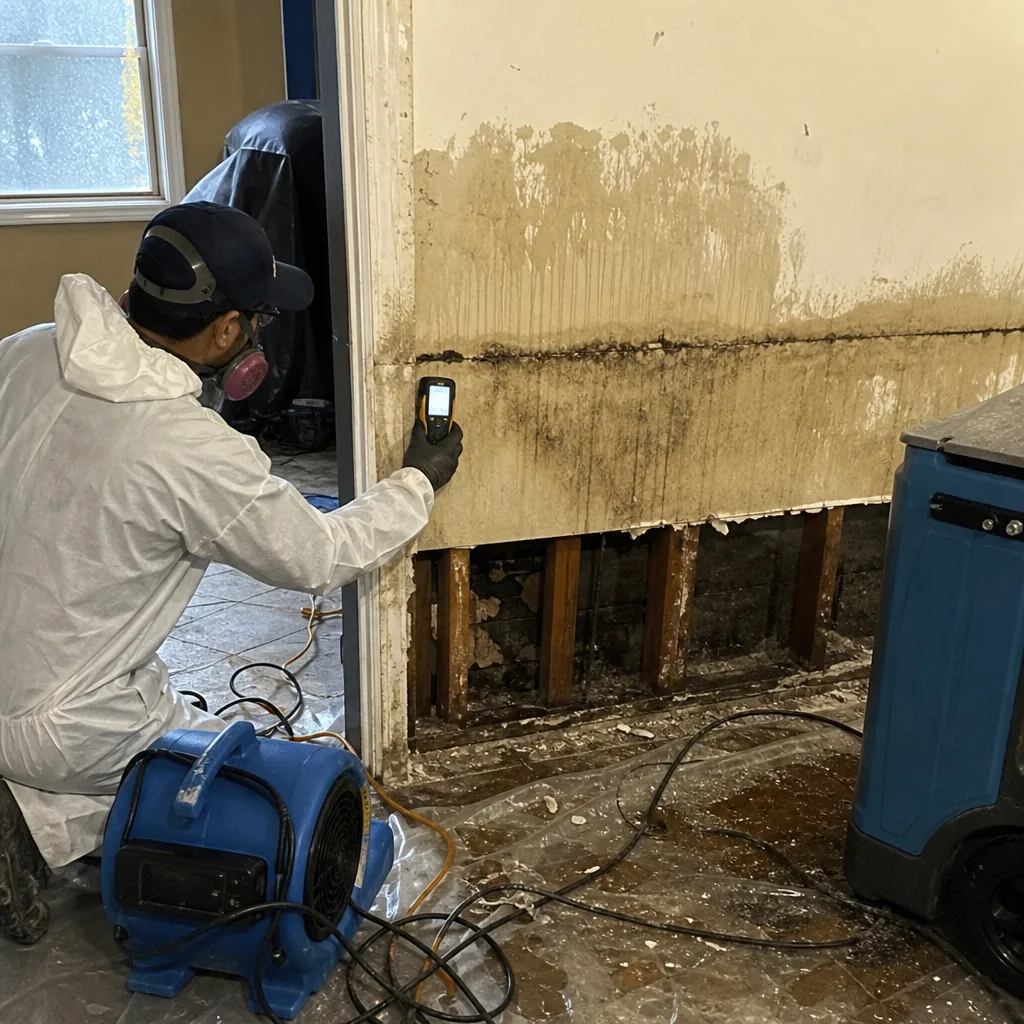 Before
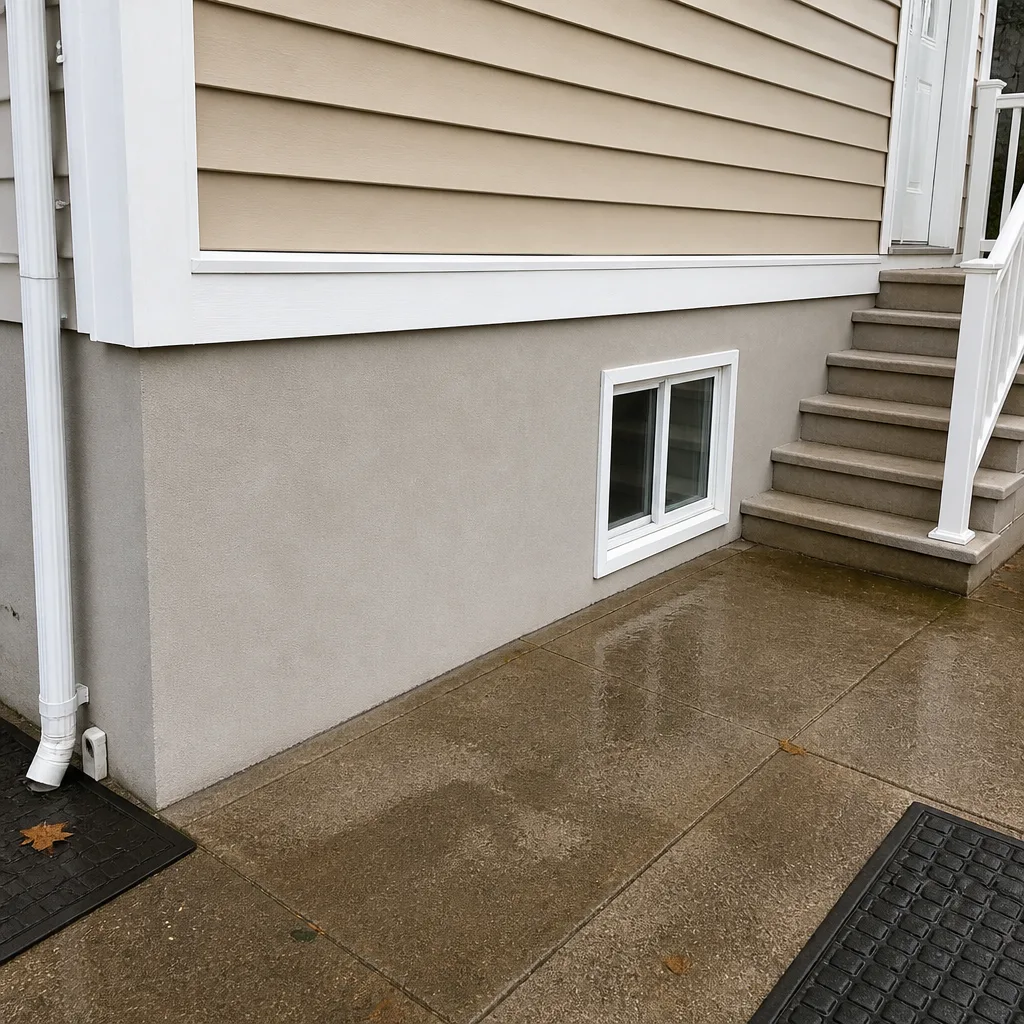 After
After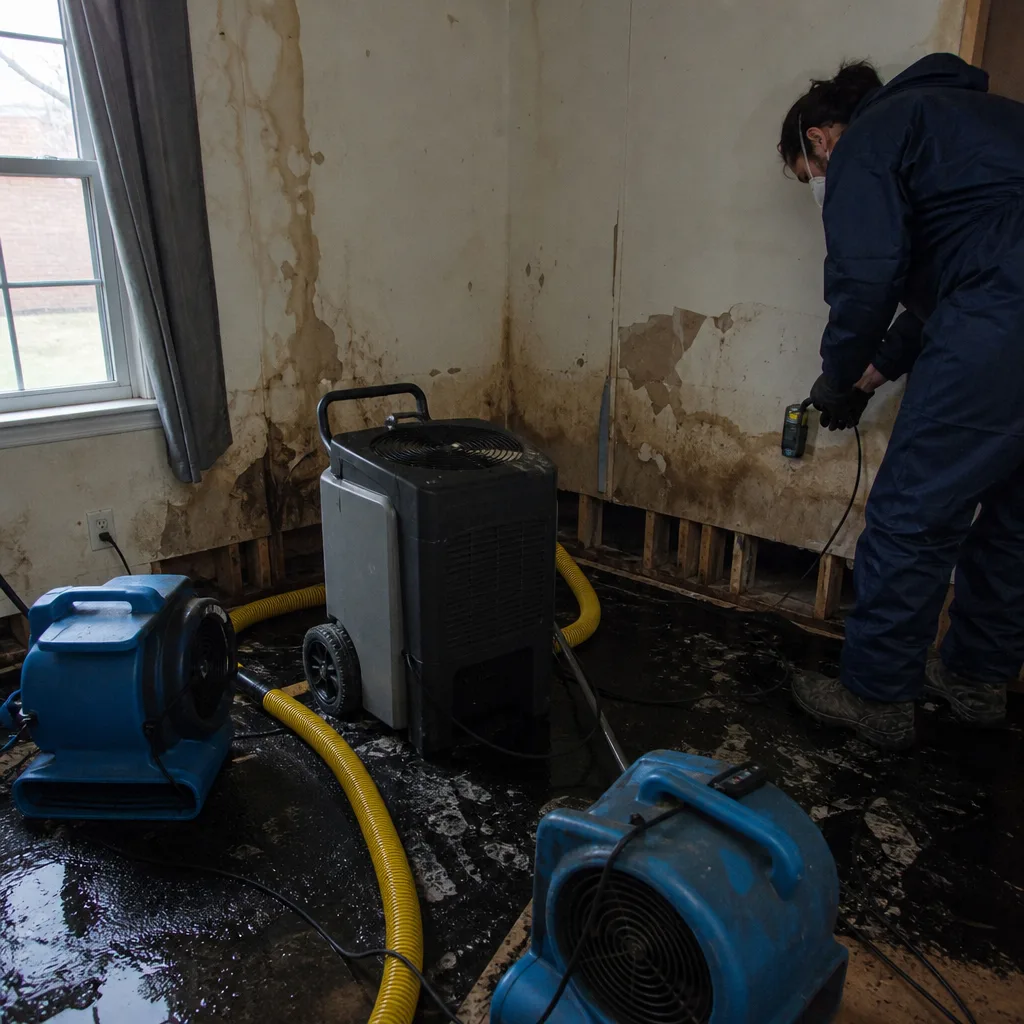 Before
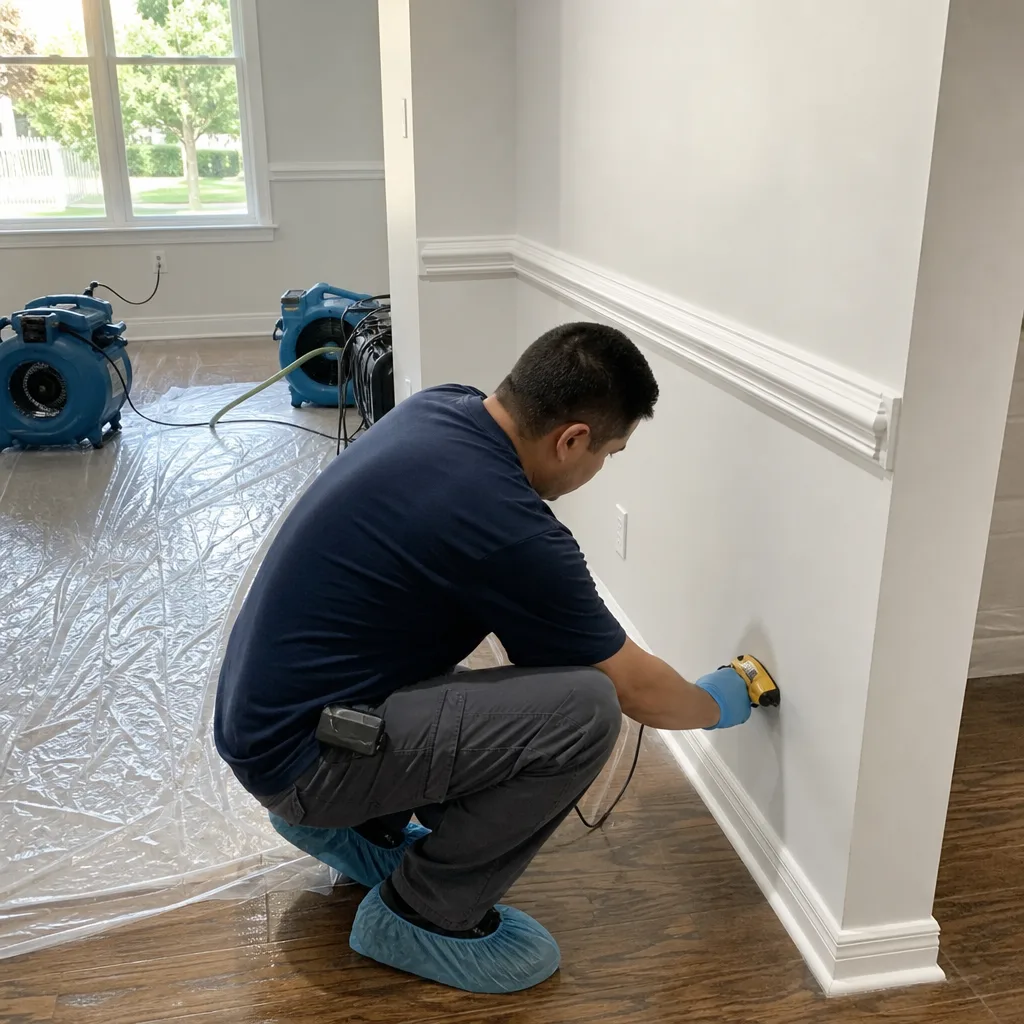 After
After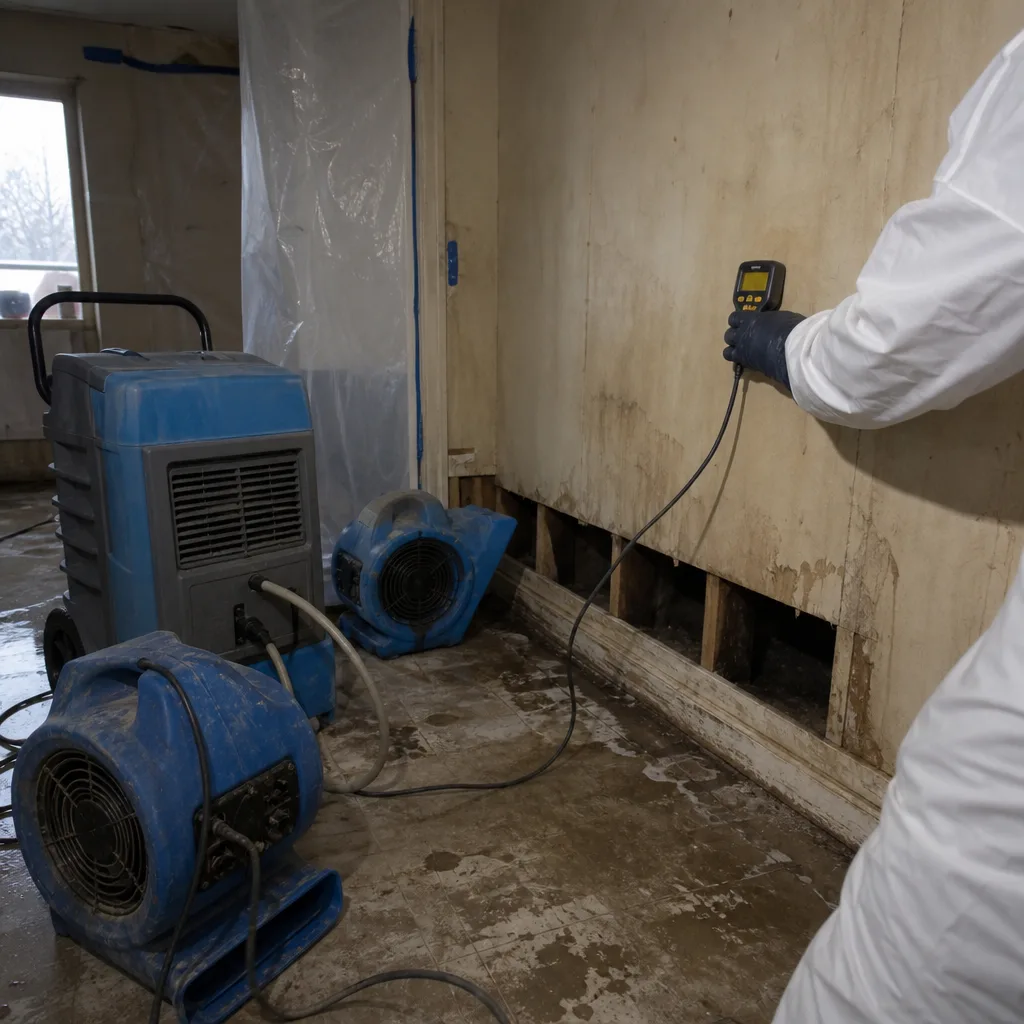 Before
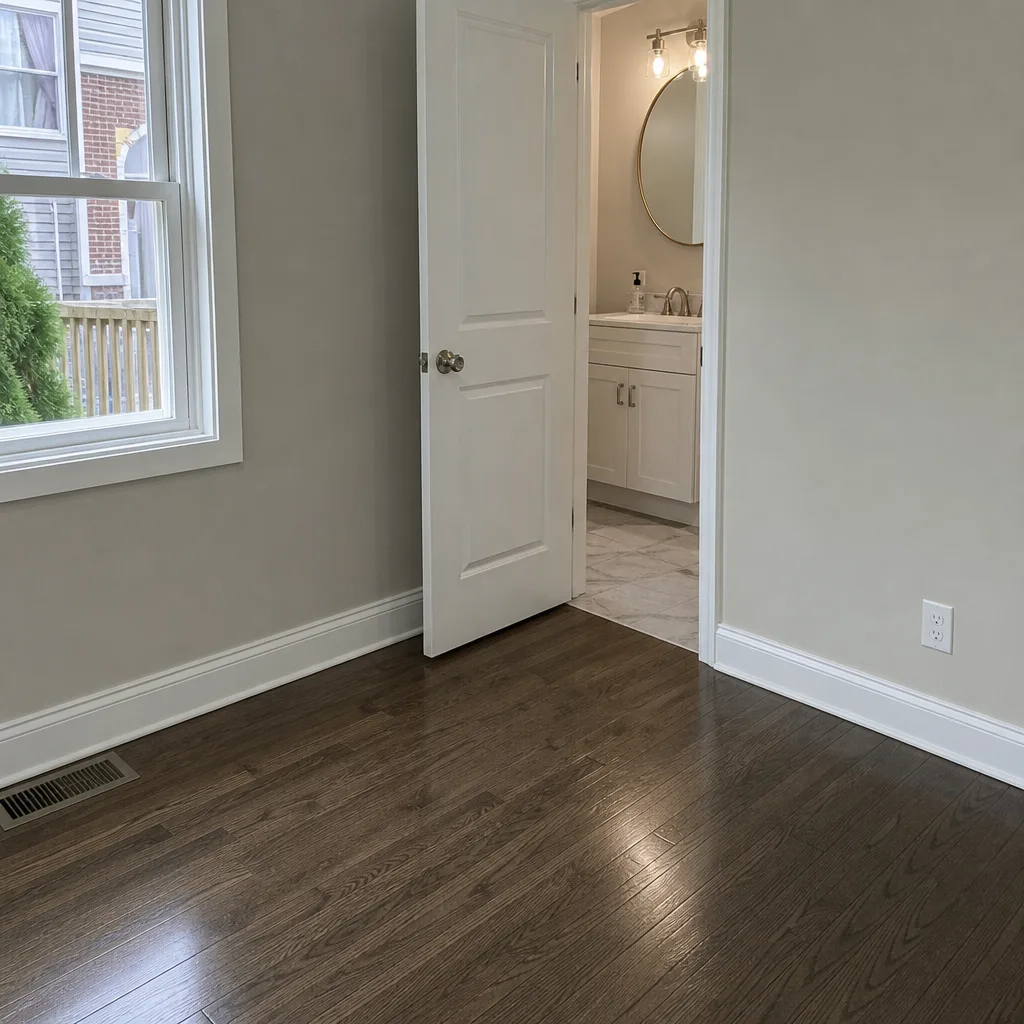 After
After24/7 Emergency Sanitization Services in Lower Manhattan
When contaminated water or biological hazards enter a Lower Manhattan building, the first call should reach a live person. We answer at (551) 348-8481 around the clock, every day of the year. A dispatcher picks up, gathers the address and what happened, and gets a crew moving toward your building within 45 minutes. The first hour after a Category 3 water event is when bacteria, harbor pathogens, and mold spores begin colonizing absorbent surfaces. Getting containment and antimicrobial treatment started fast keeps a bad situation from spreading into wall cavities, shared elevator shafts, and the apartments above. Our Sanitization Services team arrives with professional-grade equipment and a written scope of work. The visit starts with a free visual inspection, so you know what you’re facing before any bill is discussed.
What happens when you call
- 1
A real person answersNo phone trees - you reach a local pro.
- 2
You get an upfront price rangeHonest numbers before anyone is dispatched.
- 3
A background-checked tech heads outLicensed & insured, dispatched right away.
- 4
You approve before work beginsNothing starts until you say go.
Understanding Sanitization Services Severity in Lower Manhattan Properties
Lower Manhattan buildings present a severity profile unlike any other part of the five boroughs. Most structures here sit on landfill or former tidal marsh, with deep sub-basements that sit below the water table and within reach of storm surge. The cast-iron lofts of Tribeca, the converted Art Deco skyscrapers of the Financial District, and the planned residential towers of Battery Park City all share one trait: shared vertical utility chases and basement mechanical rooms that concentrate contaminated water from multiple sources into single below-grade spaces. When the Hudson River or New York Harbor pushes saltwater into these spaces, we’re dealing with Category 3 water by definition: heavily contaminated, carrying pathogens, chemicals, and conductive salts. But the salt is what changes everything. Freshwater contamination, like a broken pipe in Midtown West, requires standard decontamination. Saltwater intrusion leaves a corrosive, hygroscopic residue behind that keeps pulling moisture from the air long after visible water is gone. That means walls stay damp, mold returns within weeks if not treated with salt-specific protocols, and steel structural elements corrode faster than found inland or uptown. Containment is more complex here too: freight-elevator-only access in converted prewar towers makes equipment staging slow, so we preposition air movers and HEPA scrubbers as close to the impacted zone as building management protocols allow.
Why Lower Manhattan Property Owners Choose Floodline Restoration Co.
- 45-minute response commitment: Our dispatch board shows every truck’s live position across the service area. When a call comes in from Lower Manhattan, the nearest certified crew is routed immediately, not after a callback.
- 24/7 live answer, never an automated system: At 2 a.m. during a nor’easter, you’ll speak to a dispatcher who knows Lower Manhattan’s building access issues. Not a recording.
- IICRC-certified crews with WRT, FSRT, and AMRT credentials: Our technicians train to the standards that matter for flood, fire, and mold work. Background-checked and uniformed on every job.
- Free visual inspection before any work begins: We walk the affected space, explain what we found in plain language, and hand you a written scope. No pressure, no upsell, no surprises.
- Direct insurance billing: We document from the first hour, bill your carrier directly, and never ask you to play messenger between us and the adjuster.
- One team from extraction to reconstruction: The same Floodline crew that sets containment on day one stays through drying, sanitization, and rebuild. No mid-job handoff to a crew you’ve never met.
Our Sanitization Services Process
Inspection & Assessment
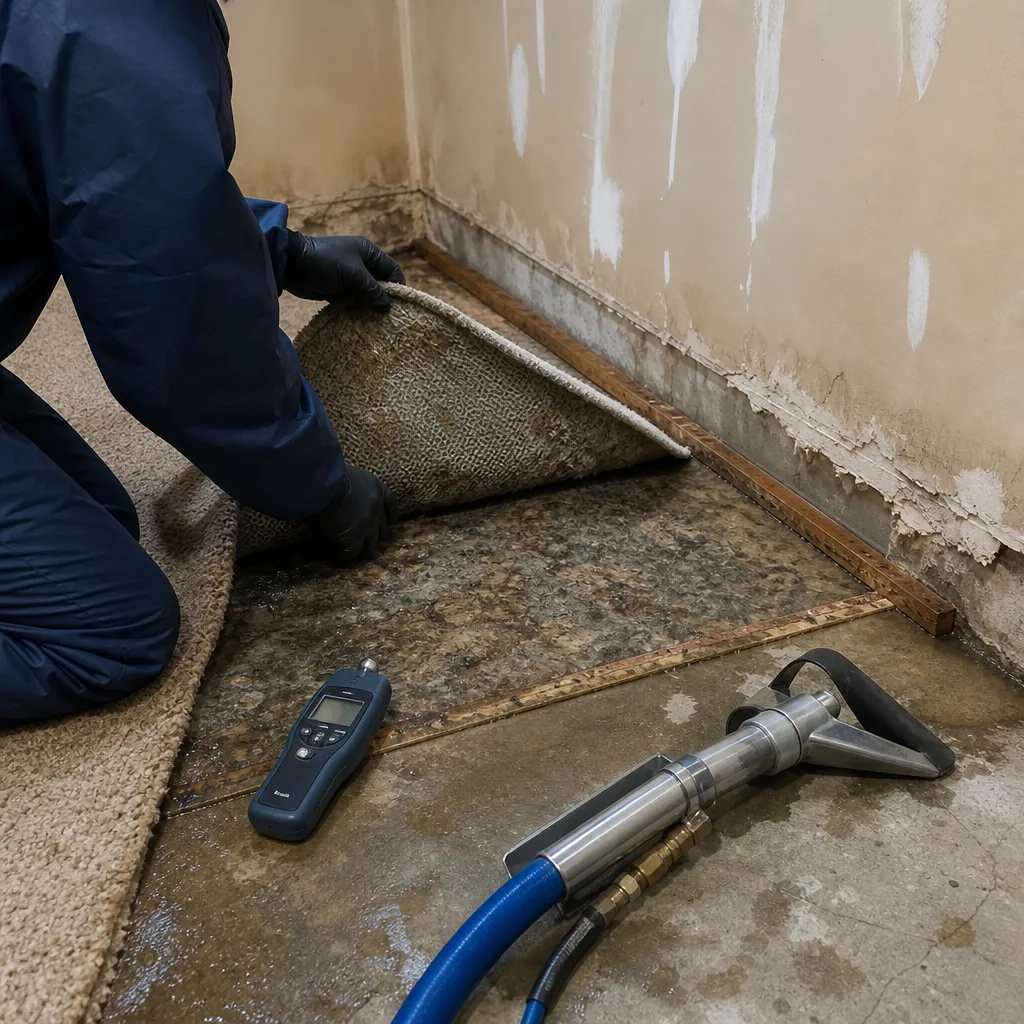
We start with thermal imaging and moisture mapping to find contaminated water that’s hidden inside walls, under floors, and behind conduit penetrations. For saltwater events, we test for conductive salt residue on structural steel and electrical equipment. The assessment produces a written scope and a firm plan.
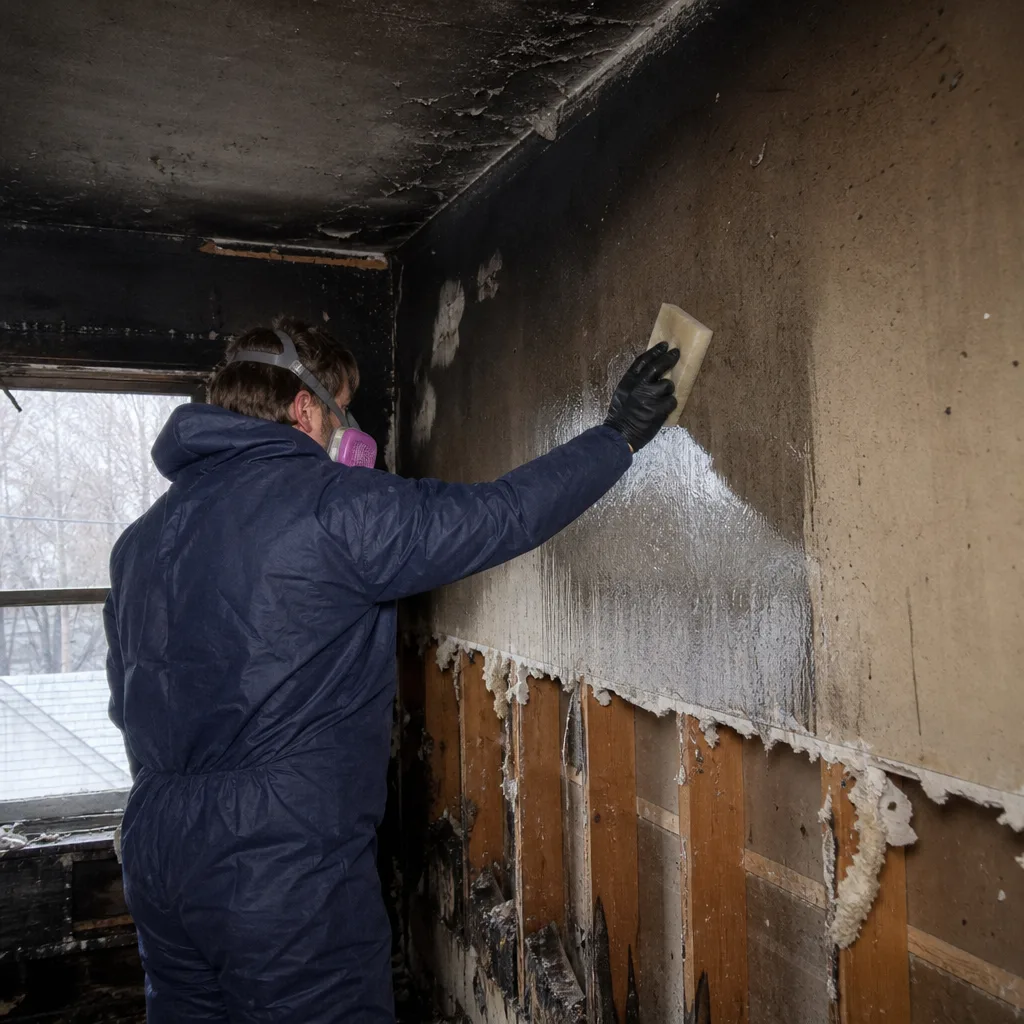
Extraction & Stabilization
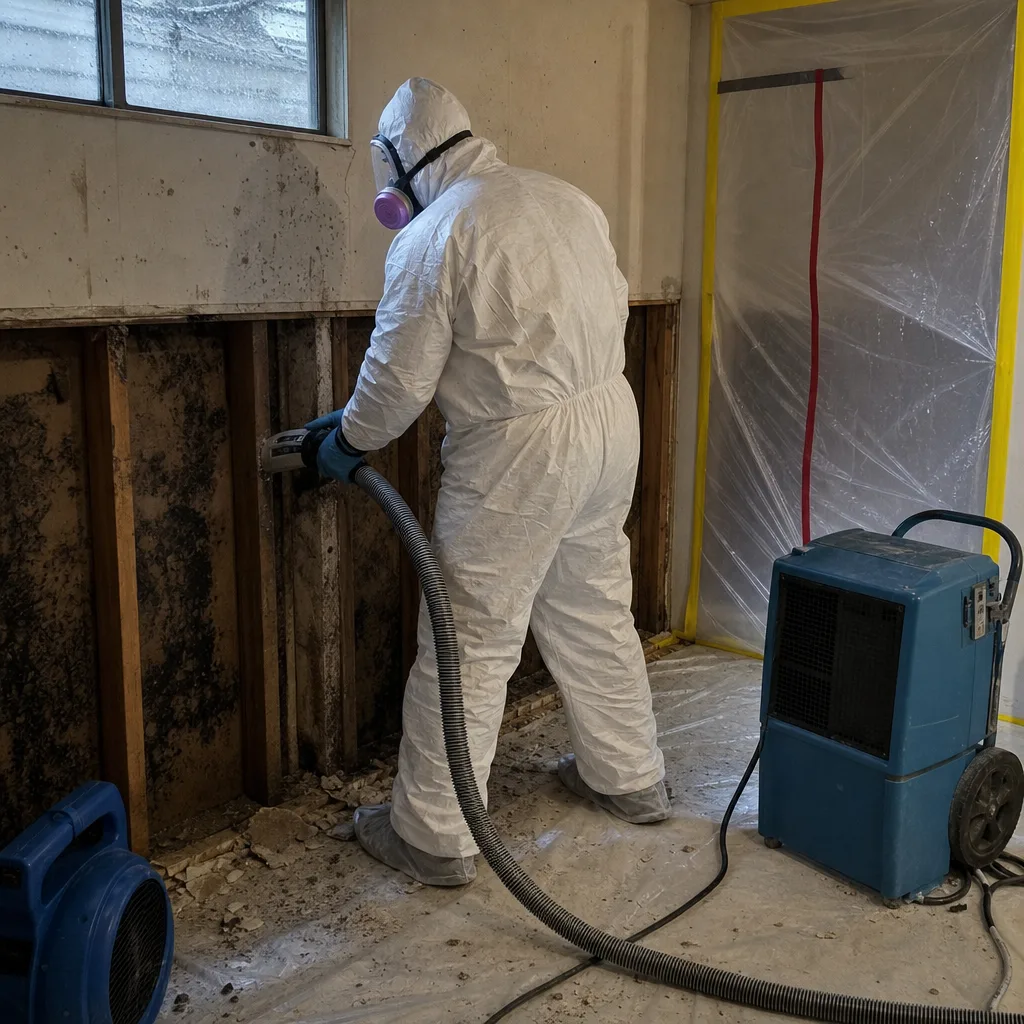
Professional-grade pumps and truck-mounted extractors remove standing Category 3 water. We isolate the affected zone with containment and negative air pressure to keep airborne contaminants from migrating into upper-floor residential units through the building’s shared ventilation stack.
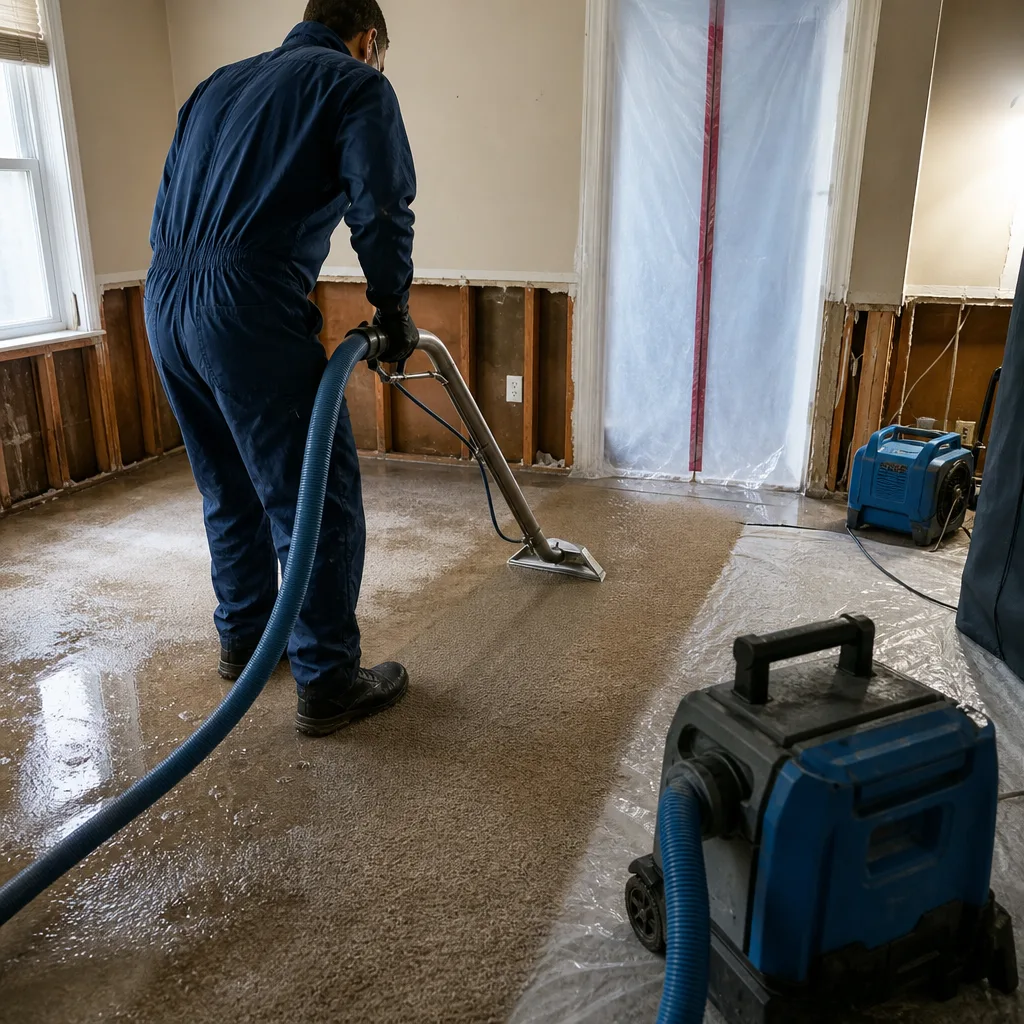
Drying & Dehumidification
Dri-Eaz and Phoenix dehumidifiers paired with XPOWER air movers create measured, aggressive airflow inside the containment zone. Hygrometer and moisture readings are logged daily until the dry standard is met. Salt-affected substrates get extended drying because hygroscopic salt keeps pulling ambient moisture back into the material.
Cleaning & Sanitization
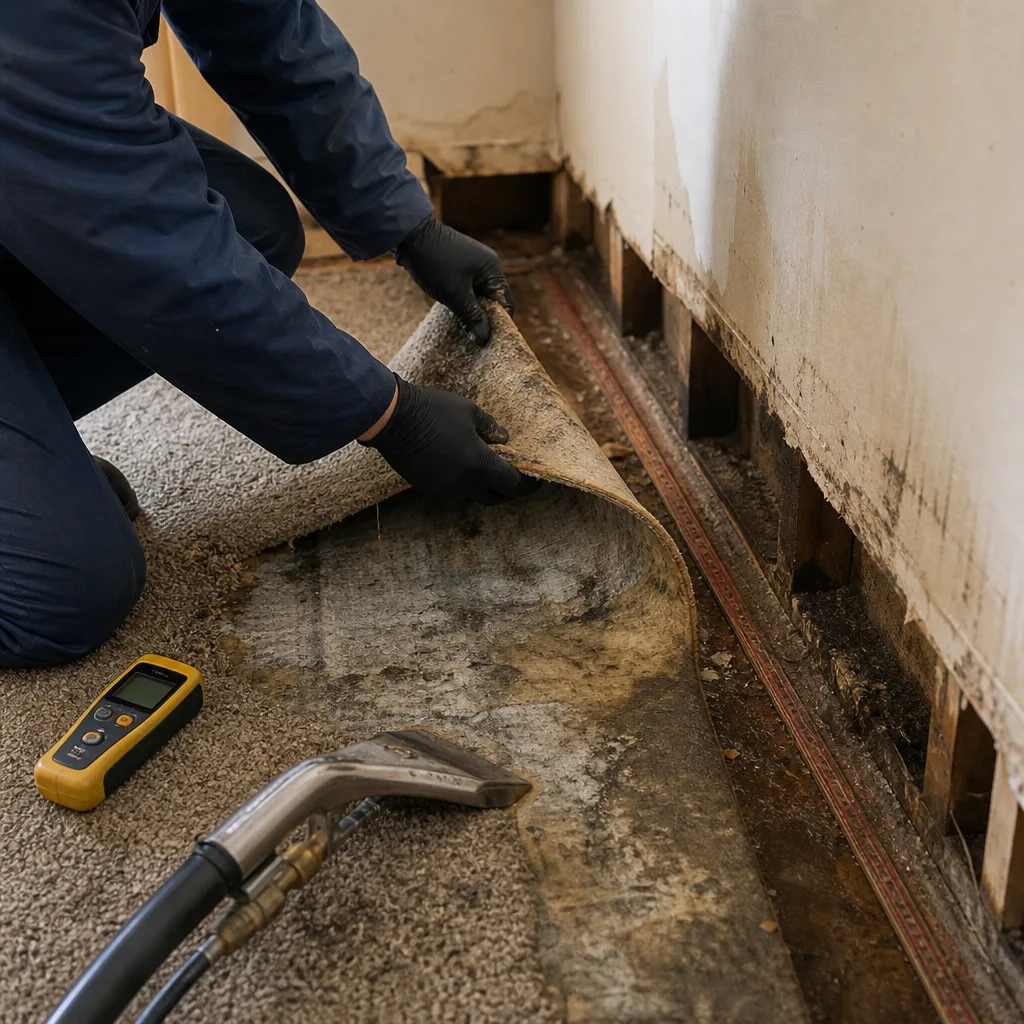
This is where saltwater demand separates from freshwater protocol. We pre-clean surfaces to remove salt films and harbor-contaminated silt, because standard disinfectants cannot penetrate the biofilm layer that saltwater deposits leave behind. Only after pre-cleaning do we apply EPA-registered antimicrobials.
Commercial-Grade Fogging & Antimicrobial Treatment
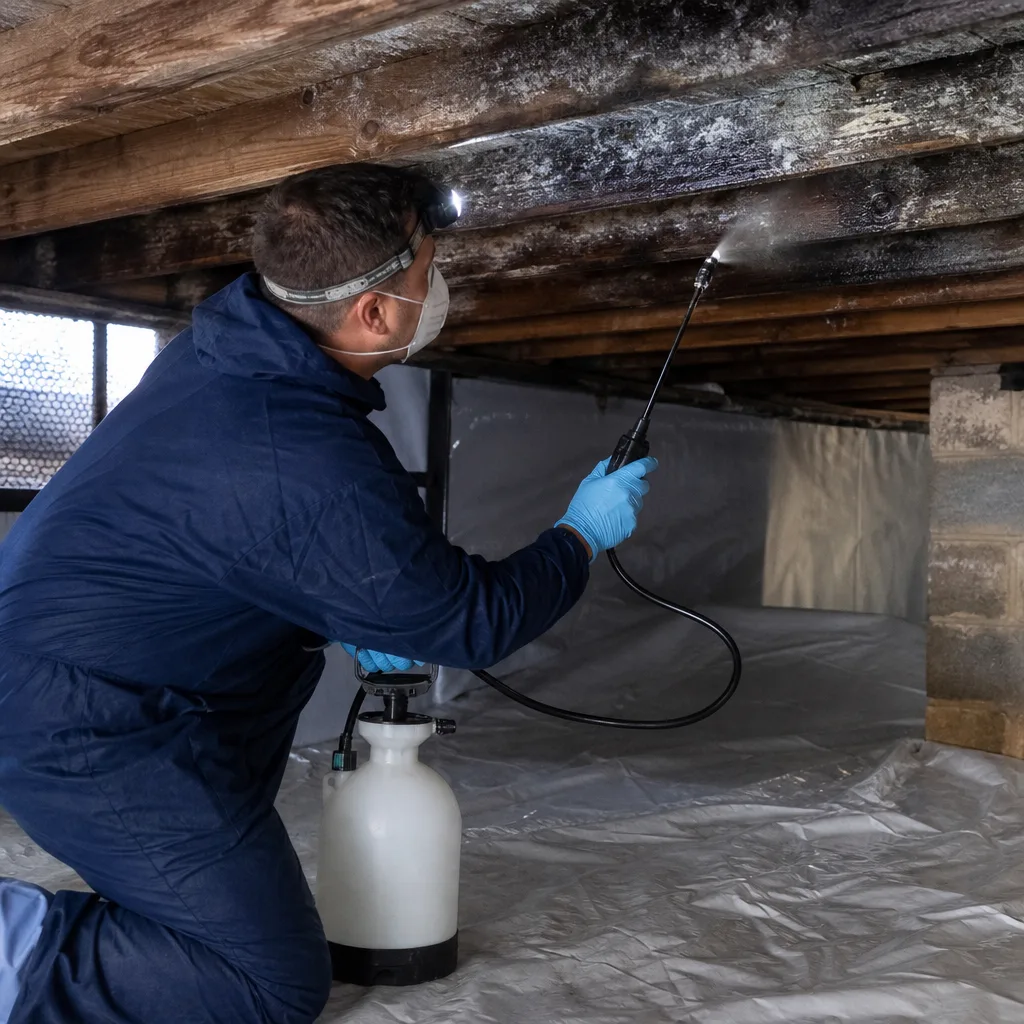
We fog the entire containment zone with an EPA-registered disinfectant using a B-Air blower, reaching surfaces that can’t be wiped: inside HVAC ducting, behind electrical panels, within wall cavities, and along conduit penetrations. Antimicrobial treatment is wiped onto every conduit penetration, steel support, and utility chase surface.
Verification, Repairs & Restoration
After decontamination is complete, we take final moisture readings, document the dry standard, and prepare a clearance report for your file and your insurer. If structural drying revealed corrosion damage to steel or wiring, we scope the repair in writing before proceeding. Reconstruction by the same Floodline crew follows.
Need Emergency Sanitization Services in Lower Manhattan Now?
Crews minutes away, answering live 24 hours a day. The sooner we start, the less it costs.
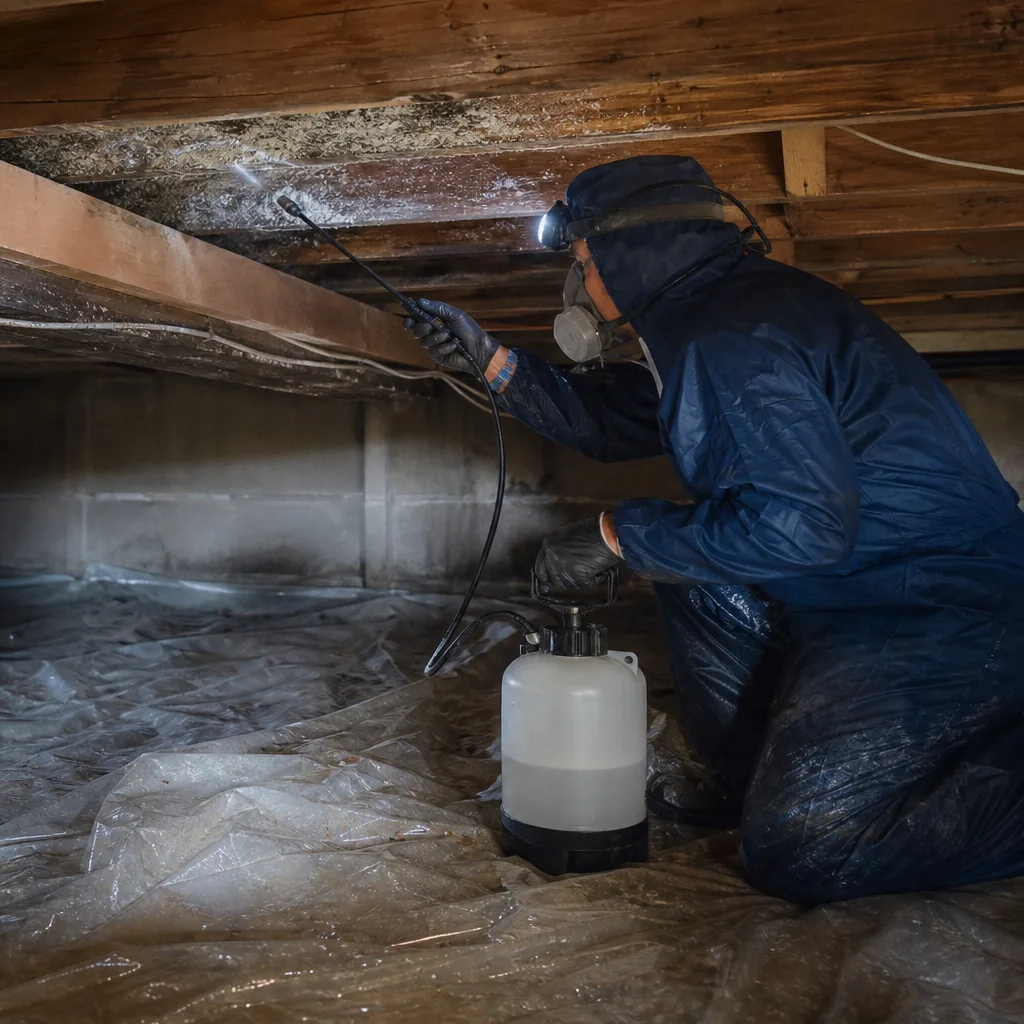
Working With Your Insurance Company
When a storm surge floods a Financial District sub-basement, the insurance claim starts with documentation, and the quality of that documentation decides how smoothly the claim goes. We’ve handled hundreds of Lower Manhattan flood and contamination losses. Our technicians photograph everything before touching a surface, log moisture readings from the first day through the final clearance test, and produce line-item scopes written in the language adjusters expect. We coordinate directly with your carrier, which means you don’t spend your week leaving messages for a claims department. Our estimates follow industry-standard pricing. Your carrier gets everything they need to process the claim quickly, and you get a written scope before any work starts.
What We Provide Your Insurer
- Thorough documentation of the loss
- Photos of all damage, room by room
- Moisture readings and drying logs
- A detailed, line-item scope of work
- Direct coordination with your carrier
Built for Lower Manhattan’s Loss Calendar
Lower Manhattan’s sanitization needs follow a seasonal pattern shaped by the Atlantic hurricane season, winter freeze-thaw cycles, and the area’s aging subterranean infrastructure. June through November is storm surge season: named hurricanes are the headline risk, but nor’easters can push tidal water into street-level vaults and PATH infrastructure without ever getting a name. When Con Edison vaults flood beneath the Financial District, contaminated water migrates into adjacent building sub-basements through shared conduit penetrations, carrying salt, silt, and biofilms into spaces that building residents never see. January and February bring deep freezes that snap aging supply lines in converted prewar buildings, sending freshwater through walls and floors, but that water picks up decades of accumulated contaminants as it travels, becoming Category 2 or 3 by the time it pools. Year-round, the humidity of a city built on landfill and surrounded by three waterways keeps damp materials from drying on their own, which makes professional-grade drying equipment and daily moisture logging essential here. We built our dispatch and equipment staging around this calendar, and our crews know which failure mode they’ll find before they walk in the door.
Sanitization Services Across Lower Manhattan’s Neighborhoods
The Financial District’s below-grade utility infrastructure creates a sanitization profile we don’t see anywhere else in the city. Con Ed vaults beneath nearly every block mean that when one floods, the contamination spreads horizontally into adjacent sub-basements through shared conduit penetrations, not just vertically from above. These spaces need containment and negative air before sanitization begins, because airborne spores and bioaerosols travel fast through freight elevator shafts into apartments above. In Battery Park City, the towers are newer and sit on WTC-excavation landfill at barely above sea level, so noreasters push tidal water through street-level grates and into underground parking structures. The plumbing is modern, but the exposure to harbor surge is constant. Tribeca’s cast-iron lofts present a different challenge: original wood ceilings and brick party walls absorb contaminated humidity quickly, and drying those materials too fast can crack 150-year-old plaster. We adjust drying targets and antimicrobial application to the building’s age and materials. Around the World Trade Center site and the South Street Seaport corridor, we run response routes designed around street closures, construction staging, and freight elevator scheduling, because getting a scrubber into place quickly beats sophistication when the air quality is dropping.
In Lower Manhattan, our crews have worked through every building type this borough has: converted Art Deco towers at 20 Exchange Place and 70 Pine, planned residential high-rises in Battery Park City, walk-up tenements in the Seaport district, and landmarked cast-iron buildings in Tribeca. The sanitization approach changes by address, but the standard doesn’t. Same written scope, same IICRC-certified technicians, same 90-Day Done Right Promise on every job.
Specialized Sanitization Services Services We Offer in Lower Manhattan
Commercial-Grade Fogging
When a sub-basement floods with Category 3 water, wiping visible surfaces isn’t enough. We fog the entire containment zone with an EPA-registered disinfectant using a B-Air blower, pushing antimicrobial droplets into the spaces no cloth can reach: inside HVAC ducting, behind electrical panels, within wall cavities, and along conduit penetrations. In a Financial District sub-basement after a surge event, fogging is the difference between sanitizing what you can see and sanitizing what you can’t.
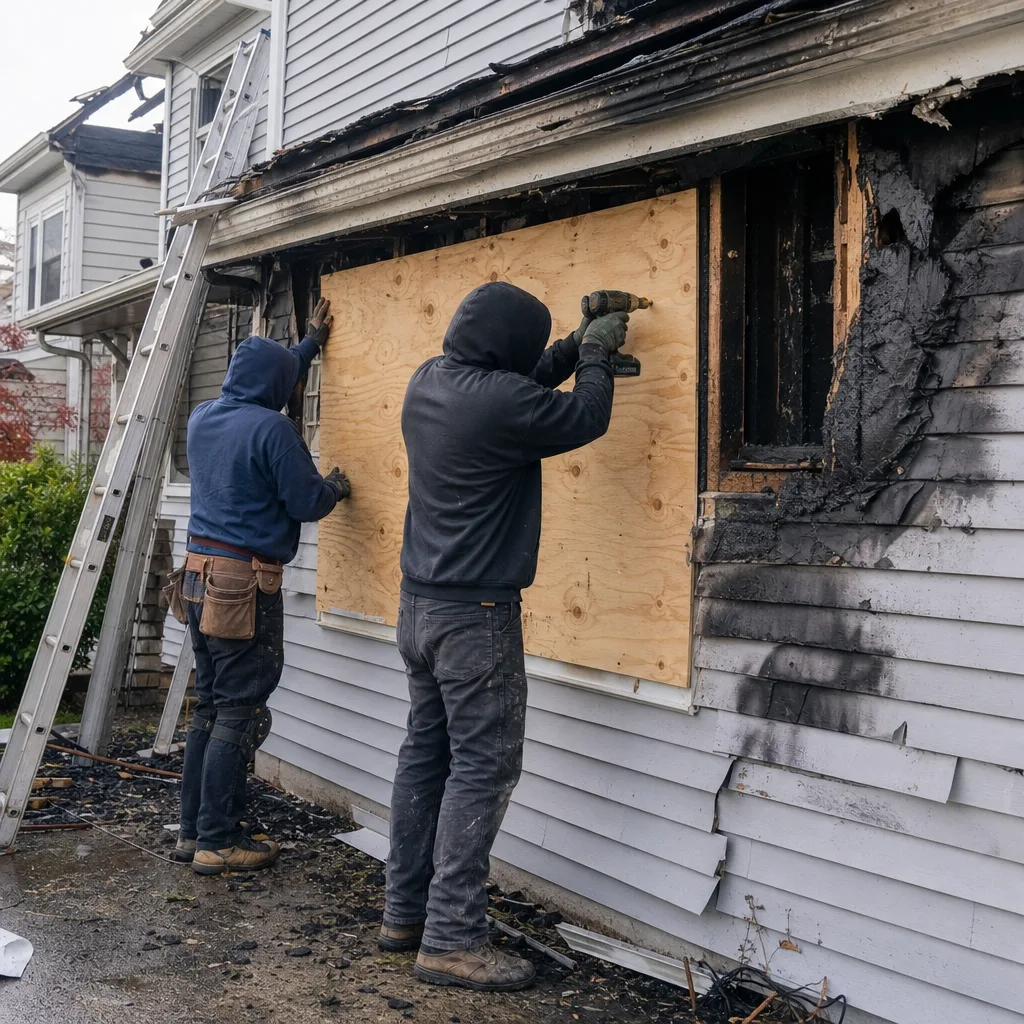
Antimicrobial Treatment
Saltwater leaves a biofilm on steel supports, concrete walls, and conduit penetrations that standard cleanup misses. We wipe every affected surface with an EPA-registered antimicrobial after pre-cleaning removes the salt film. This two-step process is specific to Lower Manhattan’s saltwater intrusion events, and skipping the pre-clean is how buildings get mold recurrences within weeks of a “completed” job.
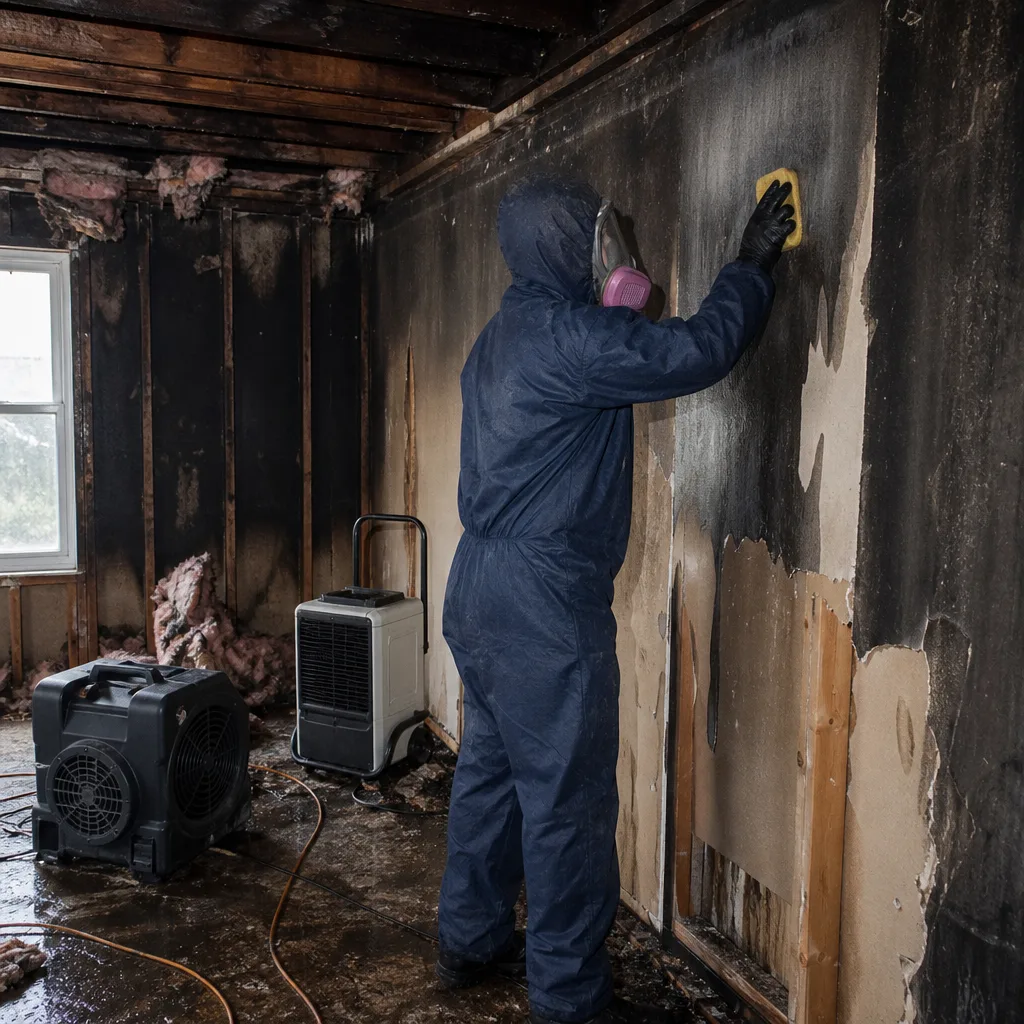
Odor Neutralization
Harbor surge water brings the smell of the East River, fuel oil, and decaying organic matter into below-grade spaces, and that odor travels up through shared ventilation stacks into apartments. Our odor neutralization protocols combine HEPA air scrubbing, activated carbon filtration, and targeted fogging to eliminate odor at the source, not just mask it with fragrance. In a converted loft with original wood ceilings, we use methods that don’t saturate porous materials with additional moisture.
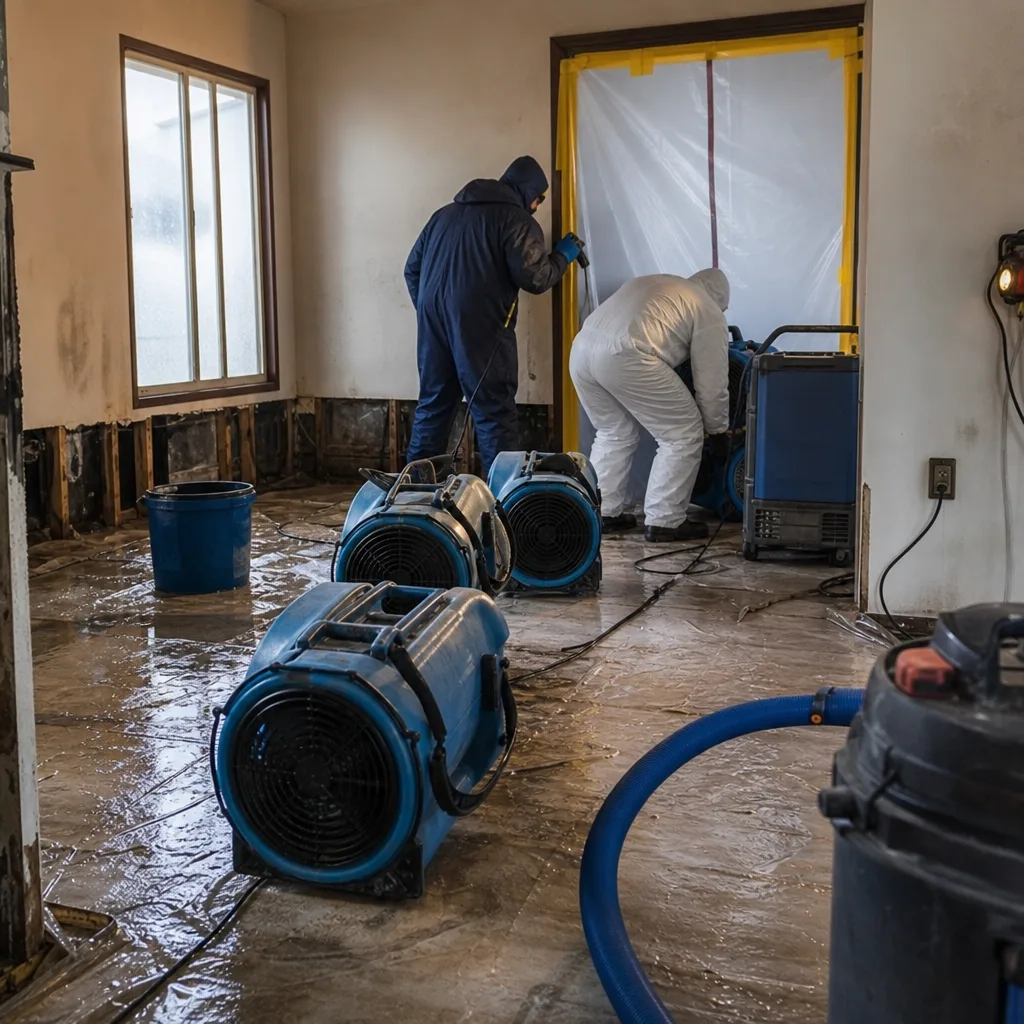
Deep Disinfection
After a flood, a sewage backup, or a viral illness inside a Lower Manhattan apartment, surfaces that look clean may not be. We apply hospital-grade disinfectants to high-touch and high-risk zones: elevator call buttons in shared lobbies, door handles, bathroom surfaces, and kitchen counters. Deep disinfection is part of every sanitization job, not an add-on line item.
Virus & Bacteria Decontamination
When Category 3 water contains harbor pathogens or sewage bacteria, the contamination risk isn’t limited to the flooded room. Bacteria move through the air on dust and moisture particles. We treat the contaminated space with EPA-registered disinfectants registered for the specific organisms present, with dwell times documented in our logs. For buildings with shared ventilation, we coordinate with building management to set containment that protects adjacent units.
Air Duct Sanitization
Moisture and contaminants that enter a building’s HVAC system spread through every room on the riser. In Battery Park City apartment towers with centralized air handling, a flooded unit can compromise the ducts serving dozens of other apartments. We inspect, clean, and sanitize air ducts using HEPA-filtered negative air machines and EPA-registered duct sanitizers, with before-and-after photos for your file.
Sanitization Services Costs in Lower Manhattan, NY
Sanitization costs in Lower Manhattan run higher than outlying boroughs for a structural reason: access. Freight elevator scheduling, building management approvals, and the time required to move equipment through narrow prewar stairwells or below-grade loading docks all add labor hours. A typical deep disinfection of a single residential unit in a converted Financial District condo runs $450-$950 depending on square footage and the number of rooms treated. Commercial-grade fogging of a sub-basement mechanical room after a saltwater intrusion event typically runs $1,200-$2,800, driven by containment setup, the volume of antimicrobial needed, and the pre-cleaning required to remove salt films before treatment. Air duct sanitization for a single apartment with shared risers in a Battery Park City tower typically lands between $600 and $1,400, depending on the number of registers and whether the building’s central handler requires treatment too. Insurance coverage for sanitization work varies by policy and cause of loss. Storm surge and flood claims generally fall under separate flood policies, while a broken pipe inside your unit falls under standard homeowners coverage. A free visual inspection gets us to a written scope with a firm number, so you’re never guessing at what it’ll cost. Call (551) 348-8481 and we’ll walk the space and give you the number before any work starts.
We Also Serve Cities Near Lower Manhattan
Our crews respond across Lower Manhattan and into the surrounding neighborhoods, including Midtown West, Washington Square, Midtown Manhattan, and Murray Hill. If you’re in a neighboring area and dealing with a contamination event, call our dispatch line and we’ll route the nearest available certified crew to you.
Serving Lower Manhattan, NY - Our Local Coverage Area
We’re based in the Lower Manhattan area and know this community well. Use the map below to see our service coverage - if you’re nearby, we can almost certainly help.
Lower Manhattan Sanitization Services Questions, Answered
How does saltwater flooding in Lower Manhattan affect sanitization differently than a freshwater leak from a broken pipe in Midtown?
Saltwater flooding demands a different sanitization sequence entirely. The salt itself leaves a hygroscopic, conductive film on surfaces after visible water is gone, which means standard disinfectants cannot penetrate the biofilm layer that saltwater deposits leave behind. We pre-clean to remove salt films and then apply EPA-registered antimicrobials. Skipping the pre-clean is why saltwater-damaged spaces get mold recurrences within weeks. Freshwater from a broken supply line is simpler to treat. Saltwater needs salt-specific decontamination. Call (551) 348-8481 for an exact scope.
Do we need building management approval to sanitize a sub-basement in a Financial District condo tower after a flood?
Yes, almost always. Sub-basement spaces in Financial District towers sit behind access controlled by building management, and freight elevator reservations are typically required to move our equipment in. We coordinate directly with property management and building engineers on every job, from the first access request through final clearance. The building’s staff usually knows the shared utility chase layout better than anyone, and we work with them to identify which adjacent spaces need containment.
Can you sanitize the air ducts in a Battery Park City apartment after a neighbor’s unit flooded?
Yes. In Battery Park City’s centralized-air towers, a flooded unit can push moisture and contaminants into the shared riser serving dozens of other apartments. We inspect your apartment’s ducts, identify what traveled through the shared system, and sanitize using HEPA-filtered negative air machines and EPA-registered duct sanitizers. We document everything for your file and, if the building’s management needs proof, for their insurance carrier too.
How quickly can mold start growing in a Lower Manhattan basement after a storm surge?
Mold colonization can begin within 24 to 48 hours on damp organic surfaces, and Lower Manhattan’s sub-basements are consistently humid even on dry days, which accelerates the timeline. Salt residue makes it worse by pulling additional ambient moisture into wood, drywall, and insulation. We treat the 48-hour window as the hard deadline for getting containment, air movement, and antimicrobial treatment started. The sooner you call (551) 348-8481, the less likely you’ll need to tear out and replace drywall.
Is commercial-grade fogging safe for a cast-iron loft in Tribeca with original wood ceilings?
Yes, but it has to be done by someone who understands old building materials. We use EPA-registered disinfectants at concentrations and dwell times that are effective against pathogens without saturating 150-year-old wood or plaster. The fogging method we select depends on the ceiling material, the room’s ventilation, and the level of contamination. For original wood ceilings, we sometimes use dry-fog methods that minimize additional moisture into porous surfaces, followed by targeted antimicrobial wiping on the ceiling structure itself.
How fast can someone actually get to my Lower Manhattan building?
We commit to a 45-minute dispatch from the time a live dispatcher takes your call at (551) 348-8481. Our trucks are staged strategically around Lower Manhattan’s response corridors, and our crews know the freight elevator and building access protocols for the Financial District, Battery Park City, and Tribeca. The crew that arrives does a free visual inspection and hands you a written scope before any work starts.
What certifications do your technicians carry?
Our technicians are certified to IICRC standards, including WRT for water restoration, FSRT for fire and smoke work, and AMRT for applied microbial remediation. They also train to RIA and IFA standards. Every technician is background-checked and uniformed. You’ll know who’s in your building and what qualifies them to be there.
What should I do in the first 30 minutes after discovering contaminated water in my building?
Stay clear of the water, especially if it came from outside the building or a sewage source. Don’t touch electrical panels, outlets near the water, or any surfaces in contact with it. Call (551) 348-8481 immediately and tell the dispatcher what you saw, where the water came from, and whether any electrical equipment was involved. If you can safely photograph the affected area from a distance, do so. Otherwise, close the doors to the space if possible and wait for our crew. Do not attempt to dry or clean the area yourself. Saltwater and sewage demand professional decontamination, and the sooner we start, the less invasive and expensive the fix becomes.
One true local insight defines sanitization work in this borough’s southern end: The Con Ed vault story. Our crew sanitized a freight-elevator-only sub-basement at 20 Exchange Place after a nor’easter pushed Category 3 water through a shared utility chase from an adjacent flooded Con Ed vault. We set containment and negative air, fogged the mechanical room with an EPA-registered disinfectant using a B-Air blower, and wiped every conduit penetration with antimicrobial treatment before structural drying could begin. Moisture readings confirmed salt-laden residue on steel supports that required two rounds of decontamination. That’s the work most sanitization companies never see, because it only exists beneath the blocks where Con Ed’s high-voltage vaults run.
Led by Curt Bowman, Floodline Restoration Co. does restoration the way Lower Manhattan demands it: done right, documented for your insurer, and backed in writing by the 90-Day Done Right Promise. Call (551) 348-8481 any hour, any day. A live person will answer, and a certified crew will head your way.
Written by Curt Bowman, Owner at Floodline Restoration Co., serving Lower Manhattan and the surrounding boroughs.
Why Lower Manhattan Chooses Floodline Restoration Co.
We set the standard for sanitization services in Lower Manhattan.
Documented for Your Claim
Every job is photographed before, during and after, with moisture logs where they apply. We hand the full file to your adjuster and bill your insurance directly - you are never the one relaying it.
Licensed & Insured
Fully certified technicians who meet all local and state licensing requirements.
Upfront Pricing
No hidden fees, no surprises. You approve the price before any work begins.
Guaranteed Work
Every repair and installation is backed by our workmanship warranty and satisfaction guarantee.
How It Works in Lower Manhattan
Getting your sanitization services handled is simple and fast.
Call or Request a Free Estimate
Tell us about your sanitization services needs and we provide an upfront, transparent quote - no obligation, no hidden fees.
Licensed Technician Dispatched
A background-checked, certified technician arrives in Lower Manhattan - typically within 30-60 minutes, with parts stocked on the truck.
Problem Solved, Guaranteed
We complete the job to your full satisfaction, backed by our warranty and 100% satisfaction guarantee.
What happens when you call
- 1A real person answersNo phone trees - talk to a local sanitization services pro.
- 2You get an upfront price rangeHonest numbers before anyone is dispatched. No surprises.
- 3We come out and measureLicensed & insured, at a time that suits you - the visit and the quote are both free.
- 4You get the price in writingLine-itemed, yours to keep, and nothing starts until you say go.
What Lower Manhattan Customers Say
Trusted by homeowners across Lower Manhattan and surrounding areas.
"Second property they have dried out for us. Same process both times, meter readings logged on every visit and the log handed over at the end. Our adjuster said it was the cleanest file he had seen all year."
"We had a musty smell in the hall closet for months. He tested first, found the leak inside the wall, sealed the area off with plastic before opening anything, and put the whole scope in writing before asking for a signature."
"Water heater flooded the finished side of the basement at two in the morning. A person answered, not a machine, and a crew was pulling water before sunrise. Everything got photographed before they moved a thing, which made the insurance claim painless."
Our Work in Lower Manhattan
A look at recent damage restoration projects across Lower Manhattan and surrounding areas.
Ready for Sanitization Services in Lower Manhattan?
Call now for a free estimate - or request one below. Licensed, insured, and here with fast after-hours help in Lower Manhattan.
(551) 348-8481Request a Free Estimate in Lower Manhattan
Tell us about your sanitization services needs - we'll respond within the hour.