
Free visual inspection and a written scope of work before any mitigation begins - photos, moisture readings, and drying logs go in your claim file
The scope we write is the scope we bill. Anything new gets shown to you, in writing, before we touch it.
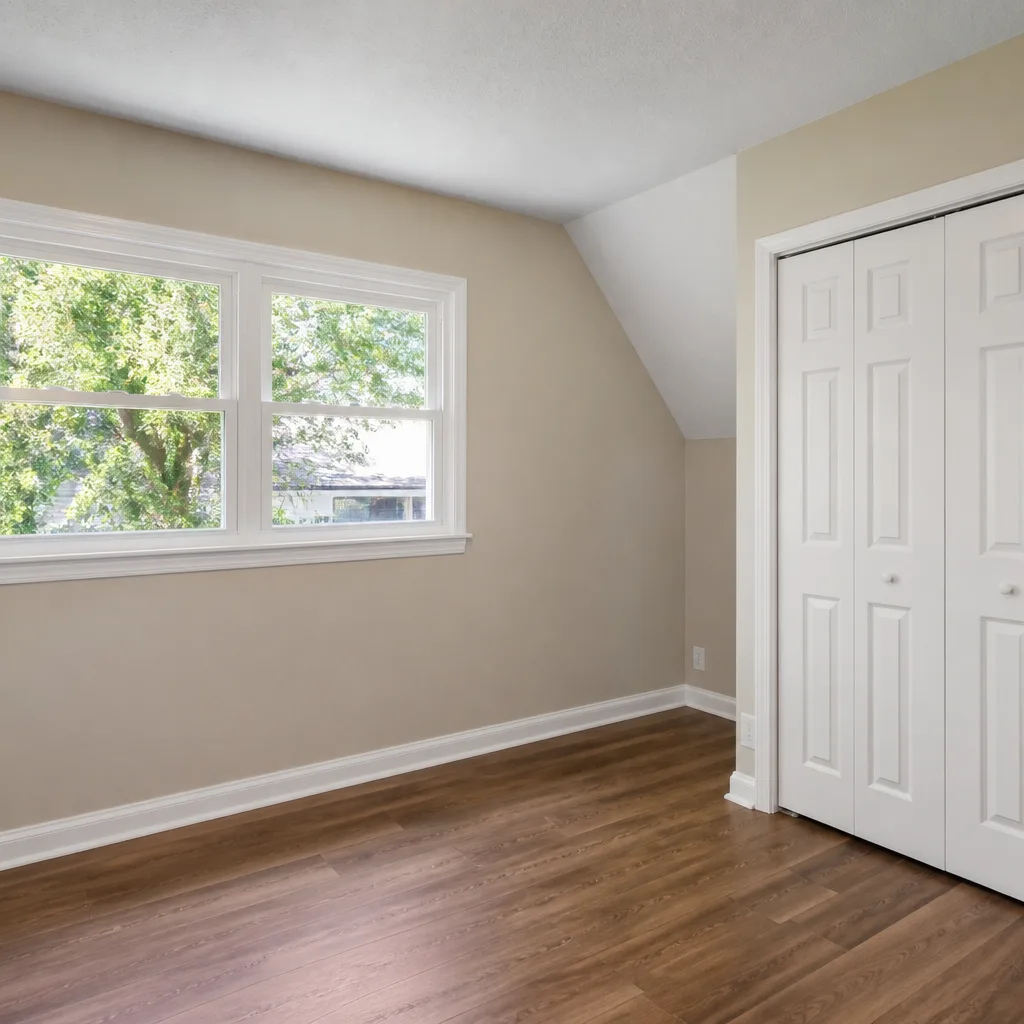
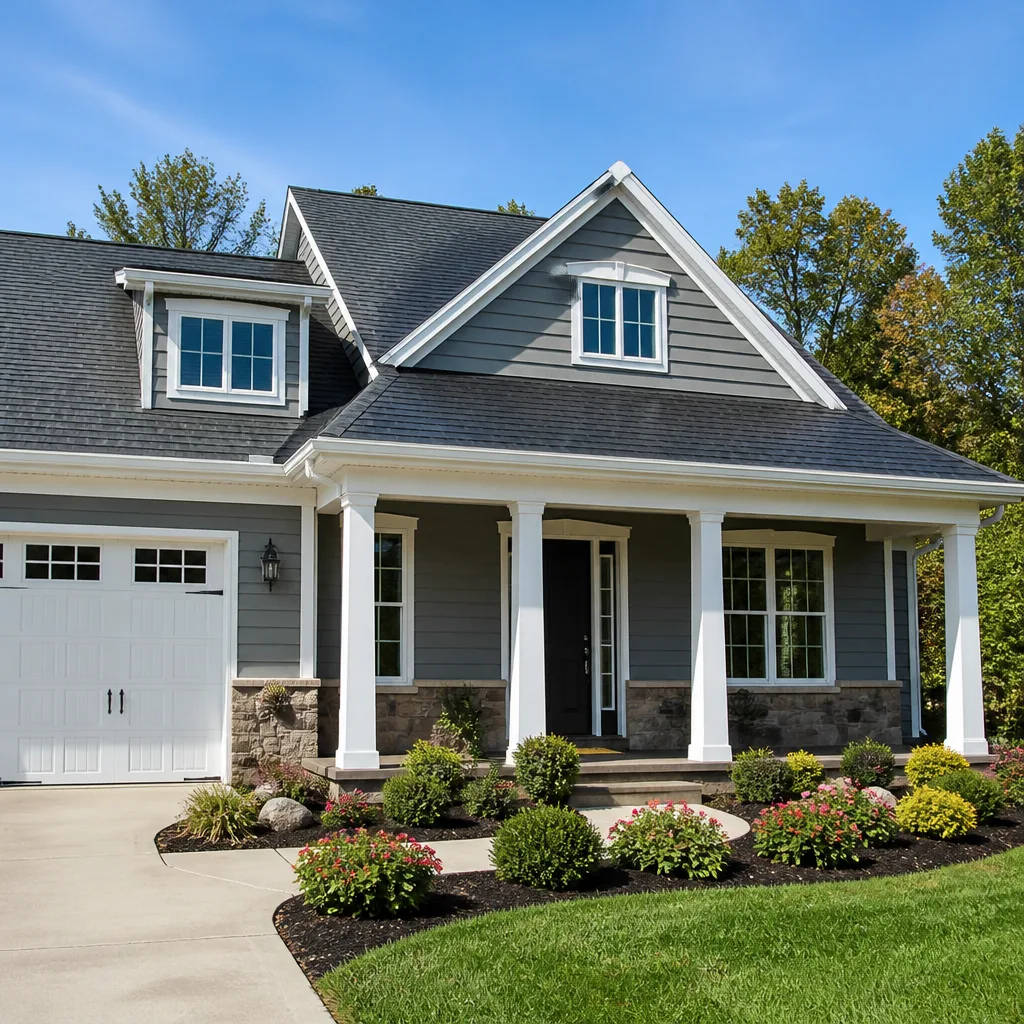
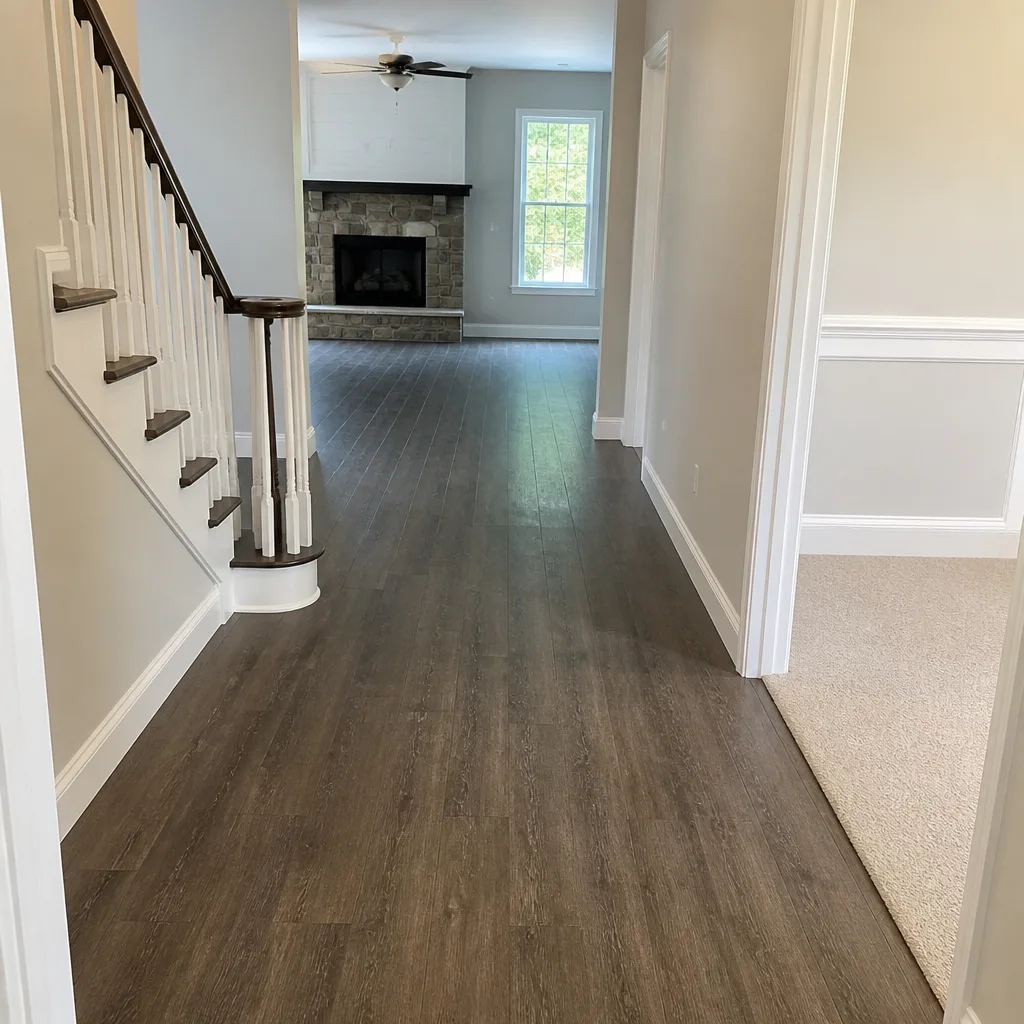
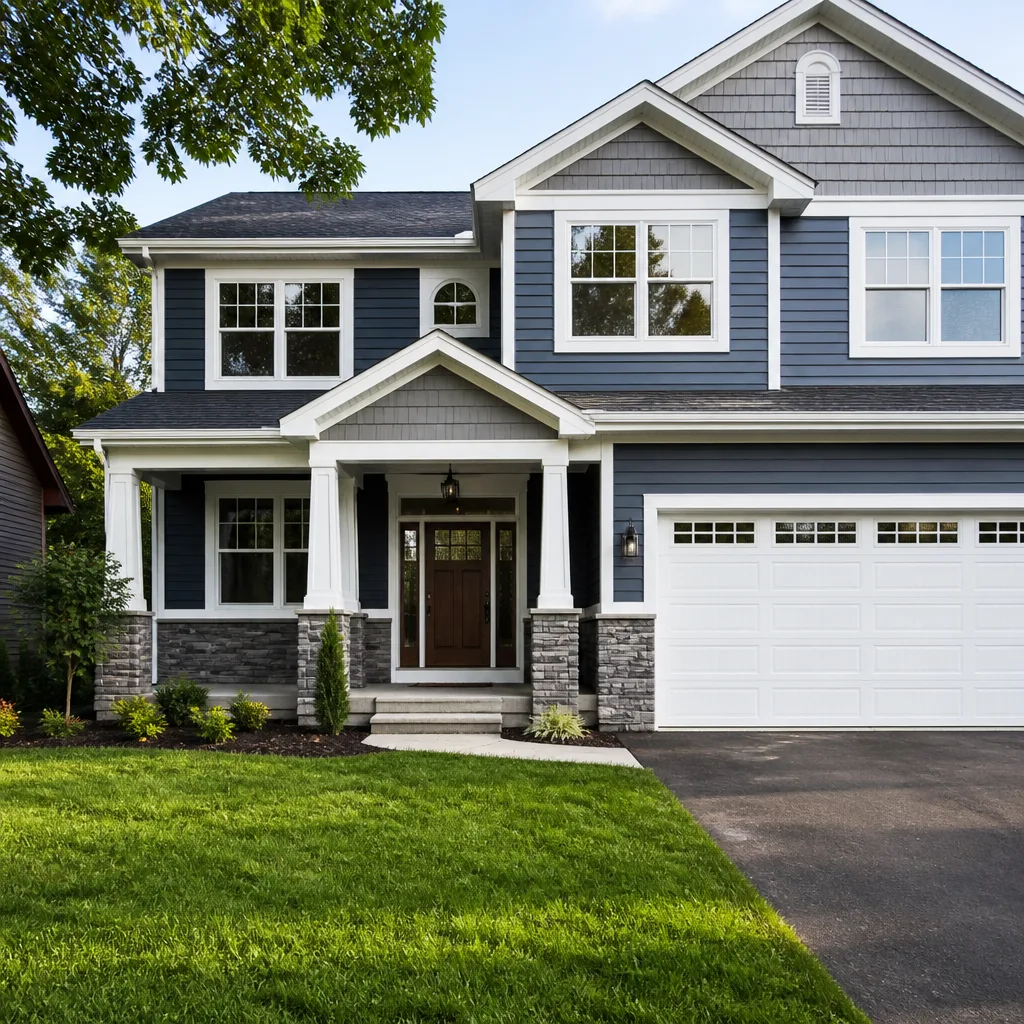
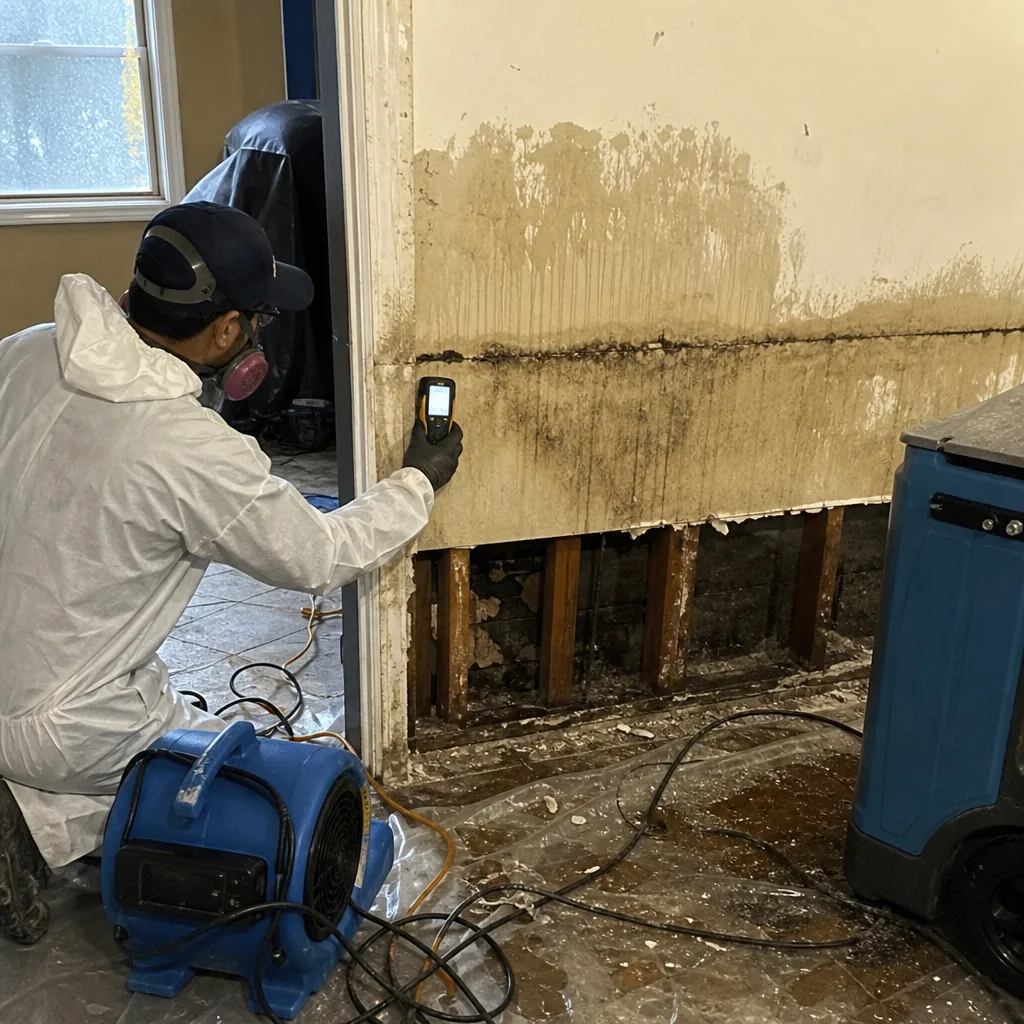 Before
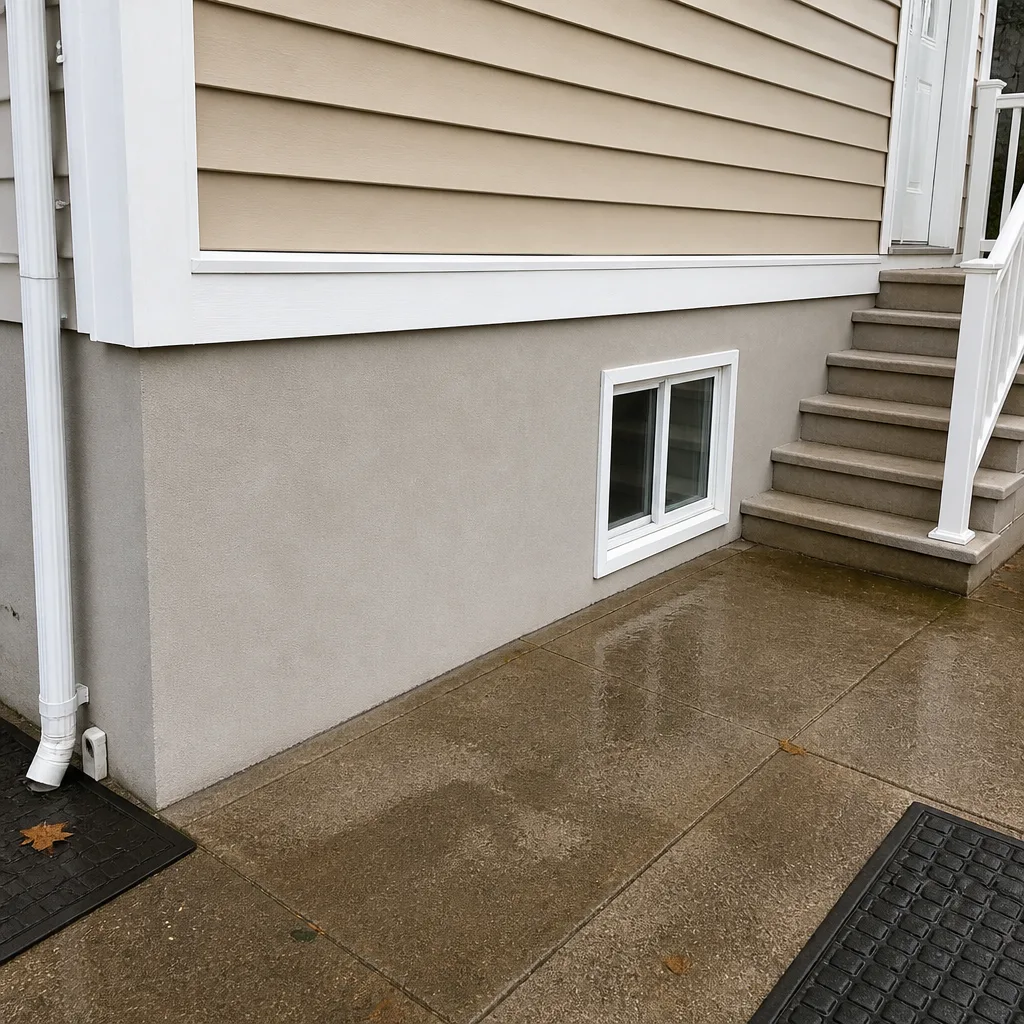 After
After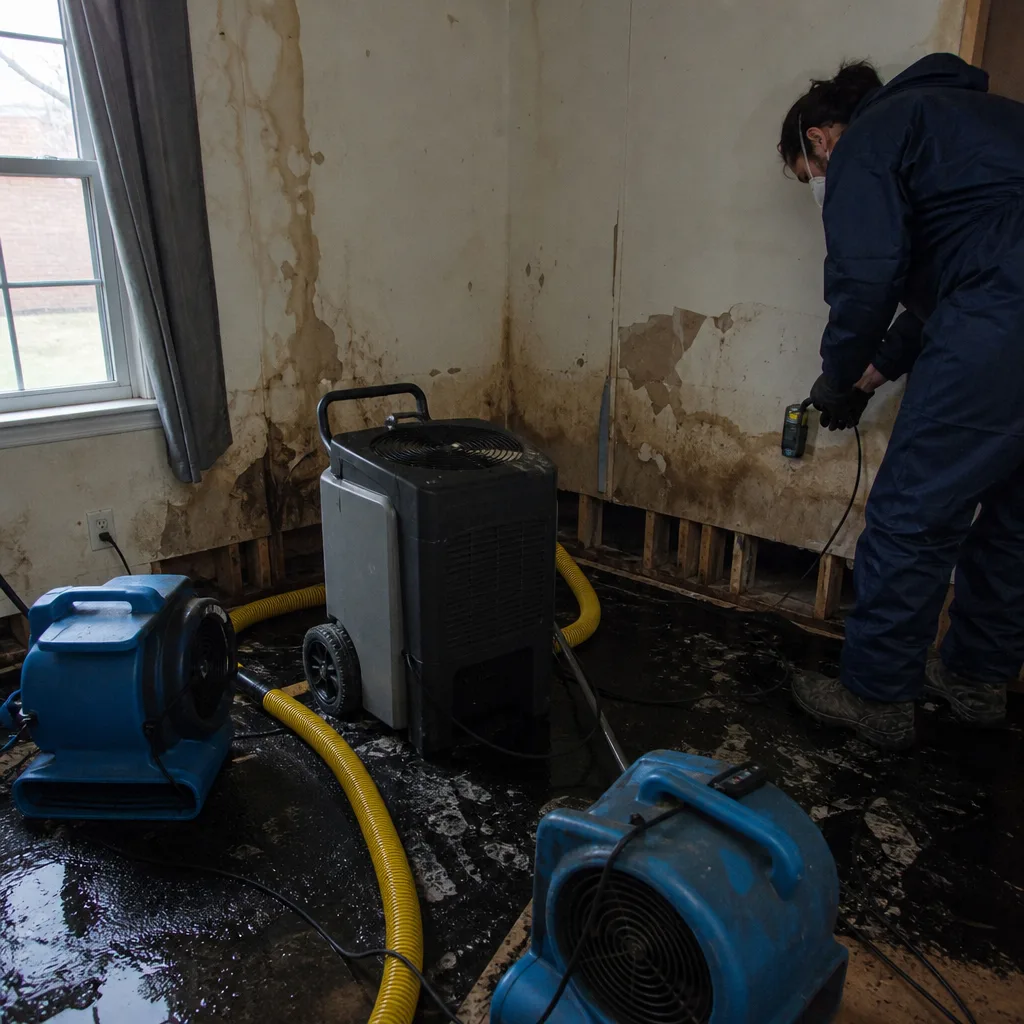 Before
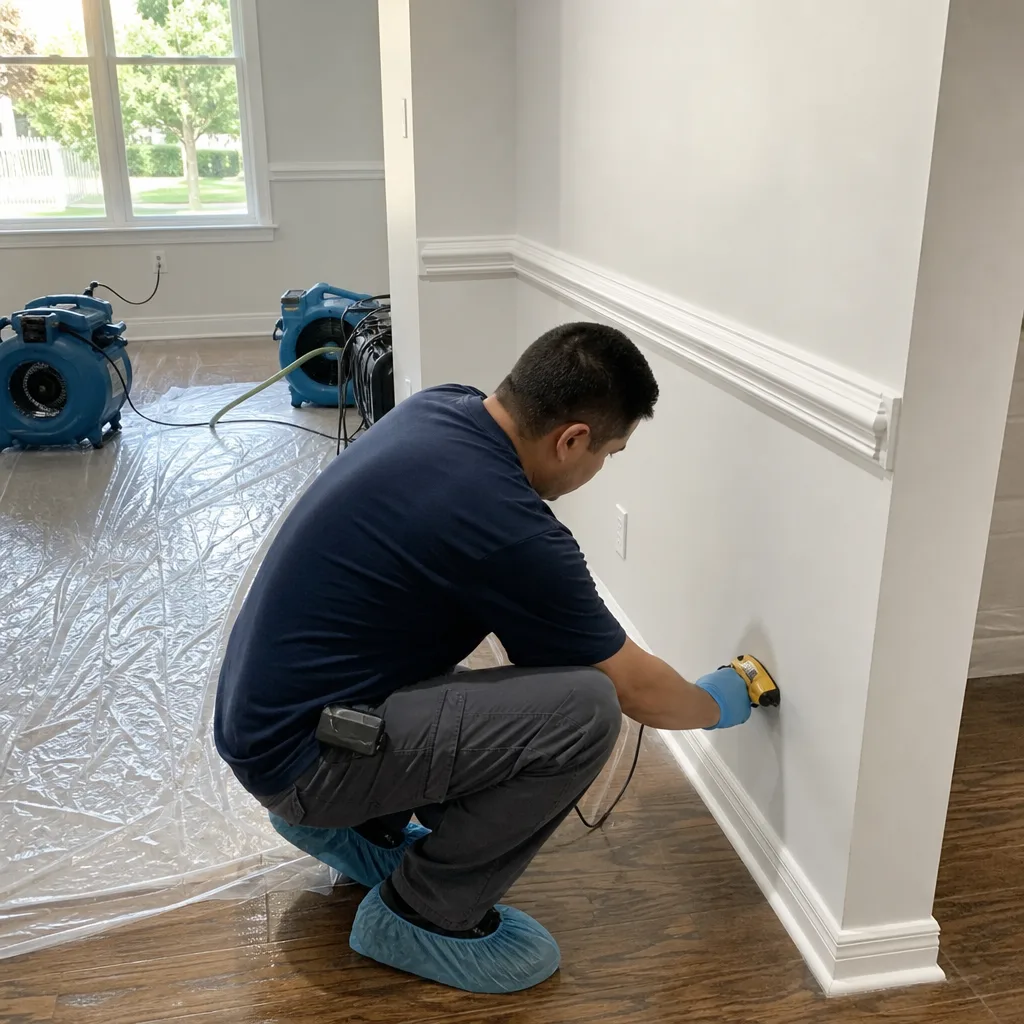 After
After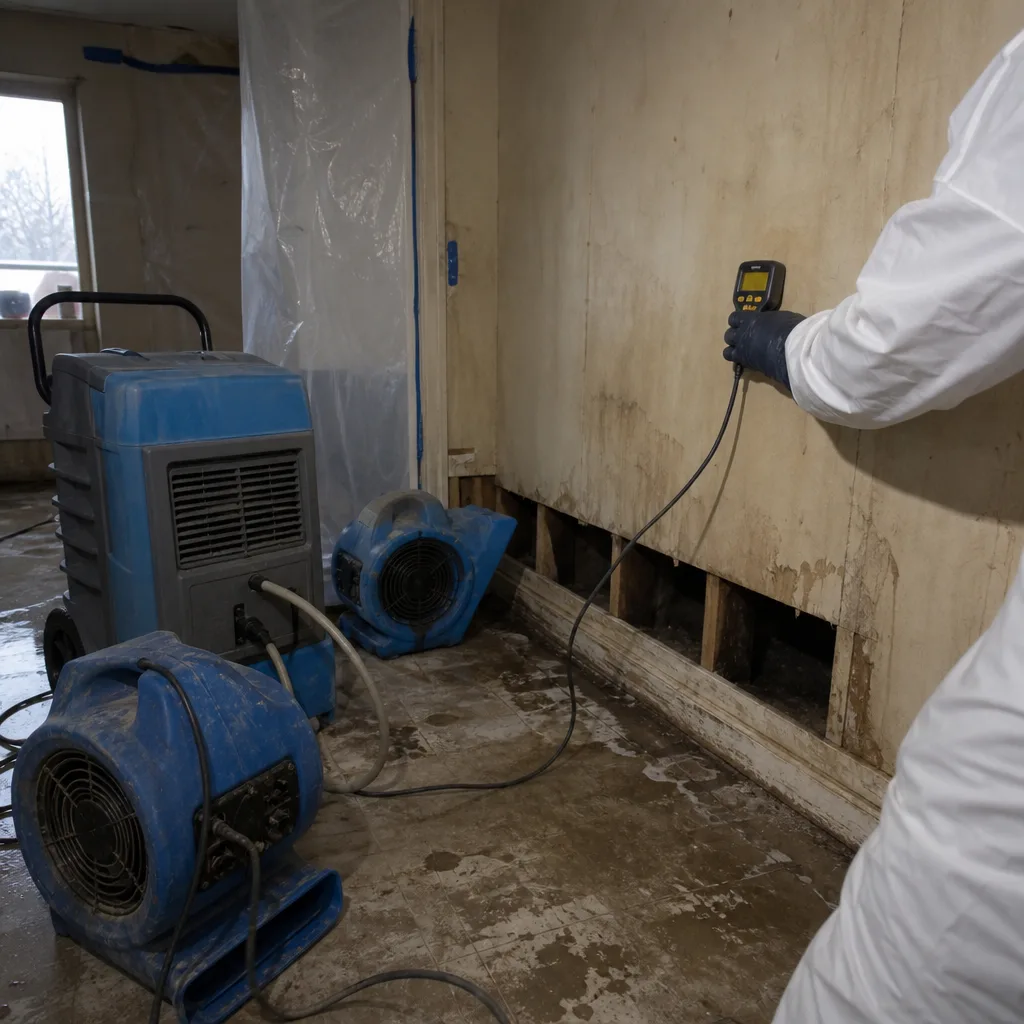 Before
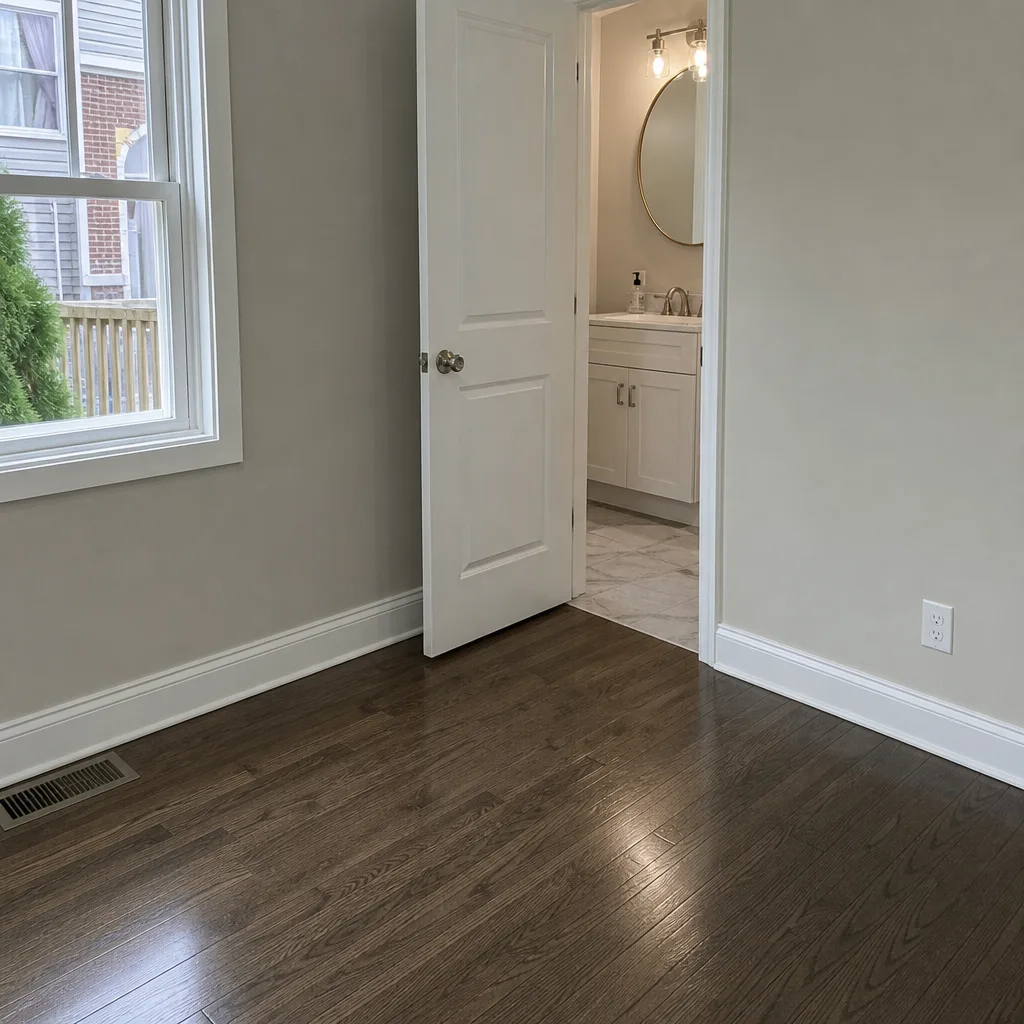 After
After24/7 Emergency Storm & Disaster Restoration in Lower Manhattan
Storm and disaster restoration in Lower Manhattan is a race against saltwater, not just standing water. When a nor’easter or hurricane pushes surge into Battery Park City, the Financial District, or Tribeca, the first call you make determines whether you’re facing a five-day drying job or a six-month structural corrosion repair. Our crews answer live at (551) 348-8481 twenty-four hours a day, every day, and dispatch into Lower Manhattan immediately. The first hour matters because saltwater begins corroding electrical conduit, elevator pit steel, and HVAC components the moment it settles. Most storm damage jobs in this part of the city require a faster, more coordinated response than anywhere else in the five boroughs. We arrive with moisture meters, thermal imaging, and commercial-grade extraction equipment already loaded, because standing water in a Financial District sub-basement does not wait for a second truck.
Understanding Storm & Disaster Restoration Severity in Lower Manhattan Properties
Lower Manhattan presents a severity profile that most restoration companies never see north of Canal Street. The peninsula sits in FEMA high-risk flood zones (AE/VE), and the surge that enters a Pine Street or Water Street building is usually Category 3 water: contaminated with sewage from flooded municipal lines, hydrocarbons from street runoff, and mineral-heavy salt from New York Harbor. Category 3 water is not something you mop up. It requires antimicrobial treatment, controlled demolition of porous materials, and a drying protocol that accounts for salt’s tendency to hold moisture long after surface readings look dry. Pre-war cast-iron lofts in Tribeca and Art Deco conversions in the Financial District share a dangerous trait: vertical utility chases that run from sub-basement vaults to roof mechanicals. Water moves through those chases floor by floor, carrying contaminants into elevator pits, electrical rooms, and even residential corridors five or six levels above the original intrusion. A moisture map in a downtown high-rise rarely looks like the water was confined to one floor. Buildings constructed on Battery Park City’s 1970s landfill sit at or barely above sea level, so even moderate tidal events send water into street-level vaults and basement mechanical rooms through drainage backflow. None of this responds well to a one-size-fits-all drying plan. Saltwater intrusion, in particular, demands corrosion testing on steel and conduit that freshwater protocols simply do not include.
Why Lower Manhattan Property Owners Choose Floodline Restoration Co.
- 45-minute response commitment to Lower Manhattan addresses. Our dispatch board is built around the streets we actually serve: Water, Front, South, West, and all the narrow blocks between. When you call at 2 a.m., a crew is moving, not a call center script.
- A live person answers, 24/7. No automated system, no “press 2 for emergencies.” You get a dispatcher who knows Lower Manhattan building access and can start coordinating freight-elevator reservations while the crew is en route.
- IICRC-certified crews with WRT and ASD credentials. Our technicians train to IICRC Water Damage Restoration and Applied Structural Drying standards, plus RIA and IFA protocols. The certification matters on Category 3 surge water and salt-contaminated drywall.
- Free visual inspection at every Lower Manhattan job. Before we touch a wall, you see what we see: moisture readings, thermal images, and a written scope. No work starts until the scope is clear.
- Direct insurance billing. We bill your carrier directly. You never play messenger between Floodline and a claims desk. Photo documentation and line-item estimates go straight to your adjuster.
- One team from extraction to reconstruction. The same uniformed, background-checked crew that extracts the water returns to hang the drywall. No mid-job handoff to a subcontractor you’ve never met.
Our Storm & Disaster Restoration Process
Inspection & Assessment
We walk the affected floors, sub-basements, and utility chases with thermal imaging and penetrating moisture meters. We map the full water path, not just the visible puddle, and check for salt residue on electrical conduit and structural steel. The resulting scope is written, photographed, and shared with you and your carrier before work begins.
Extraction/Stabilization
Submersible and truck-mounted extraction units pull standing water from vaults, elevator pits, and basement floors. We remove waterlogged debris by hand and begin emergency board-up or tarping on any envelope breach so the building does not keep taking on water while we work below grade.
Drying & Dehumidification
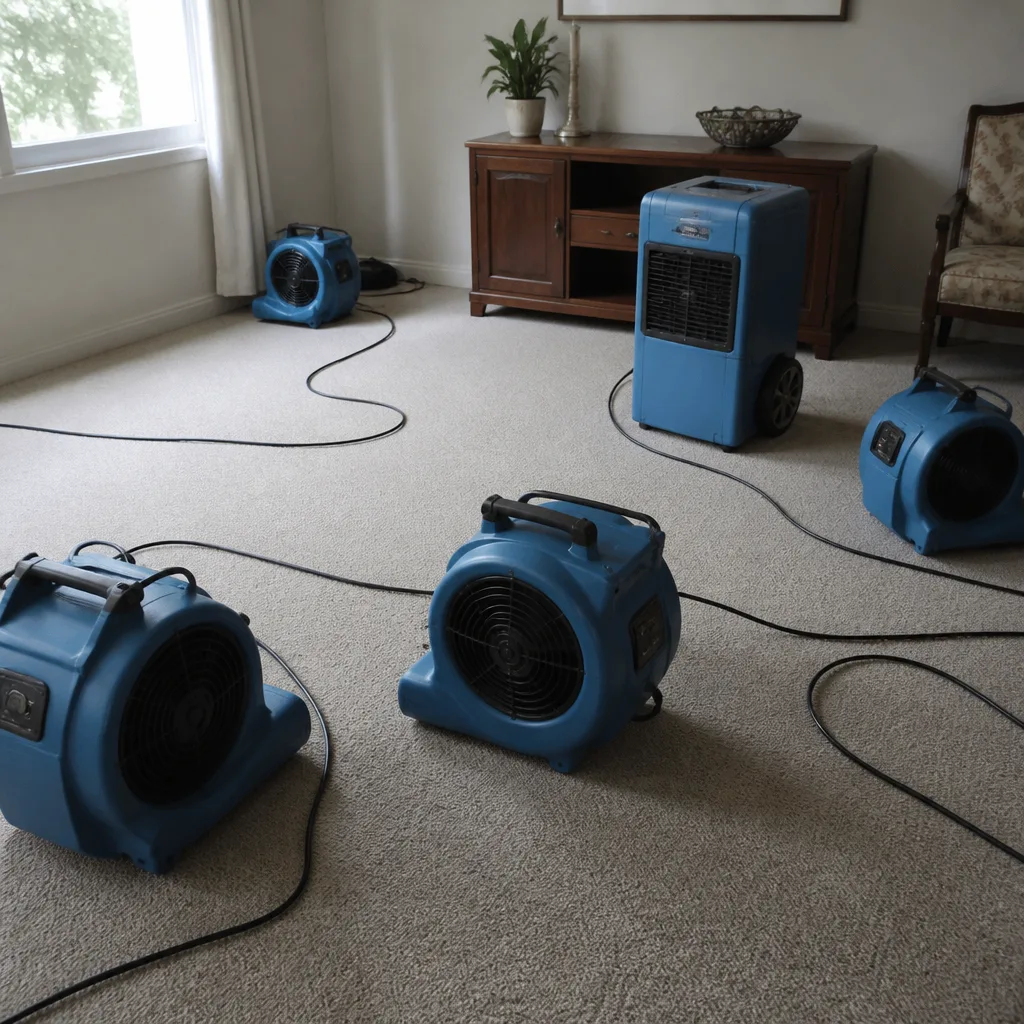
Dri-Eaz dehumidifiers and XPOWER air movers are placed on a calculated layout based on cubic feet and moisture load. Daily readings are logged until the dry standard is met. In saltwater jobs, we run corrosion checks on exposed steel and conduit during drying so hidden damage does not get sealed behind new finishes.
Cleaning & Sanitization
Category 3 water means antimicrobial treatments on every affected surface, including inside vertical chases and behind baseboards. We use HEPA air scrubbers during demolition to control airborne contaminants. Porous materials that absorbed contaminated water are cut out, bagged, and removed.
Specialty Treatment for Storm Damage
Lower Manhattan buildings with Con Edison vault penetrations get an additional step: targeted corrosion mitigation on the steel and conduit where saltwater wicks between properties. We also inspect and treat elevator pit steel, which is frequently the difference between a repair and a full replacement six months later.
Repairs & Restoration
Rebuild follows the same written scope we agreed on day one. Drywall, insulation, flooring, electrical, paint: our crews handle the restoration from the first moisture map to the final walkthrough, backed by the 90-Day Done Right Promise in writing.
Need Emergency Storm & Disaster Restoration in Lower Manhattan Now?
Crews minutes away, answering live 24 hours a day. The sooner we start, the less it costs.
Working With Your Insurance Company
Storm damage claims in Lower Manhattan move faster when the documentation is built for the adjuster from the first hour. We photograph every affected area before we touch it, log moisture readings daily, and write a line-item scope that matches carrier estimating standards. Our office communicates directly with your insurance company, so you are not relaying technical questions between a claims desk and a drying log. If the adjuster needs a reinspection, we schedule it and walk it with them. After a nor’easter flooded a Pine Street condominium’s sub-basement with Category 3 black water, our documentation of the salt water-soaked Con Ed vault penetration and the freight-elevator access delays became the backbone of the claim. The homeowner’s carrier approved the full scope without a dispute. That is what direct coordination means: a claim that moves on evidence, not phone tag.
What We Provide Your Insurer
- Thorough documentation of the loss
- Photos of all damage, room by room
- Moisture readings and drying logs
- A detailed, line-item scope of work
- Direct coordination with your carrier
Built for Lower Manhattan’s Loss Calendar
Lower Manhattan has a storm damage calendar that reads differently from any other neighborhood in the city. Late summer and early fall are hurricane season, and the narrow streets around Water Street and South Street empty floodwater faster than the drains can take it. Nor’easters hit from October through March, pushing tidal surge into Battery Park City and the blocks surrounding the World Trade Center, where landfill sits at sea level. Winter brings a different problem: deep freezes burst supply lines in pre-war buildings whose risers have never been replaced, sending clean water down through floors of a Financial District high-rise. Spring thaw reveals the damage that salt did quietly all winter, corroding conduit and pitting steel in sub-basements that never fully dried. Every season produces a different restoration sequence, and every one demands a crew that knows Lower Manhattan’s buildings and access constraints. That is the loss calendar our Storm & Disaster Restoration team plans around, and it is why our dispatch boards are built for downtown response, not suburbia’s wide driveways and garage bays.
Storm & Disaster Restoration Across Lower Manhattan’s Neighborhoods
Lower Manhattan is not one neighborhood; it is a cluster of distinct building types, each with its own storm damage profile. In Battery Park City, the residential towers sit on 1970s landfill at sea level, with sub-basements that take on tidal surge through drainage backflow and elevator pits that corrode when saltwater sits unattended for even a day. Crews here need building access coordination for every piece of equipment, because parking and street-level staging are nearly impossible. Financial District buildings, especially the pre-war towers around Wall Street and Pine Street, share below-grade vaults with Con Edison electrical infrastructure. Saltwater that enters those vaults wicks into adjacent sub-basements through conduit penetrations, spreading contamination beyond any single property line. Tribeca’s 19th-century cast-iron loft buildings present the opposite challenge: enormous open floor plates but shallow basements, timber joists, and brick party walls that absorb water and hold it. Moisture moves laterally there, not vertically. In the Seaport and Southbridge areas, the buildings are lower, the streets are closer to the river, and the stormwater system backflows quickly during even a moderate nor’easter. A restoration crew that treats all of these the same way will get it wrong in one of them. We plan by neighborhood because the failure modes are not the same.
Specialized Storm & Disaster Restoration Services We Offer in Lower Manhattan
Flood Damage Restoration
Flood restoration in Lower Manhattan is saltwater restoration. We extract, dry, and treat with antimicrobials while monitoring steel and electrical conduit for corrosion. Our crews run Dri-Eaz and Phoenix dehumidifiers around the clock until the dry standard is met, and we document every reading for your carrier.
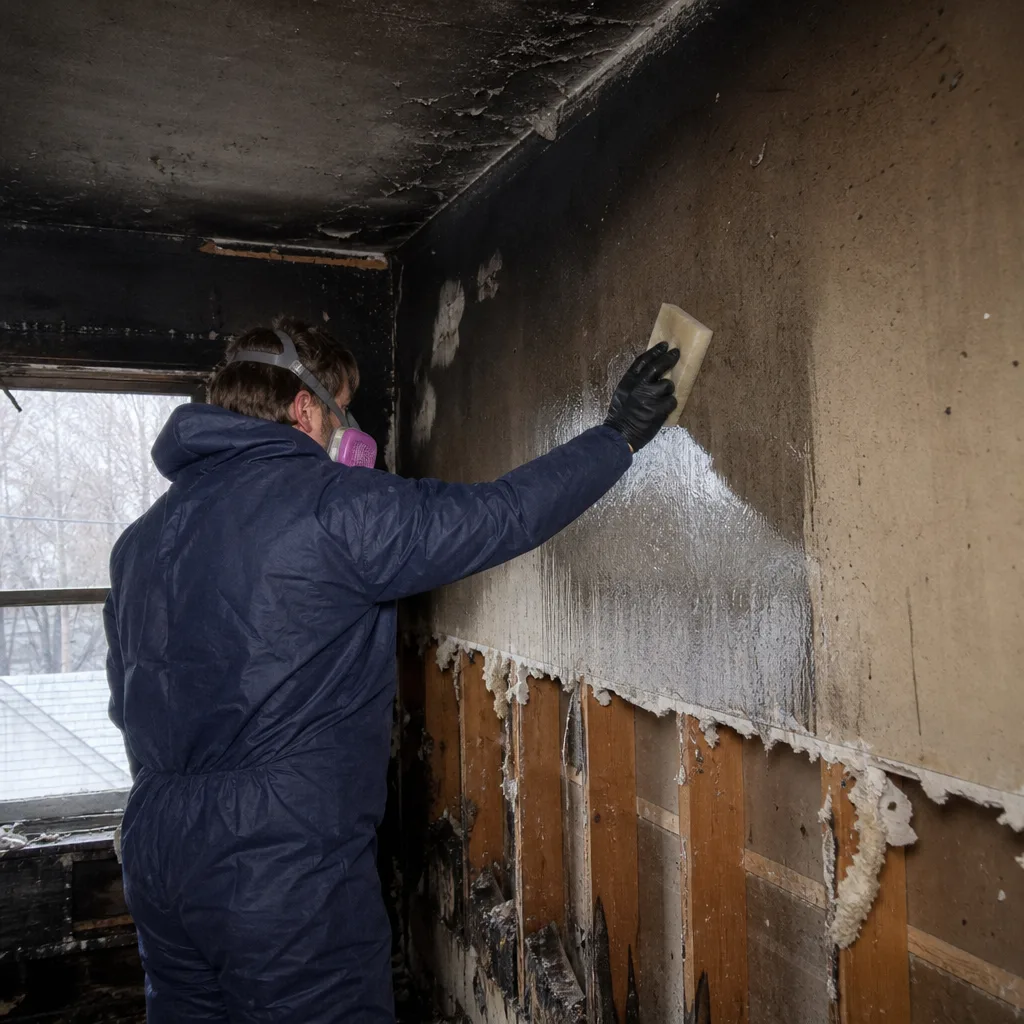
Emergency Board-Up
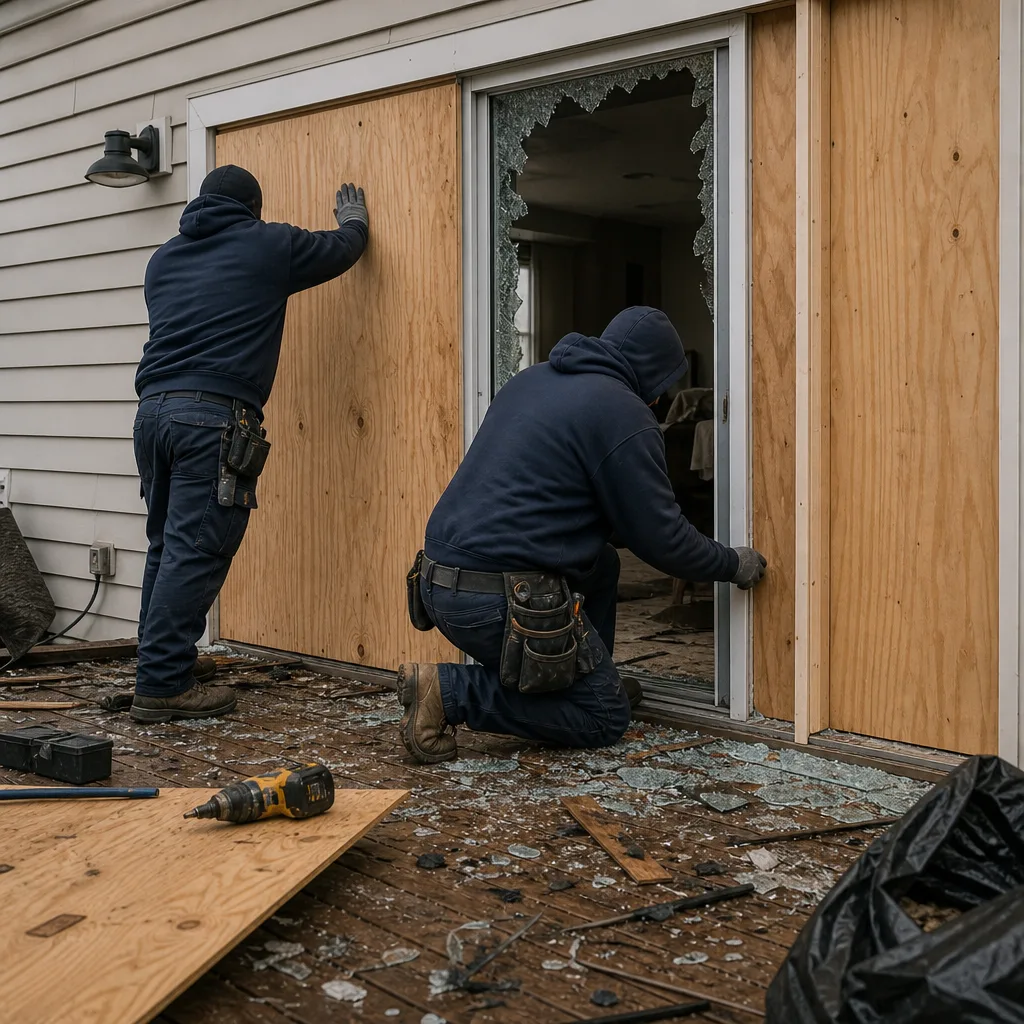
Storm-blown windows and doors in a Financial District high-rise or a Tribeca loft need to be secured immediately, both for security and to keep rain from adding to the damage. We board up openings on the same dispatch, using plywood and methods that work for pre-war frames, glass storefronts, and cast-iron window openings.
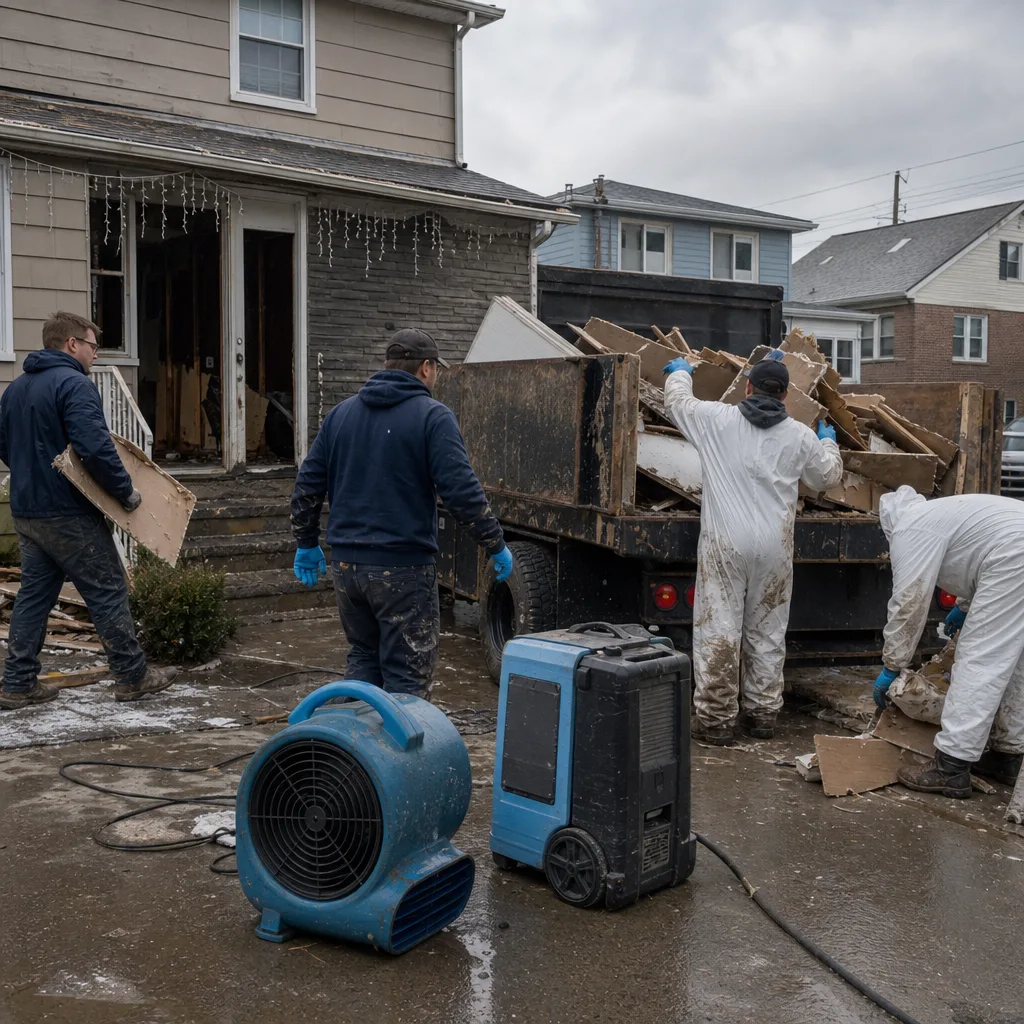
Debris Removal
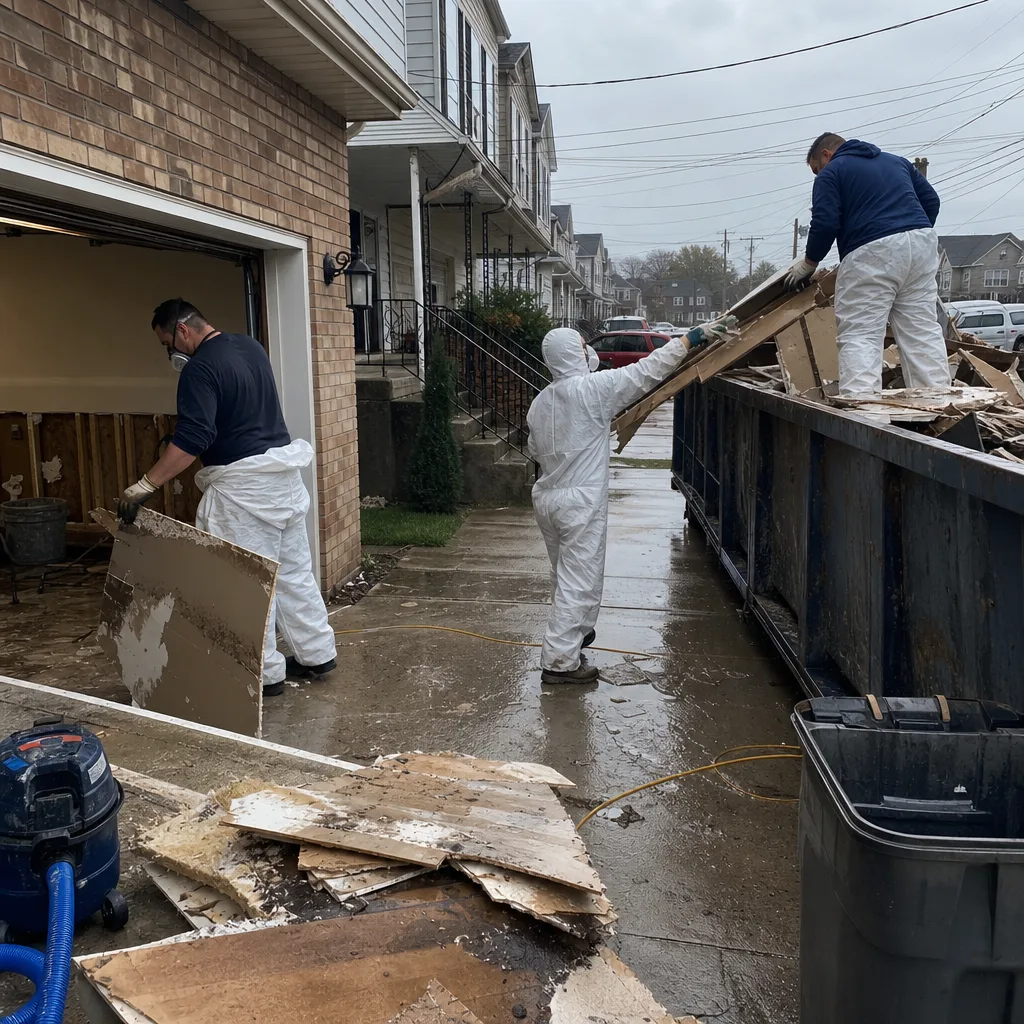
After a storm, Lower Manhattan streets fill with broken glass, wet drywall, ruined carpet, and storm-blown building materials. Saltwater-contaminated debris needs to be bagged, classified, and removed under the same safety protocols as the water itself. We handle all of it: extraction, sorting, disposal, and a clean site for the rebuild.
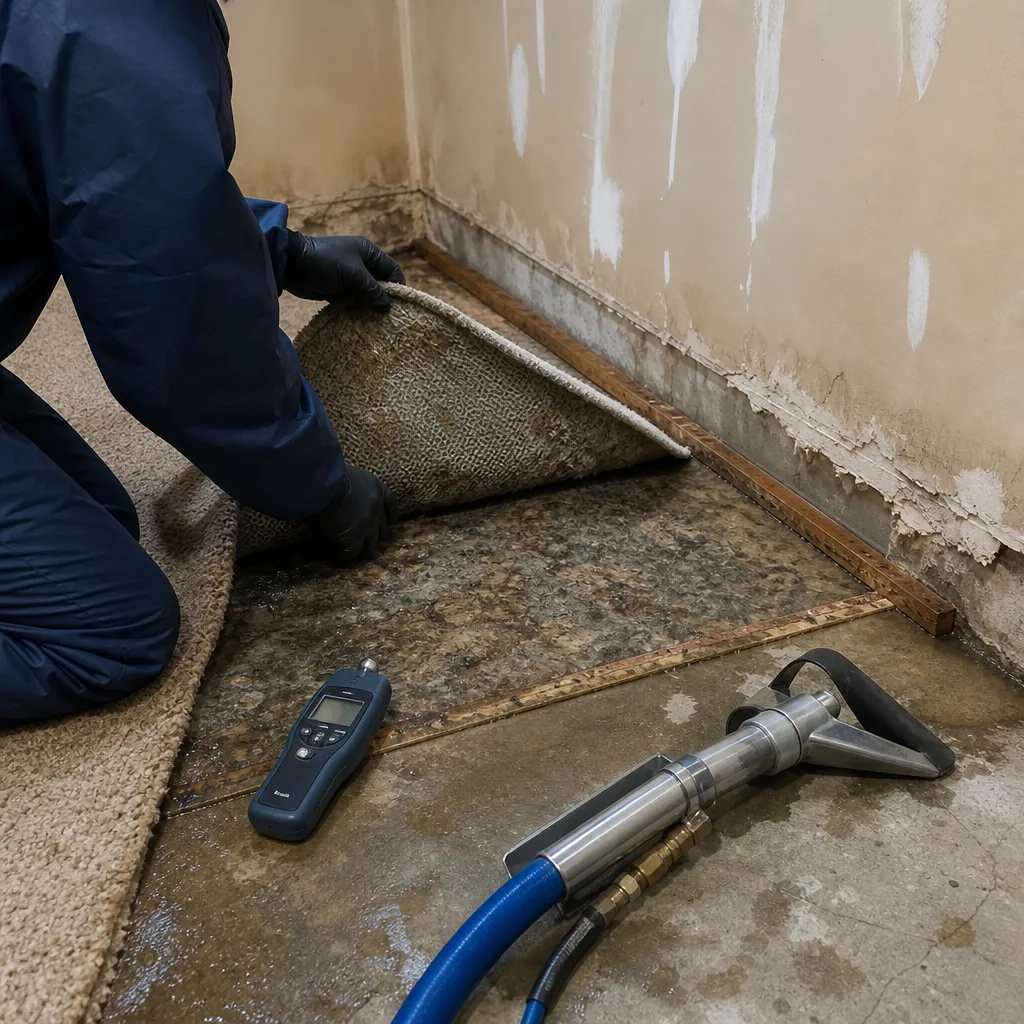
Roof Tarping
High winds tear membrane and parapet flashing off downtown roofs. We tarp roof breaches the same day we assess them, using methods that hold against the next wind event and prevent water from driving down through vertical chases into occupied floors. The tarp is temporary; the protection is not.
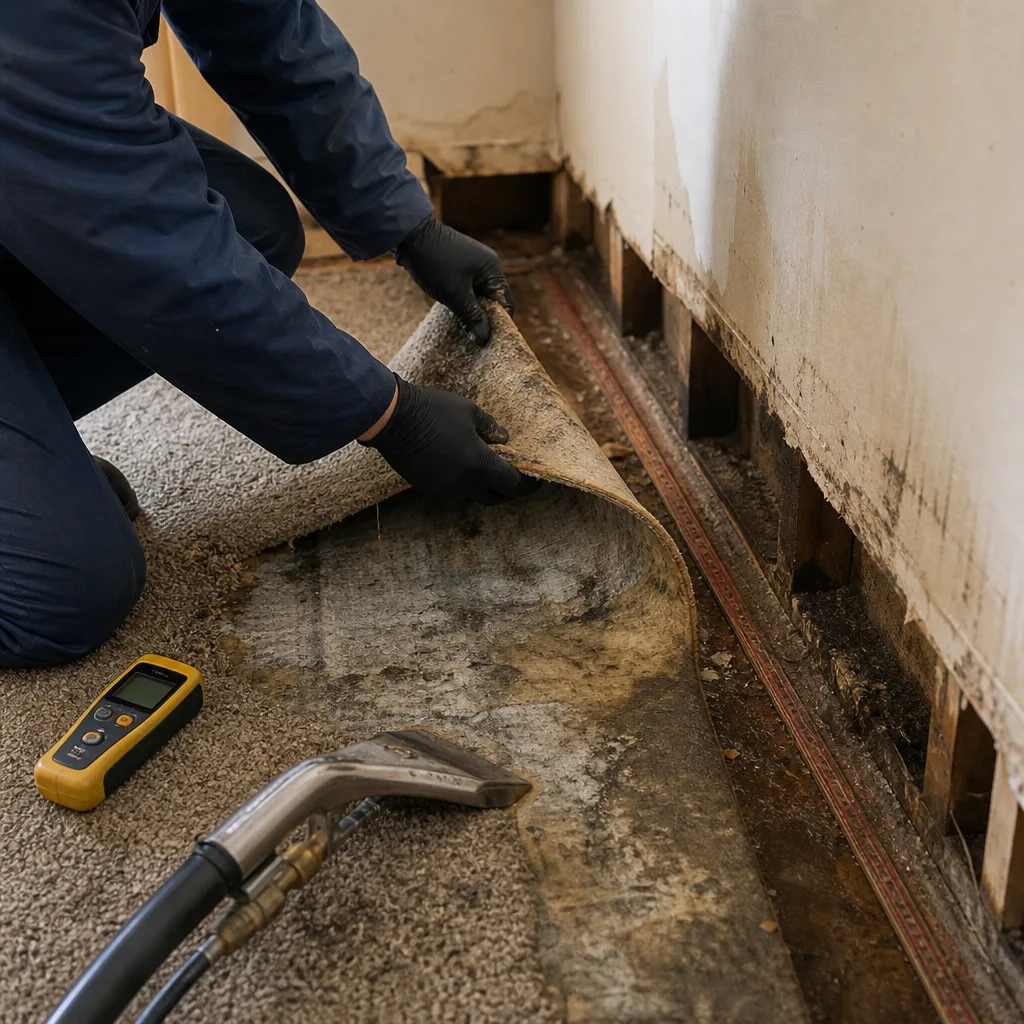
Wind Damage Repair
Lower Manhattan’s narrow streets channel wind, and pre-war windows and storefront glazing pay the price. Our Storm & Disaster Restoration crews secure broken openings, dry what the rain soaked, and rebuild windows, doors, and storefront framing to pre-loss condition.
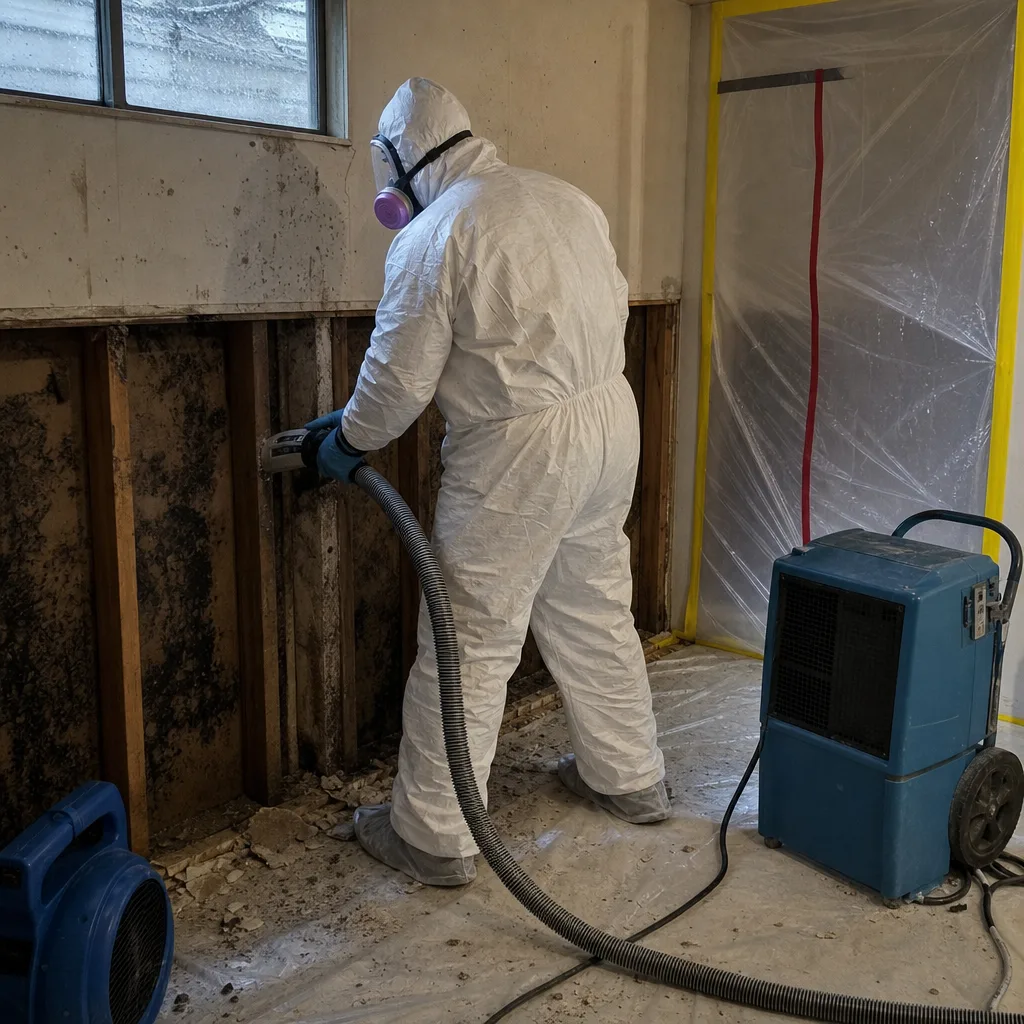
What happens when you call
- 1
A real person answersNo phone trees - you reach a local pro.
- 2
You get an upfront price rangeHonest numbers before anyone is dispatched.
- 3
A background-checked tech heads outLicensed & insured, dispatched right away.
- 4
You approve before work beginsNothing starts until you say go.
Storm & Disaster Restoration Costs in Lower Manhattan, NY
Storm damage restoration in Lower Manhattan carries a cost structure driven by access, not just square footage. A typical Category 3 water extraction and drying job in a Financial District sub-basement runs $2,800 to $6,500 depending on the size of the affected area and the number of floors the water migrated through. Emergency board-up for a single storefront or residential window costs $350 to $900, including materials and same-day labor. Roof tarping after a wind event on a low-rise Tribeca building runs $600 to $1,800. Debris removal for a storm-damaged basement or ground floor generally lands between $1,200 and $3,000. The biggest variable is freight-elevator access and building management scheduling, which adds labor hours no other neighborhood in the city imposes. We give a written, line-item scope after the free visual inspection, so you know the number before work starts. Most of these costs are covered under standard homeowner and condo policies, and Floodline Restoration Co. bills your carrier directly. Call (551) 348-8481 for an exact quote, and we’ll walk the job with you at no charge.
We Also Serve Cities Near Lower Manhattan
While this page focuses on Lower Manhattan, our crews respond daily in Lower Manhattan and the surrounding neighborhoods. We also serve Midtown West, Washington Square, Midtown Manhattan, and Murray Hill with the same live dispatch, certified crews, and written scope before work begins.
Serving Lower Manhattan, NY - Our Local Coverage Area
We’re based in the Lower Manhattan area and know this community well. Use the map below to see our service coverage - if you’re nearby, we can almost certainly help.
Lower Manhattan Storm & Disaster Restoration Questions, Answered
Does Floodline Restoration handle saltwater intrusion in Battery Park City buildings that sit on landfill?
Yes. Saltwater intrusion in Battery Park City is one of our most common restoration calls. We run corrosion checks on exposed steel and electrical conduit during extraction and drying, which is the only way to catch the hidden damage that freshwater protocols miss and that later becomes a six-figure structural repair.
How quickly can your storm restoration team get into a Financial District high-rise with freight-elevator-only access?
Our crews are typically on-site in Lower Manhattan within 45 minutes, but freight-elevator access adds coordination time. We call building management from the truck and reserve the freight elevator before we arrive, so extraction equipment rolls into the sub-basement the same visit rather than waiting in the lobby.
What is different about storm damage cleanup in Lower Manhattan compared with Midtown?
Lower Manhattan sits in FEMA high-risk flood zones on a peninsula, which means saltwater surge, below-grade Con Ed vaults, and buildings on landfill. Midtown properties rarely see saltwater or tidal backflow. Our protocols here include corrosion testing and Category 3 antimicrobial treatment that a standard drying company would never run. The full explanation is on our Storm & Disaster Restoration service page.
Does your emergency board-up service work for 19th-century cast-iron loft buildings in Tribeca?
Yes, and we board up Tribeca cast-iron buildings regularly. The window openings are often oversized, the surrounds are decorative, and the frames are original. We use methods that secure the opening without damaging the cast iron or the masonry, and we photograph everything for your carrier before we touch it.
After a storm, can Floodline Restoration remove saltwater-contaminated debris and dry out a sub-basement in a Battery Park City residential building?
Yes. That is a standard scope for us: remove waterlogged debris under Category 3 protocols, dry the sub-basement with Dri-Eaz and XPOWER equipment, treat the salinity on concrete and steel, and log daily readings until the dry standard is met. We coordinate all freight-elevator scheduling with building management.
How long does storm damage restoration take in Lower Manhattan?
Most Category 3 water extraction and structural drying jobs in Lower Manhattan run 3 to 7 days. Saltwater jobs sometimes run a day longer because of corrosion testing. Emergency board-up and tarping happen the same day. The rebuild phase depends on the scope we wrote together, but we’ll give you a schedule before any work starts.
Will my insurance cover storm damage restoration in Lower Manhattan?
Most homeowner and condo policies cover storm and flood damage restoration when the cause is a covered peril, like wind, rain, or a burst pipe after a freeze. We document the loss from the first hour, bill your carrier directly, and coordinate with your adjuster so you are not stuck relaying technical questions. Call (551) 348-8481 and we’ll walk the claim with you.
What should I do in the first 30 minutes after storm water enters my Lower Manhattan building?
Call us at (551) 348-8481, then shut off electricity to the affected area if you can reach the panel safely. Do not walk through standing water if it may be in contact with energized circuits. Do not run fans or household vacuums on flooded areas. Move valuables up, take photos, and let our crew handle the extraction and electrical safety checks.
One thing we learned from a Pine Street job after a nor’easter: the real damage was not the four inches of black water on the sub-basement floor. It was the salt water that wicked into the shared utility chase through the Con Ed vault penetration, sitting against elevator pit steel while everyone above debated insurance. We coordinated with building management for the freight elevator, deployed Dri-Eaz dehumidifiers and XPOWER air movers through the narrow loading dock, and mapped moisture in the chase the same afternoon. Antimicrobial treatment went on the conduit and the pit steel was cleaned before corrosion could take hold. Five days later the sub-basement was dry, treated, and documented, and the claim closed without a fight. That is the difference between a crew that knows Lower Manhattan and one that just arrives with a truck. Curt Bowman built Floodline Restoration Co. to be the former. If your building is dealing with storm water, salt, and a sub-basement full of wet debris, call (551) 348-8481 today for a free estimate, and we will send a certified crew that answers to you, not a subcontractor.
Written by the team at Floodline Restoration Co., serving Lower Manhattan with certified storm and disaster restoration, 24 hours a day.