
Free visual inspection and a written scope of work before any mitigation begins - photos, moisture readings, and drying logs go in your claim file
The scope we write is the scope we bill. Anything new gets shown to you, in writing, before we touch it.
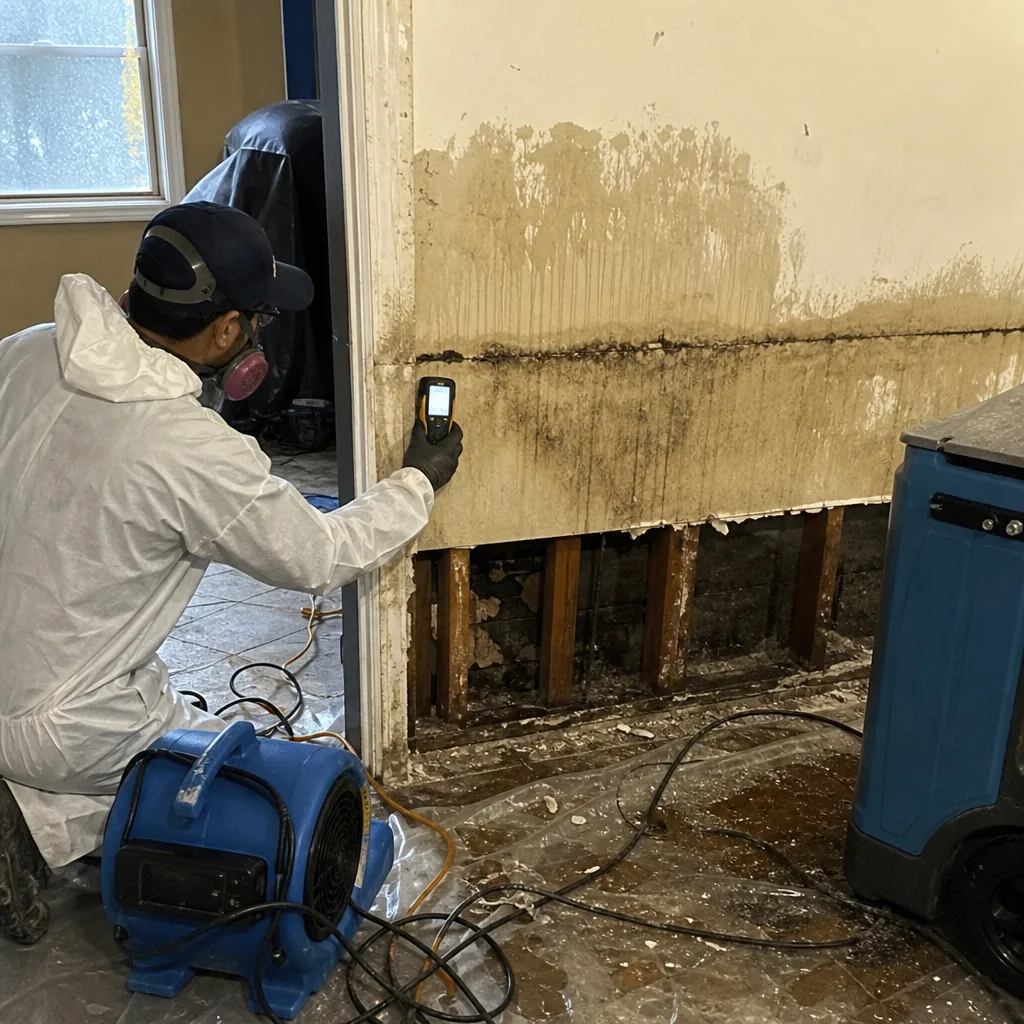 Before
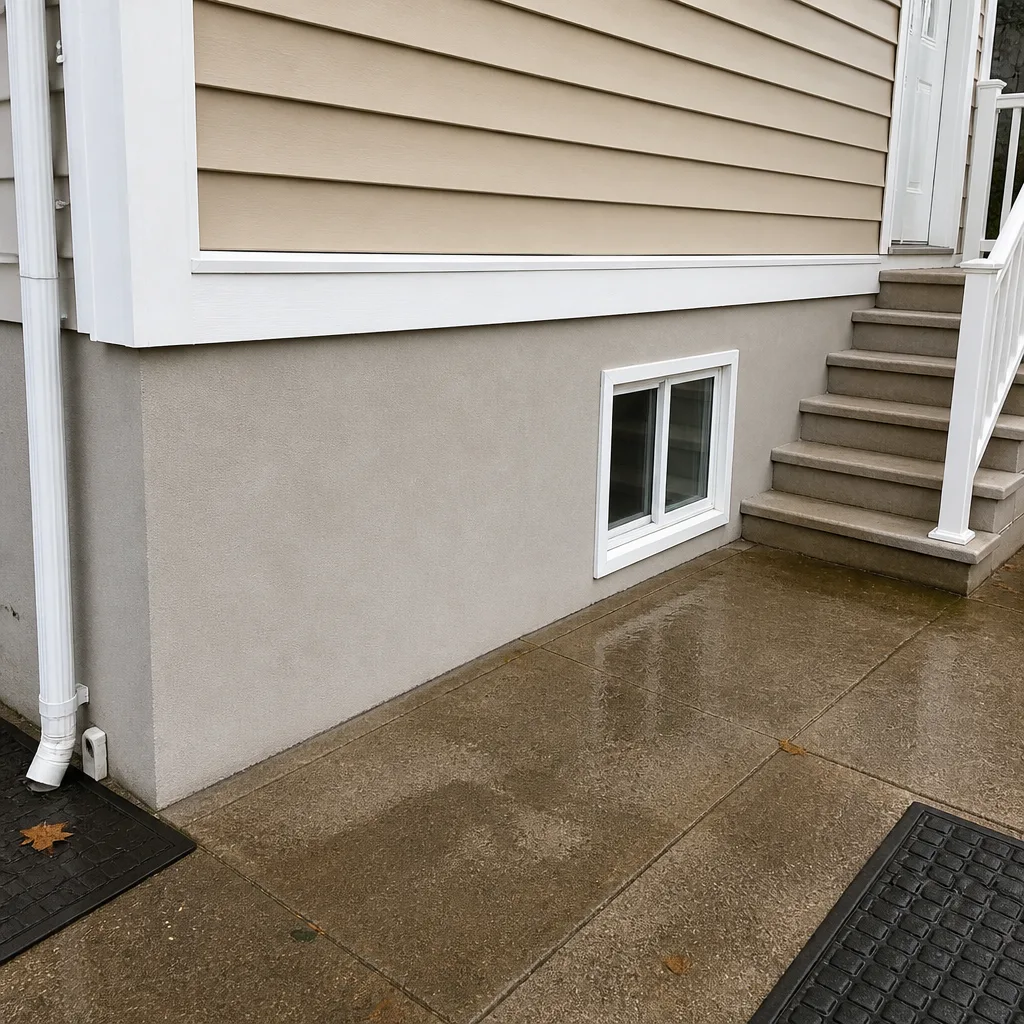 After
After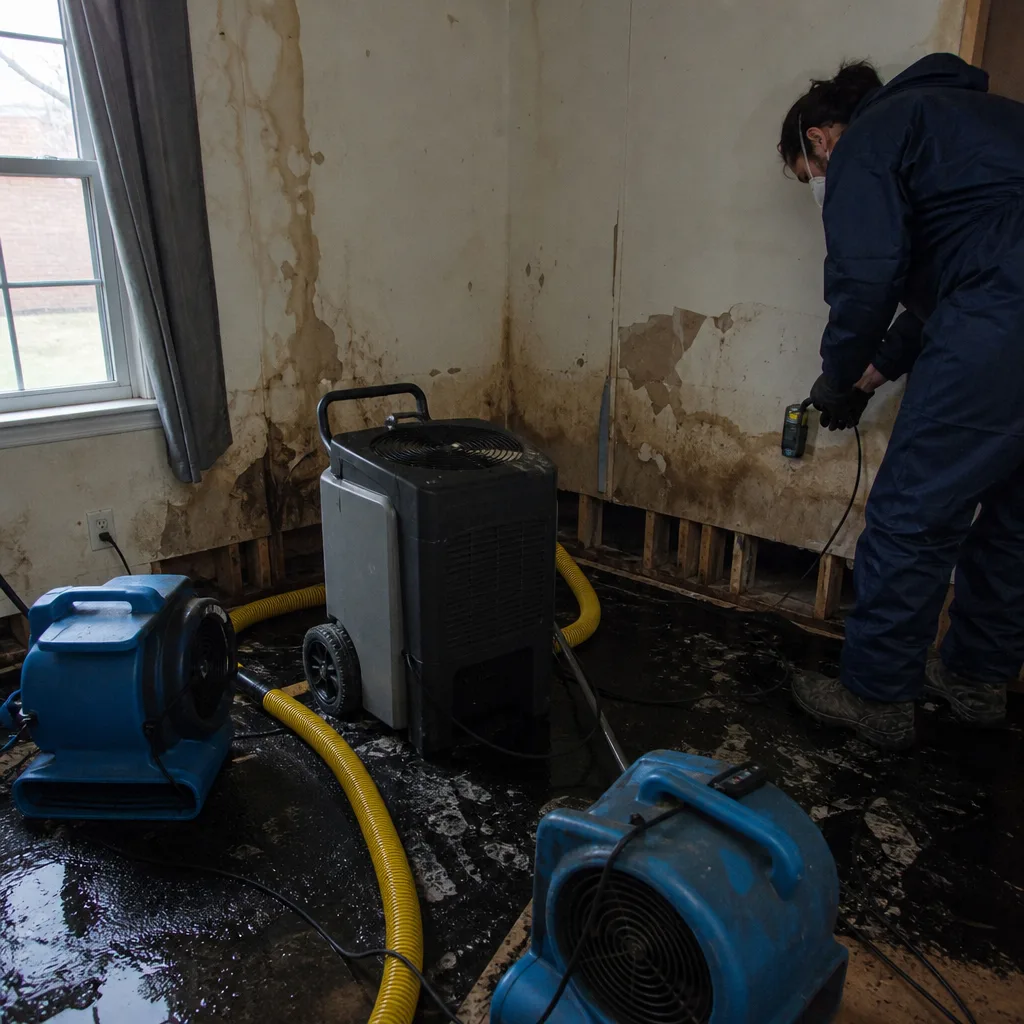 Before
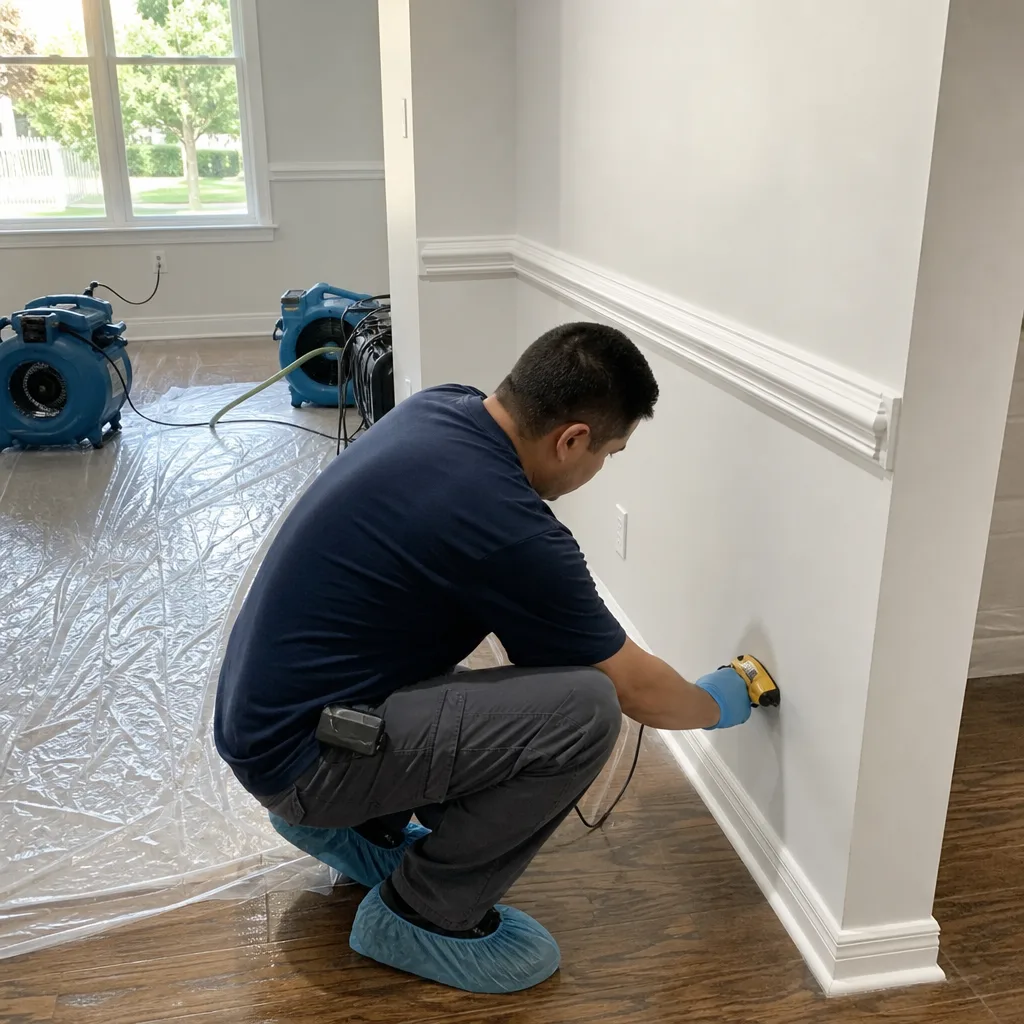 After
After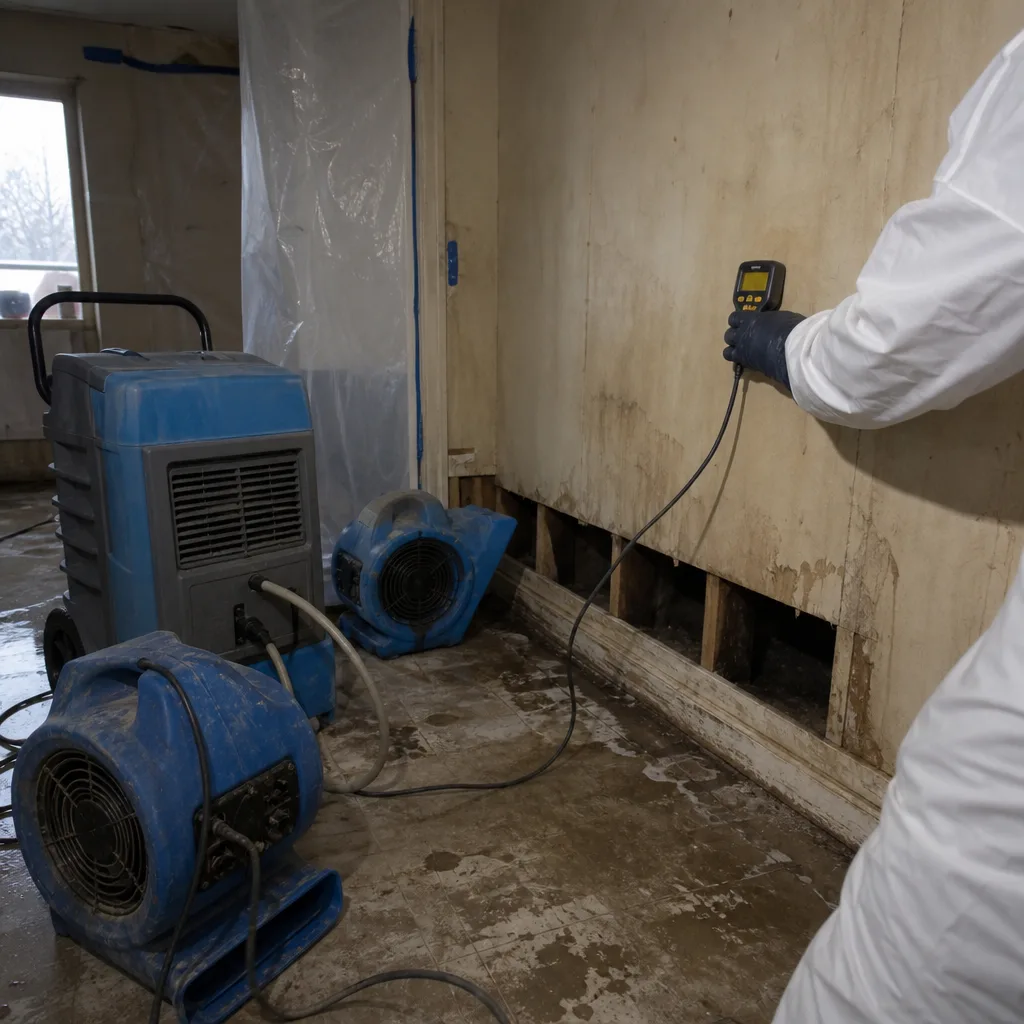 Before
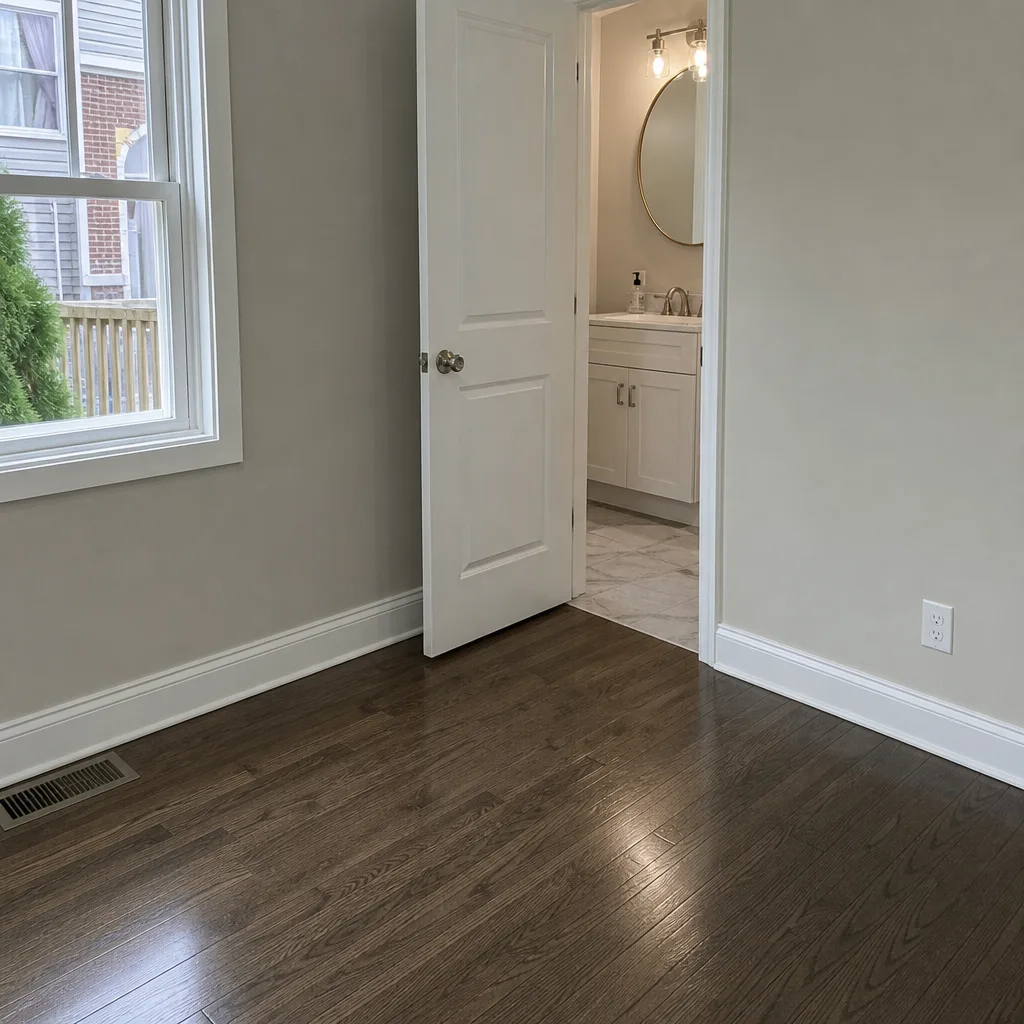 After
After24/7 Emergency Sewage Cleanup in Lower Manhattan
If sewage is backing up into your Lower Manhattan apartment or building right now, call (551) 348-8481. A live dispatcher answers at any hour, day or night. We don’t route you to a call center or ask you to leave a message. Crews are dispatched from our New York City office into Lower Manhattan the same visit, because the first hour after a sewage backup is when the damage spreads fastest. Category 3 water moves through wall cavities, wicks up drywall, and saturates subflooring within minutes.
We’ll do a free visual inspection, explain exactly what you’re dealing with, and give you a written scope before any work begins. No pressure. No vague promises. Just a crew that knows Lower Manhattan’s buildings and shows up ready to extract.
Understanding Sewage Cleanup Severity in Lower Manhattan Properties
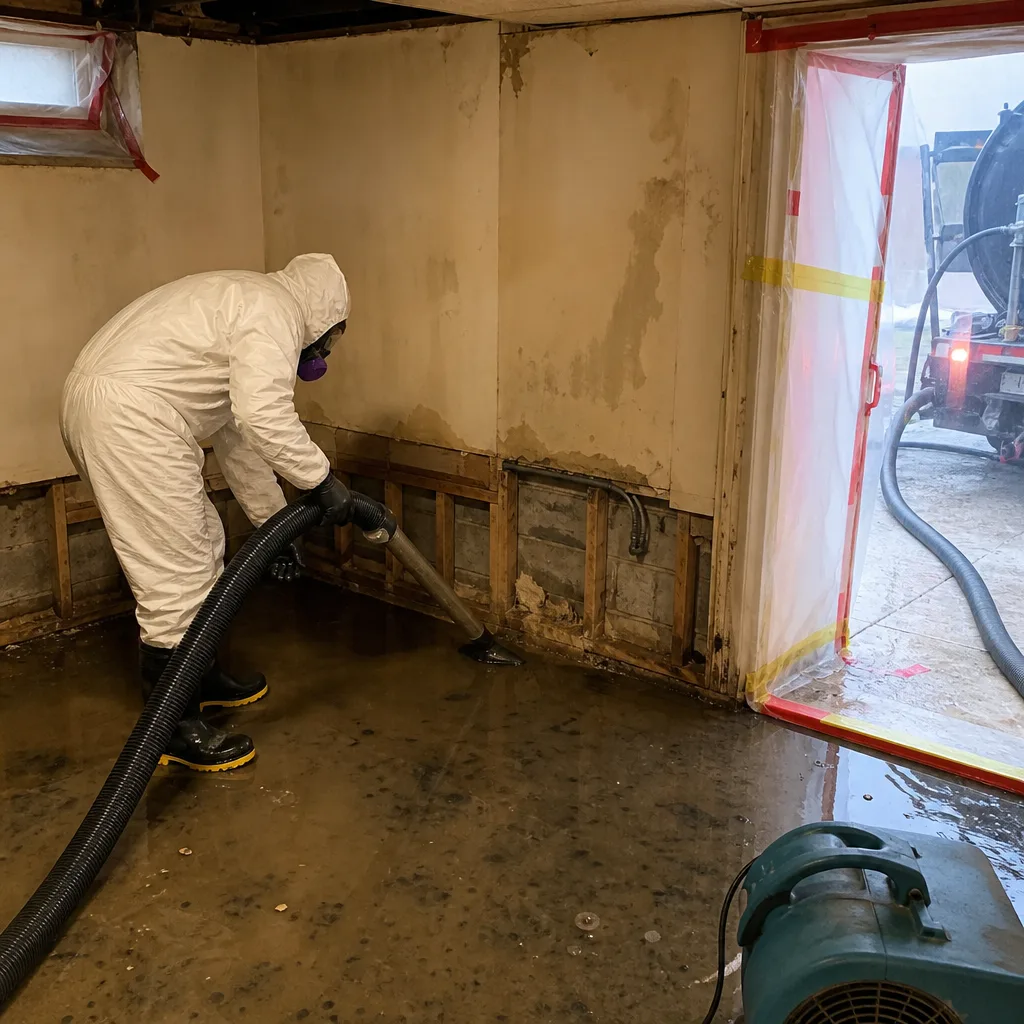
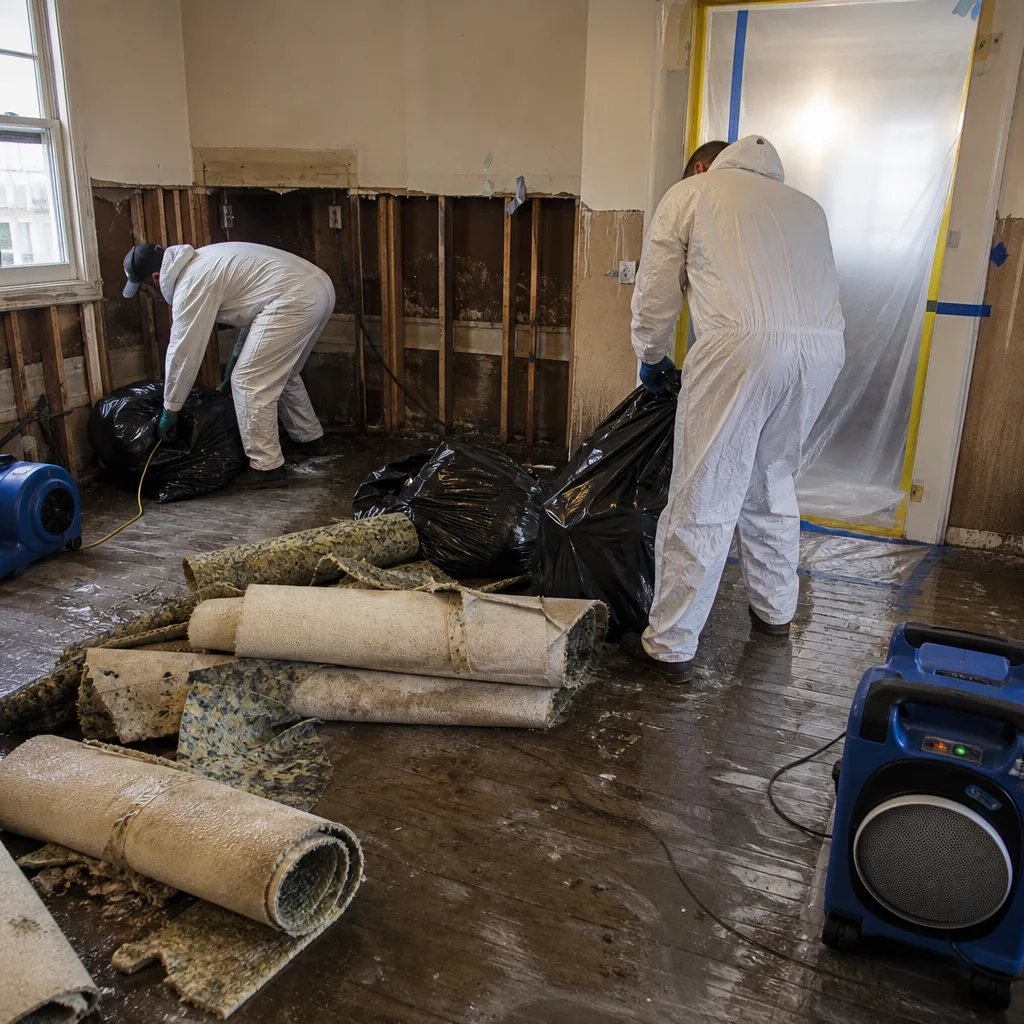
Not all water damage is the same. Sewage is Category 3 water, sometimes called black water. It carries bacteria, viruses, and parasites from human waste, food matter, and everything else that drains through a building. Category 3 water requires containment, full PPE for technicians, antimicrobial treatment, and removal of saturated porous materials like drywall, carpet pad, and insulation. You can’t just dry it out and call it done.
In Lower Manhattan, the severity depends heavily on building type. The 19th-century cast-iron lofts in Tribeca and SoHo have original cast-iron waste pipes that corrode from decades of salt air exposure. When those pipes fail inside a wall, sewage seeps slowly for weeks before anyone notices. That’s a Category 3 contamination event hidden behind plaster and lath. The converted Art Deco towers in the Financial District, like those around 70 Pine and 20 Exchange Place, have deep mechanical sub-basements where a backup in one unit’s drain line can push black water into shared vertical utility chases and spread to neighboring floors. Battery Park City sits on 1970s landfill at sea level, which means even moderate storm surge backs up through floor drains into mechanical rooms. Each building type demands a different approach, and our technicians are trained to IICRC, RIA, and IFA standards for exactly these scenarios.
Why Lower Manhattan Property Owners Choose Floodline Restoration Co.
- We answer live, 24/7. Call at 2 a.m. and a real dispatcher picks up. Not a recording. Not a callback service. We’ve built our company around that since Curt Bowman founded it in 2010.
- 45-minute response commitment. For active sewage backups in Lower Manhattan, we commit to getting a crew to your building within 45 minutes of your call. In this dense neighborhood, that’s a real promise.
- IICRC-certified technicians. Our crews hold WRT, FSRT, and AMRT certifications through the IICRC. Sewage cleanup is not a job for a general handyman with a shop vac.
- Free visual inspection. We assess the scope and give you a straight answer before any money changes hands. No obligation.
- Direct insurance billing. We coordinate with your carrier, submit the documentation, and bill them directly where coverage applies. You don’t play messenger.
- One team from extraction to rebuild. We don’t hand you off to a different contractor for reconstruction. The same Floodline crew that extracts the sewage also handles the structural drying and the rebuild. Done right, and backed in writing.
Our Sewage Cleanup Process
Inspection & Assessment
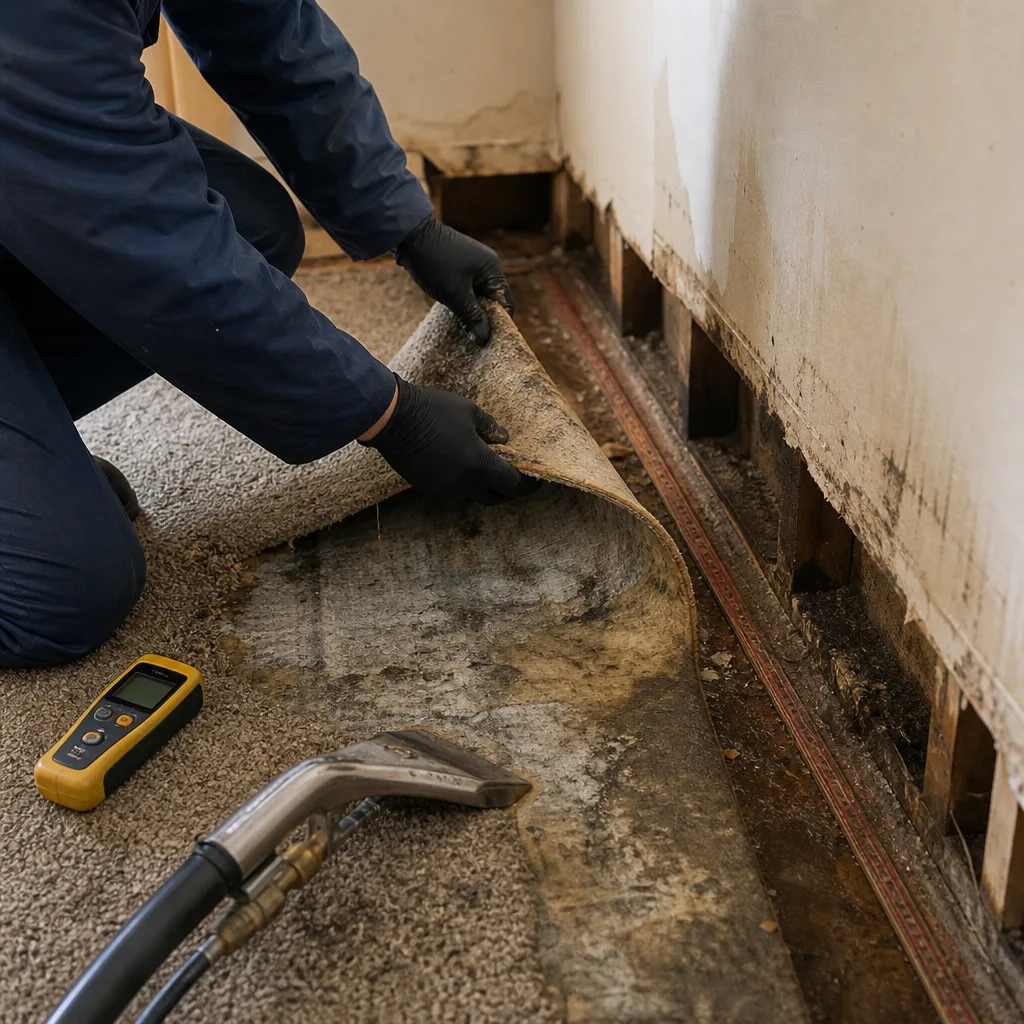
We start with moisture mapping using thermal imaging and hygrometers. This tells us where the Category 3 water has migrated, including inside walls and under flooring that looks dry on the surface. We identify the contamination boundaries before touching anything.
Extraction & Stabilization
We remove standing black water using professional-grade extraction units. This is the step that stops the damage from spreading further. We also remove saturated porous materials that cannot be safely sanitized, including carpet pad, drywall, and insulation inside the containment zone.
Drying & Dehumidification
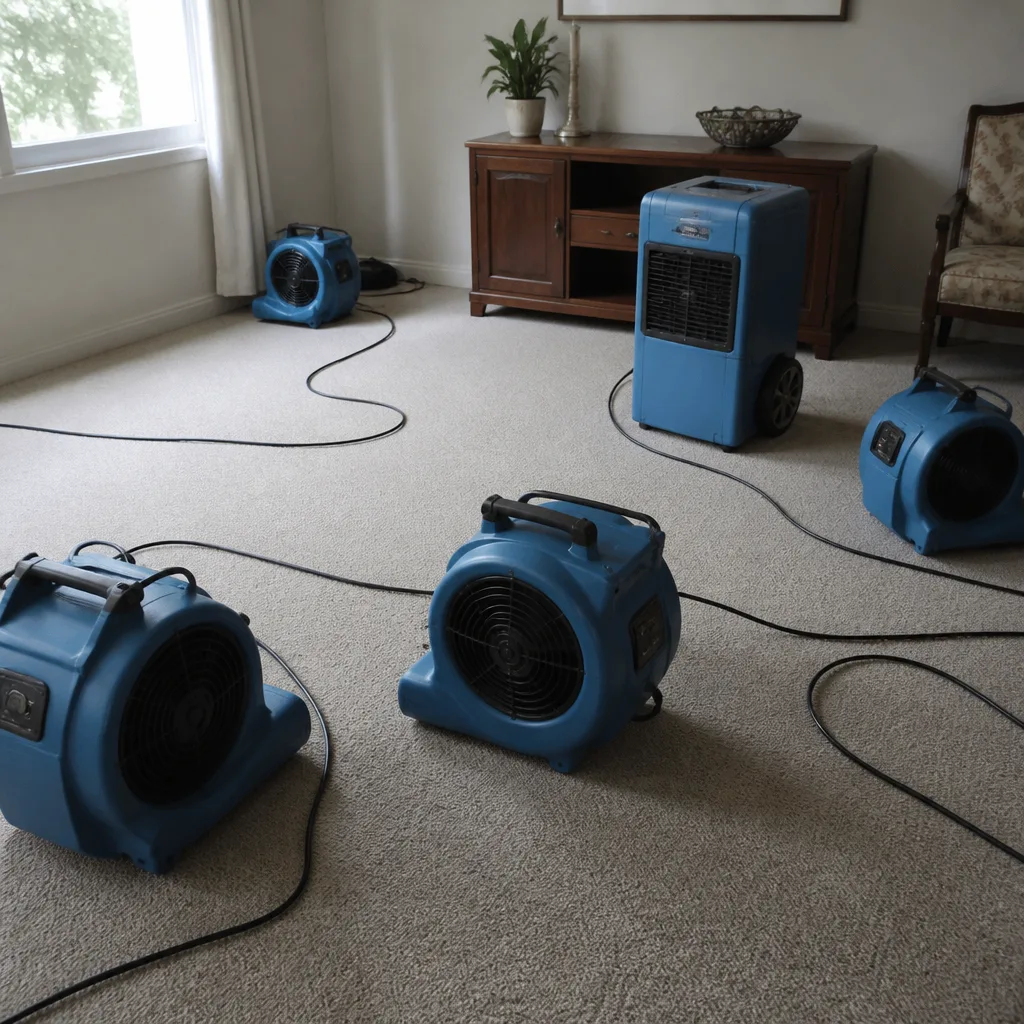
We set up Dri-Eaz dehumidifiers and XPOWER air movers inside the affected area. Daily moisture readings are logged until the dry standard is met. In Lower Manhattan’s older masonry buildings, this often takes longer than in newer construction because stone and brick hold moisture differently than drywall on steel studs.
Cleaning & Sanitization
Every surface inside the containment zone gets cleaned and treated with an antimicrobial agent. This is not a spray-and-pray step. We treat the building materials that remain, including framing, subflooring, and the base of walls that the sewage touched.
Specialty Treatment for Lower Manhattan Buildings
In buildings with shared vertical chases, we check adjacent floors and units for wicking or vapor migration. We also inspect below-grade conduit penetrations in Financial District sub-basements, a failure point we see in buildings near Con Edison vaults that most restoration companies never look at.
Repairs & Restoration
Once the area is dry and sanitized, we rebuild what we removed. Drywall, flooring, baseboards, paint. The same crew that extracted the sewage handles the finish work, and the 90-Day Done Right Promise applies to all of it.
Need Emergency Sewage Cleanup in Lower Manhattan Now?
Crews minutes away, answering live 24 hours a day. The sooner we start, the less it costs.
Working With Your Insurance Company
Most homeowners and condo policies in New York cover sewage backup damage, but the coverage varies widely. Some policies include it as a standard peril. Others require a separate endorsement. We’ve handled claims in Lower Manhattan long enough to know what carriers ask for, and we give them what they need from the first hour. That means photos of the source, photos of every affected room, moisture readings, and a line-item scope of work that matches industry-standard pricing software. We speak directly with your adjuster so you don’t have to translate restoration terminology on a phone call at midnight. Floodline handles the documentation and the back-and-forth. You handle your life.
What We Provide Your Insurer
- Thorough documentation of the loss
- Photos of all damage, room by room
- Moisture readings and drying logs
- A detailed, line-item scope of work
- Direct coordination with your carrier
Built for Lower Manhattan’s Loss Calendar
Sewage backups in Lower Manhattan don’t happen randomly through the year. They follow a pattern, and we’ve learned to read it. January and February bring deep freezes that strain old cast-iron waste lines, especially in 19th-century lofts where pipes run through minimally insulated exterior walls. A pipe that has been slowly corroding for a decade finally cracks on a 9-degree night, and sewage starts weeping behind a kitchen cabinet.
Spring brings heavy rain and rising groundwater. Battery Park City and the blocks near the World Trade Center sit on landfill at or barely above sea level, so saturated ground pressure pushes into floor drains and basement mechanical pits. Summer thunderstorms overwhelm combined sewer outfalls, backing black water up through street-level drains. And the nor’easters that hit from October through March are the worst. When tidal surge pushes into the combined sewer system, the water has nowhere to go but backward, into sub-basements and up through fixtures. Lower Manhattan is built on a peninsula surrounded by water, and that water comes back during storm season.
Sewage Cleanup Across Lower Manhattan’s Neighborhoods
We respond to sewage backups in every corner of Lower Manhattan, and the failure mode changes block by block. In the Financial District, the issue is often the below-grade utility grid. Con Edison high-voltage vaults sit beneath nearly every block, and when a surge or sewer overflow floods those vaults, contaminated water wicks into adjacent building sub-basements through shared conduit penetrations. That’s a failure mode specific to this ultra-dense, below-grade infrastructure. A technician working in Riverdale or Flushing almost never sees it. We do.
In Tribeca, it’s the age of the buildings. Converted 19th-century cast-iron warehouses on Hudson Street, Greenwich Street, and West Broadway have original waste stacks and drain lines that have been exposed to coastal salt air for 150 years. Cast iron rusts from the outside in. Slow leaks become sudden failures without warning. Battery Park City has a different problem entirely. The whole neighborhood is built on landfill at sea level, so storm surge and even high spring tides push water into mechanical rooms through floor drains. The sewage doesn’t come from a broken pipe. It comes from the river, forced backward through the drain system into the building. Each neighborhood needs a different protocol, and our crews know the buildings when they walk in the door.
Specialized Sewage Cleanup Services We Offer in Lower Manhattan
Sewage Backup Cleanup
When a drain line backs up into a Lower Manhattan apartment, the clock starts immediately. We extract the black water, contain the affected area, and remove saturated materials before the contamination wicks further into walls and flooring. In older buildings with shared vertical chases, we check adjacent units, because sewage vapor and moisture migrate horizontally as easily as they travel downward.
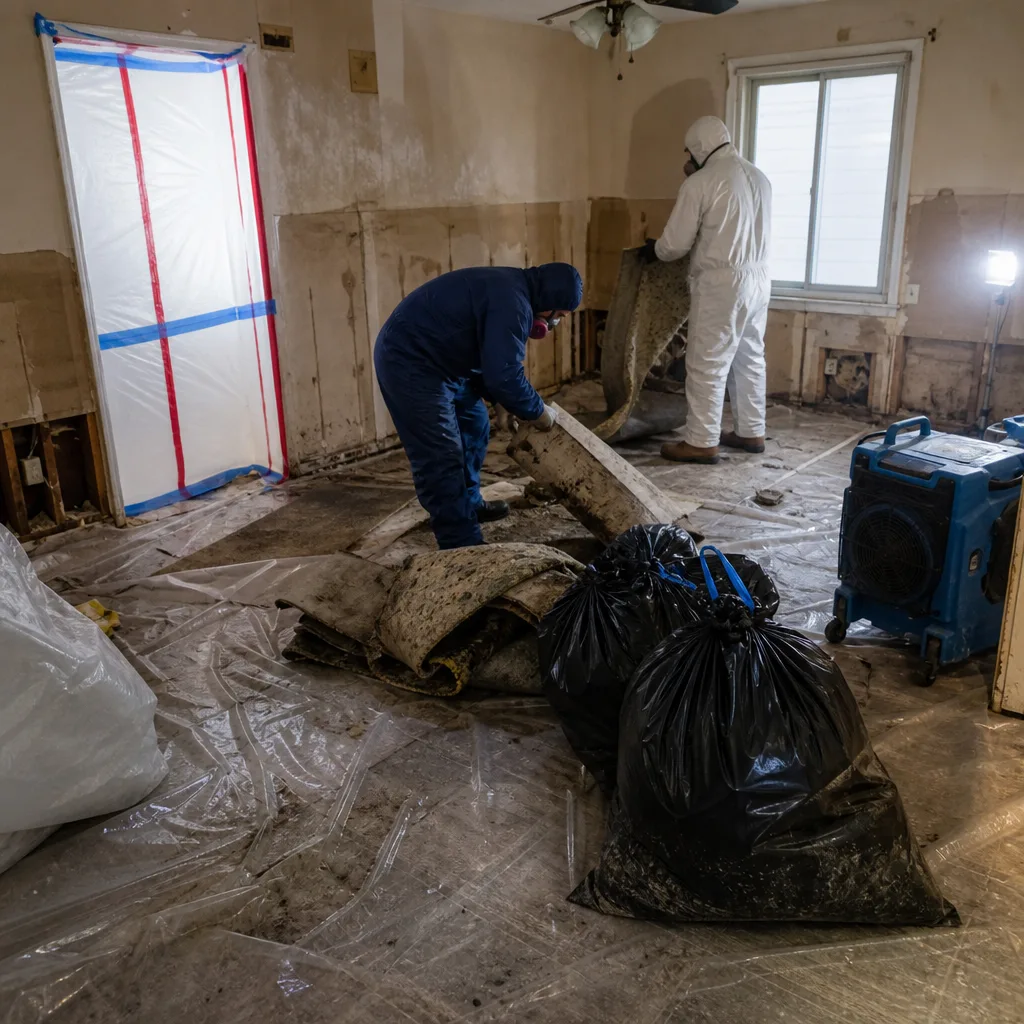
Toilet Overflow Cleanup
A toilet overflow in a Tribeca loft is rarely just a bathroom problem. In a converted 19th-century building, the overflow runs through old floor joists and pools in the ceiling of the unit below. We handle the extraction, sanitization, and drying, including opening the ceiling below to dry the cavity properly. Leaving hidden moisture behind is how mold starts.
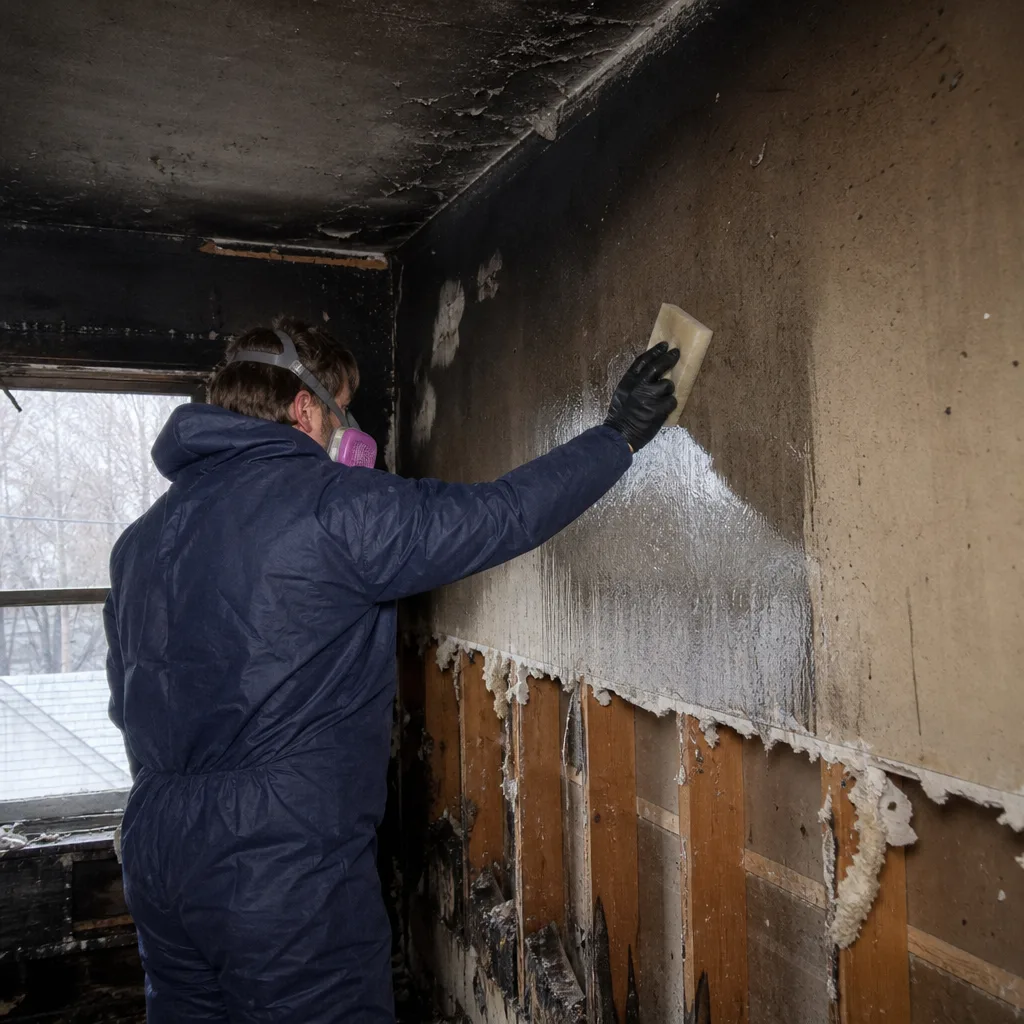
Septic Failure Cleanup
Most of Lower Manhattan is on the city sewer system, but a few older properties and some converted commercial buildings have legacy septic or holding tank setups. When those fail, the result is the same: raw sewage where it should not be. We respond the same way, with full containment and Category 3 protocols.
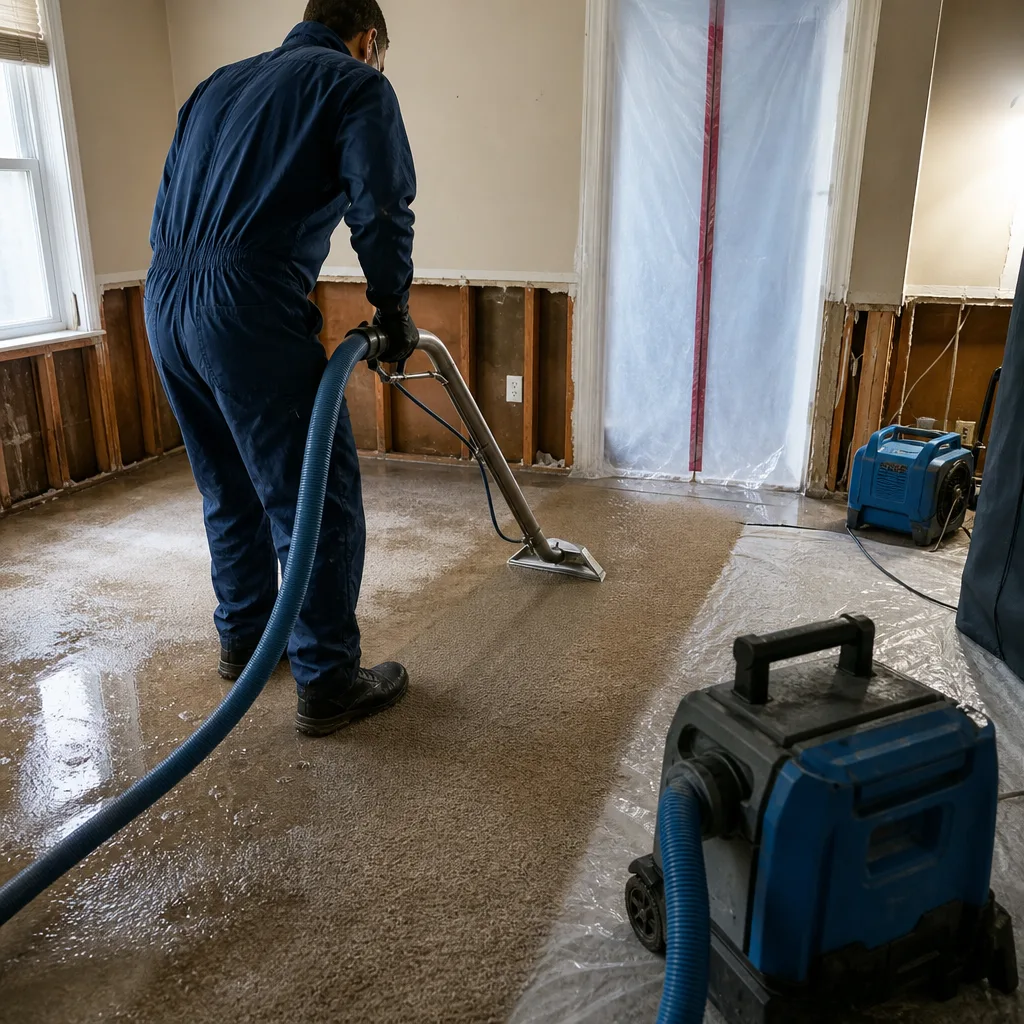
Black Water Extraction
Black water is the technical term for water contaminated with human waste, and it requires more than a wet vac. Our extraction equipment handles high-volume water removal, and we follow it immediately with antimicrobial treatment. In a Financial District sub-basement, this often means extracting from elevator pits and mechanical rooms where the water has been sitting for hours before anyone noticed.
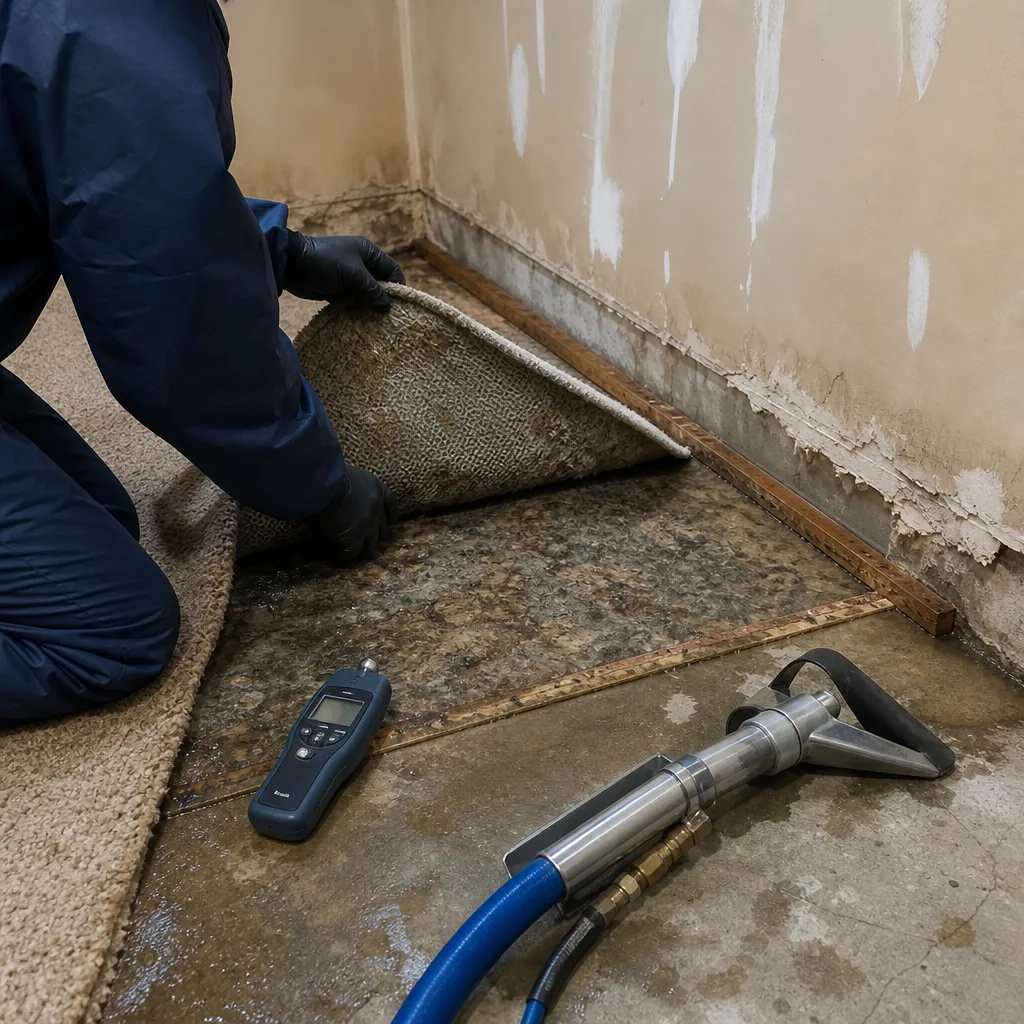
Sanitization & Disinfection
After extraction, every surface in the affected zone gets sanitized with a hospital-grade antimicrobial. We treat wall cavities, floor framing, and the bottom of studs, not just the visible surfaces. The goal is to leave the space safe, not just dry.
What happens when you call
- 1
A real person answersNo phone trees - you reach a local pro.
- 2
You get an upfront price rangeHonest numbers before anyone is dispatched.
- 3
A background-checked tech heads outLicensed & insured, dispatched right away.
- 4
You approve before work beginsNothing starts until you say go.
Sewage Cleanup Costs in Lower Manhattan, NY
For a typical sewage backup cleanup in a Lower Manhattan apartment or condo, expect to pay between $2,500 and $6,500. That covers extraction, containment, removal of saturated materials, sanitization, and structural drying. A small toilet overflow in a single bathroom might run $1,800 to $3,000. A building-wide event involving a sub-basement, elevator pit, and multiple affected units can reach $15,000 to $40,000 or more, especially in Financial District buildings where below-grade vault flooding spreads through conduit penetrations. What moves the price: the square footage affected, how far the water migrated through walls and floors, whether building management requires union or freight-elevator coordination, and whether the event is isolated to one line or involves storm surge through floor drains. Many policies cover the bulk of this work. Call (551) 348-8481 for a free inspection and a written scope. The estimate is free, and you’ll know exactly what you’re dealing with before you spend a dollar.
We Also Serve Cities Near Lower Manhattan
Floodline Restoration Co. responds to sewage cleanup calls throughout the surrounding area, including Midtown West, Washington Square, Midtown Manhattan, and Murray Hill. If you’re near Lower Manhattan, call us. We’ll be there when we say.
Lower Manhattan Sewage Cleanup Questions, Answered
What does category 3 water mean in a Lower Manhattan sewage backup, and why does it change the scope of work?
Category 3 water is grossly contaminated water that contains sewage, bacteria, and pathogens, and in Lower Manhattan it means we follow full containment and disposal protocols rather than simple drying. Porous materials that touch category 3 water, like drywall, carpet pad, and insulation, have to be removed and replaced. You cannot clean and reuse them. That’s the single biggest difference between a sewage job and a clean-water leak.
How does the salt air in Lower Manhattan affect sewage cleanup equipment and drying times?
Salt air accelerates corrosion inside the building materials, but it also adds moisture to the air itself. Lower Manhattan’s coastal humidity means dehumidifiers run longer and harder than they would in an inland property. Older masonry buildings hold moisture in brick and stone long after the drywall is dry, so our drying logs track humidity inside wall cavities, not just the room air. Expect drying times to run 20 to 30 percent longer than a comparable event in a newer, inland high-rise.
Why do sewage backups in Battery Park City often require coordination with building management before our crew can even start?
Battery Park City buildings sit on landfill at sea level, and their mechanical rooms and sub-basements are below the water table. Access is often through a freight elevator or a loading dock controlled by building staff. Our mitigation techs coordinate with management to schedule equipment moves, which can mean a 2-hour window to get extraction units down before the freight elevator is needed for residents. This neighborhood demands that coordination.
Is a sewage backup in a Tribeca loft different from one in a Midtown high-rise?
Yes. Tribeca’s converted 19th-century cast-iron buildings share vertical utility chases that run through brick and timber. A backup in one unit’s waste line can carry category 3 water into adjacent units through those chases. Midtown high-rises built after 1950 generally have isolated plumbing stacks per floor or per unit, so the contamination stays local. In Tribeca, we always check the units above and below the affected one.
If a nor’easter pushes tidal water into my Financial District sub-basement, is it treated as sewage or stormwater for cleanup?
When tidal surge or stormwater overflows the combined sewer system and comes back through floor drains, the water is contaminated with sewage, so it’s treated as category 3. From a cleanup standpoint, there’s no practical difference between a sewer backup and a surge-driven overflow through a drain: both require containment, antimicrobial treatment, and removal of saturated materials.
How fast can you actually get to Lower Manhattan for a sewage backup?
We commit to a 45-minute response for active sewage backups in Lower Manhattan. Our New York City dispatch office is close enough that crews can be on-site quickly, even during overnight hours. Call (551) 348-8481 and a live dispatcher confirms the address, building access, and the nearest cross street while the crew is mobilizing.
Will my insurance cover sewage cleanup in Lower Manhattan?
Most policies cover sewage backup if the policy includes the endorsement, and most condo and co-op master policies in New York do. We document everything from the first hour, photograph every affected room, and send your adjuster a line-item scope. We also bill the carrier directly where coverage applies. Call us and we’ll help you understand what your policy says.
What should I do in the first 30 minutes after a sewage backup?
Turn off the water if the source is a plumbing line. Don’t flush again. Don’t run water in the affected area. Move valuables and electronics out of the water, but don’t wade through it without proper protection. Then call (551) 348-8481. The first 30 minutes determine whether the damage stays local or spreads through the building.
Serving Lower Manhattan, NY - Our Local Coverage Area
We’re based in the Lower Manhattan area and know this community well. Use the map below to see our service coverage - if you’re nearby, we can almost certainly help.
Floodline Restoration Co.: Sewage Cleanup Done Right in Lower Manhattan
Last March, our crew was called to a converted 19th-century cast-iron warehouse on Hudson Street in Tribeca after a sewer main backed up into the building’s freight-elevator pit. The building’s shared vertical utility chase had carried category 3 water from one flooded sub-basement into adjacent mechanical rooms, so we set up containment and ran XPOWER air movers with a Dri-Eaz dehumidifier before performing moisture mapping. Because the freight elevator was the only equipment path, our mitigation techs coordinated with building management for a 2-hour window to move extraction units down, then completed structural drying and antimicrobial treatment on all affected masonry.
That’s how Lower Manhattan sewage cleanup works when it’s done right. The building’s age, the sub-basement utility grid, the coastal humidity, the freight-elevator access: all of it shapes the job. A generic restoration company with a template and a truck doesn’t know what they’re walking into when the address is on Water Street or in Battery Park City. We do. We’ve built this company around the specific problems Lower Manhattan throws at its buildings, and our Sewage Cleanup team handles every phase, from first extraction to finished rebuild.
Every job Floodline completes carries the 90-Day Done Right Promise, in writing. If it’s not done right, we make it right. No arguing, no paperwork battles. That’s the Keystone Standard, and it’s why Lower Manhattan property owners keep our number in their phones. Call (551) 348-8481 for a free estimate, any hour, any day. A live person will answer.
Written by Curt Bowman, Owner at Floodline Restoration Co., serving Lower Manhattan since 2010.